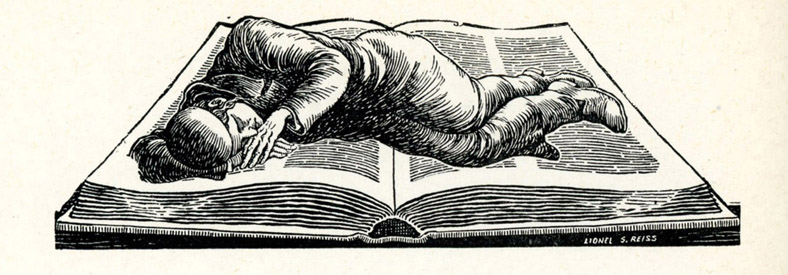
“He had been a lad of whom something was expected.”
 He had been a lad of whom something was expected.
Beyond this all had been chaos.
That he would be successful in an original way,
or that he would go to the dogs in an original way,
seemed equally probable.
The only absolute certainty about him
was that he would not stand still in the circumstances amid which he was born.
Hence, when his name was casually mentioned by neighboring yeomen,
the listener said, “Ah, Clym Yeobright: what is he doing now?”
When the instinctive question about a person is, What is he doing?
It is felt that he will not be found to be, like most of us, doing nothing in particular.
There is an indefinite sense that he must be invading some region of singularity, good or bad.
The devout hope is that he is doing well.
The secret faith is that he is making a mess of it.
Half a dozen comfortable market men,
who were habitual callers at the Quiet Woman as they passed by in their carts,
were partial to the topic.
In fact, though they were not Egdon men,
they could hardly avoid it while they sucked their long clay tubes
and regarded the heath through the window.
Clynn had been so inwoven with the in his boyhood
that hardly anybody could look upon it without thinking of him.
So the subject recurred:
if he were making a fortune and a name, so much the better for him;
if he were making a tragical figure in the world, so much the better for the narrative. (190)