Barking Man and Other Stories, by Madison Smartt Bell – 1990 [Dan Reed]

Contents

Holding Together, from Boulevard

Black and Tan (formerly “Going to the Dogs”), from The Atlantic Monthly

Customs of the Country (revised), from Harper’s Magazine

Finding Natasha, from Antaeus and Louder Than Words

Dragon’s Seed, from Boulevard

Barking Man, from The Northern Review

Petit Cachou

Witness, from Harper’s Magazine

Move On Up

Mr. Potatoehead In Love, broadcast on National Public Radio

______________________________________

“Mr. Thracewell, my brother Alfred,” Big Brother said. 
“Alf, fetch Mr. Thracewell a gin and French.” 
He passed Alf an empty glass and leaned to whisper in his ear,
“Jesus Christ, your tie’s not straight.”

As Alf receded into the hallway,
he thought he heard the murmured invocation London School of Economics,
and he swallowed against that plauguey roughness in his gullet. 
The kitchen was empty and he snatched up the gin bottle,
carried it into the pantry and shut the door after him. 
With the bottle upended over his jaws,
he squinted up at its butt until he saw four bubbles rise,
then lowered it and gasped. 
Gin and French? 
He sniffed the glass the Beeb had given him, but the scent was unenlightening. 
He fixed a gin and tonic with a lot of ice and headed back toward the front of the flat. 
En route he toppled a tower of bowler hats from the hall stand,
made an abortive move to gather them, then decided to let them lie. 
Deep in conversation with Big Brother,
Thracewell took the drink unconsciously and tasted it without looking. 
Alf watched his mouth shrivel to the surface of the glass,
and at that very instant the vast bubbles of gin he’d swallowed burst inside him with a soft explosion.

“iirrrfffooorrrffffaaarrrROOOOORF OOOO OOOO!!!” he howled. 

All around the room he could hear vertebrae popping with the speed of the turning heads.

“Your younger brother is this, you say?” Mr. Thracewell murmured. 
“My word, a most original chap.”

(Madison Smartt Bell, “Barking Man”, p. 105)

______________________________

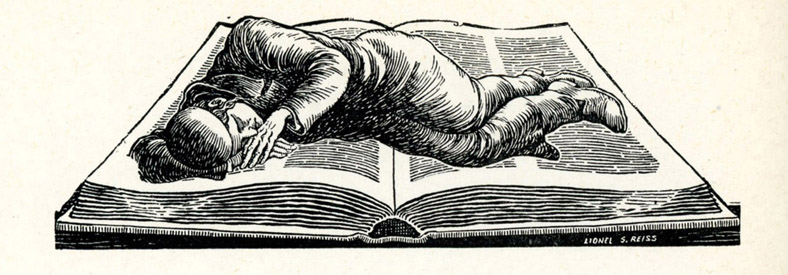
Madison Smartt Bell (photograph by Craig Daniels)

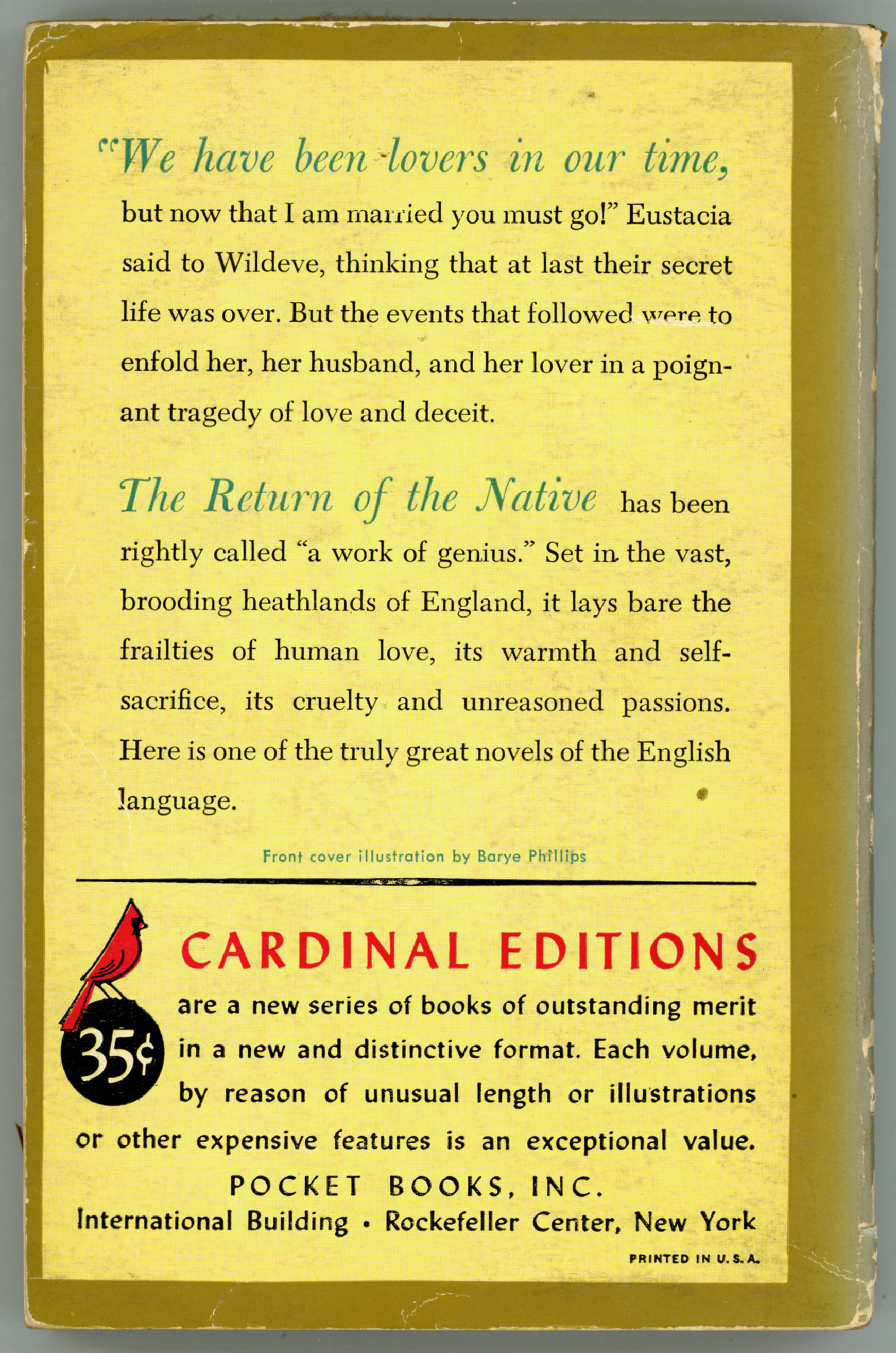
The Return of the Native, by Thomas Hardy – June, 1952 (November, 1939 (1878)) [Bayre Phillips]

“He had been a lad of whom something was expected.”

He had been a lad of whom something was expected. 
Beyond this all had been chaos. 
That he would be successful in an original way,
or that he would go to the dogs in an original way,
seemed equally probable. 
The only absolute certainty about him
was that he would not stand still in the circumstances amid which he was born.

Hence, when his name was casually mentioned by neighboring yeomen,
the listener said, “Ah, Clym Yeobright: what is he doing now?”
When the instinctive question about a person is, What is he doing?
It is felt that he will not be found to be, like most of us, doing nothing in particular.
There is an indefinite sense that he must be invading some region of singularity, good or bad.
The devout hope is that he is doing well.
The secret faith is that he is making a mess of it.
Half a dozen comfortable market men,
who were habitual callers at the Quiet Woman as they passed by in their carts,
were partial to the topic.
In fact, though they were not Egdon men,
they could hardly avoid it while they sucked their long clay tubes
and regarded the heath through the window.
Clynn had been so inwoven with the in his boyhood
that hardly anybody could look upon it without thinking of him.
So the subject recurred:
if he were making a fortune and a name, so much the better for him;
if he were making a tragical figure in the world, so much the better for the narrative.  (190)

Things Not Seen and Other Stories, by Lynna Williams – 1992 [Raul Colon]

This post, which first appeared in early 2018, has been updated to include Michiko Kakutani’s New York Times July 17, 1992 book review of Things Not Seen.  While the “initial” version of the post included the review as a scan, this revision includes the review as full text, followed by a close-up of Raoul Colon’s cover art.

I’ve also (October, 2019) updated the post to include a brief excerpt from the story “Last Shift at The Mine”.

Scroll down just a little…

Contents

Afghanistan

The Sisters of Desire

Personal Testimony

Sole Custody

A Morning in the Late Cretaceous Period

Last Shift at the Mine

Rescue the Perishing

Legacy

Things Not Seen

________________________________________

Books of The Times

A Thousand Tiny Heartbreaks

By MICHIKO KAKUTANI

Things Not Seen

And Other Stories
By Lynna Williams
213 pages. Little, Brown & Company.
$18.95.

The New York Times
July 17, 1992

The characters in these fine new stories by Lynna Williams are outsiders, people excluded from the safe, warm circle of familial affection.

In “The Sisters of Desire,” a young woman named Chris is recovering from a nervous breakdown.  Chris takes a job baby-sitting for an 11-year-old girl named Rachel, who proposes that they form a fan club for her stepfather, Tom.  It’s not long before Chris realizes that she has actually fallen in love with Tom, that she wants to replace his wife and take her place beside him as Rachel’s mother.  As the impossibility of this fantasy sinks in, Chris sees again “how separate she was, and would always be, from them, through history and circumstance, through all the things she felt but could not say.”

It’s a feeling shared by Ellen Whitmore, a preacher’s daughter who narrates two stories in this volume (“Personal Testimony” and “Rescue the Perishing”).  At the age of 9, Ellen learned that she was adopted, and this knowledge warps her subsequent relationship with her father.  On one hand, she wants to hurt and embarrass him by ghostwriting phony testimonies for the other children at Bible camp; on the other, she tries to earn back his love by trying to introduce an ill-tempered neighbor, who had supposedly been a Nazi, to Christ.

Looking at her father, she thinks, “I was sure that what I wanted most in the world was for him to love me back, not in the ‘Ellen is my daughter and I have to prove it’ way that was familiar to us both by then, but in the old way, when he looked for me in any room he went into.”

Ms. Williams’s other characters also ostensibly belong to families, but they, too, suffer from feelings of exclusion and alienation.  In the title story, a woman named Jenny begins to recover memories of being abused as a child, and these memories, accelerated by therapy, begin to contaminate her marriage.  She grows nervous, paranoid and defensive.  Her husband, David, soon catches her sense of peril; he begins to distance himself from her and question his own impulses toward their daughter.  He tells Jenny he wants “this to be over”; he wants “things to be the way they were.”  “What if I’m O.K.,” she responds, “and things still aren’t the same?  What if they never are?”  In relating such stories, Ms. Williams demonstrates an uncanny ability to write scenes that effectively dramatize her characters’ emotional dilemmas without ever seeming stagey or didactic.  Emily, the heroine of “A Morning in the Late Cretaceous Period,” realizes, while wandering through a dinosaur exhibit at the local museum, that memories of her former husband have come between her and her new husband, Tom.  “She stops speaking to him halfway through the Triassic period,” Ms. Williams writes, “feigning desperate interest in the museum dioramas of earth 225 million years before.”  Moments later, “they enter the Cretaceous period,” she writes.  “All around them, the known world is splitting into separate continents, and Emily pushes ahead, until she’s standing alone somewhere on the edge of North America.”  She feels stranded and alone, and when she gives Tom a quick, desperate shove she feels “she has moved her marriage toward extinction with an act she can’t explain and can’t take back.”

Anna, the heroine of “Sole Custody,” who lost her child, Katie, to cancer several years ago, experiences a similar epiphanic moment, when she peers in a window of the house belonging to her ex-husband, Jay.  Everything she sees inside – pictures of Katie, along with furniture, knickknacks and toys that attest to Jay’s new life with his new wife and new baby – makes her realize how much she has lost, how much she remains in thrall to the past.

Cancer, unemployment and divorce – these sad, ordinary facts of life, rather than the melodramatic sort mentioned on the evening news (“drunk drivers, or snipers at the mall, or boulders pushed at cars from freeway overpasses”) – are the ones that haunt Ms. Williams’s characters.  In many cases, the mere fear or premonition of such “things not seen” is enough to drive these people to the brink of emotional despair.  By dwelling on bad memories or intimations of some unnamed future disaster, they court misunderstanding and bad luck.

In “Afghanistan,” a man named Hopkins tries to decipher a note left by his wife: “Have gone to Afghanistan.  Tess at Scotts’ overnight.  Food in fridge.”  The second half of the note is clear and accurate: his daughter, Tess, is indeed at a neighbor’s house for the evening, and there is a casserole with stuffed pasta shells in the refrigerator.  The first sentence is more perplexing: since his wife is a linguist, Hopkins tells himself, Afghanistan must be a kind of code for something else.  After reading a newspaper story with a headline that says, “Afghan Left Feels Betrayed by Russians,” he decides that “Afghanistan” must symbolize “betrayal” to his wife, although he’s unsure whether she means her betrayal of him, or his betrayal of her.

In each of these stories, Ms. Williams writes with quiet assurance, delineating her characters’ psyches with the same authority she brings to her descriptions of their day-to-day routines.  The writing is limpid, almost translucent, allowing the reader almost complete access to these people’s inner lives.  One is left with both an appreciation of the resilience of love and an understanding of its frightening limitations: its failure in the face of illness, grief and existential fear.

____________________

– Lynna Williams –

____________________

We’ve known for months we couldn’t stay unless Mark could find permanent work. 
We’d talk about it sometimes late at night,
but then it would be another day and we’d be doing anything we could to stay. 
I could write a book about that – about all the things we never thought could happen to us. 
Like going on welfare this winter, when Mark couldn’t find any work at all for six weeks. 
On my going to work at the Traveler’s Motel three days a week, cleaning rooms. 
Two and a half years ago, when Mark got laid off again,
we would have fought about my working at any job, much less as a maid. 
But not anymore. 
I know he’d do it instead if he could. 
When I come home on those days, he and Molly make me sit at the table
while they bring me dinner like it’s a hotel. 
“Madame, perhaps desires the macaroni?” Mark will say,
and Molly, who’s started to swallow the beginnings of words,
will punch me on the arm with her little fist and say, “Caroni, Dame?” 
I am never sorry about anything when they’re carrying on like that. 
And as long as Mark is talking, I know we’re all right. 
So we’ve been doing whatever we’ve had to – until two weeks ago. 
That was when Mr. Peterson told me there’s not enough business at the motel
and they don’t need me anymore. 
We’ve been using that money, and whatever we can earn doing odd jobs, to eat,
and drawing out what little savings we have left to pay the utilities. 
My parents made the June house payment. 
We let them because it looked like there might be a buyer if we could just hang on. 
There are some older people up here looking for retirement homes. 
But nothing’s happened, and we can’t wait anymore.  (“Last Shift at The Mine”, pp. 145-146)

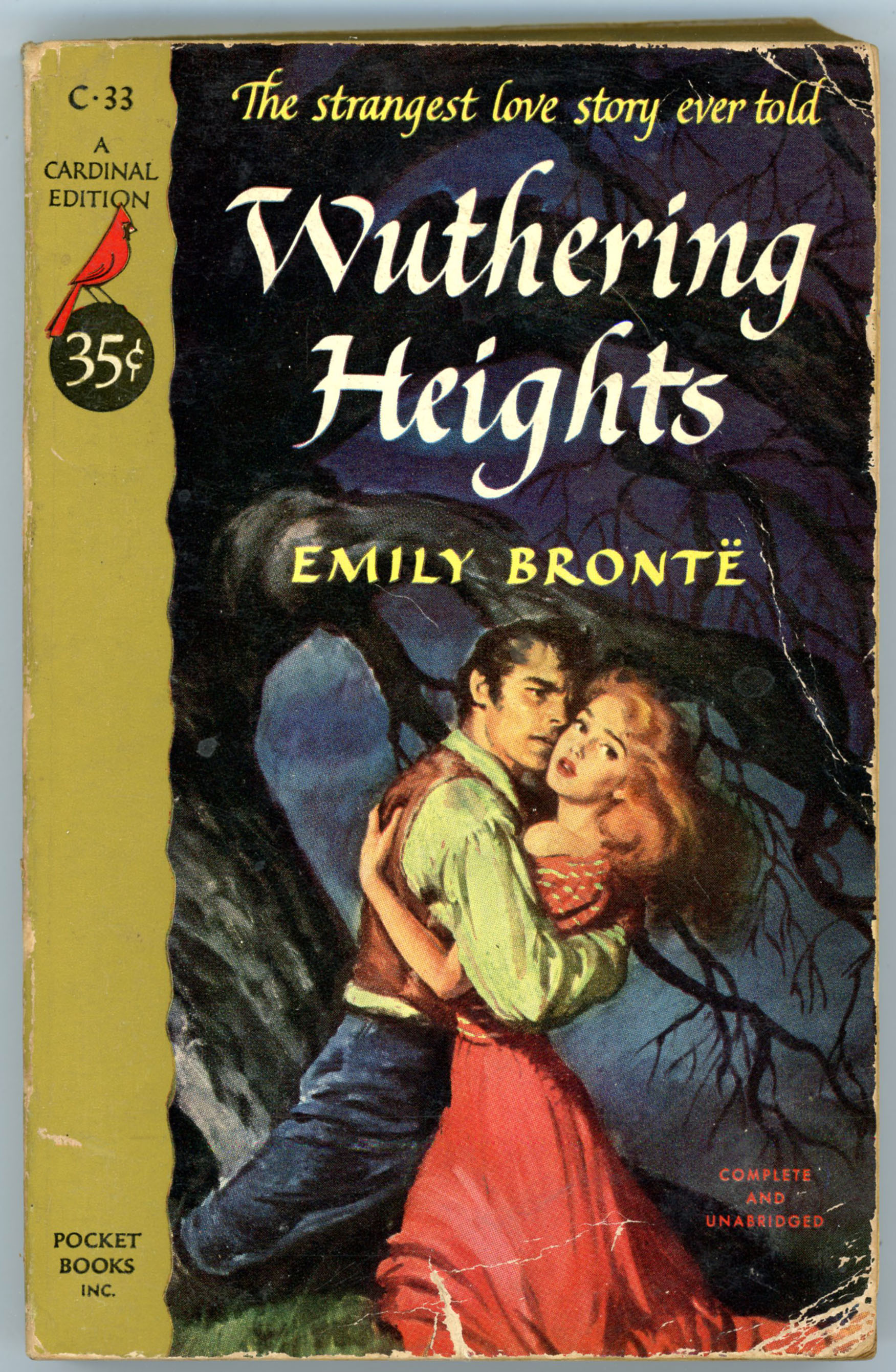
Wuthering Heights, by Emily Bronte – October, 1952 (December, 1847) [Walter M. Baumhofer]

“Is Mr. Heathcliff a man?  If so, is he mad?
And if not, is he a devil?”

Dear Ellen, it begins, —
I came last night to Wuthering Heights,
and heard, for the first time, that Catherine has been, and is yet, very ill. 
I must not write to her, I suppose,
and my brother is either too angry or too distressed to answer what I sent him. 
Still, I must write to somebody, and the only choice left me is you.

Inform Edgar that I’d give the world to see his face again —
that my heart returned to Thrushcross Grange in twenty-four hours after I left it,
and is there at this moment, full of warm feelings for him, and Catherine!
I can’t follow it though — (these words are underlined) —
they need not expect me, and they may draw what conclusions they please;
taking care, however, to lay nothing at the door of my weak will or deficient affection.

The remainder of the letter is for yourself alone. 
I want to ask you two questions: the first is, —
How did you contrive to preserve the common sympathies of human nature when you resided here?
I cannot recognise any sentiment which those around share with me.

The second question I have great interest in; it is this —
Is Mr. Heathcliff a man?  If so, is he mad?
And if not, is he a devil?
I sha’n’t tell my reasons for making this inquiry;
but I beseech you to explain, if you can, what I have married:
that is, when you call to see me; and you must call, Ellen, very soon.
Don’t write, but come, and bring me something from Edgar.

References

Wuthering Heights, at Wikipedia

Wuthering Heights (full text), at Project Gutenberg

Henderson The Rain King, by Saul Bellow (II) – 1983 (1958) [Roy Ellsworth]

Here’s a second, later (1983; Penguin Books) version of the cover of Saul Bellow’s Henderson the Rain King, by Roy Ellsworth. 

It’s a very different from Bill Preston’s 1972 cover, which was stylistically a little more traditional, relying on the use of brighter colors and not at all on the direct representation of the novel’s characters. 

The manner in which the two artists visually depicted Bellow’s animating idea in such a different manner is an interesting – albeit ironically wordless! – commentary on the rapidity of change in artistic style over a short period of time. 

“The glorious, spirited adventures of an eccentric American millionaire who finds a home of sorts in deepest Africa”. (Cover blurb)

______________________________

This is how I became the rain king
I guess it served me right for mixing into matters that were none of my damned business
But the thing had been impossible,
one of those drives which there was no question of fighting.
And what had I got myself into?
What were the consequences?
On the ground floor of the palace,
filthy, naked, and bruised,
I lay in a little room
The rain was falling, drowning the town,
dropping from the roof in heavy fringes, witchlike and gloomy
Shivering, I covered myself with hides and stared with circular eyes,
wrapped to the chin in the skins of unknown animals
I kept saying, “Oh, Romilayu, don’t be down on me.
How was I supposed to know what I was getting myself into?”
My upper lip grew long and my nose was distorted;
it was aching with the whiplashes and I felt my eyes had grown black and huge
“Oh, I’m in a bad way
I lost the bet and am at the guy’s mercy.” – Saul Bellow (p. 203)


Henderson The Rain King, by Saul Bellow (I) – March, 1972 (1958) [Bill Preston]

Here is the first of “two takes” on Saul Bellow’s Henderson the Rain King.

This post illustrates Viking Press’ 1972 paperback edition of Bellow’s novel, with cover art by Bill Preston.  You can view Roy Ellsworth’s strikingly different 1983 cover art – combining elements of symbolism, humor, and irony – here.  

The Bridge of San Luis Rey, by Thornton Wilder – October, 1949 (November, 1927) [Lawrence Butcher]

My first post at “this” blog – well, my very first blog post, “period”, from August of 2016 – showed the cover and interior illustrations of the first (1927) edition Thornton Wilder’s The Bridge of San Luis Rey.  That post (now updated and a little simplified from its original version) included an image of the cover of Washington Square Press Edition’s 1967 paperback edition of Wilder’s novel, which has rather subdued cover art.  (See below…)

I’ve since acquired a copy of Pocket Book’s 1949 paperback edition of the book, which clearly and vividly displays Lawrence Butcher’s original cover art upon which the cover of the Washington Square edition was based.  Butcher’s art strikingly depicts the central thematic elements of Wilder’s story: Brother Juniper, with a somewhat downcast yet deeply contemplative expression; the “bridge” itself, upon which are walking the the five characters (Alfonso G., Nina, Manuel B., Alfonso V., and Vera N.) whose lives, stories, and ultimate fate form the basis of the novel; the hand (or, Hand?) of fate (or God?), suspended over the bridge in an indeterminate gesture – destiny or salvation, or both? – behind which a sky depicted in yellows of varying brightnesses forms a vivid backdrop.  (Note that the very brightest shade of yellow – yellow verging into white – falls directly upon Father Juniper.)  Casting the sky in yellow, rather than hues of gray, blue, or violet, creates a visually arresting cover:

Arresting symbolically; arresting aesthetically.

______________________________

From all this saddening data
Brother Juniper contrived an index for each peasant.
He added up the total for victims
and compared it with the total for survivors,
to discover that the dead were five times more worth saving.

______________________________

It looked almost as though the pestilence had been directed
against the really valuable people in the village of Puerto.

______________________________

______________________________

And on that afternoon
Brother Juniper took a walk along the edge of the Pacific.
He tore up his findings and cast them into the waves;
he gazed for an hour upon the great clouds of pearl
that hang forever upon the horizon of that sea,
and extracted from their beauty a resignation
that he did not permit his reason to examine.

______________________________

Here’s the Washington Square Press Edition of the novel.  The cover art, obviously adapted from the 1949 Pocket Books edition, has identical elements (except for the Hand above), but perhaps for reasons of copyright, and, budgetary constraints, is vastly simplified from the original version. 

If the muted blue and green background doesn’t carry the same visual “punch” of the Pocket Books version, the story, and the novel’s message, remains the same; remains constant.

______________________________

The discrepancy between faith and the facts
is greater than is generally assumed.

______________________________

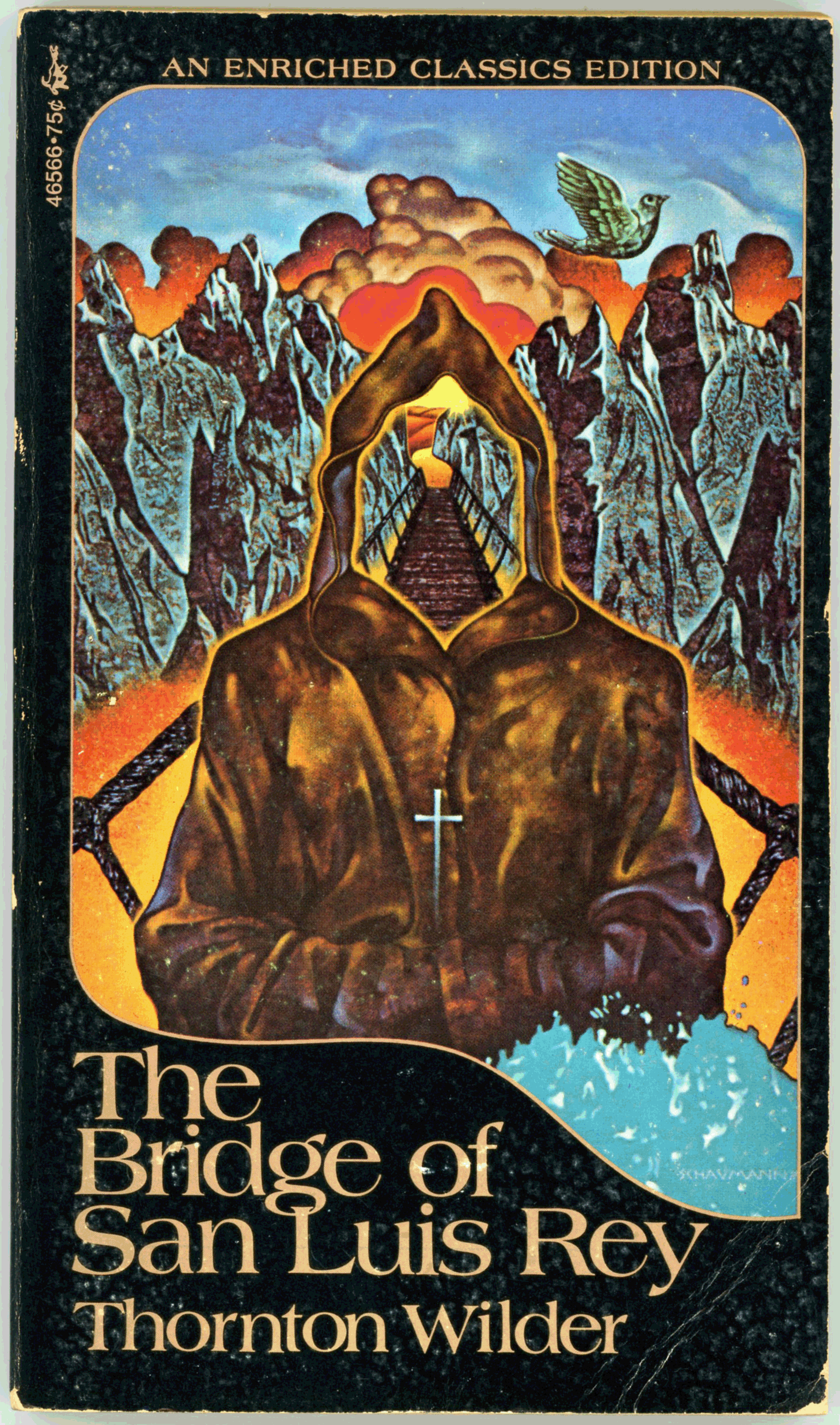
And, Pocket Books’ 1972 edition of the novel, the cover of which (I think by Peter Schaumann) is deeply symbolic.  Note that Father Juniper’s face – his identity? – has been replaced, if not supplanted, by the Bridge of San Luis Rey.


Free Fall, by William Golding – April, 1967 (February, 1960) [M. Charles]

“I hung for an instant between two pictures of the universe;
then the ripple pushed over the burning bush and I ran towards my friend. 
In that moment a door closed behind me. 
I slammed it shut on Moses and Jehovah. 
I was not to knock on that door again, until in a Nazi prison camp. 
I lay huddled against it half crazed with terror and despair.

“ – I remember when I first learnt that a planet sweep out equal areas in equal times–
it seemed to me that armies would stop fighting –
I mean – I must have been about your age –
that they would see how ridiculous a waste of time – “

“Did they, sir?  Did they, really?”

“Did who?”

“The armies.”

Slowly the difference between the adult and the child re-established itself.

“No.  They didn’t.  I’m afraid not.
If you do that sort of thing you become that sort of animal.
The universe is wonderfully exact, sonny.
You can’t have your penny and your bun.
Conservation of energy holds good mentally as well as physically.”

“But, sir –“

“What?”

Understanding came to me. 
His law spread. 
I saw it holding good at all times and in all places. 
That cool allaying rippled outward. 
The burning bush resisted and I understood instantly how we lived a contradiction. 
This was a moment of such importance to me that I must examine it completely. 
For an instant out of time, the two worlds existed side by side. 
The one I inhabited by nature, the world of miracle drew me strongly. 
To give up the burning bush,
the water from the rock,
the spittle on the eyes was to give up a portion of myself,
a dark and inward and fruitful portion. 
Yet looking at me from the bush was the fat and freckled face of Miss Pringle. 
The other world, the cool and reasonable was home to the friendly face of Nick Shales. 
I do not believe that rational choice stood any chance of exercise. 
I believe that my child’s mind was made up for me as a choice between good and wicked fairies. 
Miss Pringle vitiated her teaching. 
She failed to convince, not by what she said but by what she was. 
Nick persuaded me to his natural scientific universe by what he was not by what he said. 
I hung for an instant between two pictures of the universe;
then the ripple pushed over the burning bush and I ran towards my friend. 
In that moment a door closed behind me. 
I slammed it shut on Moses and Jehovah. 
I was not to knock on that door again, until in a Nazi prison camp. 
I lay huddled against it half crazed with terror and despair.

Here?

Not here.

(pp. 195-196)

Seize the Day, by Saul Bellow (II) – 1958 (1985) [Roy Ellsworth]

Roy Ellsworth, who created cover art for the 1977 edition of Mr. Sammler’s Planet, and the 1983 release of Henderson the Rain King, was also the artist for the 1985 publication of Seize the Day – all authored by Saul Bellow; all published by Penguin Books.  

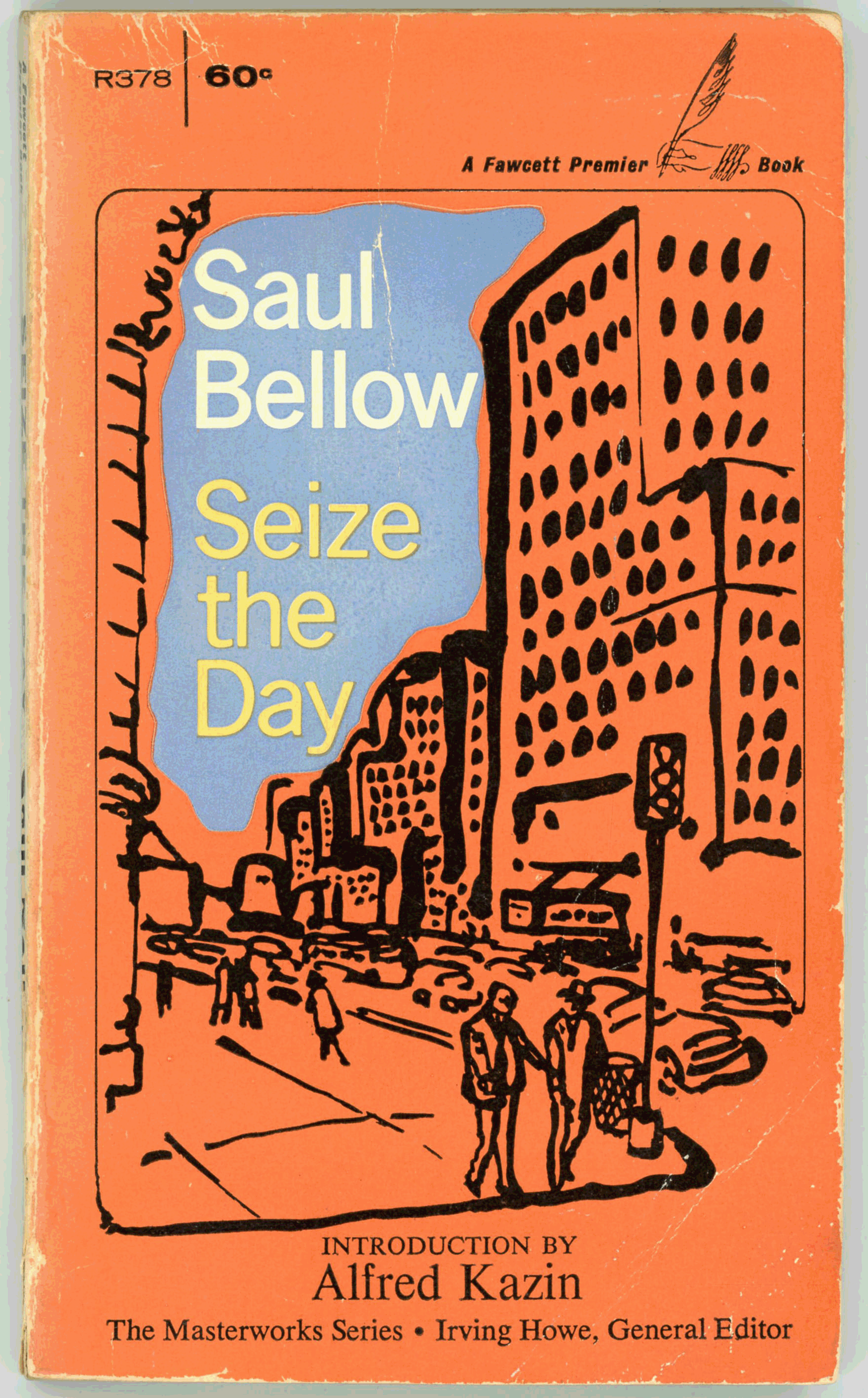
His cover for the latter novel – shown in this post – is strikingly different from the simple, somewhat impressionistic illustration featured on the cover of the novel’s 1958 Fawcett Crest edition, which I first posted in April of 2019.  In the latter, the emphasis is on an un-named New York City street, with the protagonist and his father, Tommy Wilhelm and “Dr. Adler”, appearing as diminutive, nondescript figures. 

For the book’s 1985 edition, Ellsworth rendering of father and son shows them as distinct individuals, with a notable resemblance.  Curiously, as he did for Henderson the Rain King, his cover coveys a mood of lightheartedness and whimsy, more than a little at variance (!) with the novel’s utter seriousness. 

References

The Day Seized, at…

… Rotten Tomatoes

… Internet Movies Database

… Wikipedia

Seize the Day, by Saul Bellow (I) – 1958 [Unknown Artist]

I labor,
I spend,
I strive,
I design,
I love,
I cling,
I uphold,
I give way,
I envy,
I long,
I scorn,
I die,
I hide,
I want.

On Broadway it was still bright afternoon
and the gassy air was almost motionless under the leaden spokes of sunlight,
and sawdust footprints lay above the doorways of butcher shops and fruit stores.
And the great, great crowd,
the inexhaustible currents of millions of every race and kind pouring out,
pressing round, of every age, of every genius,
possessors of every human secret, antique and future,
in every face the refinement of one particular motive or essence –

______________________________

Faster, much faster than any man could make the tally. 
The sidewalks were wider than any causeway;
the street itself was immense,
and it quaked and gleamed and it seemed to Wilhelm to throb at the last limit of endurance. 
And although the sunlight appeared like a broad tissue,
its actual weight made him feel like a drunkard. 

– Saul Bellow –

Adapted for film by Fielder Cook and Robert Ribman, “Seize The Day” was released on September 9, 1986 at the Toronto International Film Festival, as a made-for-television film for PBS’ Great Performances series, with the late Robin Williams starring in the role of Tommy Wilhelm. 

A caveat:  I’ve neither (yet) read the book, nor (just yet) fully viewed the movie – though after the creation of “this” post, I well may.  I do recall sitting down to view the film on PBS, but – due to the sheer pathos of the story, particularly Tommy’s repellent, if not loathsome father, “Dr. Adler” (played by Joseph Wiseman), and his entirely unsympathetic wife, “Margaret” (played by Katherine Borowitz) – I gave up early:  I couldn’t bring myself to watch the production in ts entirety.

The video below, a composite of different scenes from the film (at the YouTube channel of hannahskaye) gives a glimpse of the power and intensity of Williams’ performance. 

Tommy’s life is a series of walls, which can neither be surmounted nor demolished.   He is left with one thing only: Himself.   

If the story is not a happy one, well, somehow, it nonetheless is a tale that can be appreciated.   

References

Seize the Day – at Rotten Tomatoes

Seize the Day – at Internet Movies Database

Seize the Day – at Wikipedia