Words in Print: Vasily Semyonovich Grossman (Василий Семенович Гроссман) – Book Review of “Forever Flowing”, February 23, 1973

Another review of Forever Flowing, albeit I don’t know the publication in which this item actually appeared!  Brief like Thomas Lask’s 1 April 1972 review in the New York Times, this anonymous reviewer focused upon the book from a literary – and thus not too complimentary – vantage point.

________________________________________

Synthesis with Slaves

VASILY GROSSMAN
Forever Flowing
Translated by Thomas P. Whitney
217 pp  Andre Deutsch £  2.25

February 23, 1973

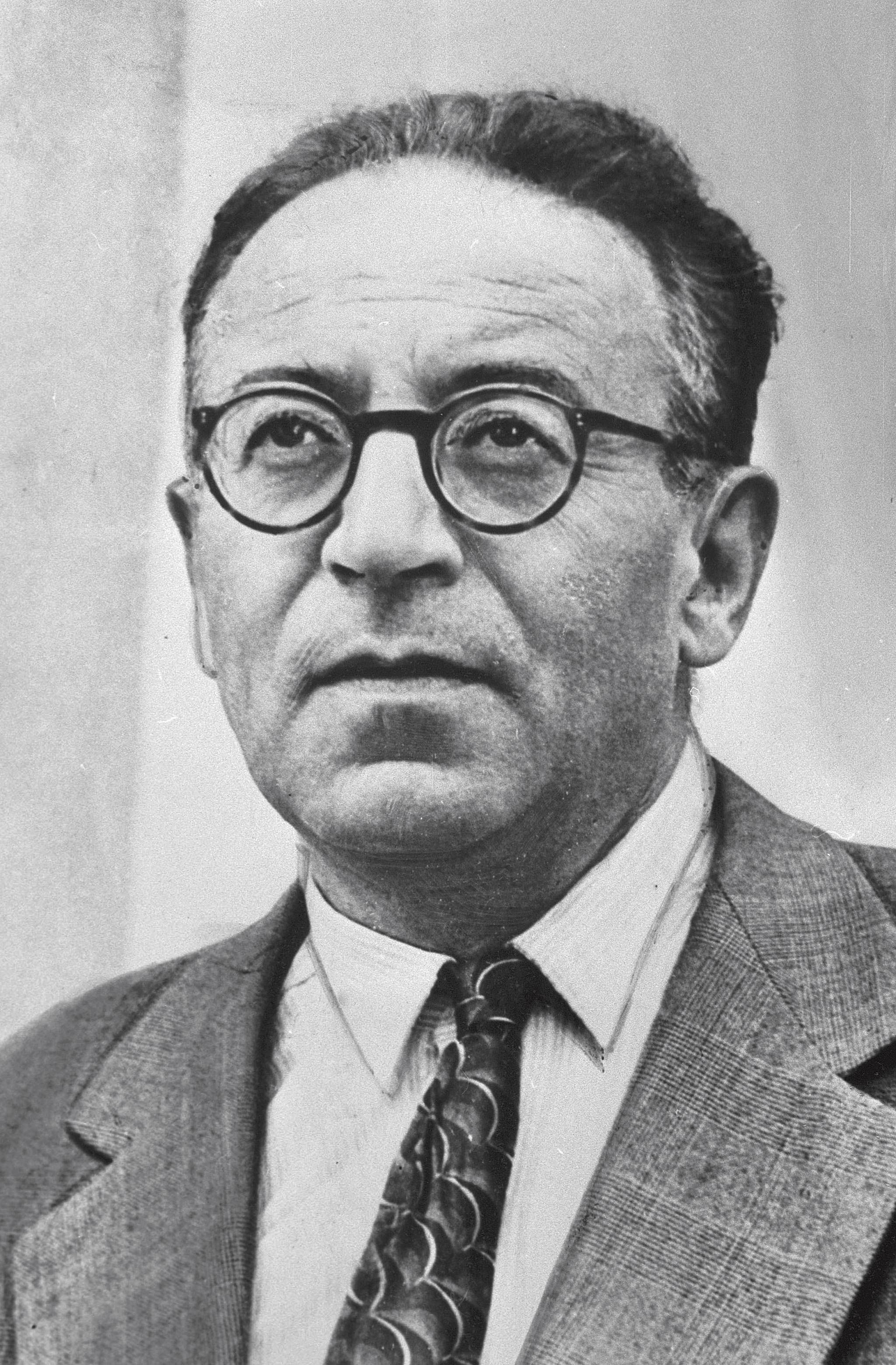
(Photograph accompanying “Stalingrad“, by Vasily Grossman, at Granta, November 15, 2018.)

Vasily Semenovich Grossman was an important Russian writer, little known in the West, who was born in 1905, established himself as a novelist before he was thirty, and became famous during the Second World War for some impressive works of reportage and for a novel, The People Is Immortal, which rose above the prevailing level of social patriotism.  Despite his considerable contributions to Soviet literature, however, he got into trouble towards the end of Stalin’s life, when his old play If One Believes the Pythagoreans and his new novel, For The Just Cause, were suppressed.  After Stalin’s death he spent several years writing a bitterly subversive book called Everything Flows, which couldn’t possibly be published in Russia and was smuggled abroad after his death in 1964.  It was published in Germany in 1970, and now appears here in a very stiff American translation.

The new title, Forever Flowing, is rather misleading.  Grossman was of course quoting one of the old Heraclitan tags, which is repeated in the book, together with a grim parody of another instead of “You cannot step into the same river twice.”  He says, “You cannot get into the same prison train twice.”  The whole book, in fact, is permeated with the metaphysical ideas attributed to Heraclitus more than 2,000 years ago; and, while this destroys its literary quality, it gives it a special historical and philosophical interest. 

Everything Flows is not really a novel – or rather, it begins as a novel, describing one of the “Returners” (возвращающиеся – vozvrashchayushchiesya) a man who has come back from the labour camps after thirty years and finds that everything has flowed, everyone has changed, and the revolutionary enthusiasm of the old days has turned into sour disillusion and narrow careerism; but it soon breaks down into a series of semi-fictional stories about various aspects of the Stalinist dictatorship which are never properly drawn together but are linked and eventually overshadowed by a long meditation on the meaning and purpose the phenomenon of Stalinism.

Grossman is remarkable among Soviet writers fur seeing this not as some kind of error in development or interruption of progress hut as an essential culmination of the whole course of Russian history.  He sees Stalin as the true successor of Lenin, and Lenin as the destroyer of the liberty which had become possible for the first time in 1917.  Lenin is indicted for creating a synthesis of “socialism and unfreedom”, which derives from the Tsarist tradition of progress plus serfdom, embodied above all by Peter the Great.  This is a familiar theme in the West, but in Russia it is rank heresy, and it would be interesting to know in what circumstances Grossman came to such a conclusion.

Some of the stories have considerable power, especially those about Masha, the wife of an arrested man who is arrested in turn and suffers and dies in the camps, and about Anna, the Party activist who witnesses the Ukrainian famine at the beginning of the 1930s during the compulsory collectivization of the land.  But the main story, about Ivan, the hero whose life has been ruined by the regime, is weak, and the whole hook leaves an impression of artistic confusion mixed with intellectual conviction of a disturbing kind.

Everything flows, and yet remains tile same: tyrannies rise and fall, but tyranny lasts forever.  Grossman hints that liberty will come in the end, but it is hard to see how this fits into his scheme, and the terrible vision of Russia enduring perpetual slavery is the most striking feature of the hook.  It is a pity that, in spite of the time he spent on it, Grossman didn’t manage to make it as good as it deserved to be.

Suggested Readings

Aciman, Alexander, Book Review: Vasily Grossman, the Great Forgotten Soviet Jewish Literary Genius of Exile and Betrayal, Lives Inside Us All, Tablet, October 23, 2017
 
Capshaw, Ron, The Scroll: The Jewish Anti-Fascist Committee Was Created to Document the Crimes of Nazism Before They Were Murdered by Communists – For the crime of acknowledging Jewish identity, the committee’s members were killed in a Stalinist pogrom, Tablet, November 29, 2018
 
Epstein, Joseph, The Achievement of Vasily Grossman – Was he the greatest writer of the past century?, Commentary, May, 2019.
 
Eskin, Blake, Book Review: Eyewitness – A collection of Vasily Grossman’s shorter work offers a chance to reassess the Soviet master’s life and legacy. A conversation with Grossman translator Robert Chandler, Tablet, December 8, 2010
 
Kirsch, Adam, Book Review: No Exit: Life and Fate, Vasily Grossman’s indispensable account of the horrors of Stalinism and the Holocaust, puts Jewishness at the heart of the 20th century, Tablet, November 30, 2011
 
Vapnyar, Lara, Book Review: Dispatches – How World War II turned a Soviet loyalist into a dissident novelist.  Plus: An audio interview with the editor of A Writer at War, Tablet, January 30, 2006
 
Taubman, William, Book Review: Life and Fate: A biography of Vasiliy Grossman, the Soviet writer whose masterpiece compared Stalin’s regime to Hitler’s, The New York Times Book Review, p. 16, July 14, 2019


Words in Print: Vasily Semyonovich Grossman (Василий Семенович Гроссман) – Book Review of “Forever Flowing”, The New York Times, March 26, 1972 [Daniel Maffia]

Here’s Irving Howe’s 1972 New York Times review of Vasily Grossman’s Forever Flowing, with artist Daniel Maffia’s accompanying illustration.

Maffia’s art juxtaposes a portrait of Grossman with the image of a train, the latter symbolic of the book’s opening pages, which describe the journey of protagonist Ivan Grigoryevich (if he is actually a protagonist, for he seems far more having been acted upon than acting) back to Moscow after his release from decades of imprisonment in the Gulag.

While Grossman’s better known and far lengthier Life and Fate features characters fully “fleshed out” in terms of names and identities (personal history, life experiences, and relationships with family and friends) could the strikingly generic Russian name “Ivan Grigoryevich” – consisting solely of a given name and patronymic, thus lacking any connotation of nationality – have been an effort to  create within one character a literary template for universal themes of freedom and justice?

Having read both novels, I find a comparison between them to be strikingly difficult because of dissimilarities in their length, literary structure, scope of action, and the disparity between the depth of character development in Life and Fate, versus the near one-dimensionality of characters in Forever Flowing.  In addition, the books differ through Grossman’s focus within Life and Fate on the historical experience of the Jews of Russia (both civilian and military) within the context of the Second World War, against Forever Flowing’s universality, Jewish themes being apparent in only a single, searing, passage.

Yet, withall, I liked Forever Flowing more than Life and Fate, for despite the former’s lack of cohesion (Howe is entirely correct in his appraisal, “…he wrote out of so urgent a passion that he brushed aside the formal niceties of composition, these chapters have to be taken as set-pieces not well integrated with the plot.”) underlying themes are approached with a degree of directness and simplicity that is striking in effect and intensity.

Regardless and even because of their stylistic differences, both books are worthy of reading and contemplation.

________________________________________

A bold underground novel of the split Russian soul

Forever Flowing
By Vasily Grossman.

Translated from the Russian by Thomas P. Whitney.
247 pp.  New York: Harper & Row.  $6.95.

By IRVING HOWE

The New York Times Book Review
March 26, 1972

For two centuries now, under czars and commissars, Russia has given us the most brutal autocracy and brilliant literature.  During the last 20 years its best writing has come from poets, novelists and essayists who cannot publish in their own country but whose work, in defiance of the bureaucratic fist, finds its way into the West

Some of these writings, like Alexander Solzhenitsyn’s novel, “The First Circle,” Andrei Sinyavsky’s essay, “On Socialist Realism,” and Nadezhda Mandelstam’s memoir, “Hope Against Hope,” are masterpieces.  Their strength comes not merely from a high order of individual talent, but from the unconditional attachment to freedom that is the animating idea of Russian underground literature (samizdat).  Indeed, at a time when some Western intellectuals have again yielded themselves to authoritarian dogmas and charismatic dictators, it is these brave writers of the East – not only Russians but also Poles like Leszek Kolakowski and Yugoslavs like Milovan Djilas – who best uphold the values of independence, freedom, dissent.

Vasily Grossman’s “Forever Flowing,” written shortly before his death in 1964, is another of these remarkable books, known only to a few friends (and no doubt the secret police).  It is a novel portraying the experiences and reflections of a man who returns to Moscow after 30 years in the Siberian labor camps; it contains pungent discussions of political ideas; and it trembles with the vision of freedom.  At least in this book, Grossman is not so good a novelist as Solzhenitsyn or smooth an essayist as Sinyavsky.  Yet in one major respect his book seems the boldest to emerge from the suppressed literature of Russia: It is the first, to my knowledge, that comes to grips with the myth of Lenin.

Grossman’s career holds remarkable interest, precisely because for so long a time it was quite ordinary.  He began to publish in the 30s, when a novella of his attracted the favor of Maxim Gorky.  Other writings established him as a gifted novelist who was especially admired by Russian literary people for his style.  Apparently a decent man, he tried to maintain his integrity and nurture his talent during the Stalin years without paying too great a price in shame.  Neither heroic nor slavish, he remained silent when he had to, but meanwhile kept his mind alive, storing up explosive ideas and impressions.

In 1946 he published a play, “If You Believe the Pythagoreans,” that was denounced by the party-line critics, and then, during the anti-Semitic campaign against “homeless cosmopolites.” he was attacked again Konstantin Paustovsky, the distinguished Russian writer, privately told a friend in the West that in these years Grossman wrote a novel which he, Paustovsky, considered a masterpiece but that the manuscript was confiscated by the secret police and no copies were allowed to remain.  Nevertheless, Grossman kept writing “for the drawer,” completing “Forever Flowing,” not a masterpiece but a notable book, in his final years.

What seems most striking about his career is that, in ways not entirely clear from a distance, a man like Grossman could experience a major intellectual and moral transformation over a period of time – by himself? together with friends? – in which the received ideology of the Communist state was discarded and the scorned, “obsolete” values of liberalism or social democracy became a cherished possession.  Reading the pages of “Forever Flowing” with their glow of humane reflectiveness, one wonders: How did people like Grossman hack their way out of the ideological jungle in which circumstances had trapped them?  How, in their enforced isolation, did they find a path, and by no means uncritically, to the best of Western thought?  Whatever the answers, one is almost tempted after reading this book to accept Grossman’s view – a view not exactly encouraged by recent history – that there is a natural, indestructible striving toward freedom inherent in human nature.”

“Forever Flowing” begins in a familiar manner: a worn old man is on a westward-moving train to Moscow.  Mocked by the louts and officials who share his compartment, he keeps his silence.  Ivan Grigoryevich is returning from the camps to which, half a life earlier, he had been sent because of an impulsive student speech deviating from Communist orthodoxy.  The figure of the returned prisoner is a central one in recent Russian writing: the victim, the survivor, the man who remembers.

Ivan visits his cousin and boyhood chum, Nikolai, a small-talented scientist who has toadied a little over the years and now lives in “a world of parquet floors, glass-enclosed bookcases, paintings and chandeliers.”  One man well-fed, smug, and uneasy; the other gaunt, tormented and irritable.  Ivan makes no accusations.  It is his very silence that provokes Nikolai into self-defense: “I went through trials and tribulations,” though “of course I did not ring out like Herzen’s bell.”  It is hopeless, a dialogue of the deaf.  What can a man from the camps say to a man with an apartment?

Beyond these acrid, sharply-contoured opening chapters, “Forever Flowing” has little plot.  Ivan visits Leningrad, meets Pinegin, a former colleague, now a dignified gentleman with a fine coat.  “Don’t worry,” bursts out Ivan in anticipation of a rebuff,”… like you, I, too, have a passport.”  Pinegin replies with dignity: “When I run into an old friend, I am not in the habit of making inquiries about his passport”  It sounds good, a word of solidarity at last.  Later, we learn it was Pinegin who had denounced Ivan.

Ivan moves to a town in southern Russia, works as a laborer, meets a woman also worn out by suffering.  She lived through Stalin’s campaign against the kulaks and the forced collectivization.  They have a few moments together, not exactly of happiness, but of the peace that comes when people can at last speak with honesty.  The woman dies.  Ivan is again alone, with his thoughts and questions, “gray, bent and changeless.”

Woven through this simple story are linked segments of incident and passages of reflection.  Two scenes are especially strong.  One is an imaginary trial, perhaps running through Ivan’s mind, in which the informers who had sent millions to the camps are now arraigned.  Each speaks freely, from his own motives, for his own skin.  Especially forceful is “the well-educated informer”:

“Why are you determined to expose particularly those like us who are weak?  Begin with the state.  Try it!  After all, our sin is its sin.  Pass judgment on it!  Fearlessly, out in the open. …  And then explain one other thing, if you please.  Why have you waited till now?  You knew us all in Stalin’s lifetime.  You used to greet us cordially then and waited to be received at the doors of our offices.”

The other scene, rich with Dostoevskian echoes, consists of Ivan’s recollections of a critical moment in prison.  Next to him lay “the most intelligent of all the men I ran into.  But his mind was frightening.  Not because it was evil [but because] he refused to accept my faith in freedom.”  This fellow-prisoner believed “in the law of the conservation of violence.”  The history of life, he insisted, “is the history of violence triumphant.  It is eternal and indestructible.”  To Ivan the pain of these words seemed greater than the pain of the interrogator’s blows a few hours earlier.  “They dragged me off again to interrogation …  I felt relieved.  I believed again in the inevitability of freedom.”

The chapters of intellectual reflection are meant no doubt to be taken as the thoughts of Ivan.  But perhaps because Vasily Grossman could not properly finish his book or perhaps because he wrote out of so urgent a passion that he brushed aside the formal niceties of composition, these chapters have to be taken as set-pieces not well integrated with the plot.  No matter; they are striking in their own right.

Grossman is fascinated by the paradox that runs through the whole Russian revolutionary movement  How can it be that in the same people there exists a “meekness and readiness to endure suffering … unequaled since the epoch of the first Christians” together with “contempt for and disregard of human suffering, subservience to abstract theories, the determination to annihilate not merely enemies but those comrades who deviated even slightly front complete acceptance of the particular abstraction …”?  Grossman finds his answer in the tradition of Russian messianism, a “sectarian determinism, the readiness to suppress today’s living freedom for the sake of an imaginary freedom tomorrow.”

In a powerful sketch of Lenin, he connects the revolutionary leader with this two-sided tradition: the gentle selfless man who loved music and showed tenderness toward friends, and the harsh politician who, in rage against heresies, laid the basis for the party-state dictatorship.  This kind of revolutionary Grossman sees as a man who fancies himself a surgeon of history: “His soul is really in his knife.”  Grossman’s Stalin reduced Leninism to its political essentials.

But Grossman does not stop there.  Through a confrontation with those notions of a unique Russian destiny that course through the work of Tolstoy and Dostoevsky as well as, less assertively, Solzhenitsyn, he performs a first-rate intellectual service.  The great Russian writers, both the reactionaries and some revolutionaries, professed to find unique qualities in the Russian soul which they regarded as the last unsullied vessel of Christian purity; they sneered, too often and with disastrous results, at the liberalism of the West.  All these prophets “failed to see that the particular qualities of the Russian soul did not derive from freedom, and that the Russian soul had been a slave for a thousand years.”  And then a crucial passage:

“In the Russian fascination with Byzantine, ascetic purity, with Christian meekness, lives the unwitting admission of the permanence of Russian slavery.  The sources of this Christian meekness, and gentleness, of this Byzantine, ascetic purity, are the same as those of Leninist passion, fanaticism, and intolerance.”

This is the voice of a “Westerner,” the kind of Russian intellectual who, alas, never has had enough influence in his own country.  But now, after the ordeal of the past half-century, what Grossman wrote in the privacy of his study, perhaps without expecting that it would ever be published, takes on the strength of a central truth.  It is, I think, the one supremely revolutionary idea: that without democratic freedoms no society, whether it calls itself capitalist or socialist, whether it has an industrialized or backward economy, can be tolerable

It is also the one permanently revolutionary idea, for no one can say with assurance that it will survive our century and every thoughtful man knows that it will always have a precarious life, its triumph never assured.

Suggested Readings

Aciman, Alexander, Book Review: Vasily Grossman, the Great Forgotten Soviet Jewish Literary Genius of Exile and Betrayal, Lives Inside Us All, Tablet, October 23, 2017
 
Capshaw, Ron, The Scroll: The Jewish Anti-Fascist Committee Was Created to Document the Crimes of Nazism Before They Were Murdered by Communists – For the crime of acknowledging Jewish identity, the committee’s members were killed in a Stalinist pogrom, Tablet, November 29, 2018
 
Epstein, Joseph, The Achievement of Vasily Grossman – Was he the greatest writer of the past century?, Commentary, May, 2019.
 
Eskin, Blake, Book Review: Eyewitness – A collection of Vasily Grossman’s shorter work offers a chance to reassess the Soviet master’s life and legacy. A conversation with Grossman translator Robert Chandler, Tablet, December 8, 2010
 
Kirsch, Adam, Book Review: No Exit: Life and Fate, Vasily Grossman’s indispensable account of the horrors of Stalinism and the Holocaust, puts Jewishness at the heart of the 20th century, Tablet, November 30, 2011
 
Vapnyar, Lara, Book Review: Dispatches – How World War II turned a Soviet loyalist into a dissident novelist.  Plus: An audio interview with the editor of A Writer at War, Tablet, January 30, 2006
 
Taubman, William, Book Review: Life and Fate: A biography of Vasiliy Grossman, the Soviet writer whose masterpiece compared Stalin’s regime to Hitler’s, The New York Times Book Review, p. 16, July 14, 2019
 

Words in Print: Vasily Semyonovich Grossman (Василий Семенович Гроссман) – Book Review of “Forever Flowing”, The New York Times, April 1, 1972

Subsequent to Irving Howe’s review of Forever Flowing in The New York Times, came a shorter, penetrating, astute review by Thomas Lask in the same newspaper.  Different in approach from Howe, Lask’s analysis of Grossman’s book suggests that it was based upon a deep familiarity with the political history of the Soviet Union.

________________________________________

When Theories Are Made Flesh

By THOMAS LASK

FOREVER FLOWING.  By Vasily Grossman.
Translated from the Russian by Thomas P. Whitney.
247 pages.  Harper & Row.  $6.95.

The New York Times
April 1, 1972

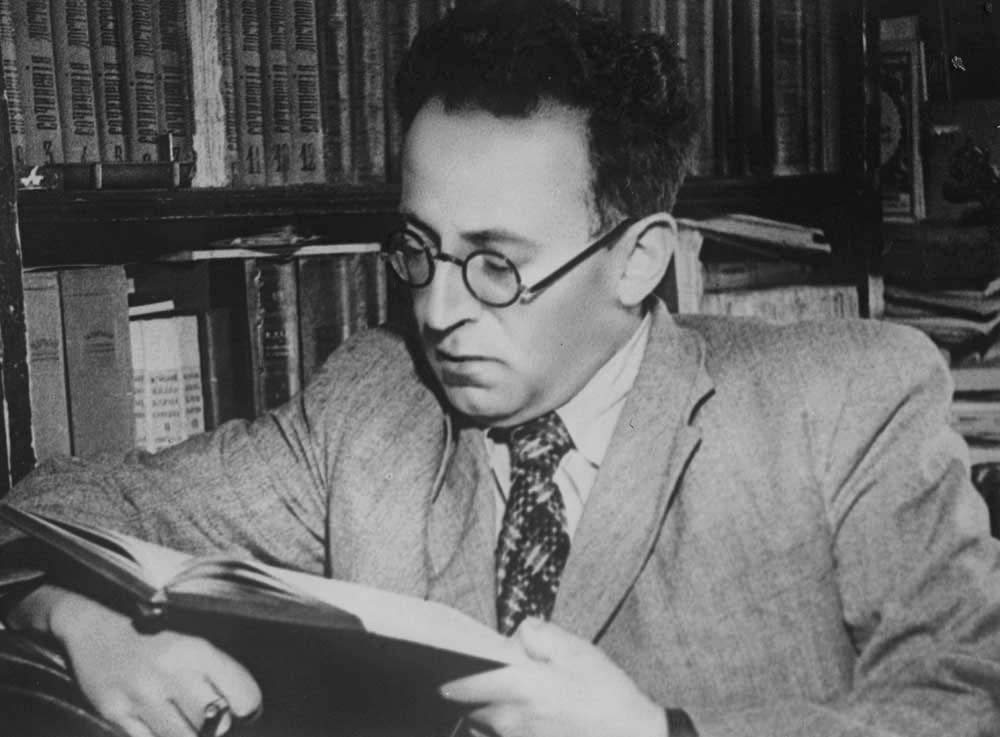
(Photograph accompanying Simon Willis’ essay of January / February 2013 “Art, Freedom, and Cognac“, at 1843 Magazine.)

In one of the powerfully conceived images in Vasily Grossman’s novel, the Russian state is described in physical terms as an entity of such great mass as to warp everything that comes within its orbit.  How Russians were bent by that magnetic pull from their decency, their humanity is the substance of this novel.  It isn’t, strictly speaking, a novel at all, even within the latitude granted that term.  The characters, though distinctive, are types, examples in a dissertation on the post-revolutionary state. 

There is no story to speak of, and what story there is, one of betrayal, imprisonment and release, is neither new nor unknown.  But the form does not matter nor the old fashioned writing (if we judge the original by Thomas Whitney’s translation) nor such clumsy devices as the intrusion of the author to the forgetful exclusion of his main figure.  “Forever Flowing” is not intended as blithe entertainment; it is the thoughts of a man who has seen much, wondering amid the ruins and shards of his life how they came about.  As such it is as eloquent a memorial to the anonymous little man in the Stalinist state as “Dr. Zhivago” is to the artistic spirit in post-Czarist Russia and “The First Circle” to the scientific intelligentsia.

Enemy of the People

“Forever Flowing” is a look at the Soviet state from the very bottom, not from the bottom of society or the political spectrum, but from the place where all the lofty decisions from on high, all abstractly conceived theories, all high sounding resolves are translated into human endeavor and measured by human results.  It is the place where all theories are made flesh.  Grossman judges all theories by a simple rule: What happens to the people to whom they apply?

As he follows the results from the time of Lenin to that of the post-World War II leadership, he concludes that the state is a rapacious, relentless, soul-crushing adversary – an enemy of the people.  Yet so powerful is the embracing magnetism of the state that the citizenry contrive at their own downfall.  At the worst it allows the scum, the Yagodas and Berias to come to the top; at best it corrupts even the well-meaning and men of principle.  The real saints are few and far between.

Ivan Grigoryevich has been given his freedom after 30 years in the Russian slave labor camps, and he returns to Moscow, to Leningrad, to once familiar places an old, gaunt, bent man.  As he visits a cousin, encounters a comrade who had denounced him to the prosecutor, finds lodgings and a job for himself, Russia’s history, his own past and that of so many he knew boil and bubble in his mind.  His reappearance disconcerts those he meets; they find their dormant consciences flickering to life, unpleasant memories floating to the top of their minds.  Some had given in to base demands a little at a time only to find themselves so far in, it was as distasteful to turn back as to go on.  Some had believed that they were working for the good of the state.  Some were greedy, some were seduced by ambition or high office.  The motives and the reasoning were always complicated, intertwined, rationalized.  And as the author points out the thinking inside the camp was exactly the same as that of the world outside.  The ideologies of the prisoners were as varied and ingenious as the men who had put them there.  They were after all the same Russians.

Vasily Grossman, who died in 1964, was a novelist, playwright and war correspondent, whose work after World War II was so severely criticized that he never finished a novel about that war although part of it had already appealed in print.  The present work occupied him for the last eight years of his life.  It has not been published in Russia for reasons that will be clear to every reader.

Excesses of the State

One of them is that he goes beyond Stalin to Lenin when he comes to place the blame for the excesses of the Soviet state.  He dismisses the human side of Lenin, his personal modesty, his courtesy, his love of music, his patience with a citizen, not because they are not true, but because they did not really count in guiding the revolution and in establishing the new state.  These took intellectual arrogance, ruthlessness, insulting impatience with opposition and contempt for western notions of individual freedom.  Those who shared Lenin’s gentler side, Bukharin, Rykov, Kamenev and Zinoviev, were crushed as mercilessly by Stalin as these qualities were eliminated from the body politic.  Stalin, says the author, was Lenin’s true heir.  The force that fashioned the revolution later guided the purges.

But an idea of even greater abhorrence to the Russian hierarchy as well, perhaps, to the Russian people, is the one that sees the Soviet state as a natural result of Russian history.  The serf-like mentality of the Russian people has been a weight on the liberating spirit of the country for a thousand years.  In a passage that shoots a sharp light into the discussion, Grossman argues that Lenin was chosen by the Russian people.  He was their kind of leader.

In spite of all his pessimistic assessments, he contends that the spirit of freedom lives on in the Russian heart and that it will ultimately flower even in his native land.  How this will come about in the light of all he has said is never made clear.  Very likely it was Grossman’s last wan hope.  By the time he died, perhaps there was nothing left.

Suggested Readings

Aciman, Alexander, Book Review: Vasily Grossman, the Great Forgotten Soviet Jewish Literary Genius of Exile and Betrayal, Lives Inside Us All, Tablet, October 23, 2017
 
Capshaw, Ron, The Scroll: The Jewish Anti-Fascist Committee Was Created to Document the Crimes of Nazism Before They Were Murdered by Communists – For the crime of acknowledging Jewish identity, the committee’s members were killed in a Stalinist pogrom, Tablet, November 29, 2018
 
Epstein, Joseph, The Achievement of Vasily Grossman – Was he the greatest writer of the past century?, Commentary, May, 2019.
 
Eskin, Blake, Book Review: Eyewitness – A collection of Vasily Grossman’s shorter work offers a chance to reassess the Soviet master’s life and legacy. A conversation with Grossman translator Robert Chandler, Tablet, December 8, 2010
 
Kirsch, Adam, Book Review: No Exit: Life and Fate, Vasily Grossman’s indispensable account of the horrors of Stalinism and the Holocaust, puts Jewishness at the heart of the 20th century, Tablet, November 30, 2011
 
Vapnyar, Lara, Book Review: Dispatches – How World War II turned a Soviet loyalist into a dissident novelist.  Plus: An audio interview with the editor of A Writer at War, Tablet, January 30, 2006
Taubman, William, Book Review: Life and Fate: A biography of Vasiliy Grossman, the Soviet writer whose masterpiece compared Stalin’s regime to Hitler’s, The New York Times Book Review, p. 16, July 14, 2019


Words in Print: Vasily Semyonovich Grossman (Василий Семенович Гроссман) – Obituary, The New York Times, September 18, 1964

Vasily Grossman’s obituary, as it appeared in the New York Times in September of 1964.  The item’s brevity stands in ironic contrast to the future impact and continuing legacy of Grossman’s literary oeuvre…

________________________________________

VASILY GROSSMAN,
SOVIET NOVELIST

Writer of War Stories Dies
Criticized by Stalinists

Special to The New York Times

September 18, 1964

(Photograph accompanying book review “Perfection Is Always Simple“, of July 5, 2013, at Financial Times.)

MOSCOW, Sept. 17 – Vasily S. Grossman, the Soviet novelist and former war correspondent, I died Monday after a long illness.  He was 58 years old.

Mr. Grossman was best known for his war novels based on his experiences as a front-line correspondent for the Defense Ministry newspaper Krasnaya Zvezda.  He was repeatedly criticized in the postwar Stalinist period for a lack of party-minded orientation.  He did little subsequent writing.

A graduate of the mathematics-physics faculty of the University of Moscow, Mr. Grossman worked for several years as an Industrial safety engineer before turning to professional writing in 1934.

His first novel, “Glueckauf,” published in that year, was based on his experiences in the Donets Basin coal mines.  In the late nineteen thirties he wrote a major novel in three volumes, “Stepan Kolchugin,” dealing with the Bolshevik underground before the revolution.

In his wartime novel, “The People Are Immortal,” which is considered to be one of his best, the author avoided romantic eloquence and sought to stress the human side of soldiers in battle.

His play, “We Believed the Pythagoreans,” was attacked in the Soviet press in 1946 during a party crackdown on arts and literature.

A second novel of the war, “For the Just Cause,” which deals with the defense of Stalingrad, was criticized in 1952 for underemphasizing the role of the party in winning the war.  A corrected edition appeared in 1956.

Suggested Reading

Aciman, Alexander, Book Review: Vasily Grossman, the Great Forgotten Soviet Jewish Literary Genius of Exile and Betrayal, Lives Inside Us All, Tablet, October 23, 2017

Capshaw, Ron, The Scroll: The Jewish Anti-Fascist Committee Was Created to Document the Crimes of Nazism Before They Were Murdered by Communists – For the crime of acknowledging Jewish identity, the committee’s members were killed in a Stalinist pogrom, Tablet, November 29, 2018

Epstein, Joseph, The Achievement of Vasily Grossman – Was he the greatest writer of the past century?, Commentary, May, 2019

Eskin, Blake, Book Review: Eyewitness – A collection of Vasily Grossman’s shorter work offers a chance to reassess the Soviet master’s life and legacy. A conversation with Grossman translator Robert Chandler, Tablet, December 8, 2010

Kirsch, Adam, Book Review: No Exit: Life and Fate, Vasily Grossman’s indispensable account of the horrors of Stalinism and the Holocaust, puts Jewishness at the heart of the 20th century, Tablet, November 30, 2011

Vapnyar, Lara, Book Review: Dispatches – How World War II turned a Soviet loyalist into a dissident novelist.  Plus: An audio interview with the editor of A Writer at War, Tablet, January 30, 2006

Taubman, William, Book Review: Life and Fate: A biography of Vasiliy Grossman, the Soviet writer whose masterpiece compared Stalin’s regime to Hitler’s, The New York Times Book Review, p. 16, July 14, 2019


The Science Fiction Stories of Rudyard Kipling, edited by John Brunner – 1994 [Kevin Kelly]

Unlike the majority of science fiction paperbacks that I’ve thus far presented, Citadel Twilight’s the Science Fiction Stories of Rudyard Kipling is a trade paperback, of physically larger format than a conventional paperback.

More importantly, the book’s content: Given the era during which the stories in the book were composed – the late 1880s through 1930 – Rudyard Kipling’s tales have a strikingly different literary style than “Golden Age”, let alone contemporary, science fiction.  The stories emphasize descriptions of technology and physical setting far more than a narrative of action (albeit, action there is), and place less emphasis on character development than character interaction. 

While I cannot characterize the stories as memorable, I certainly can characterize them as interesting.   

In terms of the book’s art, none of Kipling’s stories mention, allude to, or remotely hint at a trio of flying saucers (let alone a solitary flying dinner plate) as illustrated on the cover.  Perhaps this art was chosen to simply lend the book’s cover a dramatic and attractive “science fiction” air. 

Otherwise, the skyline of the flaming city reminds me vastly less of London, than – perhaps?! – an early twentieth century American metropolis…

Contents

Kipling’s Major Publications – uncredited essay

About Rudyard Kipling – essay by John Brunner

“A Matter of Fact”, from The People, January 24, 1892, later in Many Inventions (1893)

“The Ship That Found Herself”, from The Idler, December, 1895, later in The Day’s Work (1898)

“.007”, first published as “.007: The Story of an American Locomotive”, in Scribner’s Magazine, August, 1897, later in The Day’s Work (1898)

“Wireless”, from Traffics and Discoveries, 1904 (possibly first published August, 1902)

“With the Night Mail”, from McClure’s, November, 1905

“As Easy As A.B.C.”, first published as “As Easy as A.B.C.”: A Tale of 2150 A.D.”, from The London Magazine, March – April, 1912, later in A Diversity of Creatures, April 17 and 27, 1917

“In the Same Boat”, from a Diversity of Creatures, April 17 and 27, 1917 (possibly first published December, 1911)

“The Eye of Allah”, from The Strand Magazine, September, 1926

“Unprofessional”, from Limits and Rewards, 1932 (possibly first published October, 1930)

“The Fairies’ Siege”, 1901, first published in John Brunner Presents Rudyard Kipling’s Science Fiction, October, 1992

Reference

The Science Fiction Stories of Rudyard Kipling, at Internet Speculative Fiction Database

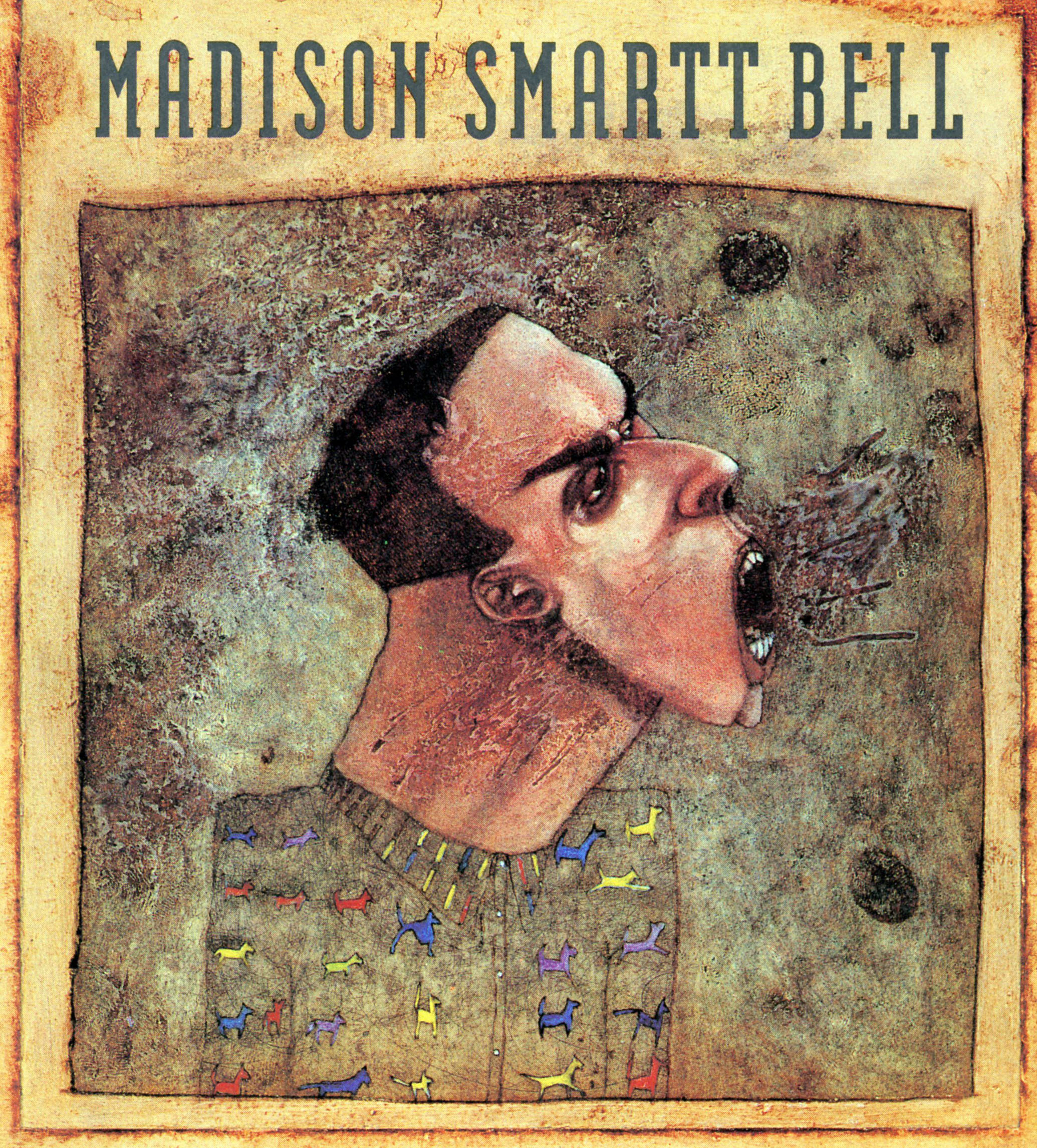
Barking Man and Other Stories, by Madison Smartt Bell – 1990 [Dan Reed]

Contents

Holding Together, from Boulevard

Black and Tan (formerly “Going to the Dogs”), from The Atlantic Monthly

Customs of the Country (revised), from Harper’s Magazine

Finding Natasha, from Antaeus and Louder Than Words

Dragon’s Seed, from Boulevard

Barking Man, from The Northern Review

Petit Cachou

Witness, from Harper’s Magazine

Move On Up

Mr. Potatoehead In Love, broadcast on National Public Radio

______________________________________

“Mr. Thracewell, my brother Alfred,” Big Brother said. 
“Alf, fetch Mr. Thracewell a gin and French.” 
He passed Alf an empty glass and leaned to whisper in his ear,
“Jesus Christ, your tie’s not straight.”

As Alf receded into the hallway,
he thought he heard the murmured invocation London School of Economics,
and he swallowed against that plauguey roughness in his gullet. 
The kitchen was empty and he snatched up the gin bottle,
carried it into the pantry and shut the door after him. 
With the bottle upended over his jaws,
he squinted up at its butt until he saw four bubbles rise,
then lowered it and gasped. 
Gin and French? 
He sniffed the glass the Beeb had given him, but the scent was unenlightening. 
He fixed a gin and tonic with a lot of ice and headed back toward the front of the flat. 
En route he toppled a tower of bowler hats from the hall stand,
made an abortive move to gather them, then decided to let them lie. 
Deep in conversation with Big Brother,
Thracewell took the drink unconsciously and tasted it without looking. 
Alf watched his mouth shrivel to the surface of the glass,
and at that very instant the vast bubbles of gin he’d swallowed burst inside him with a soft explosion.

“iirrrfffooorrrffffaaarrrROOOOORF OOOO OOOO!!!” he howled. 

All around the room he could hear vertebrae popping with the speed of the turning heads.

“Your younger brother is this, you say?” Mr. Thracewell murmured. 
“My word, a most original chap.”

(Madison Smartt Bell, “Barking Man”, p. 105)

______________________________

Madison Smartt Bell (photograph by Craig Daniels)

The Return of the Native, by Thomas Hardy – June, 1952 (November, 1939 (1878)) [Bayre Phillips]

“He had been a lad of whom something was expected.”

He had been a lad of whom something was expected. 
Beyond this all had been chaos. 
That he would be successful in an original way,
or that he would go to the dogs in an original way,
seemed equally probable. 
The only absolute certainty about him
was that he would not stand still in the circumstances amid which he was born.

Hence, when his name was casually mentioned by neighboring yeomen,
the listener said, “Ah, Clym Yeobright: what is he doing now?”
When the instinctive question about a person is, What is he doing?
It is felt that he will not be found to be, like most of us, doing nothing in particular.
There is an indefinite sense that he must be invading some region of singularity, good or bad.
The devout hope is that he is doing well.
The secret faith is that he is making a mess of it.
Half a dozen comfortable market men,
who were habitual callers at the Quiet Woman as they passed by in their carts,
were partial to the topic.
In fact, though they were not Egdon men,
they could hardly avoid it while they sucked their long clay tubes
and regarded the heath through the window.
Clynn had been so inwoven with the in his boyhood
that hardly anybody could look upon it without thinking of him.
So the subject recurred:
if he were making a fortune and a name, so much the better for him;
if he were making a tragical figure in the world, so much the better for the narrative.  (190)

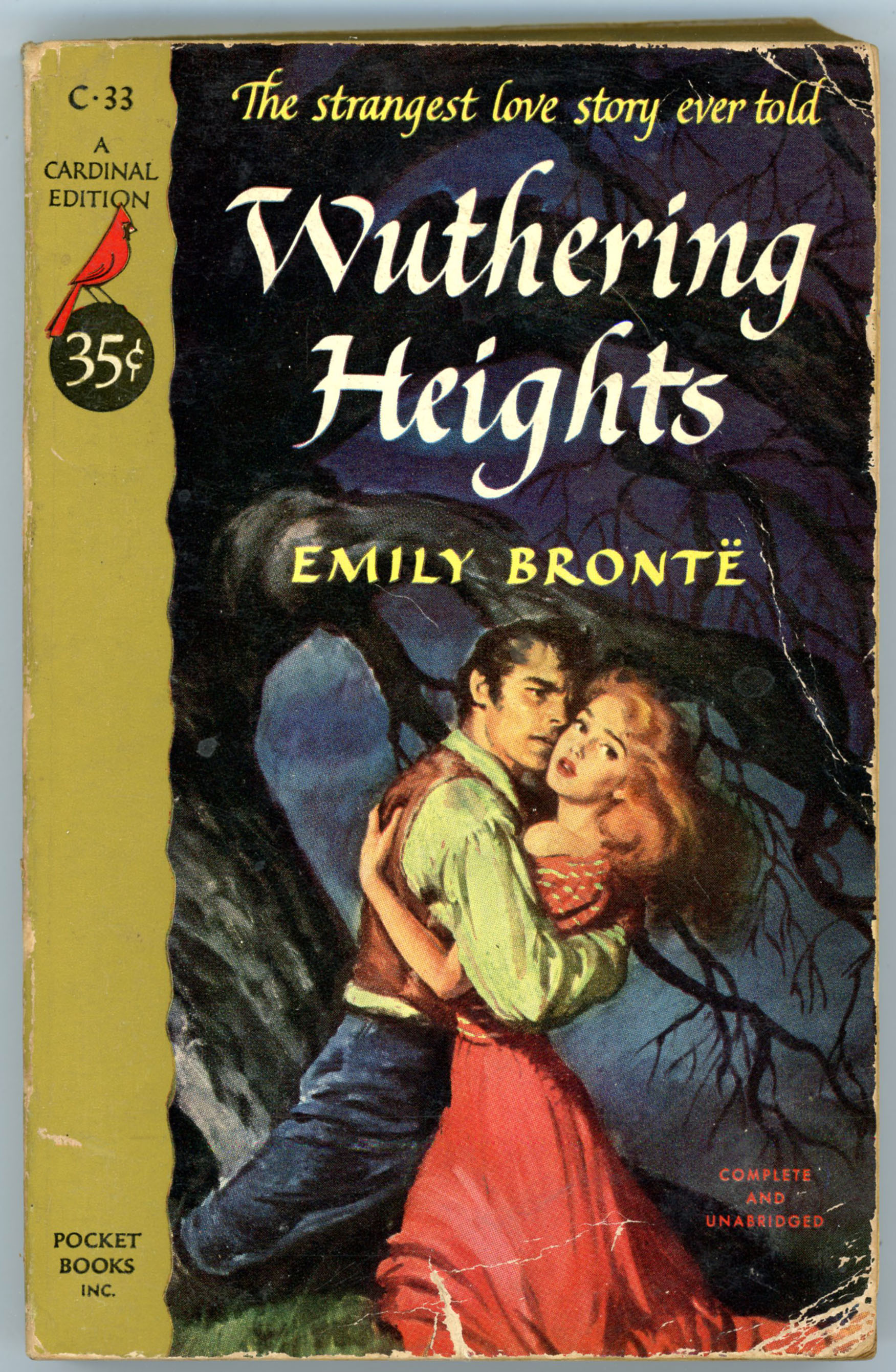
Wuthering Heights, by Emily Bronte – October, 1952 (December, 1847) [Walter M. Baumhofer]

“Is Mr. Heathcliff a man?  If so, is he mad?
And if not, is he a devil?”

Dear Ellen, it begins, —
I came last night to Wuthering Heights,
and heard, for the first time, that Catherine has been, and is yet, very ill. 
I must not write to her, I suppose,
and my brother is either too angry or too distressed to answer what I sent him. 
Still, I must write to somebody, and the only choice left me is you.

Inform Edgar that I’d give the world to see his face again —
that my heart returned to Thrushcross Grange in twenty-four hours after I left it,
and is there at this moment, full of warm feelings for him, and Catherine!
I can’t follow it though — (these words are underlined) —
they need not expect me, and they may draw what conclusions they please;
taking care, however, to lay nothing at the door of my weak will or deficient affection.

The remainder of the letter is for yourself alone. 
I want to ask you two questions: the first is, —
How did you contrive to preserve the common sympathies of human nature when you resided here?
I cannot recognise any sentiment which those around share with me.

The second question I have great interest in; it is this —
Is Mr. Heathcliff a man?  If so, is he mad?
And if not, is he a devil?
I sha’n’t tell my reasons for making this inquiry;
but I beseech you to explain, if you can, what I have married:
that is, when you call to see me; and you must call, Ellen, very soon.
Don’t write, but come, and bring me something from Edgar.

References

Wuthering Heights, at Wikipedia

Wuthering Heights (full text), at Project Gutenberg

The Oedipus Cycle, by Sophocles, English versions by Dudley Fitts and Robert Fitzgerald – 1969 (1939) [Enrico Arno]

And, when your years of kingship are remembered,
Let them not say We Rose, but later fell –
Keep the State from going down in the storm!
(Prologue: Priest – p 5)

See, how our lives like birds take wing,
Like sparks that fly when a fire soars,
To the shore of the god of the evening.
(Parodos: Chorus – Strophe 2 – p 11)

You call me unfeeling.  If you could only see
The nature of your own feelings…
(Scene I: Teiresias – 17)

The greatest griefs are those we cause ourselves.
(Exodus: Second Messenger – 65)

Henderson The Rain King, by Saul Bellow (II) – 1983 (1958) [Roy Ellsworth]

Here’s a second, later (1983; Penguin Books) version of the cover of Saul Bellow’s Henderson the Rain King, by Roy Ellsworth. 

It’s a very different from Bill Preston’s 1972 cover, which was stylistically a little more traditional, relying on the use of brighter colors and not at all on the direct representation of the novel’s characters. 

The manner in which the two artists visually depicted Bellow’s animating idea in such a different manner is an interesting – albeit ironically wordless! – commentary on the rapidity of change in artistic style over a short period of time. 

“The glorious, spirited adventures of an eccentric American millionaire who finds a home of sorts in deepest Africa”. (Cover blurb)

______________________________

This is how I became the rain king
I guess it served me right for mixing into matters that were none of my damned business
But the thing had been impossible,
one of those drives which there was no question of fighting.
And what had I got myself into?
What were the consequences?
On the ground floor of the palace,
filthy, naked, and bruised,
I lay in a little room
The rain was falling, drowning the town,
dropping from the roof in heavy fringes, witchlike and gloomy
Shivering, I covered myself with hides and stared with circular eyes,
wrapped to the chin in the skins of unknown animals
I kept saying, “Oh, Romilayu, don’t be down on me.
How was I supposed to know what I was getting myself into?”
My upper lip grew long and my nose was distorted;
it was aching with the whiplashes and I felt my eyes had grown black and huge
“Oh, I’m in a bad way
I lost the bet and am at the guy’s mercy.” – Saul Bellow (p. 203)