
Category: Science Fiction – Books
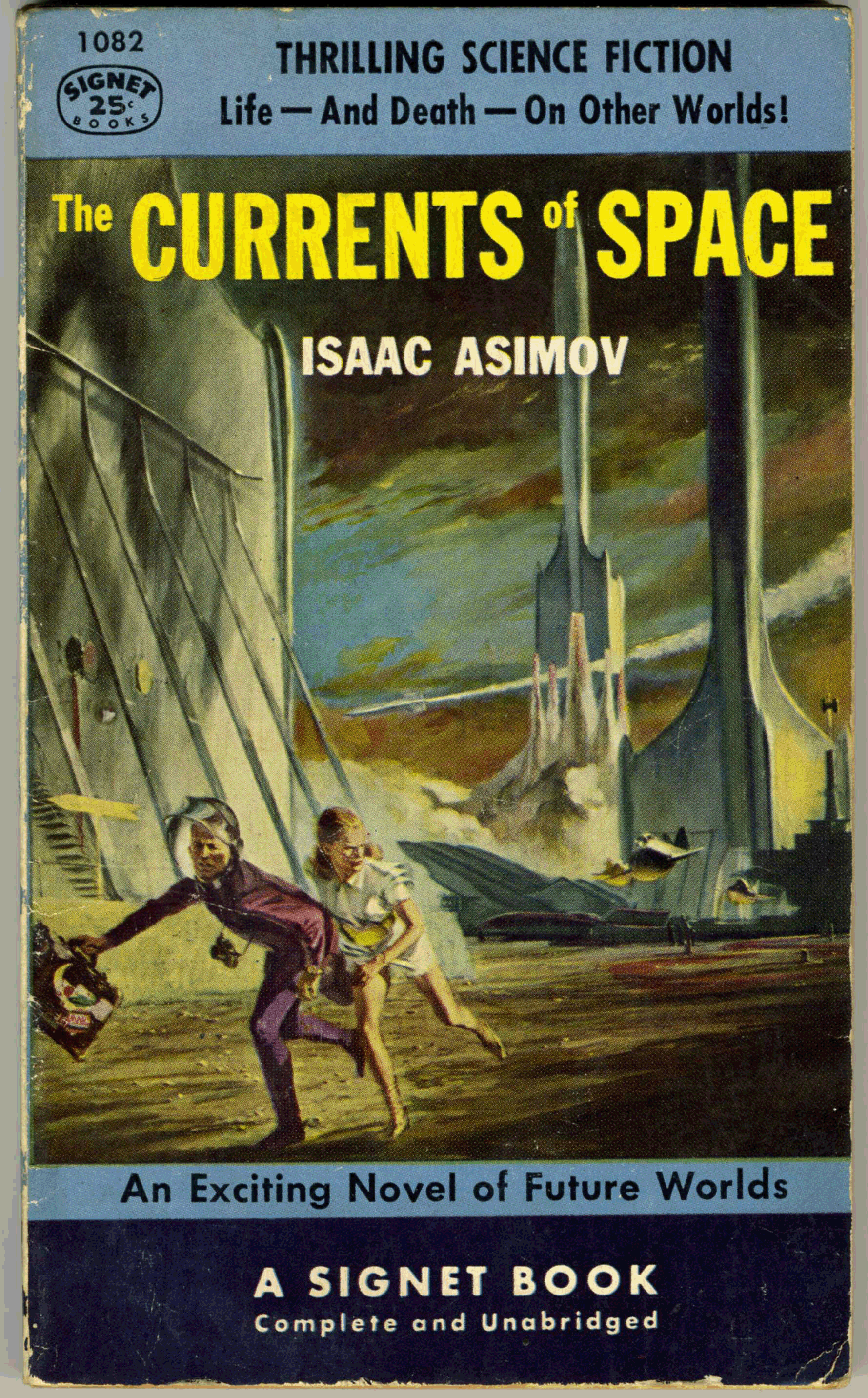
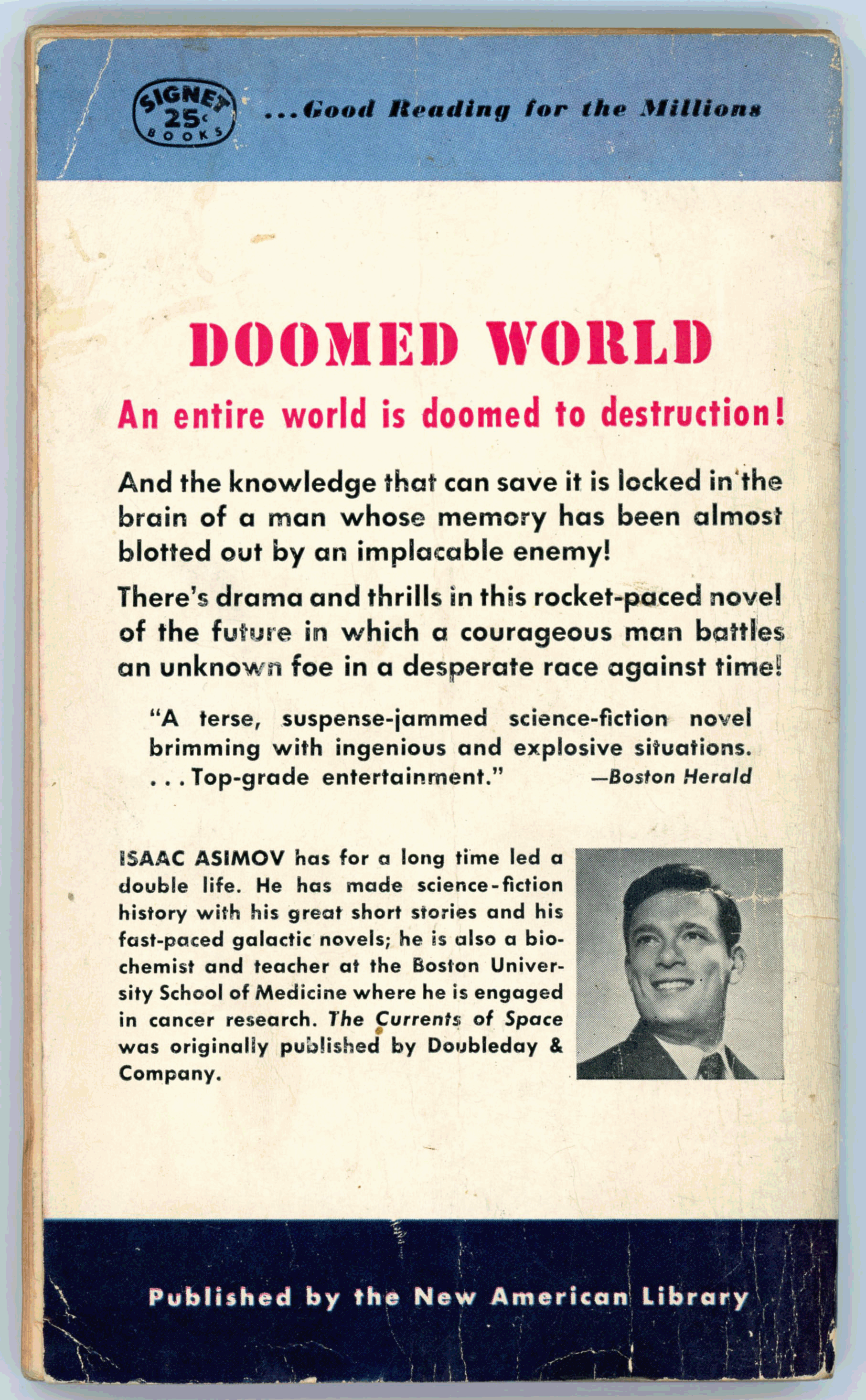
The Currents of Space, by Isaac Asimov – December, 1953 [Stanley Meltzoff]

The Best of Frederik Pohl, Edited by Lester Del Rey – June, 1975 [Dean Ellis]
 The Tunnel Under the World, Galaxy, January, 1954
Punch, Playboy, 1961
Three Portraits and a Prayer, Galaxy, August, 1962
Day Million, Rogue, 1966
Happy Birthday, Dear Jesus, Alternating Currents, 1956
We Never Mention Aunt Nora, Galaxy, July, 1958
Father of the Stars, If, November, 1964
The Day the Martians Came, Dangerous Visions, 1967
The Midas Plague, Galaxy, April, 1954
The Snowmen, Galaxy, December, 1959
How to Count on Your Fingers, Science Fiction Stories, September, 1956
Grandy Devil, Galaxy, June, 1955
Speed Trap, Playboy, 1967
The Richest Man in Levittown, Galaxy, April, 1959
The Day the Icicle Works Closed, Galaxy, February, 1960
The Hated, Turn Left at Thursday, 1961
The Martin in the Attic, If, July, 1960
The Census Takers, The Magazine of Fantasy and Science Fiction, February, 1956
The Children of Night, Galaxy, October, 1964
The Best of James Blish, Edited by Robert A.W. Lowndes – August, 1979 [H.R. Van Dongen]
 Helen O’Loy, Astounding Science Fiction, December, 1938
The Day Is Done, Astounding Science Fiction, May, 1939
The Coppersmith, Unknown, September, 1939
Hereafter, Inc., Unknown Worlds, December, 1941
The Wings of Night, Astounding Science Fiction, March, 1942
Into Thy Hands, Astounding Science Fiction, August, 1945
And It Comes Out Here, Galaxy, February, 1951
The Monster, Argosy, 1951
The Years Draw Nigh, Astounding Science Fiction, October, 1951
Instinct, Astounding Science Fiction, January, 1952
Superstition, Astounding Science Fiction, August, 1954
For I Am a Jealous People, Star Short Novels, 1954
The Keepers of the House, Fantastic Universe, January, 1956
Little Jimmy, The Magazine of Fantasy and Science Fiction, April, 1957
The Seat of Judgement, Venture Science Fiction, July, 1957
Vengeance Is Mine, Galaxy, December, 1964
Neutron Star, by Larry Niven – 1968 (March, 1978) [Rick Sternbach]
 Neutron Star
A Relic of Empire
At The Core
The Soft Weapon
Flatlander
The Ethics of Madness
The Handicapped
Grendel

The Best of Cordwainer Smith, Edited by John J. Pierce – 1975 (1977) [Darrell Sweet]
 Scanners Live in Vain, Fantasy Book, 1950
The Lady Who Sailed The Soul, Galaxy, 1960
The Game of Rat and Dragon, Galaxy, 1955
The Burning of The Brain, Worlds of If, 1958
The Crime and the Glory of Commander Suzdal, Amazing Stories, 1964
Golden the Ship Was – Oh! Oh! Oh!, Amazing Science Fiction Stories, 1959
The Dead Lady of Clown Town, Galaxy, 1964
Under Old Earth, Galaxy, 1966
Mother Hitton’s Littul Kittons, Galaxy, 1961
Alpha Ralpha Boulevard, The Magazine of Fantasy and Science Fiction, 1961
The Ballad of Lost C’Mell, Galaxy, 1962
A Planet Named Shayol, Galaxy, 1961
______________________________
Alpha Ralpha Boulevard
This was a sudden return to the whole we had known.
Earthport stood on its single pedestal, twelve miles high,
at the eastern edge of the small continent.
At the top of it, the lords worked amid machines which had no meaning any more.
There the ships whispered their way in from the stars.
______________________________
We turned from the ruined road into an immense boulevard.
The pavement was so smooth and unbroken that nothing grew on it,
save where the wind and dust had deposited random little pockets of earth.
Macht stopped.
“This is it,” he said, “Alpha Ralph Boulevard.”
We fell silent and looked at the causeway of forgotten empires.
To our left the boulevard disappeared in a gentle curve.
It led far north of the city in which I had been reared.
I knew that there was another city to the north, but I had forgotten its name.
Why should I have remembered it?
It was sure to be just like my own.
But to the right –
To the right the boulevard rose sharply, like a ramp.
It disappeared into the clouds.
Just at the edge of the cloud-line there was a hint of disaster.
I could not see for sure,
but it looked to me
as though the whole boulevard had been sheared off by unimaginable forces.
Somewhere beyond the clouds there stood the Abba-dingo,
the place where all questions were answered…
Or so they thought.
The Man in The High Castle, by Philip K. Dick – 1962 (1964) [Unknown Artist]
 It furthers one
To undertake something.
It furthers one to cross the great water.
Ten pairs of tortoises cannot oppose him.
Constant perseverance brings good fortune.
The king presents him before God.
One is enriched through unfortunate events.
No blame, if you are sincere
And walk in the middle,
And report with a seal to the prince.
If you walk in the middle
And report to the prince,
He will follow.
He brings increase to no one.
Indeed, someone even strikes him.
He does not keep his heart constantly steady.
Misfortune.
One must resolutely make the matter known
At the court of the king.
It must be announced truthfully. Danger.
It is necessary to notify one’s own city.
It does not further to resort to arms.
It furthers one to undertake something.
(Philip K. Dick)

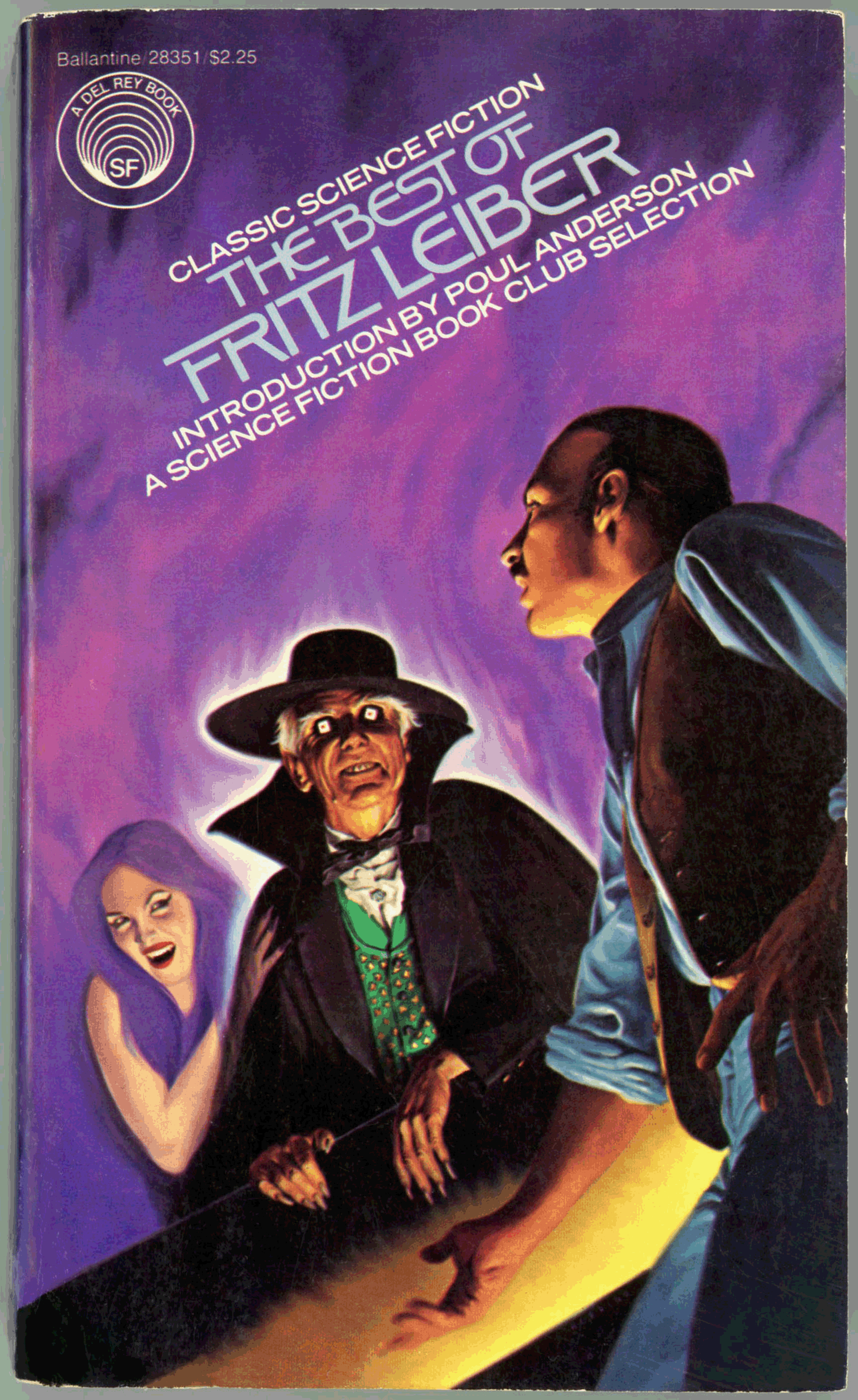
The Best of Fritz Leiber, Introduced by Poul Anderson – 1974 [Michael Herring]
“I’ll take the big dive.”
 Sanity, Astounding Science Fiction, April, 1944
Wanted – An Enemy, Astounding Science Fiction, February, 1945
The Man Who Never Grew Young, Avon Fantasy Reader #9, 1948
The Ship Sails at Midnight, Fantastic Adventures, September, 1950
The Enchanted Forest, Astounding Science Fiction, October, 1950
Coming Attraction, Galaxy, November, 1950
Poor Superman, Galaxy, July, 1951
A Pail of Air, Galaxy, December, 1951
The Foxholes of Mars, Thrilling Wonder Stories, June, 1952
The Big Holiday, The Magazine of Fantasy and Science Fiction, January, 1953
The Night He Cried, 1953
The Big Trek, The Magazine of Fantasy and Science Fiction, October, 1957
Space-Time For Springers, 1958
Try and Change The Past, Astounding Science Fiction, March, 1958
A Deskful of Girls, The Magazine of Fantasy and Science Fiction, April, 1958
Rump-Titty-Titty-Tum-Tah-Tee, The Magazine of Fantasy and Science Fiction, May, 1958
Little Old Miss Macbeth, The Magazine of Fantasy and Science Fiction, December, 1958
Mariana, Fantastic Science Fiction Stories, February, 1960
The Man Who Made Friends With Electricity, The Magazine of Fantasy and Science Fiction, March, 1962
The Good New Days, Galaxy, October, 1965
Gonna Roll The Bones, 1967
America the Beautiful, 1970
______________________________
From “Gonna Roll The Bones”, in Dangerous Visions, October, 1967
…”Joe Slattermill, you still have something of value to wager, if you wish.
Your life.”
At that a giggling and a hysterical tittering and a guffawing and braying
and a shrieking burst uncontrollably out of the whole Boneyard.
Mr. Bones summed up the sentiments
when he bellowed over the rest of the racket,
“Now what use of value is there in the life of a bummer like Joe Slattermill?
Not two cents, ordinary money.”
The Big Gambler laid a hand on the revolver gleaming before him
and all the laughter died.
“I have a use for it,” the Big Gambler whispered.
“Joe Slattermill, on my part I will venture all my winnings of tonight,
and throw in the world and everything in it for a side bet.
You will wager your life, and on the side your soul.
You to roll the dice.
What’s your pleasure?”
Joe Slattermill quailed, but then the drama of the situation took hold of him.
He thought it over and realized
he certainly wasn’t going to give up being stage center in a spectacle like this
to go home broke to his Wife and Mother and decaying house
and the dispirited Mr. Guts.
Maybe, he told himself encouragingly,
there wasn’t power in the Big Gambler’s gaze,
maybe Joe had made his one and only crap-shooting error.
Besides, he was more inclined to accept Mr. Bones’s assessment
of the value of his life than the Big Gambler’s.
“It’s a bet,” he said.
“Lottie, give him the dice.”
Joe concentrated his mind as never before,
the power tingled triumphantly in his hand, and he made his throw.
The dice never hit the felt.
They went swooping down, then up,
in a crazy curve far out over the end of the table,
and then came streaking back like tiny red-glinting meteors
towards the face of the Big Gambler,
where they suddenly nested and hung in his black eye sockets,
each with the single red gleam of an ace showing.
Snake eyes.
The whisper, as those red-glinting dice-eyes stared mockingly at him:
“Joe Slattermill, you’ve crapped out.”
Using thumb and middle finger – or bone rather – of either hand,
the Big Gambler removed the dice from his eye sockets
and dropped them in Lottie’s white-gloved hand.
“Yes, you’ve crapped out, Joe Slattermill,” he went on tranquilly.
“And now you can shoot yourself”
– he touched the silver gun
– “or cut your throat”
– he whipped a gold-handled bowie knife out of his coat
and laid it beside the revolver
– “or poison yourself”
– the two weapons were joined by a small black bottle
with white skull and crossbones on it
– “or Miss Flossie here can kiss you to death.”
He drew forward beside him the prettiest, evilest-looking sporting girl.
She preened herself and flounced her short violet skirt
and gave Joe a provocative, hungry look,
lifting her carmine upper lip to show her long white canines.
“Or else,” the Big Gambler added,
nodding significantly towards the black-bottomed crap table,
“you can take the Big Dive.”
Joe said evenly, “I’ll take the big dive.”
The Lovers, by Philip José Farmer – 1952 (1982) [Jim Burns]
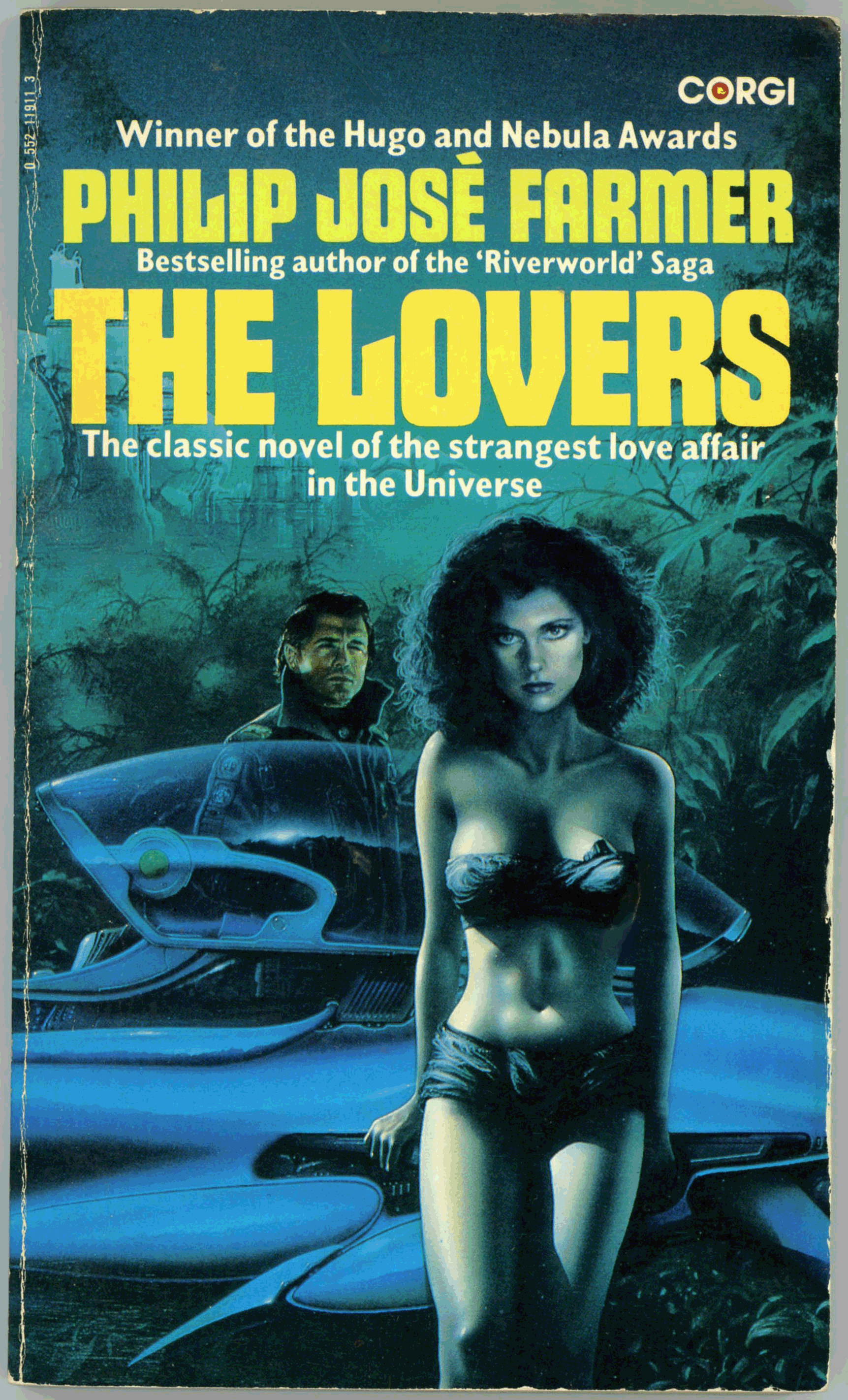 Hal Yarrow stared through steamshapes into big brown eyes.
He shook his head.
Eyes?
And arms like branches?
Or branches like arms?
He thought he was in the grip of a brown-eyed nymph.
Or were they called dryads?
He couldn’t ask anybody.
They weren’t supposed to know about such creatures.
Nymph and dryad had been delated from all books
including Hack’s edition of the Revised and Real Milton.
Only because Hal was a linguist
had he had the chance to read an unexpurgated Paradise Lost
and thus learn of classical Greek mythology.
Thoughts flashed on and off like lights on a spaceship’s control board.
Nymphs sometimes turned into trees to escape their pursuers.
Was this one of the fabled forest women staring at him
with large and beautiful eyes through the longest lashes he’d ever seen?
He shut his eyes
and wondered if a head injury was responsible for the vision and, if so,
it if would be permanent.
Hallucinations like that were worth keeping.
He didn’t care if they conformed to reality or not.
He opened his eyes.
The hallucination was gone.
– Philip José Farmer –
Cordwainer Smith: The Instrumentality of Mankind, Introduction by Frederik Pohl – 1979 [Michael Herring]
 Contents
Stories from The Instrumentality of Mankind
No, No, Not Rogov!, from If, February, 1959
War No. 81-Q
Mark Elf, from Saturn, May, 1957
The Queen of the Afternoon, from Galaxy, April, 1978
When the People Fell, from Galaxy, April, 1959
Think Blue, Count Two, from Galaxy, February, 1963
The Colonel Came Back from the Nothing-at-All
From Gustible’s Planet, from If, July, 1952
Drunkboat, from Amazing Stories, October, 1963
Others
Western Science Is So Wonderful, from If, December, 1958
Nancy, from Satellite Science Fiction, March, 1959
The Fife of Bodidharma, from Fantastic, June, 1959
Angerhelm, 1959
The Good Friends, from Worlds of Tomorrow, October, 1963