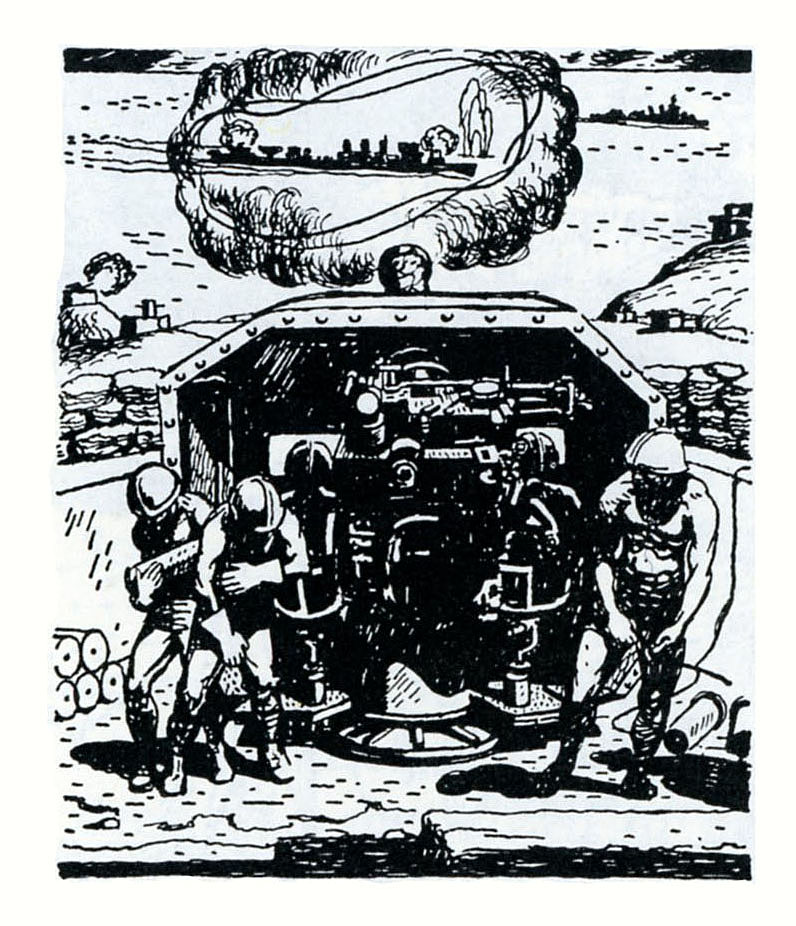
(p. vi)
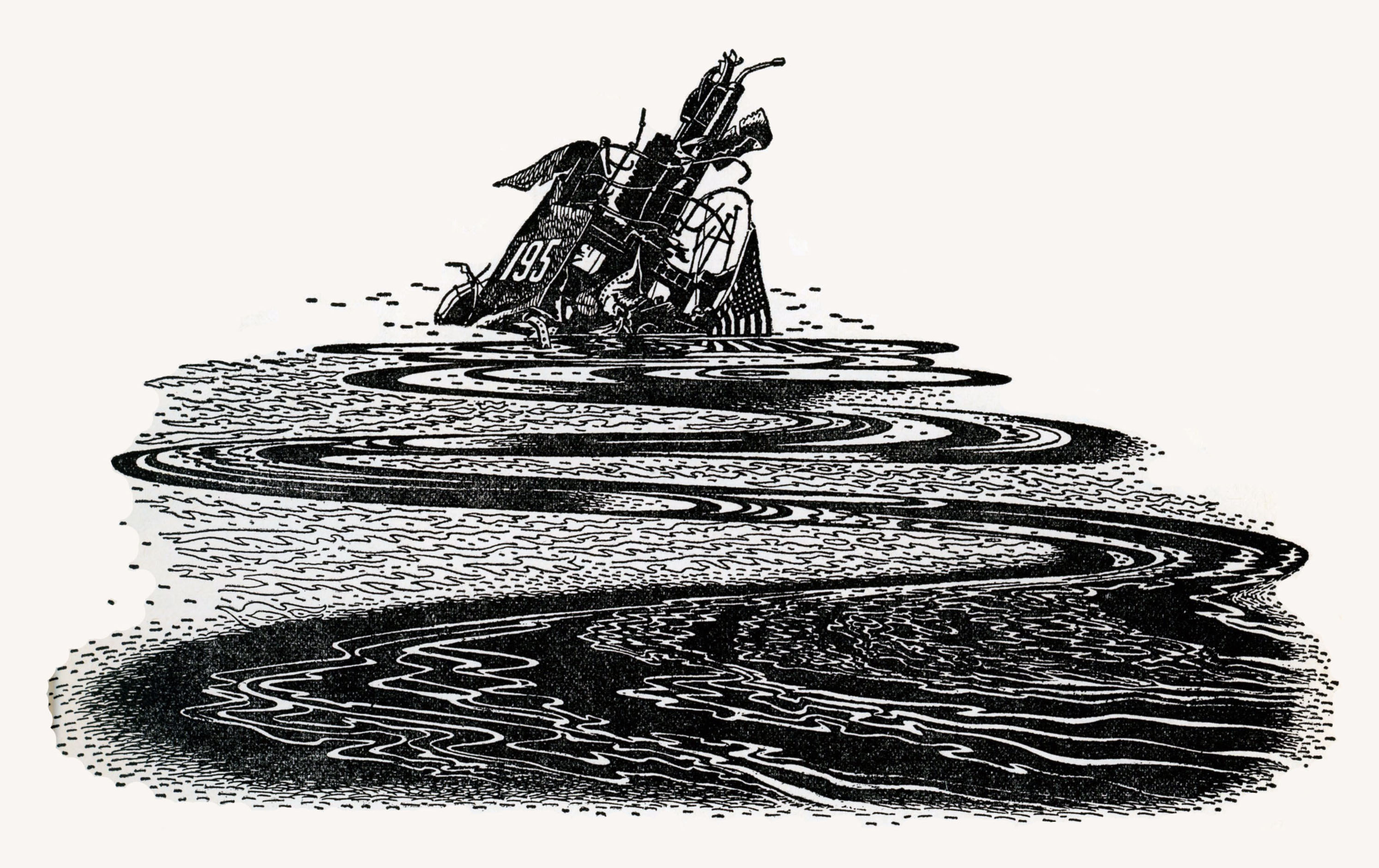 (Holocaust at Pearl Harbor – p. 1)
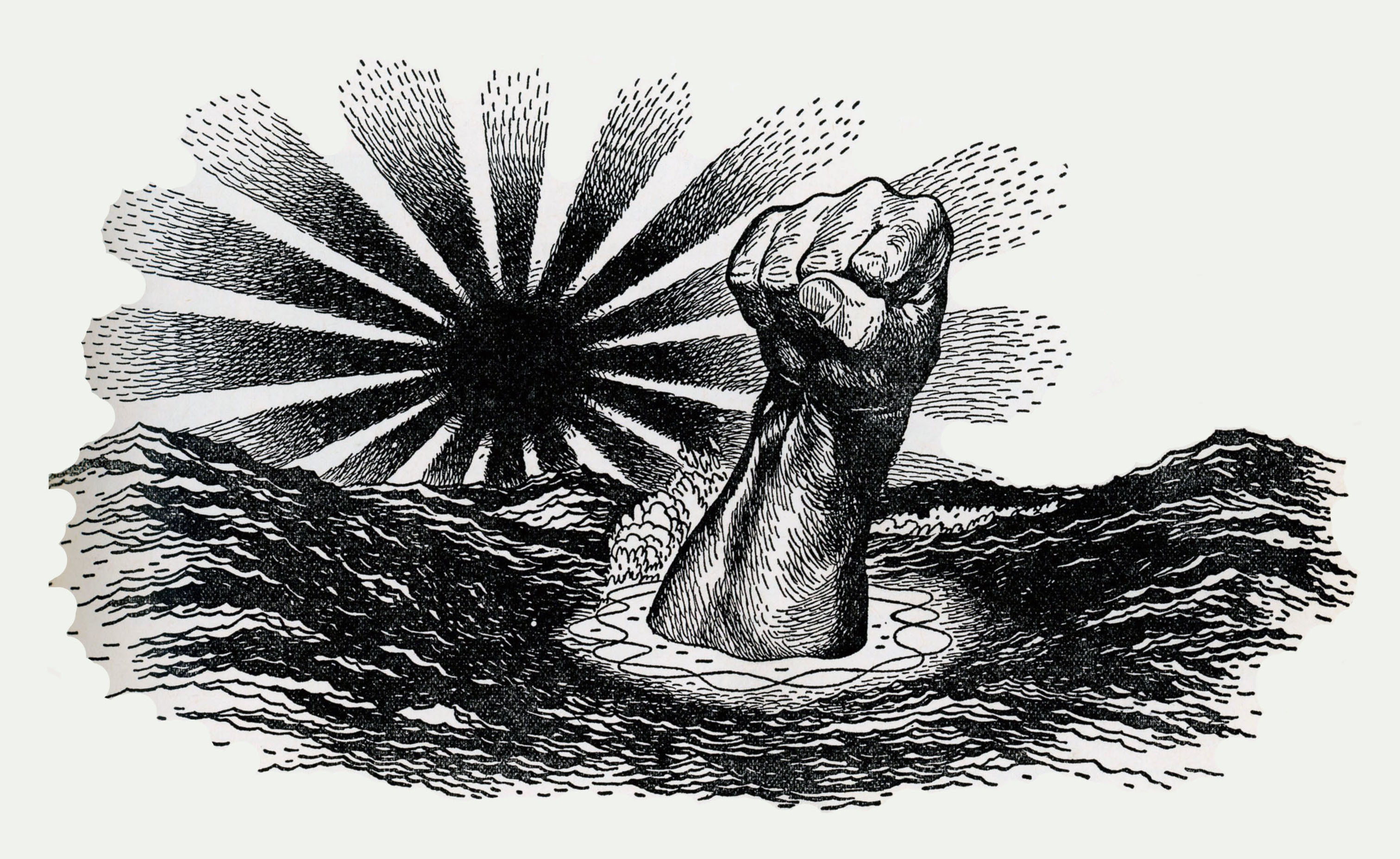 (The Fighting Defense – p. 47)
 (All-Out Attrition – p. 189)
 (Pacific Sweep – p. 301)
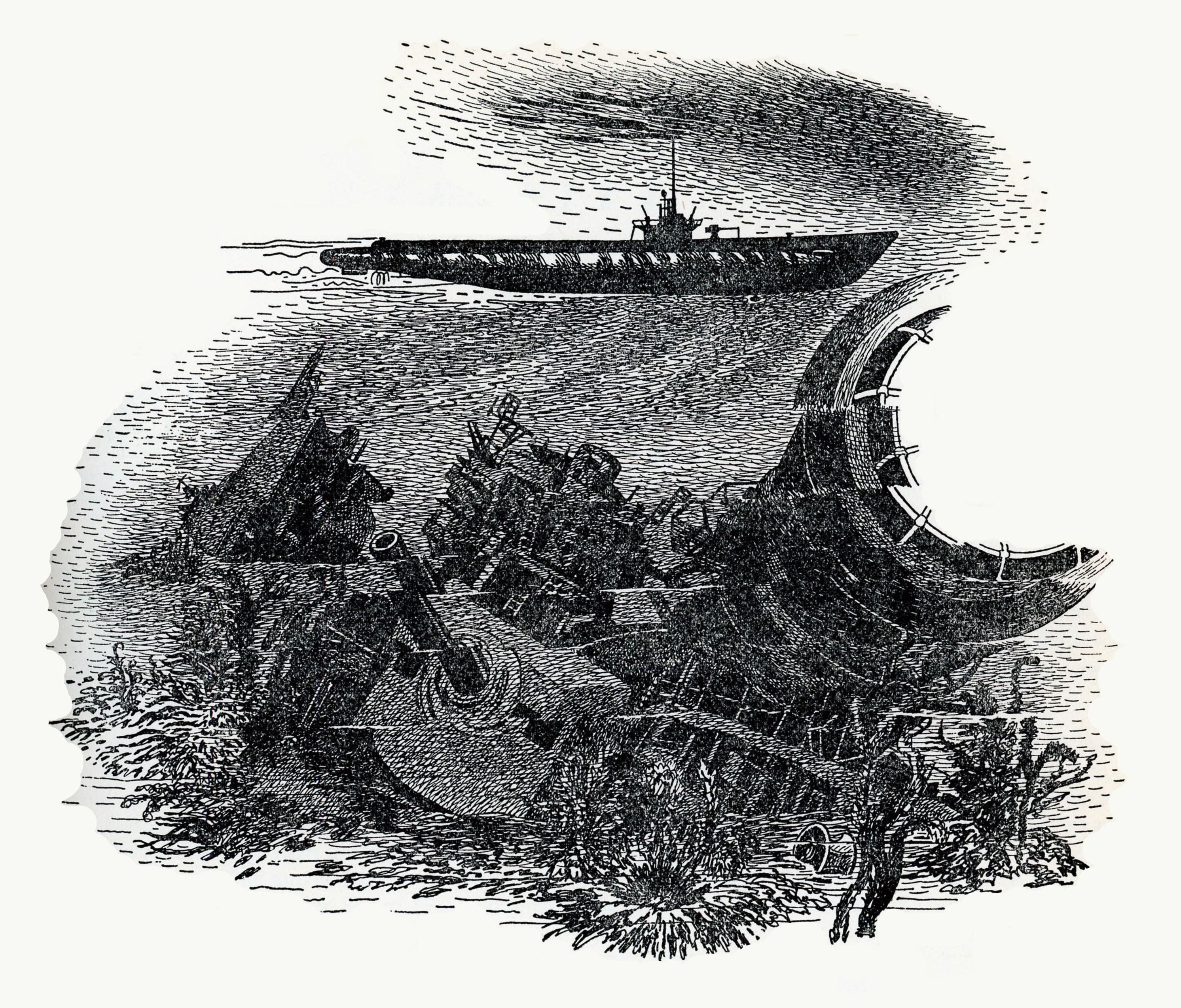 (Japanese Sunset – p. 437)
 (Epilogue – p. 495)
Images and Thoughts to Inspire Your Intellect and Infuse Your Imagination!
(p. vi)
(Holocaust at Pearl Harbor – p. 1)
(The Fighting Defense – p. 47)
(All-Out Attrition – p. 189)
(Pacific Sweep – p. 301)
(Japanese Sunset – p. 437)
(Epilogue – p. 495)
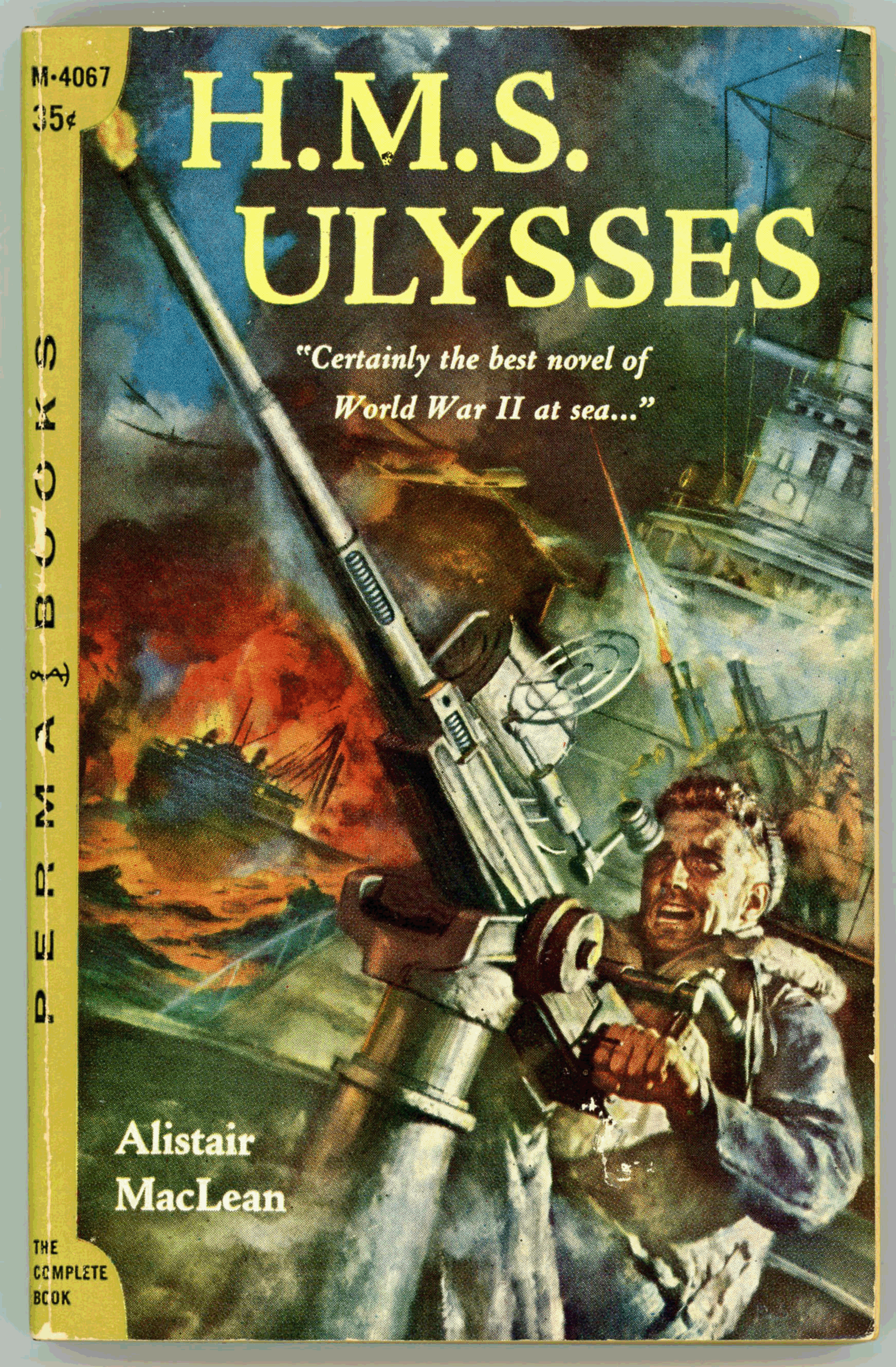 Cap in hand, Ralston sat down opposite the captain.
Vallery look at him for a long time in silence.
He wondered what to say, how best to say it.
He hated to have to do this.
Richard Vallery also hated war.
He always had hated it,
and he cursed the day it had dragged him out of his comfortable retirement.
At least “dragged” was how he put it;
only Tyndall knew that he had volunteered his services to the Admiralty
on September 1, 1939,
and had had them gladly accepted.
 But he hated war.
Not because it interfered with his lifelong passion for music and literature,
on both of which he was a considerable authority,
not even because it was a perpetual affront to his aestheticism,
to his sense of rightness and fitness.
He hated it because he was a deeply religious man,
because it grieved him to see in mankind the wild beasts of the primeval jungle,
because he thought the cross of his life was already burden enough
without the gratuitous infliction of the mental and physical agony of war,
and, above all,
because he saw war all too clearly as the wild and insensate folly it was, –
as a madness of the mind that settled nothing, proved nothing –
except the old, old truth that God was on the side of the big battalions.
But some things he had to do,
and Vallery had clearly seen that this war was to be his also.
And so he had come back to the service and had grown older
as the bitter years passed, older and frailer,
and more kindly and tolerant and understanding.
Among naval captains – indeed, among men – he was unique.
In his charity, in his humility, Captain Richard Vallery walked alone.
It was a measure of the man’s greatness
that this thought never occurred to him.
 (Winning the Mediterranean – p. 364)
  (Central Pacific Push – p. 384)
  (Western Pacific Push – p. 402)
  (Battle off Samar – p. 424)
  (U.S.S. Hoel – p. 427)
  (U.S.S. Ross – p. 437)
  (Typhoon – Manila Bay – p. 448)
  (Typhoon – Manila Bay – p. 459)
  (Okinawa Invasion – p. 485)
 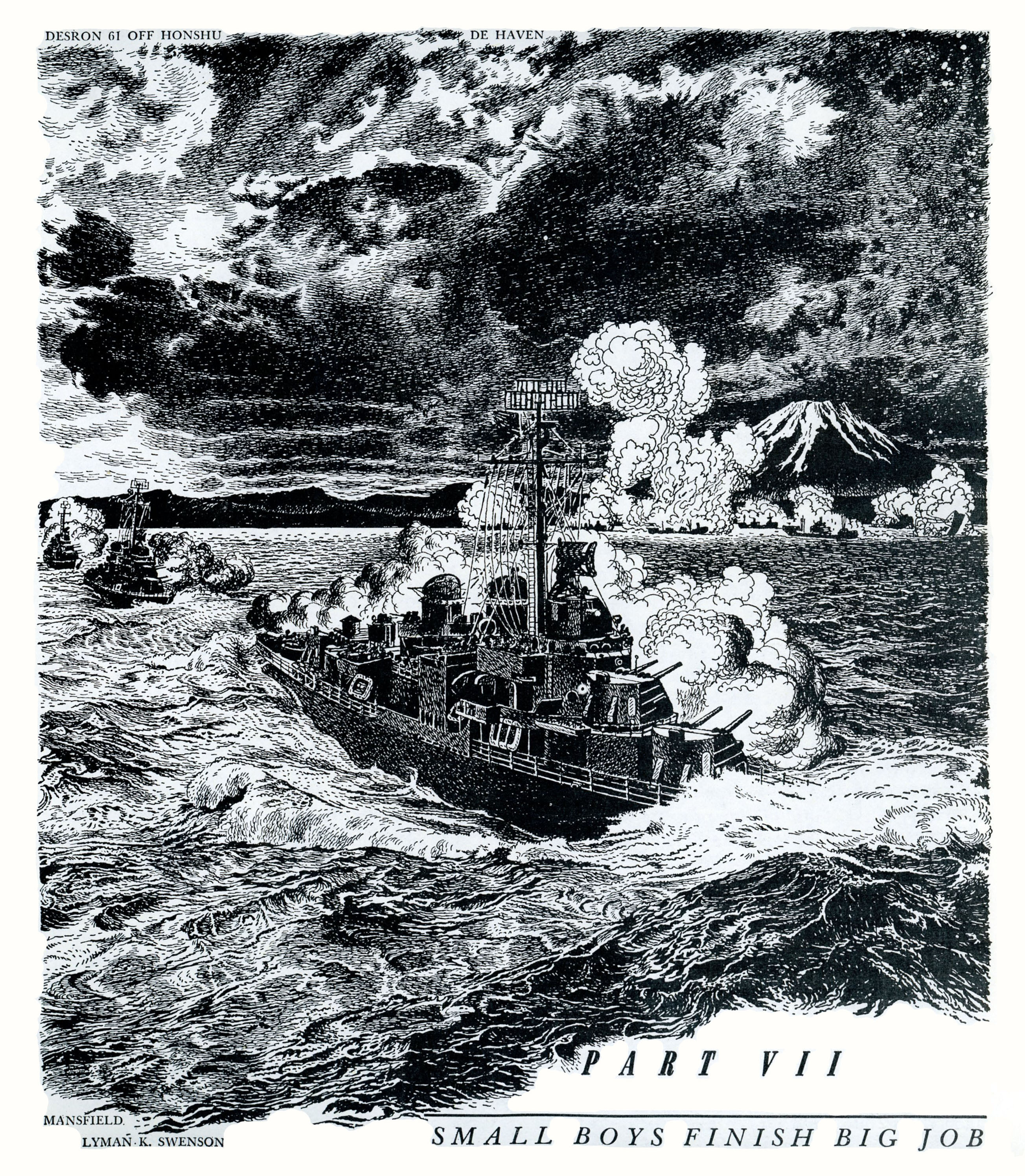 (Small Boys Finish Big Job – p. 501)
 (Destroyers to North Africa – p. 149)
 (Central Solomons Sweep – p. 215)
 (Aleutian Conclusion – p. 249)
 (South Seas Mop-Up – p. 256)
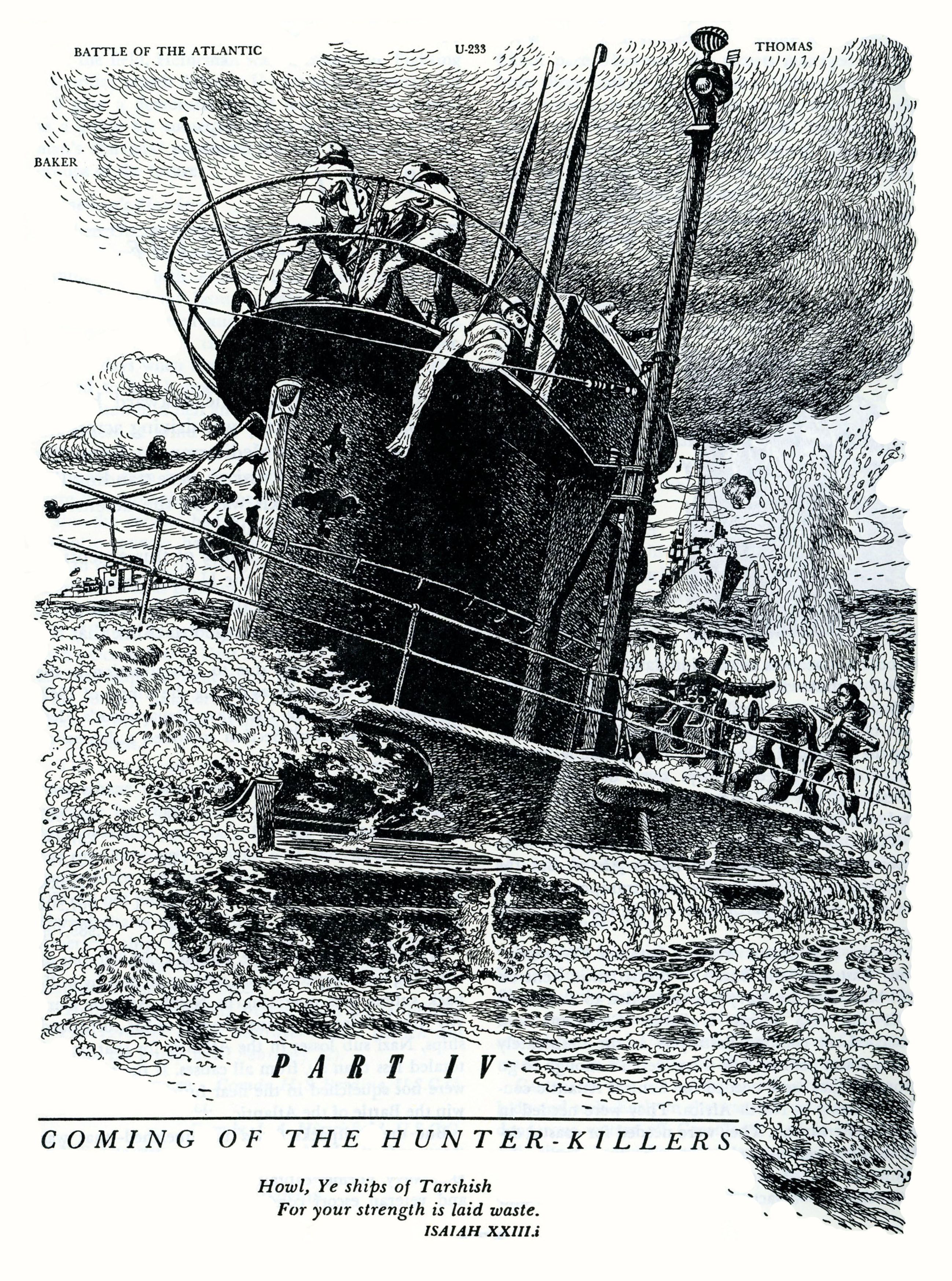 (Coming of the Hunter-Killers – p. 273)
 (Holding the Trans-Atlantic Line – p. 274)
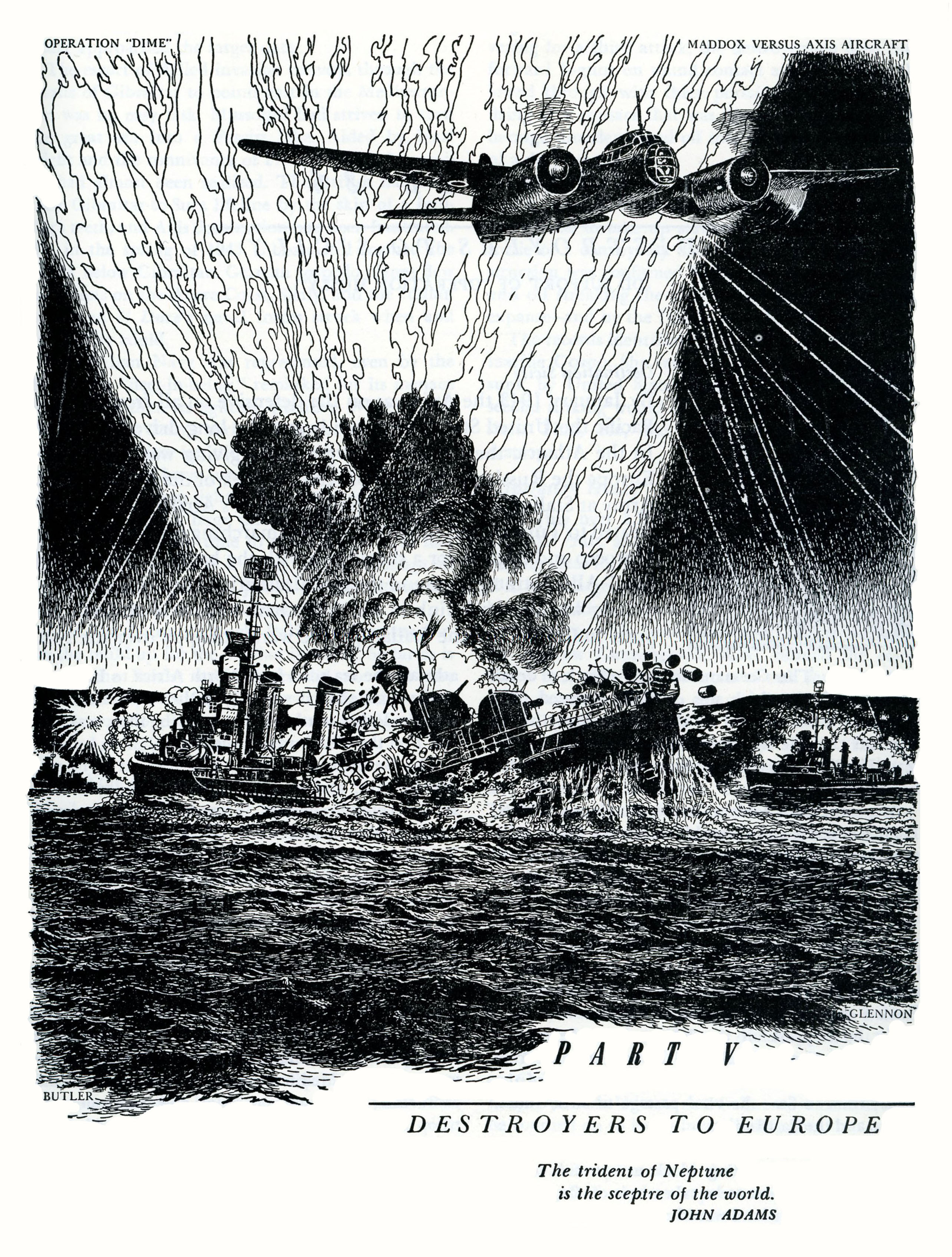 (Destroyers to Europe – p. 315)
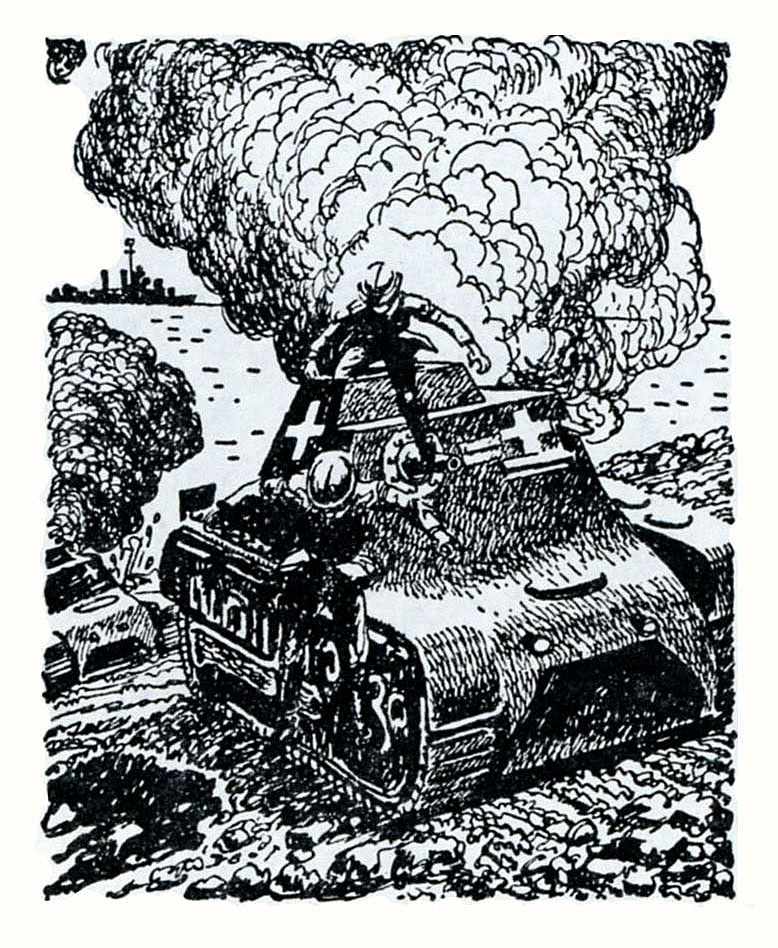 (Destroyers to Sicily – p. 316)
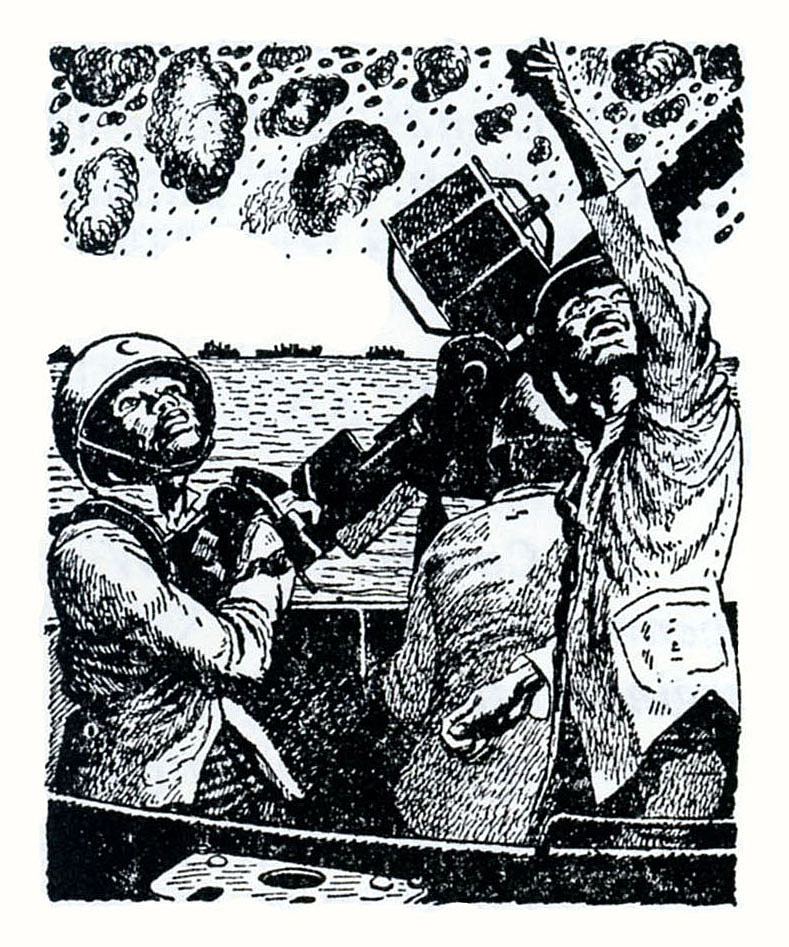 (Destroyers to Italy – p. 329)
 (Destroyers to Normandy – p. 343)
 (Frontspiece)
 (p. iv)
 (p. viii)
 (Preface – p. xiii)
 (Holocaust at Pearl Harbor – p. 3)
 (Central Pacific Front – p. 12)
 (Philippines Invasion – p. 23)
 (Thunder Down Under – p. 93)
 (The Empire Blockade – p. 169)
 (Japanese Anti-Submarine War – p. 209)
 (Torpedo! – p. 250)
 (Central Pacific Offensive – p. 279)
 (Tokyo Approach – p. 439)
 (Submarine Lifeguarding – p. 465)
 (Frontspiece)
 (Preface – p. xiii)
 (Introduction – p. xvii)
 (The Modern DD – p. 11)
 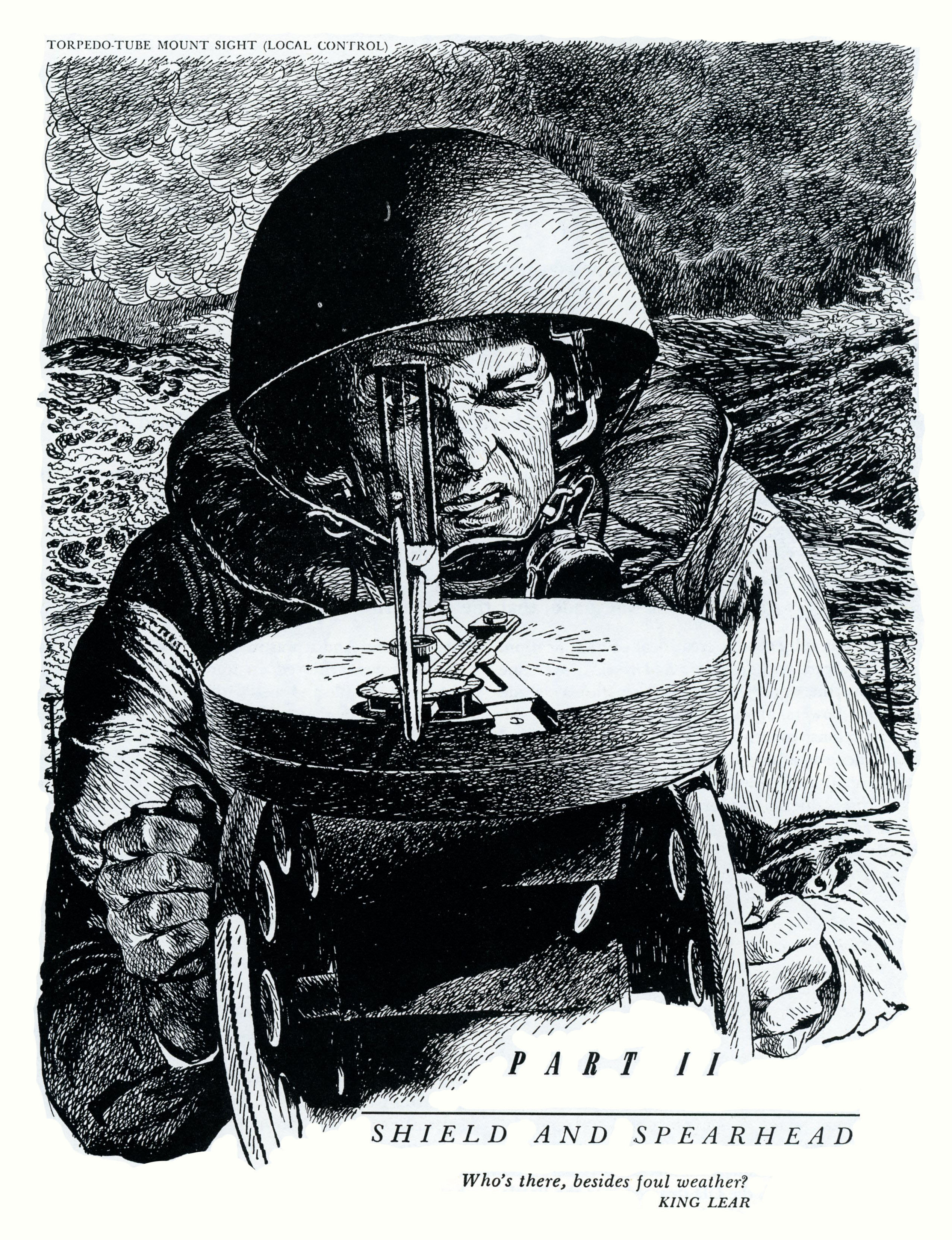 (Shield and Spearhead – p. 53)
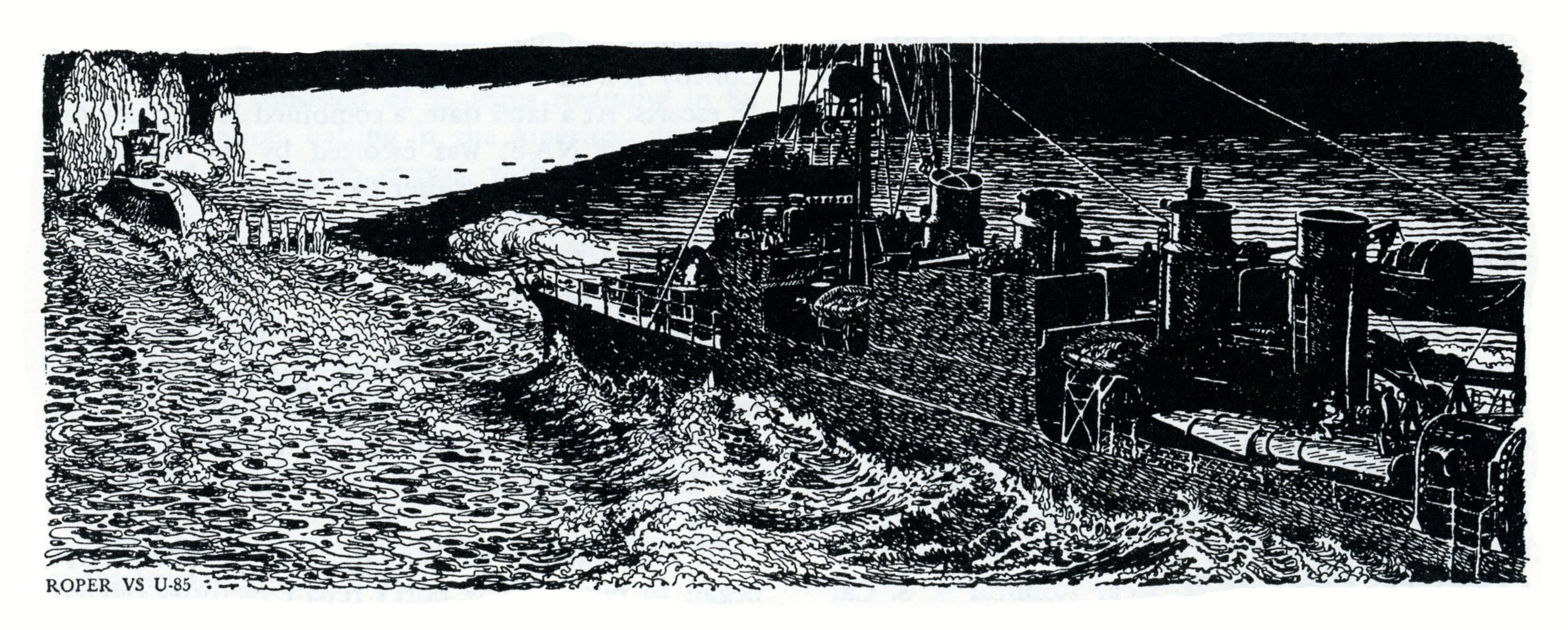 (Destroying the Submarine – p. 67)
 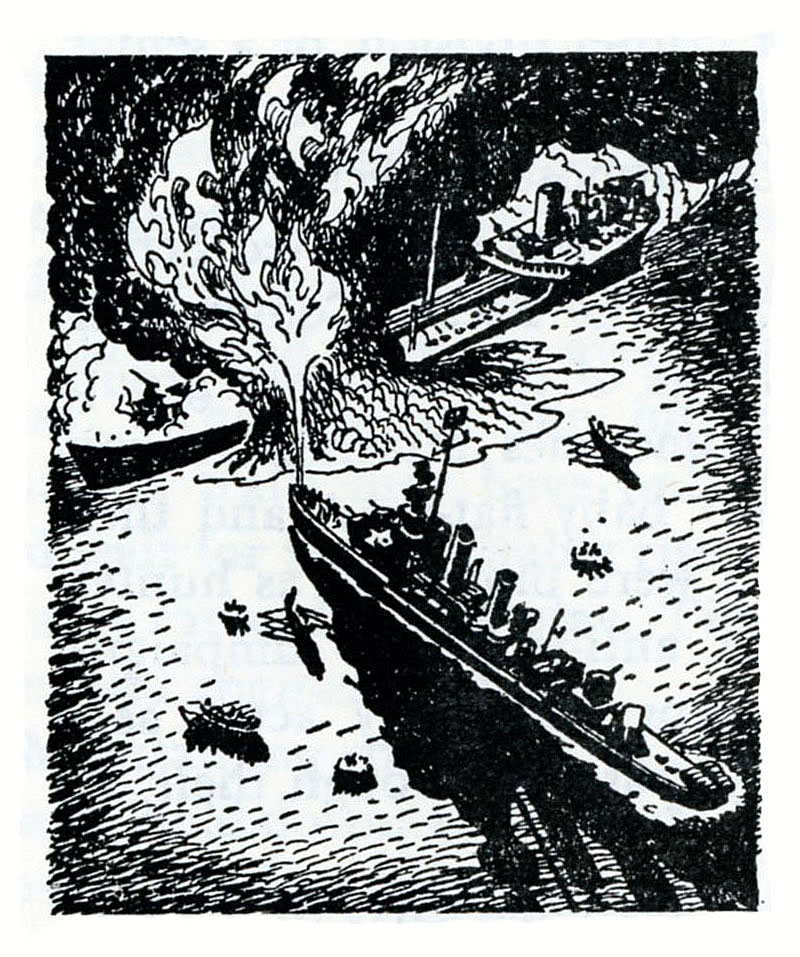 (DesLant Into Battle (I) – p. 68)
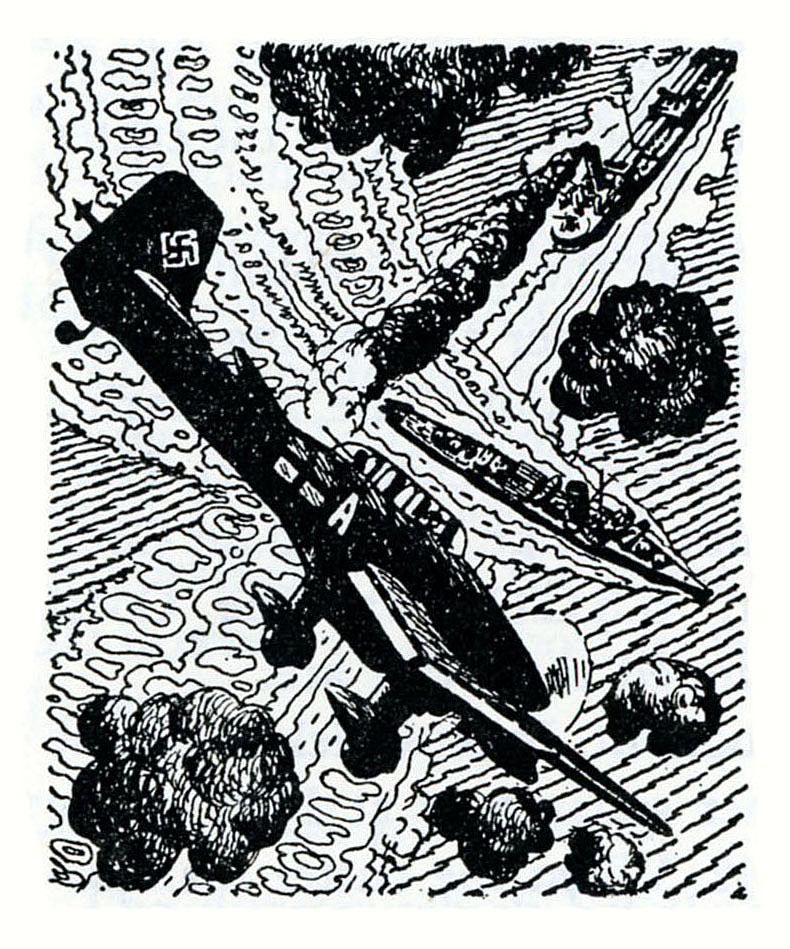 (DesLant Into Battle (II) – p. 76)
 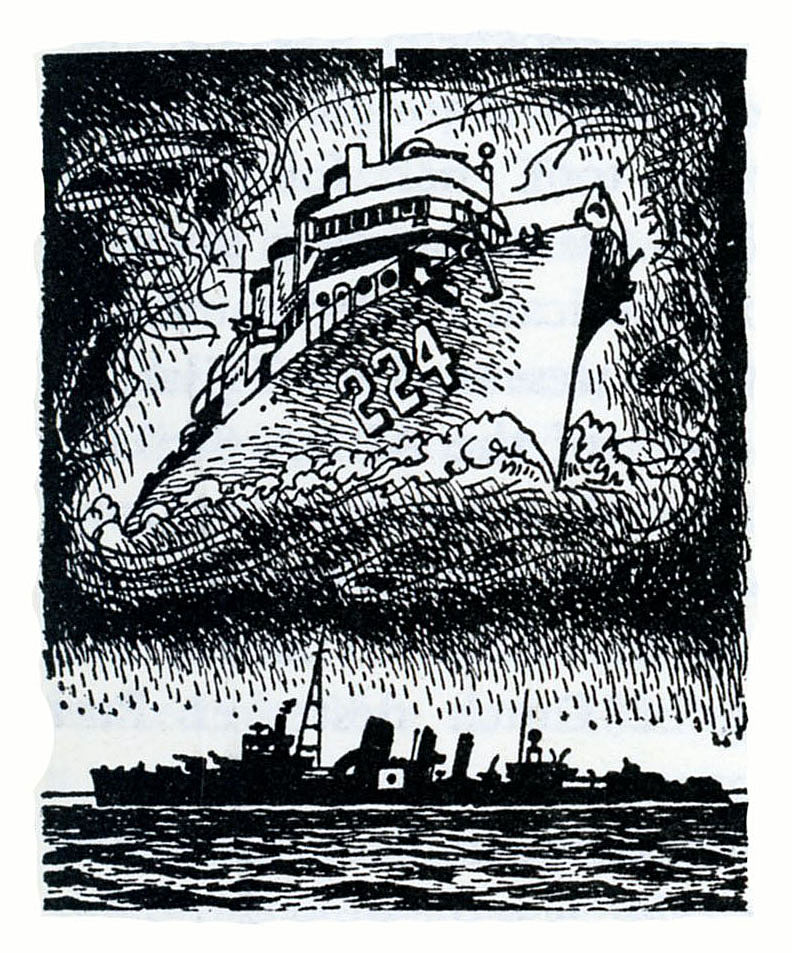 (Ordeal of DesRon 29 – p. 97)
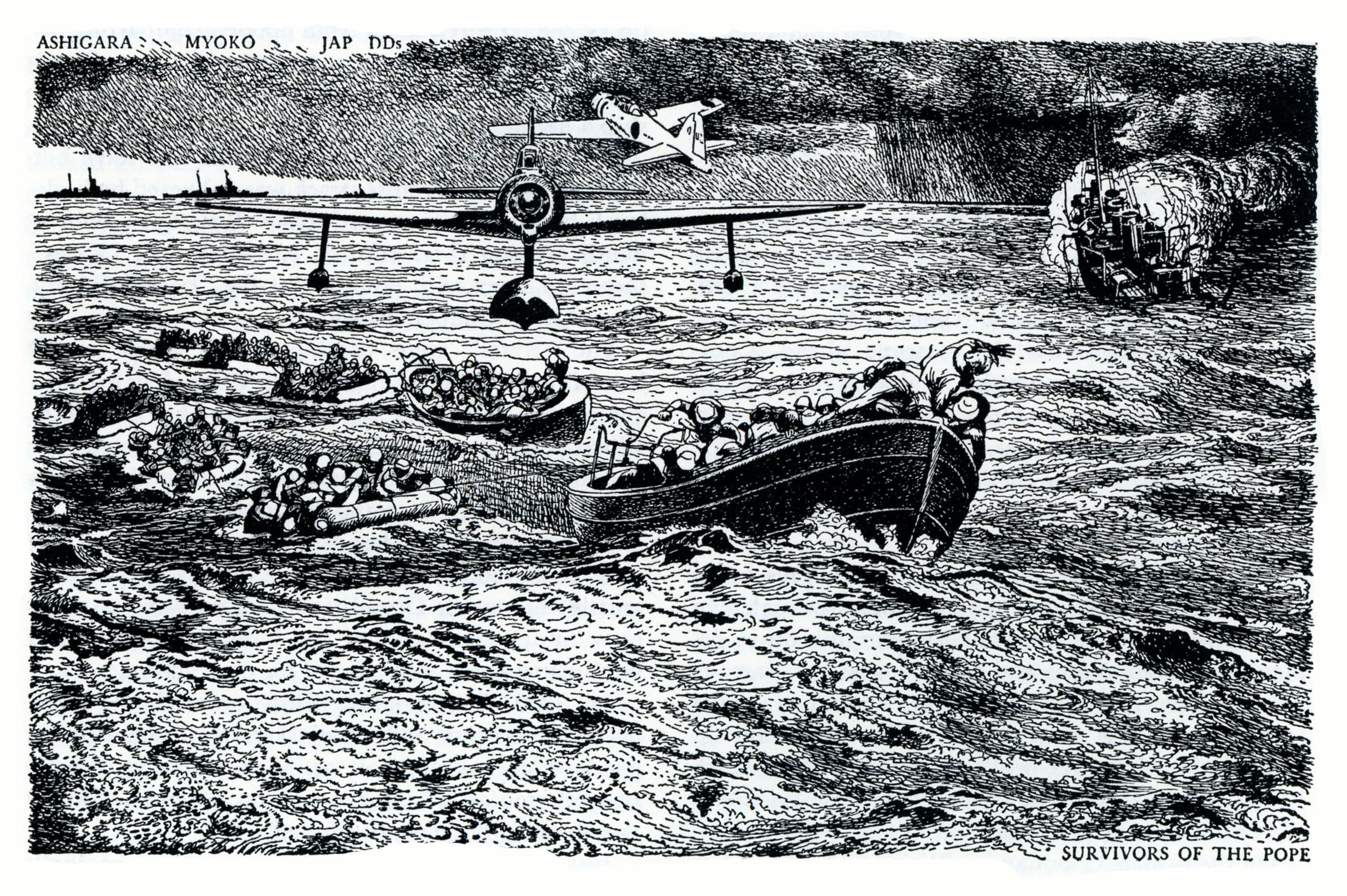 (Ordeal of DesRon 29 – p. 110)
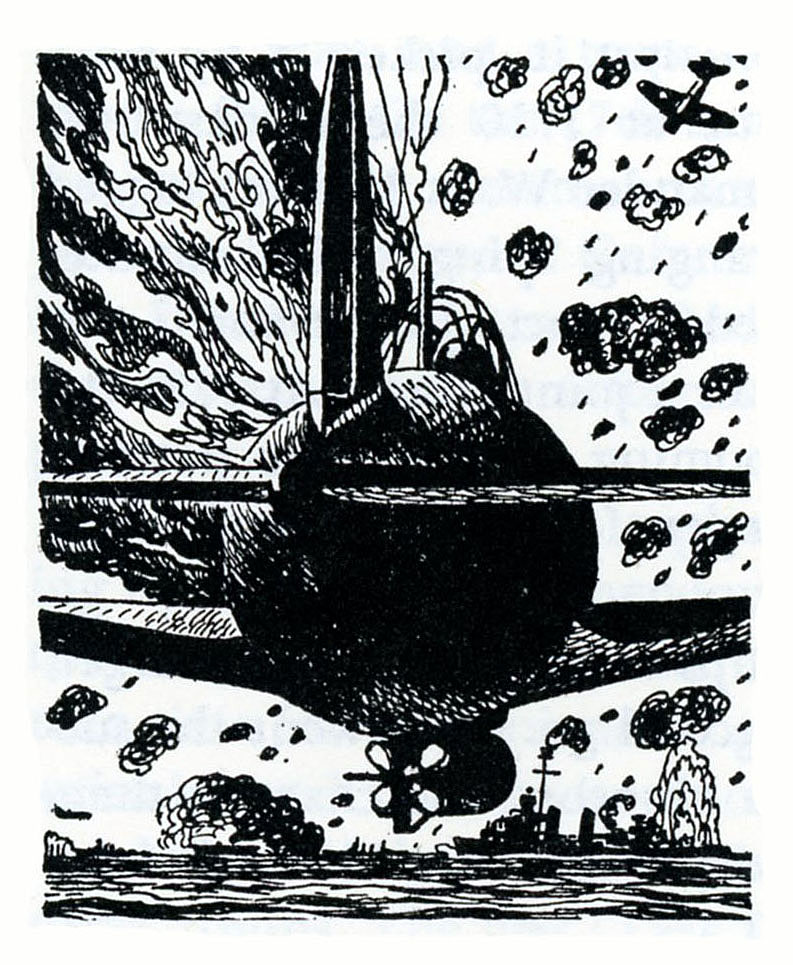 (Pacific Stand – p. 111)
  (Convoy Escorts Versus Wolfpacks – p. 137)
 Uncertain as to what to do, I decided to make an inventory of my belongings.
I wanted to figure out what I could count on in my solitude at sea.
First of all, I could rely on my watch, which kept perfect time,
and which I couldn’t stop glancing at every two or three minutes.
In addition, I had my gold ring, which I’d bought in Cartagena the year before,
and a chain with a medal of the Virgin of Carmen on it,
also purchased in Cartagena, from another sailor for thirty-five pesos.
In my pockets I had nothing but the keys to my locker on the destroyer
and three business cards I have been given at a store in Mobile
one day in January when I had gone out shopping with Mary Address.
Since I had nothing to do,
I read the cards over and over to distract myself until I was rescued.
I don’t know why the cards seemed like the messages in bottles
that shipwrecked sailors pitch into the sea.
I think if I had had a bottle at that moment
I would have put one of the cards into it, playing shipwrecked sailors,
just to do something amusing to tell my friends about in Cartagena.

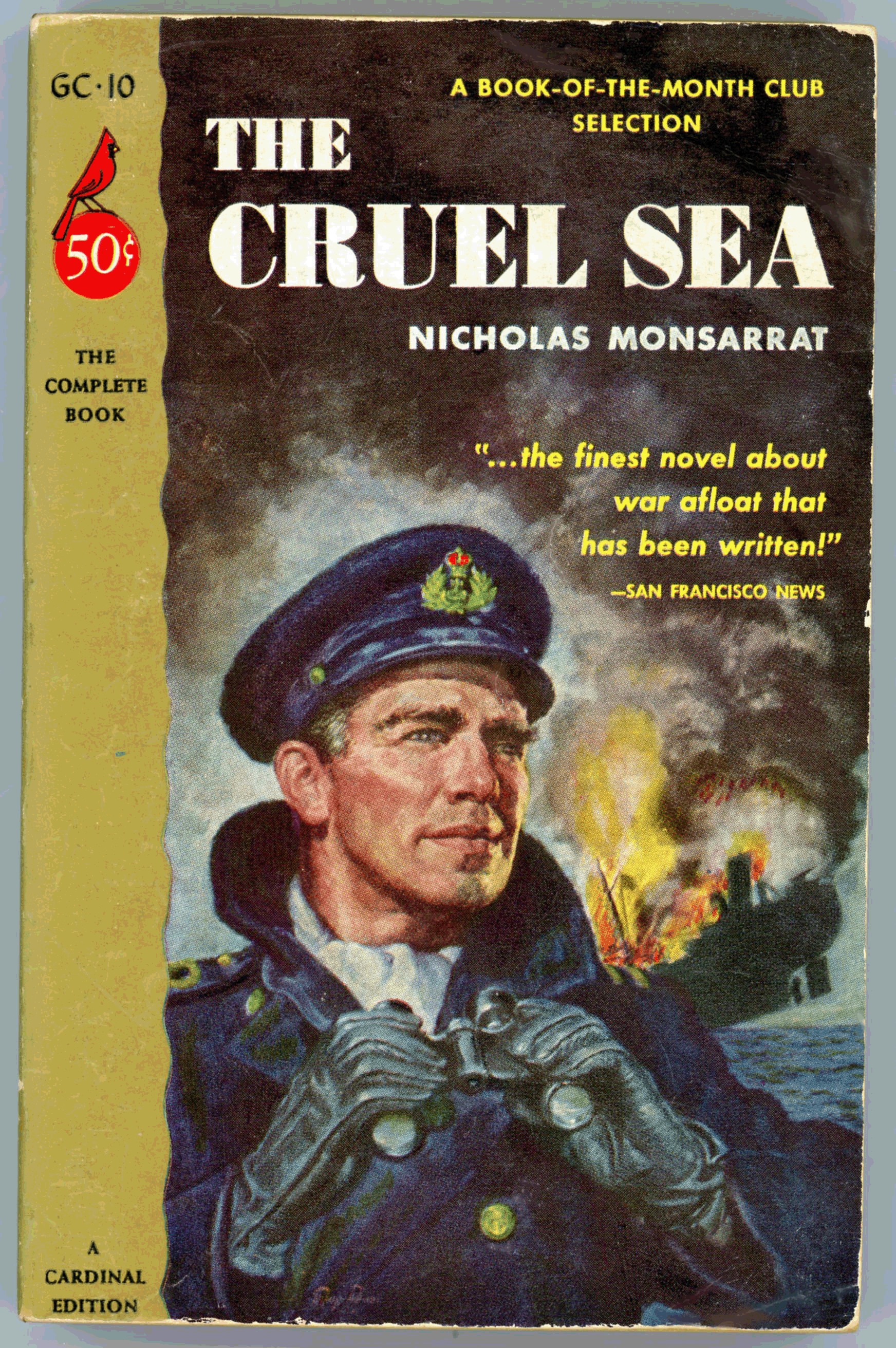 So their battle ended, and so,
all over the Atlantic, the fighting died –
a strangely tame finish,
after five and a half years of bitter struggle.
There was no eleventh-hour,
death-or-glory assault on shipping,
no individual attempt at piracy after the surrender date:
the vicious war petered out in bubbles,
blown tanks, a sulky yielding, and the laconic order:
“Follow me.”
But no anti-climax, no quiet end,
could obscure the triumph and the pride inherent in this victory,
with its large cost –
thirty thousand seamen killed,
three thousand ships sent to the bottom in this one ocean –
and its huge toll of seven hundred and eighty U-boats sunk,
to even the balance.
It would live in history,
because of its length and its unremitting ferocity:
it would live in men’s minds
for what it did to themselves and to their friends,
and to the ships they often loved.
After all, it would live in naval tradition,
and become legend,
because of its crucial service to an island at war,
its price in sailor’s lives, and its golden prize –
the uncut lifeline to the sustaining outer world.