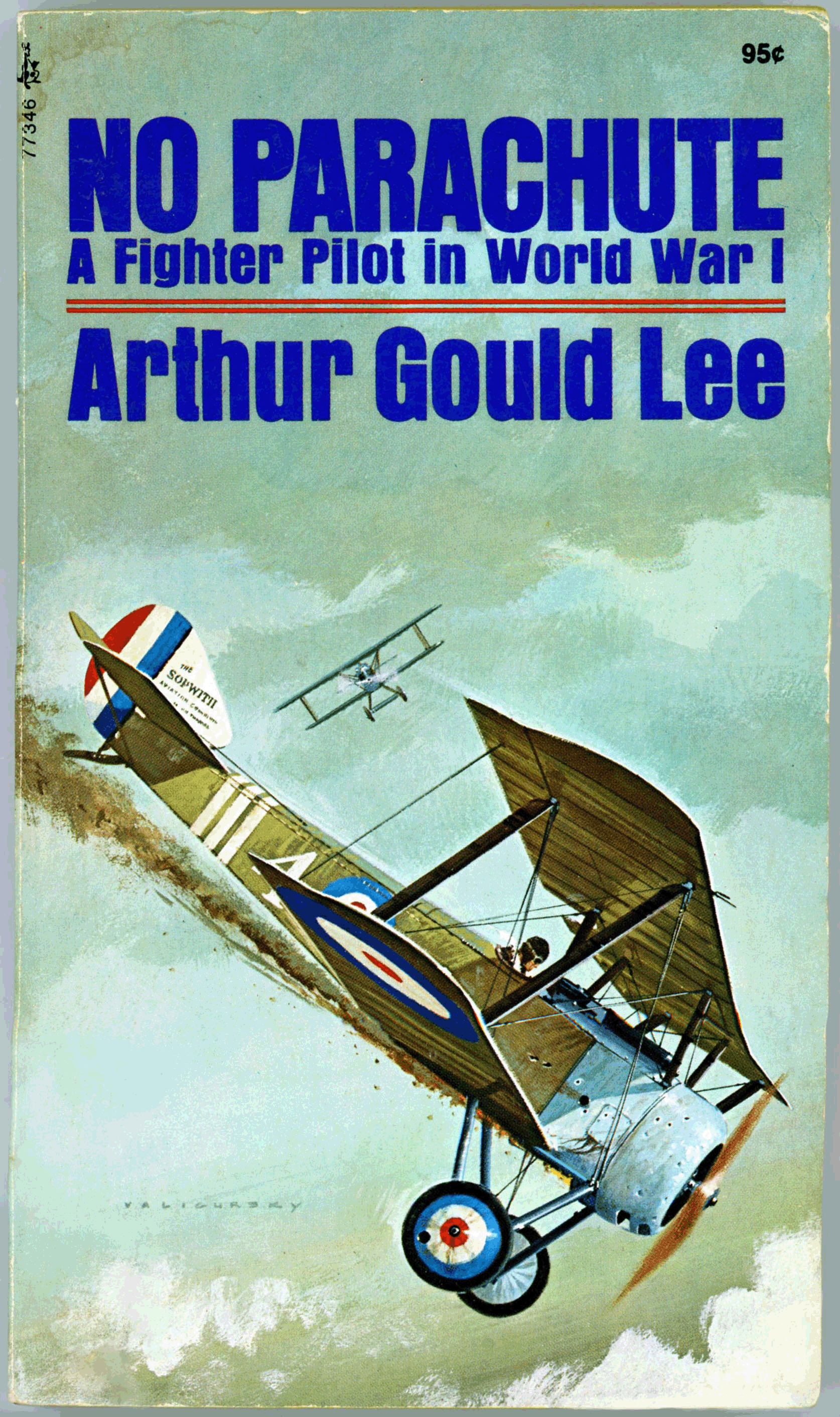
 Looking back on this scrap,
I realize that however much you’re scared before you start,
once you’re in it you don’t feel excitement or fear,
you fight in a sort of daze.
When it’s over, and you find you’re still alive,
you feel both exhausted and exhilarated.
In fact, what with the sun shining,
and blue sky above,
and the white clouds below, and your engine running smoothly,
and the Pup handling like the spirited thing she is,
you can feel that you’ve enjoyed it.
Like you enjoy a plunge in an icy-cold mountain pool – once you get out of it.
(June 30, 1917)
* * * * * * * * * *
In your last letter you ask why I touch wood just before a scrap when I could pray.
But why should God grant me any special favour?
The Hun I’m fighting may be calling on Him too.
It isn’t as though I have any great faith in religion,
but even if I had,
would it divert a bullet?
Anyway, how can anybody who has to fight believe in God,
with all the mass killings,
and with British, French and German priests all shouting that God is on their side?
How can I call on God to help me shoot down a man in flames?
(September 21, 1917)
* * * * * * * * * *
They talk glibly about danger and bravery and so on,
but they are just words,
they don’t mean a thing.
They ask you how many Fritzes you’ve shot down,
old bean,
as though it’s a cricket score.
They just don’t realize that a machine destroyed means a life ended,
some unfortunate devil,
British or German,
smashed to pulp or burned alive.
Somehow, the air smells cleaner out here.
All the way on the journey back to Izel form London
I had the feeling that I didn’t want to come,
that I was forced to do so because I was in the grip of a vast machine,
like hundreds of thousands of other young men,
helpless,
with no wills of our own,
compelled to come back to danger, maybe death.
Yet as soon as I entered the Mess and was greeted by the chaps,
I had a sensation of coming home.
The familiar cheerful faces, the smiling Mess servants, my batman, even Jock –
and late the N.C.O.s and the men in the flight –
they all made me feel I belonged here, and not to the selfish mob of London.
It was then that I realize what made me so often restless during that leave
was that I was missing the squadron – and the war.
Yes, the war.
Sounds darned silly, but that’s what it was,
the excitement, the unspoken friendliness, the feeling of doing something real.
I hate the war, of course,
yet I was drawn back to it,
I had a queer urge to go back to where I belonged,
even if it was dangerous.
(Friday, November 9, 1917)