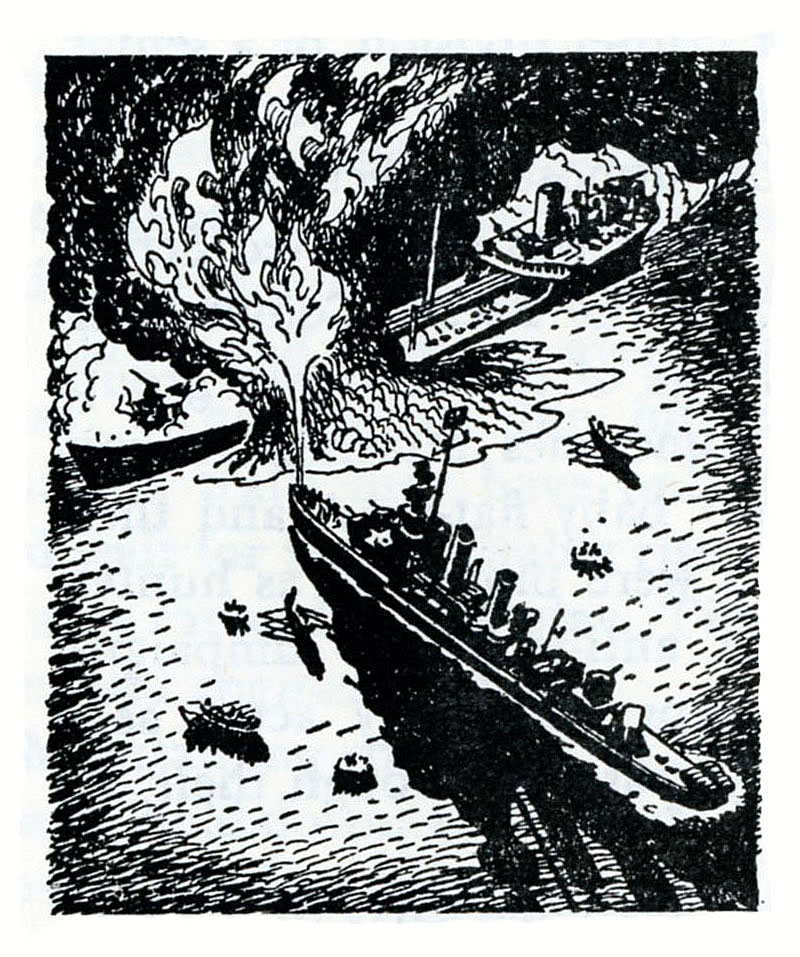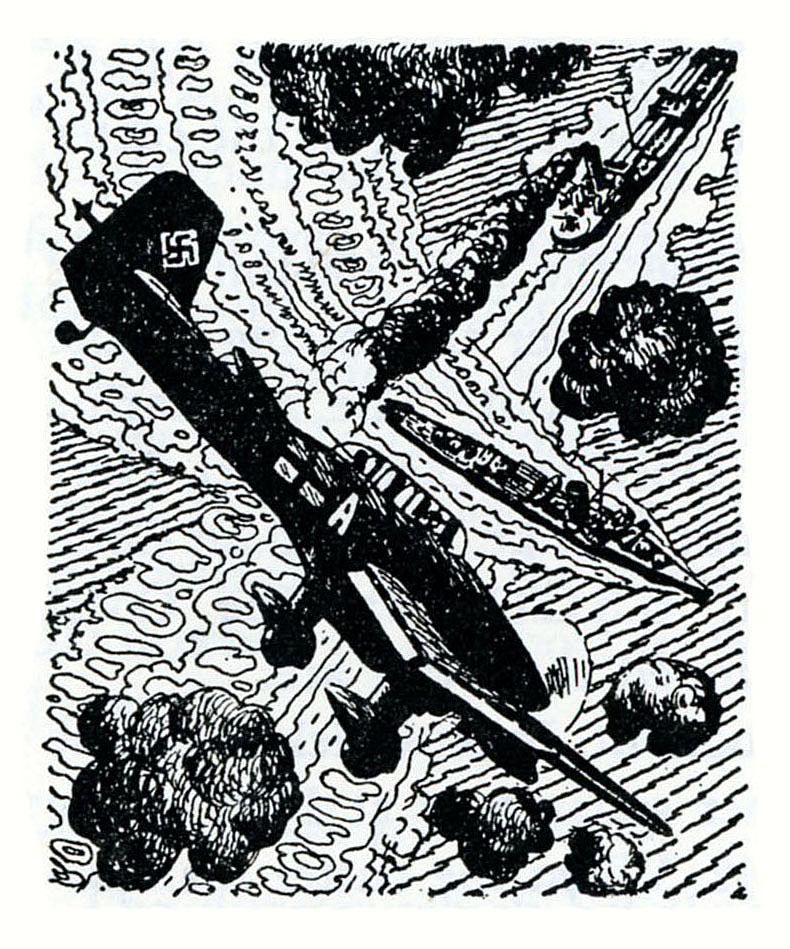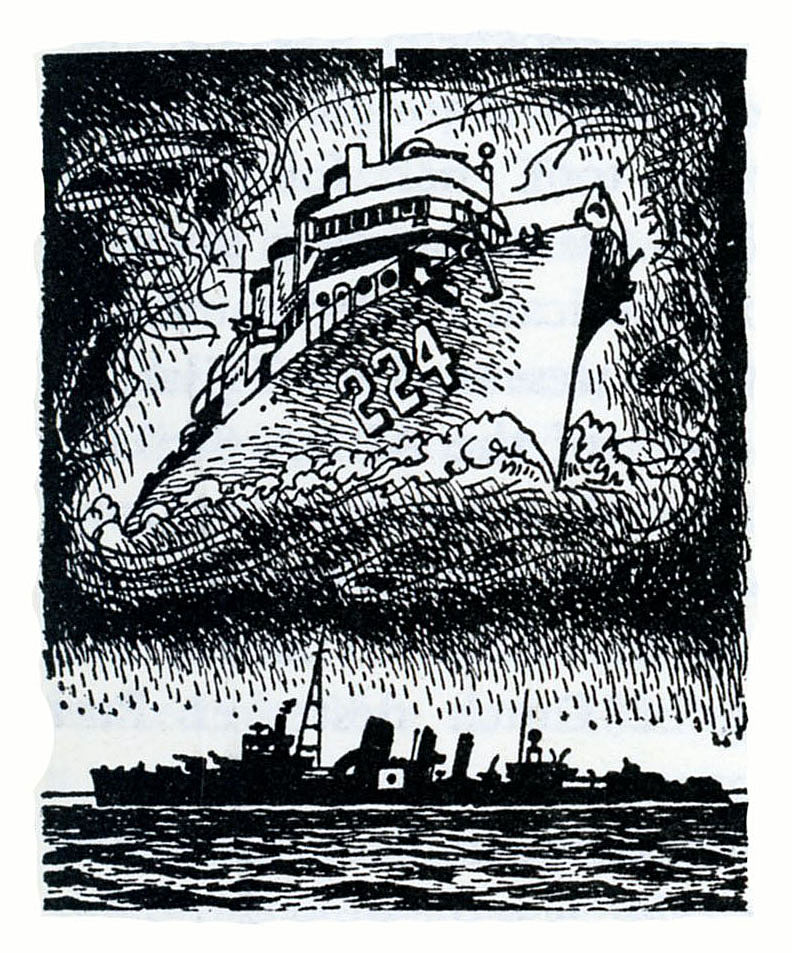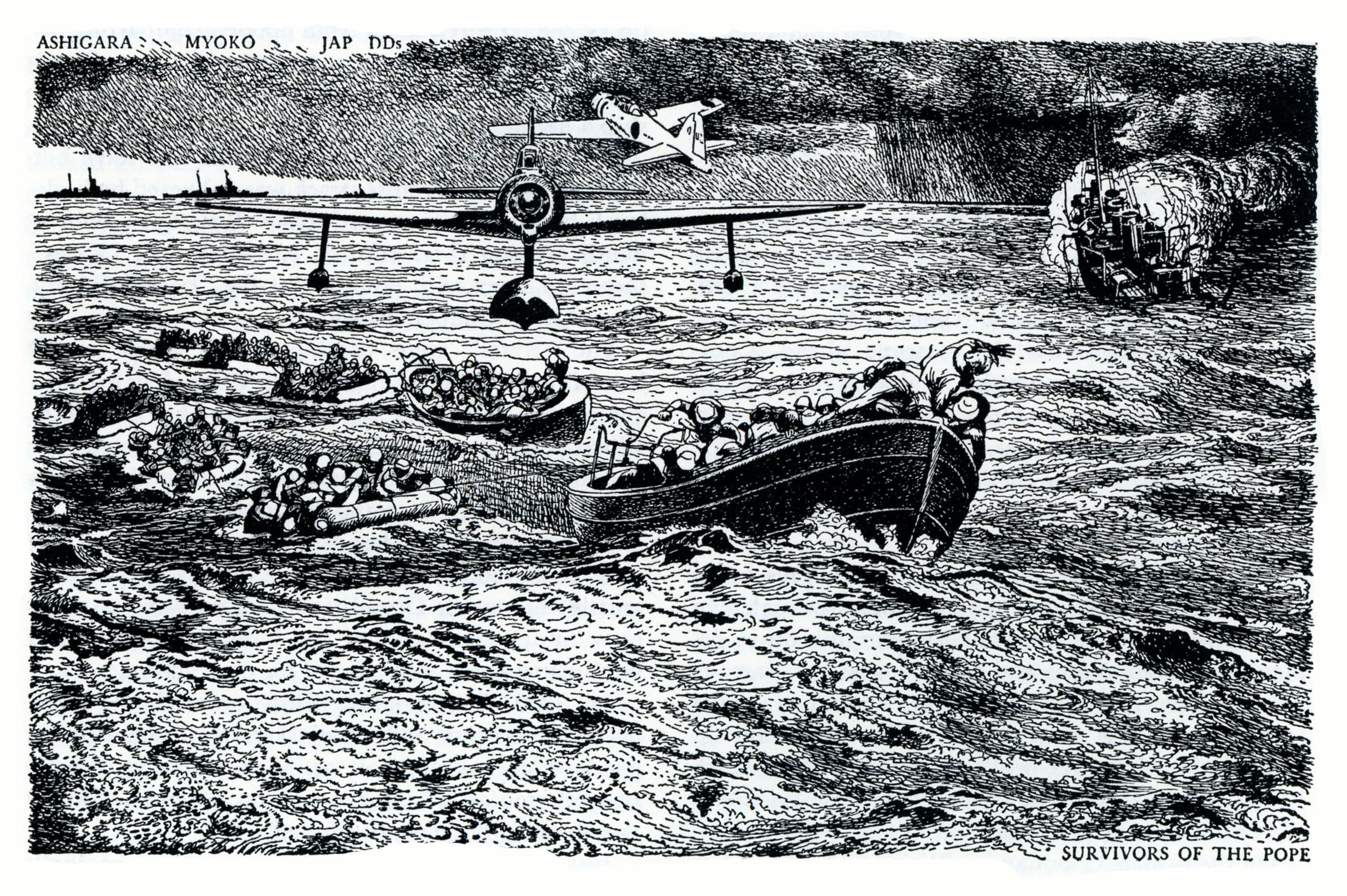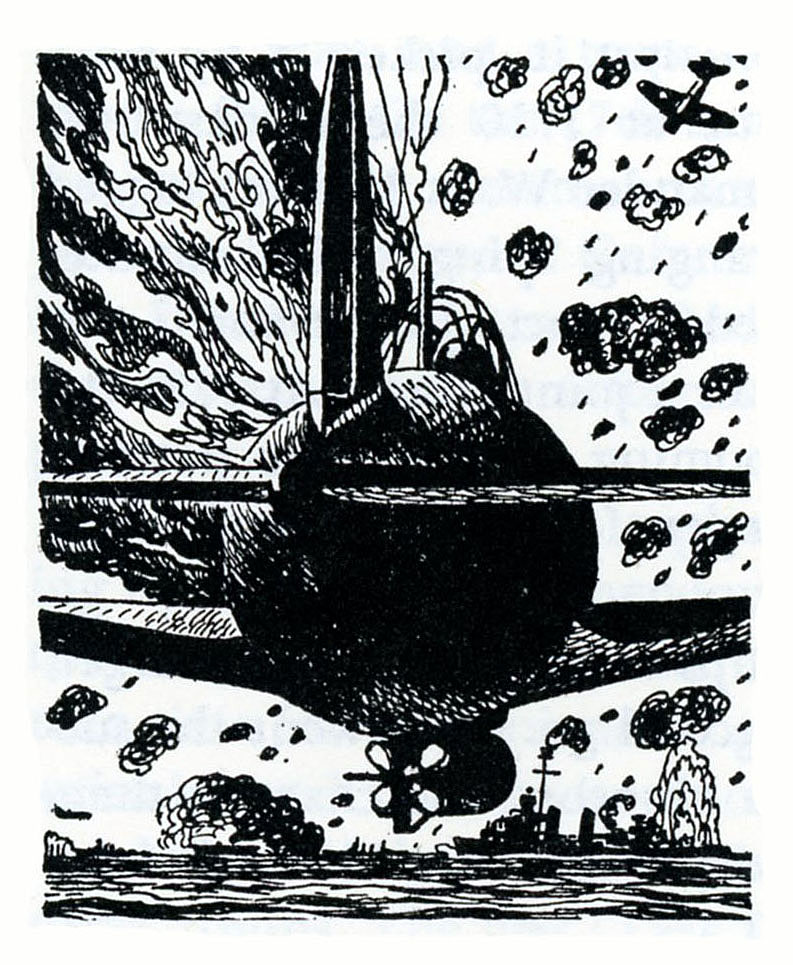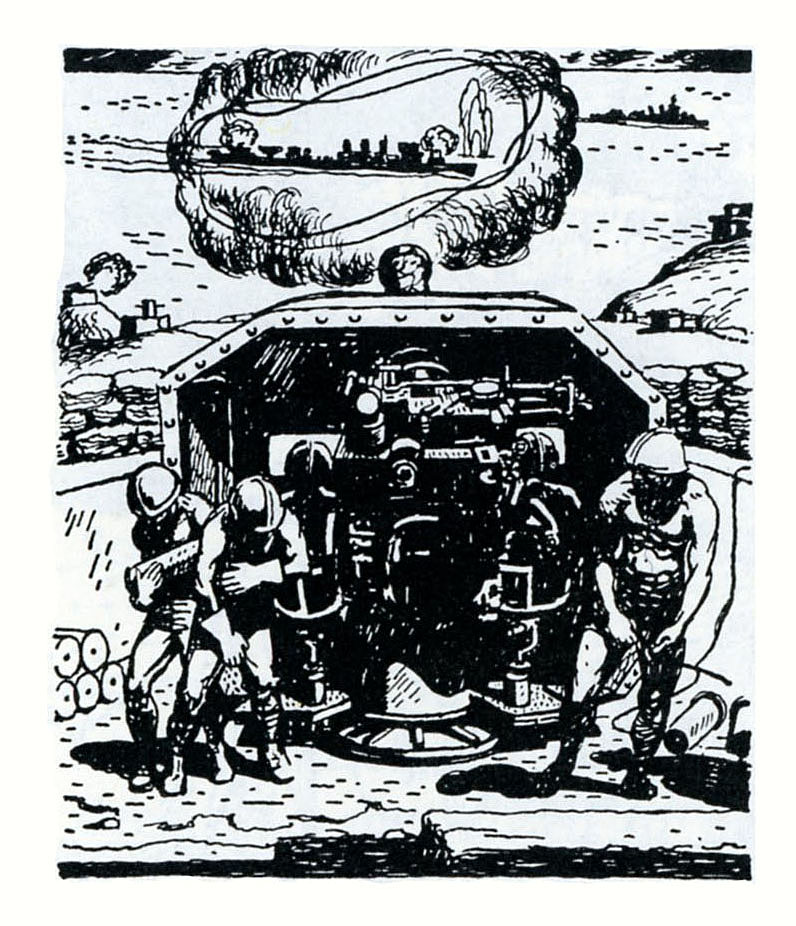
United States Destroyer Operations in World War II, by Theodore Roscoe – 1953 [Lt. Cdr. Fred Freeman] – I

(Frontspiece)

(Preface – p. xiii)

(Introduction – p. xvii)

(The Modern DD – p. 11) (Shield and Spearhead – p. 53)

(Destroying the Submarine – p. 67) (DesLant Into Battle (I) – p. 68)

(DesLant Into Battle (II) – p. 76) (Ordeal of DesRon 29 – p. 97)

(Ordeal of DesRon 29 – p. 110)

(Pacific Stand – p. 111) (Convoy Escorts Versus Wolfpacks – p. 137)

(Destroyers to North Africa – p. 138)

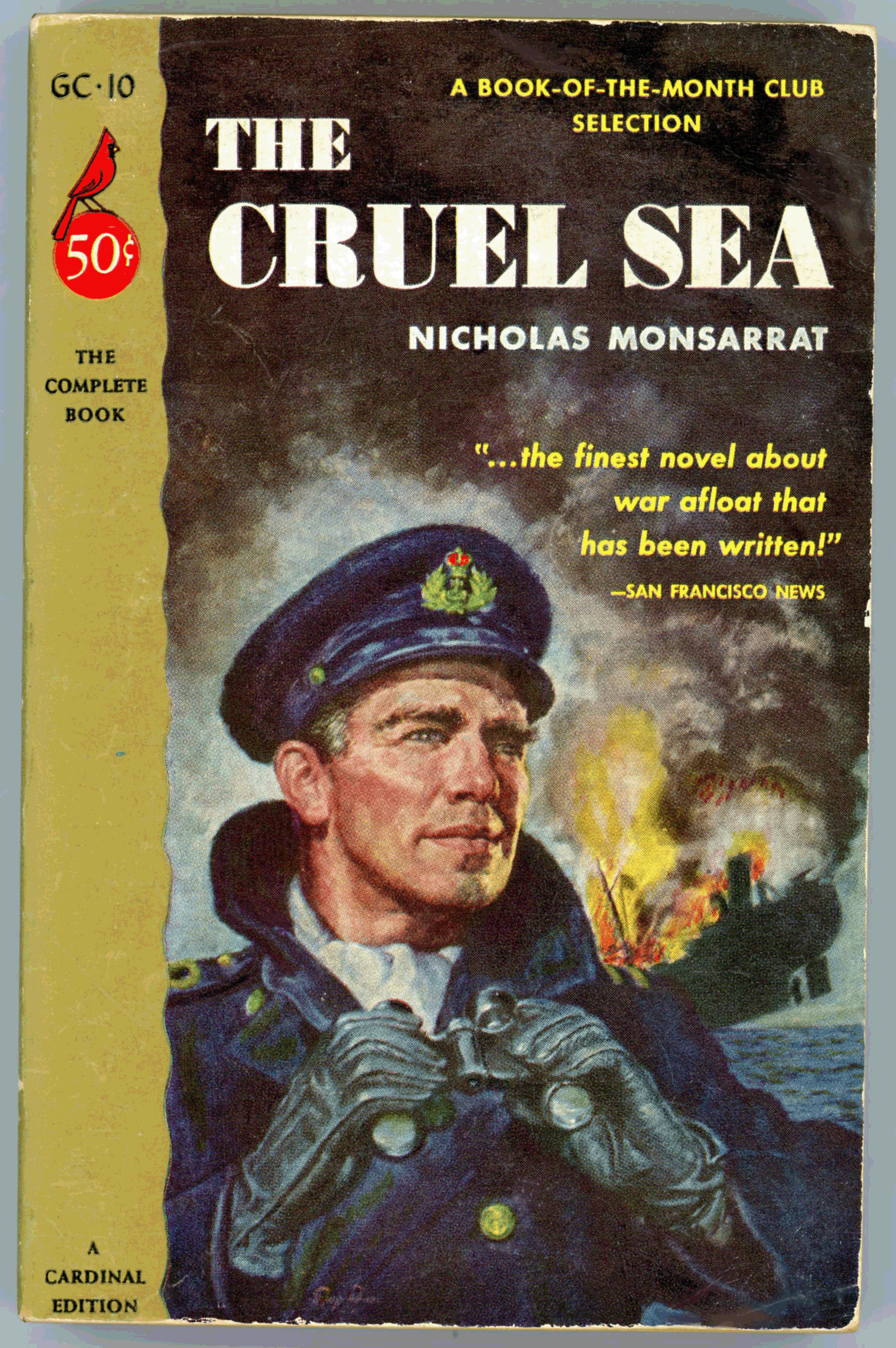
The Cruel Sea, by Nicholas J.T. Monsarrat – 1953 [Ray Pease]

the-cruel-sea-nicholas-monsarrat-1953-ray-pease_edited-1So their battle ended, and so,
all over the Atlantic, the fighting died –
a strangely tame finish,
after five and a half years of bitter struggle.
There was no eleventh-hour,
death-or-glory assault on shipping,
no individual attempt at piracy after the surrender date:
the vicious war petered out in bubbles,
blown tanks, a sulky yielding, and the laconic order:
“Follow me.”
But no anti-climax, no quiet end,
could obscure the triumph and the pride inherent in this victory,
with its large cost –
thirty thousand seamen killed,
three thousand ships sent to the bottom in this one ocean –
and its huge toll of seven hundred and eighty U-boats sunk,
to even the balance.

It would live in history,
because of its length and its unremitting ferocity:
it would live in men’s minds
for what it did to themselves and to their friends,
and to the ships they often loved. 
After all, it would live in naval tradition,
and become legend,
because of its crucial service to an island at war,
its price in sailor’s lives, and its golden prize –
the uncut lifeline to the sustaining outer world.


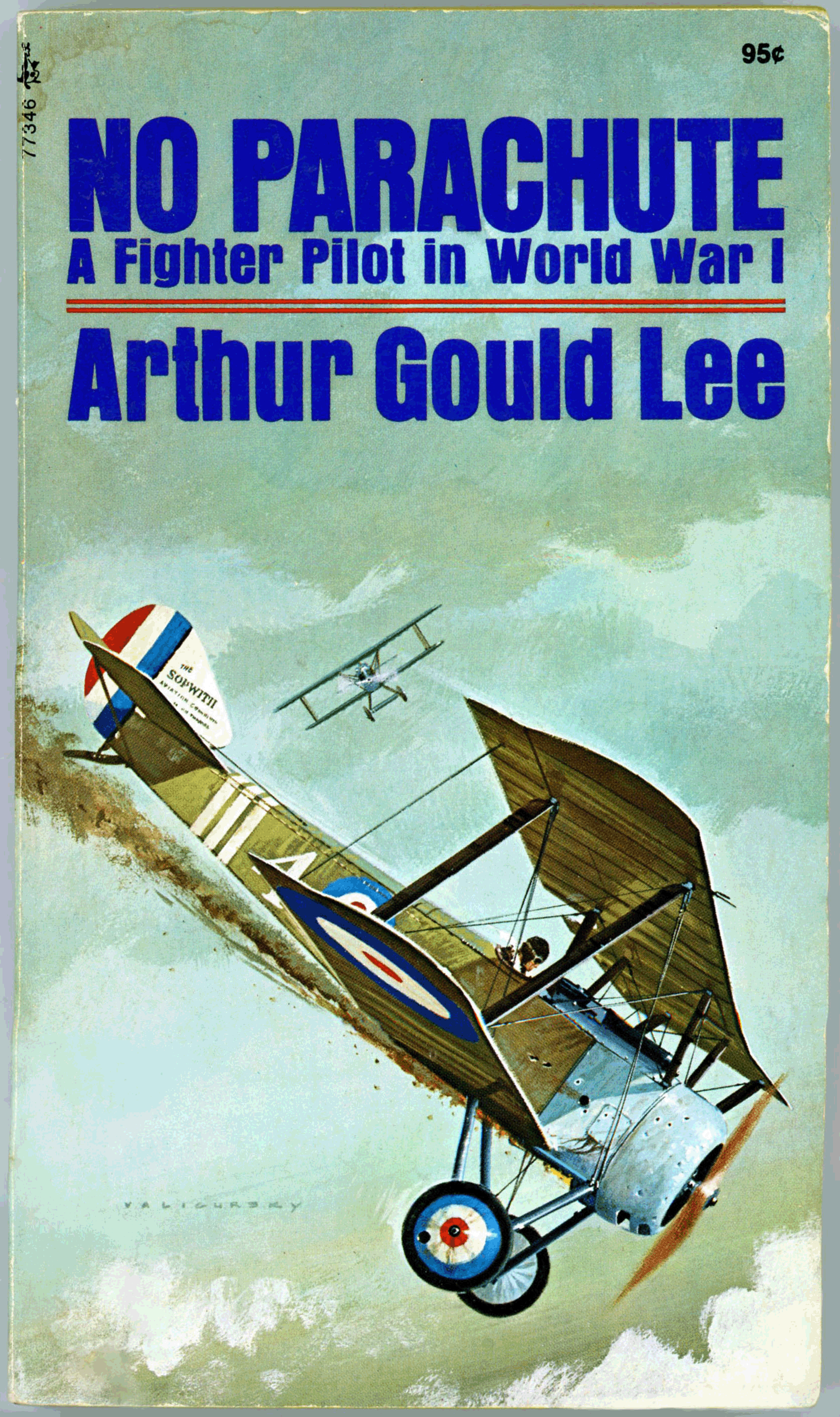
No Parachute – A Fighter Pilot in World War I, by Arthur Gould Lee – 1917 (1971) [Edward Valigursky]

no-parachute-arthur-gould-lee-1971-valigursky_edited-1Looking back on this scrap,
I realize that however much you’re scared before you start,
once you’re in it you don’t feel excitement or fear,
you fight in a sort of daze.
When it’s over, and you find you’re still alive,
you feel both exhausted and exhilarated.
In fact, what with the sun shining,
and blue sky above,
and the white clouds below, and your engine running smoothly,
and the Pup handling like the spirited thing she is,
you can feel that you’ve enjoyed it.
Like you enjoy a plunge in an icy-cold mountain pool – once you get out of it.
(June 30, 1917)

* * * * * * * * * *

In your last letter you ask why I touch wood just before a scrap when I could pray. 
But why should God grant me any special favour? 
The Hun I’m fighting may be calling on Him too. 
It isn’t as though I have any great faith in religion,
but even if I had,
would it divert a bullet? 
Anyway, how can anybody who has to fight believe in God,
with all the mass killings,
and with British, French and German priests all shouting that God is on their side?
How can I call on God to help me shoot down a man in flames?
(September 21, 1917)

* * * * * * * * * *

They talk glibly about danger and bravery and so on,
but they are just words,
they don’t mean a thing. 
They ask you how many Fritzes you’ve shot down,
old bean,
as though it’s a cricket score. 
They just don’t realize that a machine destroyed means a life ended,
some unfortunate devil,
British or German,
smashed to pulp or burned alive.

Somehow, the air smells cleaner out here.

All the way on the journey back to Izel form London

I had the feeling that I didn’t want to come,
that I was forced to do so because I was in the grip of a vast machine,
like hundreds of thousands of other young men,
helpless,
with no wills of our own,
compelled to come back to danger, maybe death. 
Yet as soon as I entered the Mess and was greeted by the chaps,
I had a sensation of coming home. 
The familiar cheerful faces, the smiling Mess servants, my batman, even Jock –
and late the N.C.O.s and the men in the flight –
they all made me feel I belonged here, and not to the selfish mob of London.

It was then that I realize what made me so often restless during that leave
was that I was missing the squadron – and the war. 
Yes, the war. 
Sounds darned silly, but that’s what it was,
the excitement, the unspoken friendliness, the feeling of doing something real. 
I hate the war, of course,
yet I was drawn back to it,
I had a queer urge to go back to where I belonged,
even if it was dangerous.
(Friday, November 9, 1917)

Gunner’s Moon, by John Bushby – 1972 (1975) [Unknown Artist]

gunners-moon-john-bushby-1972-1975-unknown-1_edited-1“Damned fool!
Why on earth didn’t you report sick at home?
Surely there’s a Service unit somewhere near you?”

I gave a short account of my attempt to do so.
He looked surprised, opened his mouth as if to say something and then,
no doubt remembering his obligations to the Medical Trade Union, shut it again;
his criticism of a colleague unvoiced. 
Fifteen minutes later I was tucked up in bed in sick quarters
and asleep for the next twenty-four hours.
A week later I was discharged feeling almost human again.


Now if I have dwelt on this little incident
it is because of its subsequent effect on my future, and indeed my life. 
As a result of the delay I was transferred back
from No. 3 Manchester Course to No. 4;
the latter not then due to commence for three weeks or so. 
Now I believe it fact when I say that
of all those who passed through No. 3 Manchester Course at Finningley
not even one is alive today. 
Every crew brought together on that course was eventually killed in action and,
but for a small ‘flu virus, I would undoubtedly have been among them. 
I can trace this pattern back from then and also forward into days still to come. 
Is it a pattern? 
Or is it a series of random, unconnected events
having no logic and no meaning
but to which we who are the subject of such events
illogically attempt to apply logic? 
Man has to have a reason for everything. 
That is his nature. 
More learned men than I could probably dissect,
re-assemble and tie the whole thing up neatly and convincingly
and give that faultless explanation which we seek. 
But at night, flying high among the cold stars
and the immeasurable blackness of space;
watching the shooting stars burn themselves out
across our atmosphere and the bright unwinking glare of the eternal planets,
one gets a new slant on things and begins to believe
that maybe there is a purpose and a pattern to it all.


gunners-moon-john-bushby-1972-1975-unknown-2_edited-1Not far from Duisberg I had it again,
and this time more strongly than ever before.
I carried on methodically rotating the turret and searching the sky to port,
to starboard and above,
straining to see anything which might mean danger in the night.
Then, over to starboard,
a brilliant flare suddenly dropped out of the sky
and for a few moments bathed the cloud tops in its orange glow.
Against it I saw silhouetted an aircraft,
and there was no mistaking it as a Me-110 night fighter.
He was still about a mile away and on a parallel course.
Then, as the flare died down,
I saw him turn away and be swallowed up in the darkness.
At that precise moment the vague load on my consciousness vanished also.

The feeling came back several times more on subsequent trips. 
Whether in some sort of animal reaction
I was beginning to develop an extra-sensory perception of danger
or whether it was just some sheer nonsensical delusion,
I do not know. 
Nevertheless I always re-doubled the intensity of my look-out at such times,
and on at least one more occasion it was justified when,
aided and abetted by Dick’s phenomenal night vision,
we were able to evade a stalking night-fighter before he was ready to attack. 
I had had this old feeling for several minutes prior to Dick’s warning yell. 
At times I wondered whether to mention it,
but forbore to do so because it sounded so foolish. 
I compromised on these occasions by muttering down the intercom
something about the possibility of fighters being about
because the flak had suddenly stopped,
or some other reasons which the rest of the crew would accept as normal.

* * * * * * * * * *

Date: Evening of November 22-23, 1942

Operation: Target – Stuttgart

Aircraft: Lancaster Mark I, ED311, “OL * K

Crew:

Pilot Officer R.N. Williams, DFM (pilot) – POW, Stalag Luft III

Flight Sergeant Thomas Rodham Armstrong (574713) – Killed in Action

Pilot Officer G.M. Bishop, RCAF – POW, Stalag Luft III

Flight Sergeant G.L. Davies – POW, Stalag Luft VI

Flight Sergeant C.H. Crawley – POW, Stalag Luft VI

Flight Officer John Bushby – POW, Stalag Luft III

Pilot Officer O.C.Y. Lambert – POW, Stalag Luft I

Takeoff 1810 Wyton.  Hit by light flak while crossing the Normandy coast, homebound, and ditched in the English Channel.  A moving account of this crash is reported in the classic book “Gunner’s Moon” by John Bushby.  Flight Sergeant Armstrong is commemorated on the Runnymede Memorial. – RAF Bomber Command Losses of the Second World War – 1942, by W.R. Chorley

The Thin Red Line, by James R. Jones – 1962 (1964) [Unknown Artist]

the-thin-red-line-james-jones-1962-1964Welsh had never been in combat.
But he had lived for a long time with a lot of men who had.
And he had pretty well lost his belief in,
as well as his awe of,
the mystique of human combat.
Old vets from the First World War,
younger men who had been with the Fifteenth Infantry in China,
for years he had sat around getting drunk with them
and listening to their drunken stories of melancholy bravery.
He had watched the stories grow with the years and the drinking sprees,
and he had been able to form only one conclusion
and that was that every old vet was a hero.
How so many heroes survived and so many non-heroes got knocked off,
Welsh could not answer.
But every old vet was a hero.
If you did not believe it, you had only to ask them,
or better yet, get them drunk and not ask them.
There just wasn’t any other kind.
One of the hazards of professional soldiering was that every twenty years,
regular as clockwork,
that portion of the human race to which you belonged,
whatever its politics or ideals about humanity,
was going to get involved in a war,
and you might have to fight in it.
About the only way out of this mathematical hazard
was to enlist immediately after one war
and hope you would be too old for the next; you might just make it.
But to accomplish that you had to be of a certain age at just exactly the right time,
and that was rare.
But it was either that, or enlist in the Quartermaster Corps or some such branch.
Welsh had already understood all this when he enlisted in 1930
exactly between wars at the age of twenty,
but he had gone ahead and enlisted anyway.
He had gone ahead and enlisted,
and he had enlisted in the Infantry.
Not in the Quartermaster Corps.
And he had stayed in Infantry.
And this amused Welsh too.


jones-1110_edited-2Doll had learned something during the past six months of his life.
Chiefly what he had learned was that everybody lived by a selected fiction.
Nobody was really what he pretended to be.
It was as if everybody made up a fiction story about himself,
and then he just pretended to everybody that that was what he was.
And everybody believed him, or at least accepted his fiction story.
Doll did not know if everybody learned this about life
when they reached a certain age,
but he suspected that they did.
They just didn’t tell it to anybody.
And rightly so.
Obviously, if they told anybody,
then their own fiction story about themselves wouldn’t be true either.
So everybody had to learned it for himself.
And then, of course, pretend he hadn’t learned it.
Doll’s own first experience of this phenomenon had come from,
or at least begun with,
a fight he had had six months ago with one of the biggest,
toughest men in C-for-Charlie,
Corporal Jenks.
They had fought each other to a standstill,
because neither would give up,
until finally it was called a sort of draw-by-exhaustion.
But it wasn’t this so much as it was the sudden realization
that Corporal Jenks was just as nervous about having the fight as he was,
and did not really want to fight any more than he did,
which had suddenly opened Doll’s eyes.
Once he’d seen it here, in Jenks, he began to see it everywhere,
in everybody.

jones-2111_edited-2Yes, makin’ mock o’ uniforms that guard you while you sleep

Is cheaper than them uniforms, an’ they’re starvation cheap;

An’ hustlin’ drunken soldiers when they’re goin’ large a bit

Is five times better business than paradin’ in full kit.

Then it’s Tommy this, an’ Tommy that, an’ “Tommy, ‘ow’s yer soul?”

But it’s “Thin red line of ‘eroes” when the drums begin to roll –

The drums begin to roll, my boys, the drums begin to roll,

O it’s “Thin red line of ‘eroes” when the drums begin to roll.

(Rudyard Kipling’s Verse, definitive edition, (1891), 1940)

Flight to Arras, by Antoine de Saint Exupéry – 1942 [Lewis Galantiere]

flight-to-arras-antoine-de-saint-exupery-lewis-galantiere-1942-19__-paul-bacon_edited-1Pure logic is the ruin of the spirit.

* * * * * * * * * *

I don’t think highly of physical courage.
Life has taught me that there is only one true kind of courage:
resisting the condemnation of a mode of thought.
I know that it took me much more courage
not to budge from the line of conduct my
conscience dictated to me,
despite two years of slander and insults,
than to photograph Mainz or Essen…

The Years of War, by Vasiliy S. Grossman – 1946 [Unknown Artist]

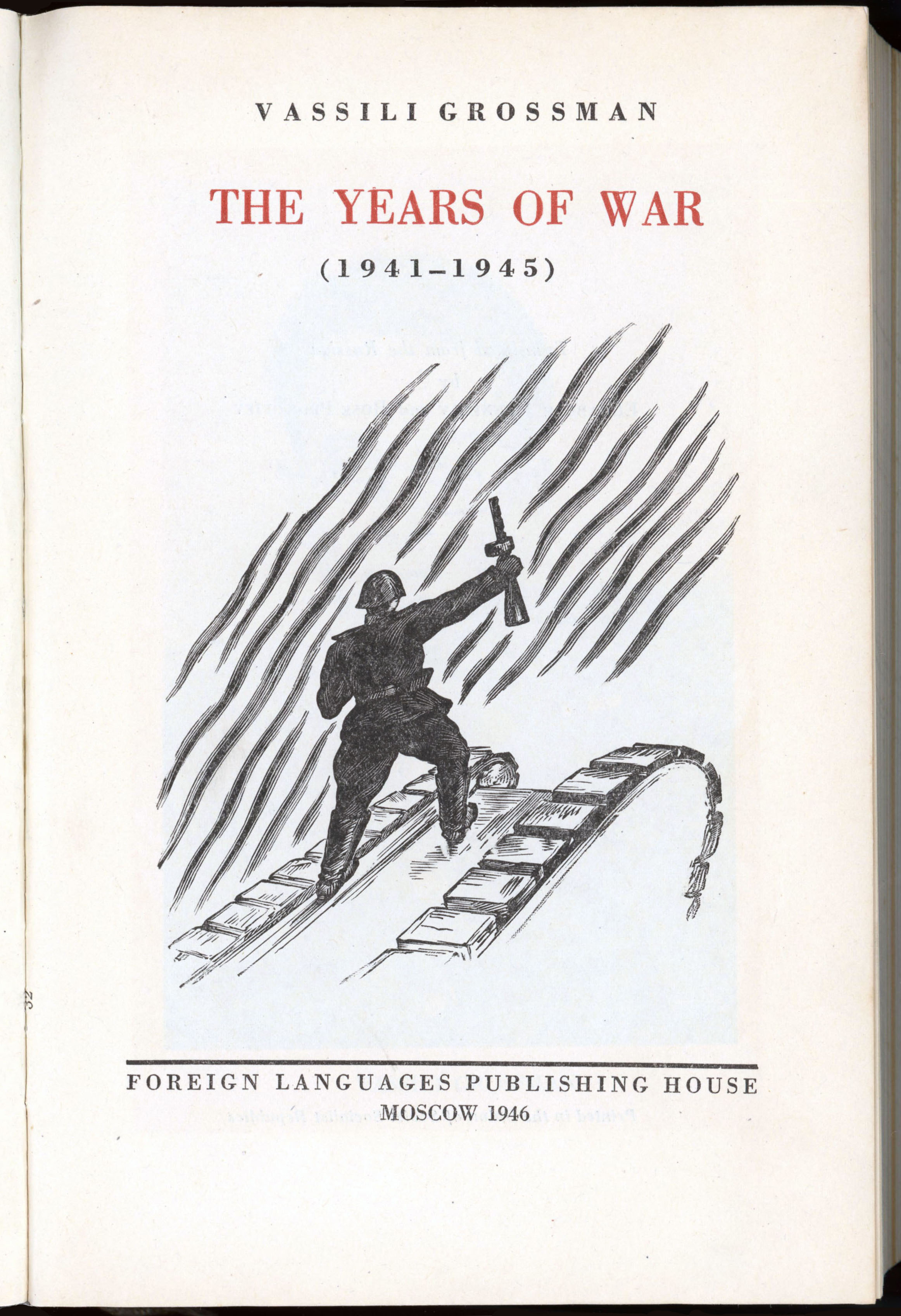
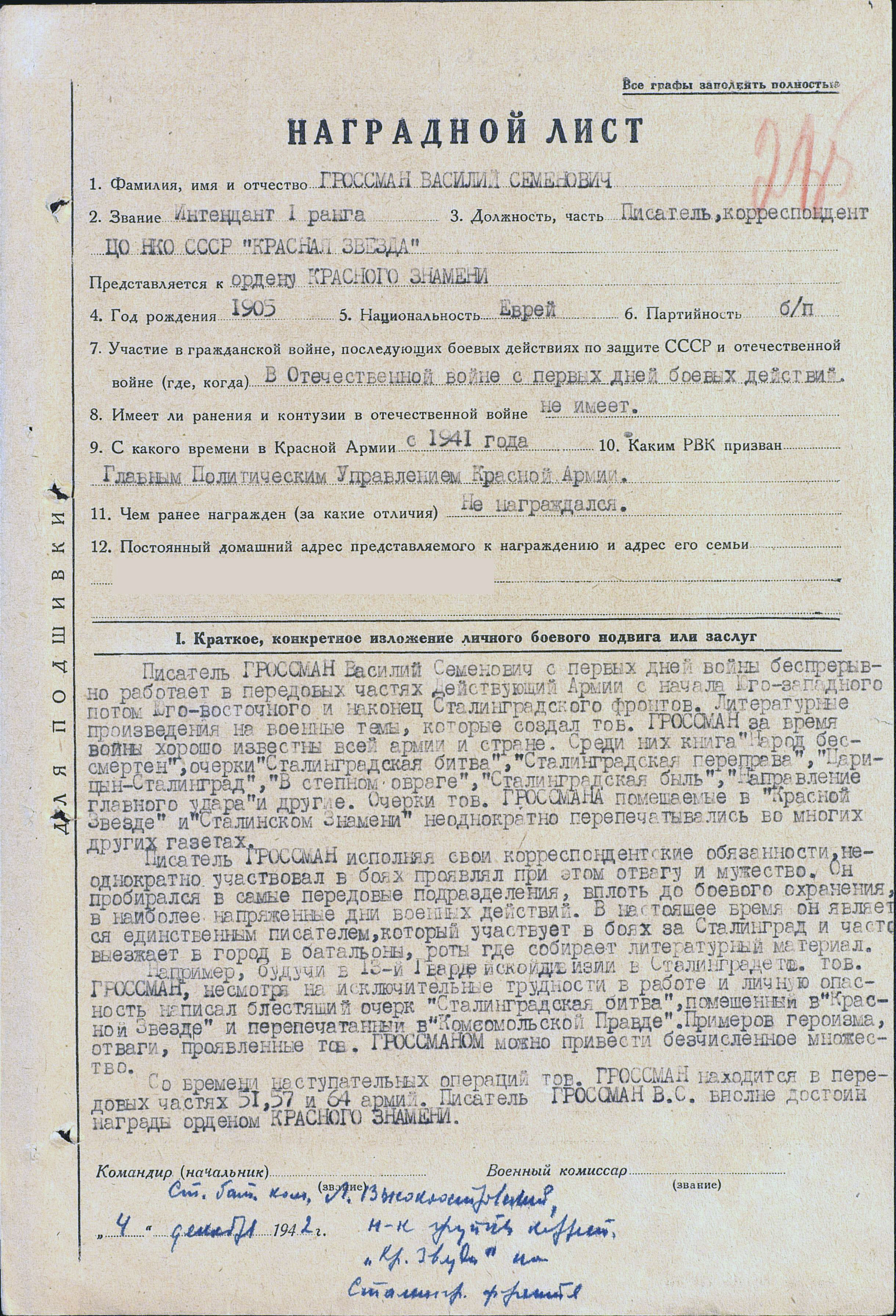
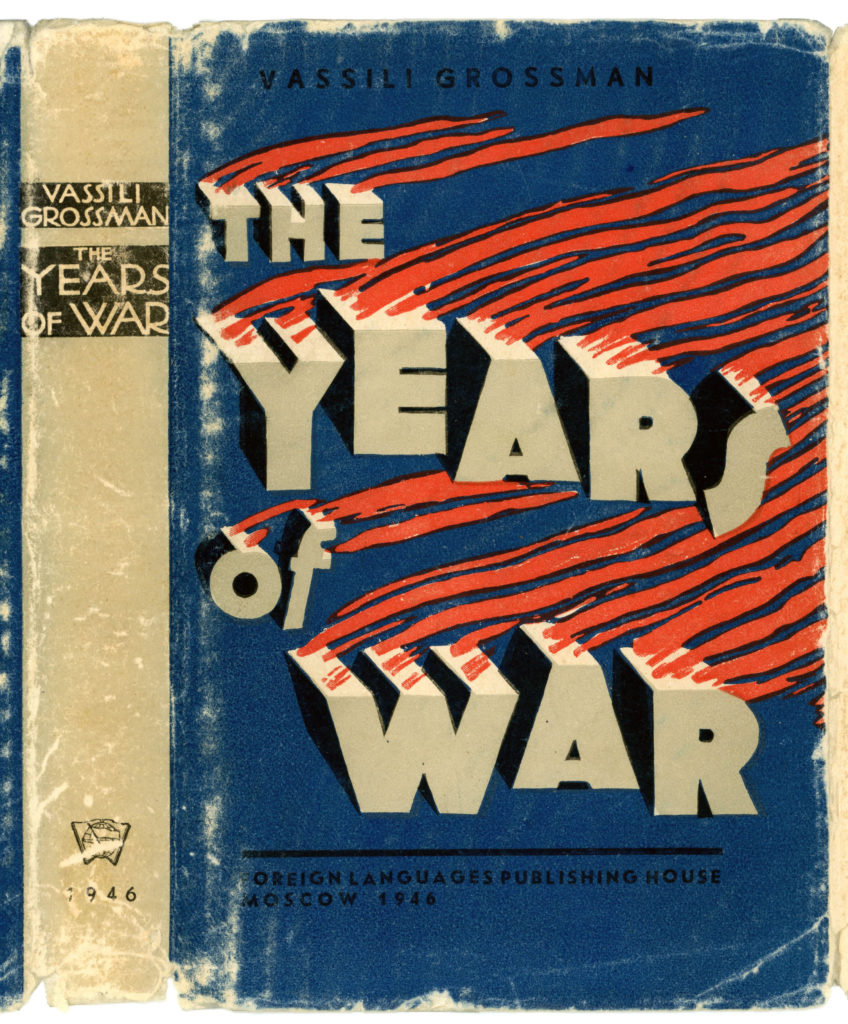
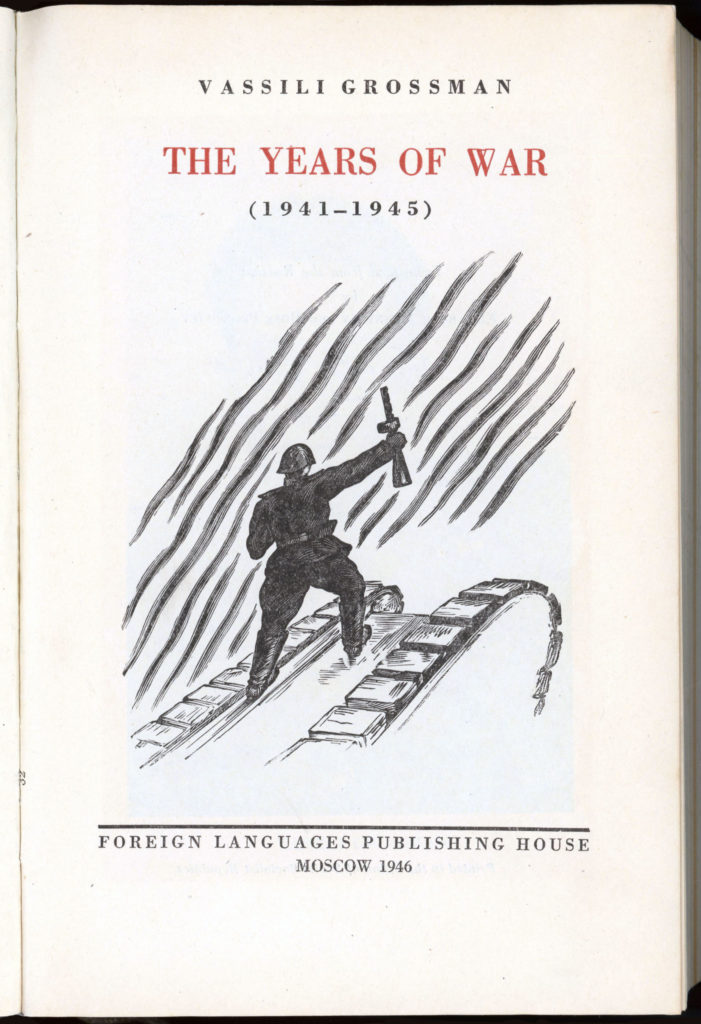
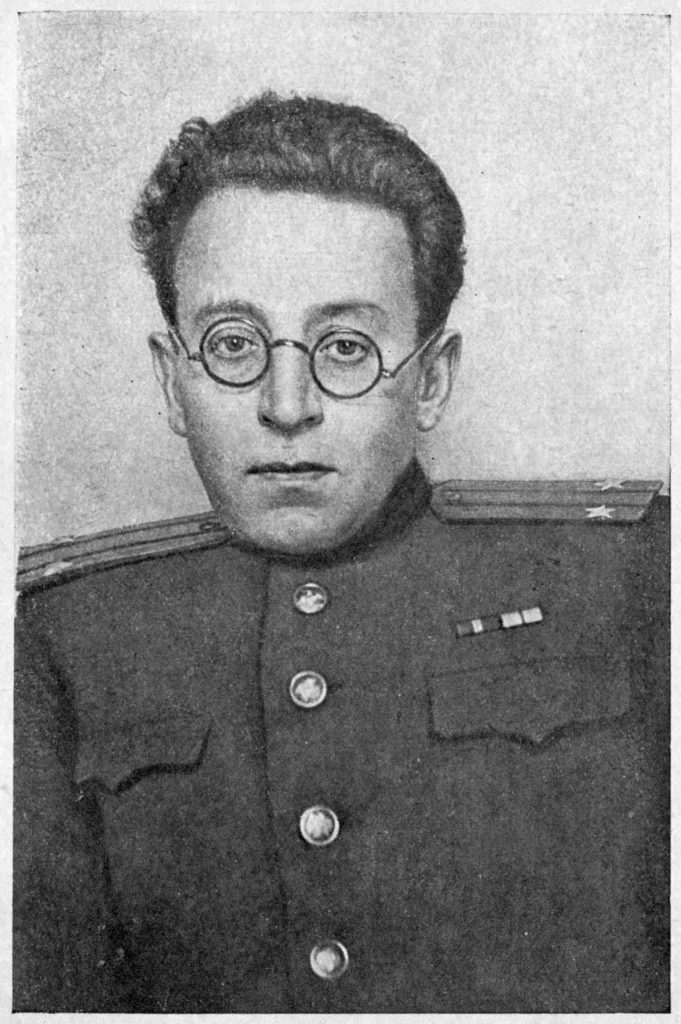
the-years-of-war-vassili-grossman-1946-1 the-years-of-war-vassili-grossman-1946-2_edited-1 grossman-vasily-ds-600 The document below is Vasiliy Grossman’s Commendation for The Order of the Red Star (Ordenu Krasnaya Zvezda – Ордену Красная Звезда) , dated 9 December 1942.  This document specifically mentions Grossman’s works “The People are Immortal,” “The Battle of Stalingrad”, “Stalingrad Crossing”, and “Stalingrad Story”.  Grossman’s experiences, recollections, and reporting during the Battle of Stalingrad formed a central basis for the setting and characters in his postwar novel, Life and Fate.

grossman-vasiliy-s-1a

grossman-vasiliy-s-1b

Краткое конкретное изложение личного боевого нодвига или заслуг

Писатель ГРОССМАН Василий Семенович с первых дней войны беспрерывно работает в передовых частях Действующий Армии с начала Юго-западного потом Юго-восточного и наконец Сталинградского фронтов.  Литературные произведения на военные темы, которые создал тов. ГРОССМАН за время войны хорошо известны всей армии и стране. Среди них книга “Народ бессмертен”, очерки “Сталинградская битва”, “Сталинградская переправа”, “Царицын-Сталинград”, “В степном овраге”, “Сталинградская быль”, “Направление главного удара” и другие.  Очерки тов. ГРОССМАН помешаемые в “Красной Звезде” и “Сталинском Знамени” неоднократно перепечатывались во многих Других газетах.

Писатель ГРОССМАН исполняя свои корреспондентокие обязанности, неоднократно участвовал в боях проявлял при этом отвагу и мужество.  Он пробирался в самые передовые подразделения, вплоть до боевого охранения, в наиболее напряженные дни военных действий.  В настояшее время он является Единственным писателем, который участвует в боях за Сталинград и части выезжает в город в батальоны, роты где собирает литературный материал.

На пример, будучи в 13-й Гвардейской Дивизии в Сталинград, тов. ГРОССМАН, несмотря на исключительные трудности в работе и личную опасность Написал блестяший очерк “Сталинградская битва”, помешенный в “Красной Звезде” и перепечатанный в “Комсомольской Правде”.  Примеров героизма, отваги, проявленные тов. ГРОССМАН можно привести безчисленное множество.

Со времени наступательных операций тов. ГРОССМАН находится в передовых частях 51, 57 и 64 армий.  Писатель ГРОССМАН В.С. вполне достоин награды орденом КРАСНОГО ЗНАМЕНИ.

~~~~~~~~~~~~~~~~~~~~~~~~~~~~~~~~~~~~~~~~

Summary of the specific statement of personal combat heroism or merit

Writer GROSSMAN Vasiliy Semenovich from the first days of the war constantly working in the forward parts of the army since the beginning of the South West subsequently South-east and finally Stalingrad Fronts.  Literary works on military subjects, created by comrade GROSSMAN during the war are well known throughout the Army and the country.  Among them the book “The People are Immortal,” essays “The Battle of Stalingrad”, “Stalingrad Crossing”, “Tsaritsyn-Stalingrad,” “The Steppe Gully”, “Stalingrad Story”, “The Direction of the Main Attack,” and others.  The essays of Comrade GROSSMAN appearing in the “Red Star” and “Stalin Banner” were repeatedly reprinted in many other newspapers.

Writer GROSSMAN performing his duties as correspondent, has participated in battles at the same time showing bravery and courage.  He made his way to the most advanced units, up to the outposts, in the most intense days of hostilities.  At the present time he is the only writer who participated in the battles of Stalingrad and often traveled to the city in the battalions [and] companies where he collects literary material.

For example, while in the 13th Guards Division in Stalingrad, Comrade GROSSMAN, in spite of the extreme difficulties in his work and personal danger wrote the brilliant essay “The Battle of Stalingrad”, columns in the “Red Star” and was reprinted in “Komsomolskaya Pravda”.  The examples of heroism and bravery shown comrade GROSSMAN can be cited by innumerable multitudes.

Since offensive operations Comrade GROSSMAN has been in the advanced parts of the 51st, 57th and 64th armies.  Writer V.S. GROSSMAN is quite worthy of the Order of the Red Banner.

For a deeper understanding of the life and works of Vasiliy Grossman, I strongly recommend The Bones of Berdichev – The Life and Fate of Vasily Grossman, by John Garrard and Carol Garrard (The Free Press, 1996), and A Writer At War – Vasily Grossman with the Red Army, 1941-1945, by Anthony Beevor and Luba Vinogradova (Pantheon Books, 2005).    
 

Here Is Your War, by Ernie Pyle [Carol Johnson]

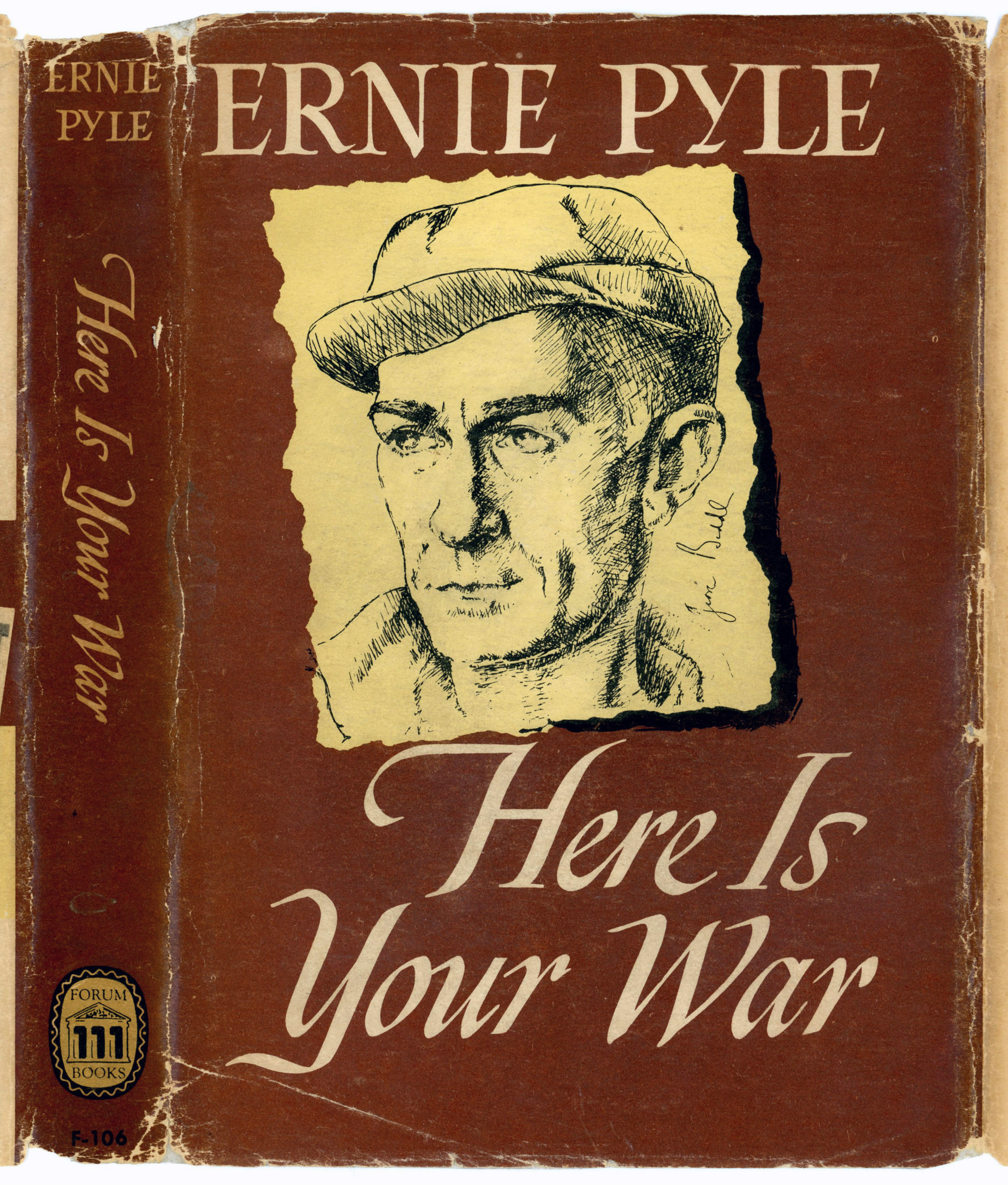
00 Here Is Your War - Ernie Plye - 1945 (Carol Johnson) 2(Forum Books Edition, 1945)

00 Here Is Your War - Ernie Pyle (1943) 1944 1(Pocket Books Edition, 1944 – front)

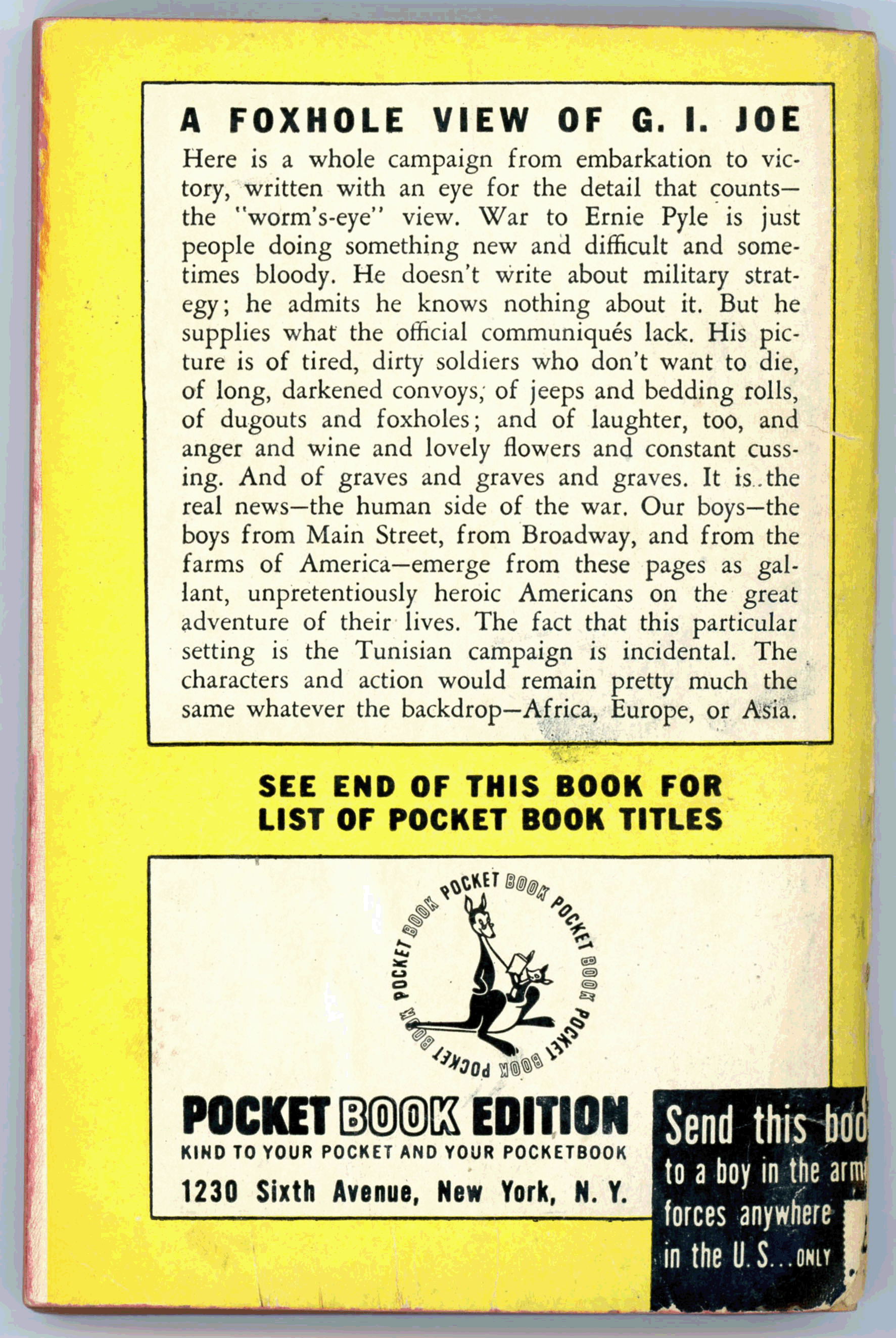
00 Here Is Your War - Ernie Pyle (1943) 1944 2

(Pocket Books Edition, 1944 – rear)

Here is Your War - 000 - Frontspiece 2

Frontspiece

Here is Your War - 003 (Convoy to Africa) 2

Convoy to Africa (3)

Here is Your War - 004 (Convoy to Africa - Soldiers Aboard Ship) 2Convoy to Africa (4)

Here is Your War - 008 (Convoy to Africa - Soldiers Aboard Ship) 2

Convoy to Africa (8)

Here is Your War - 011 (Convoy to Africa) 2

Convoy to Africa (11)

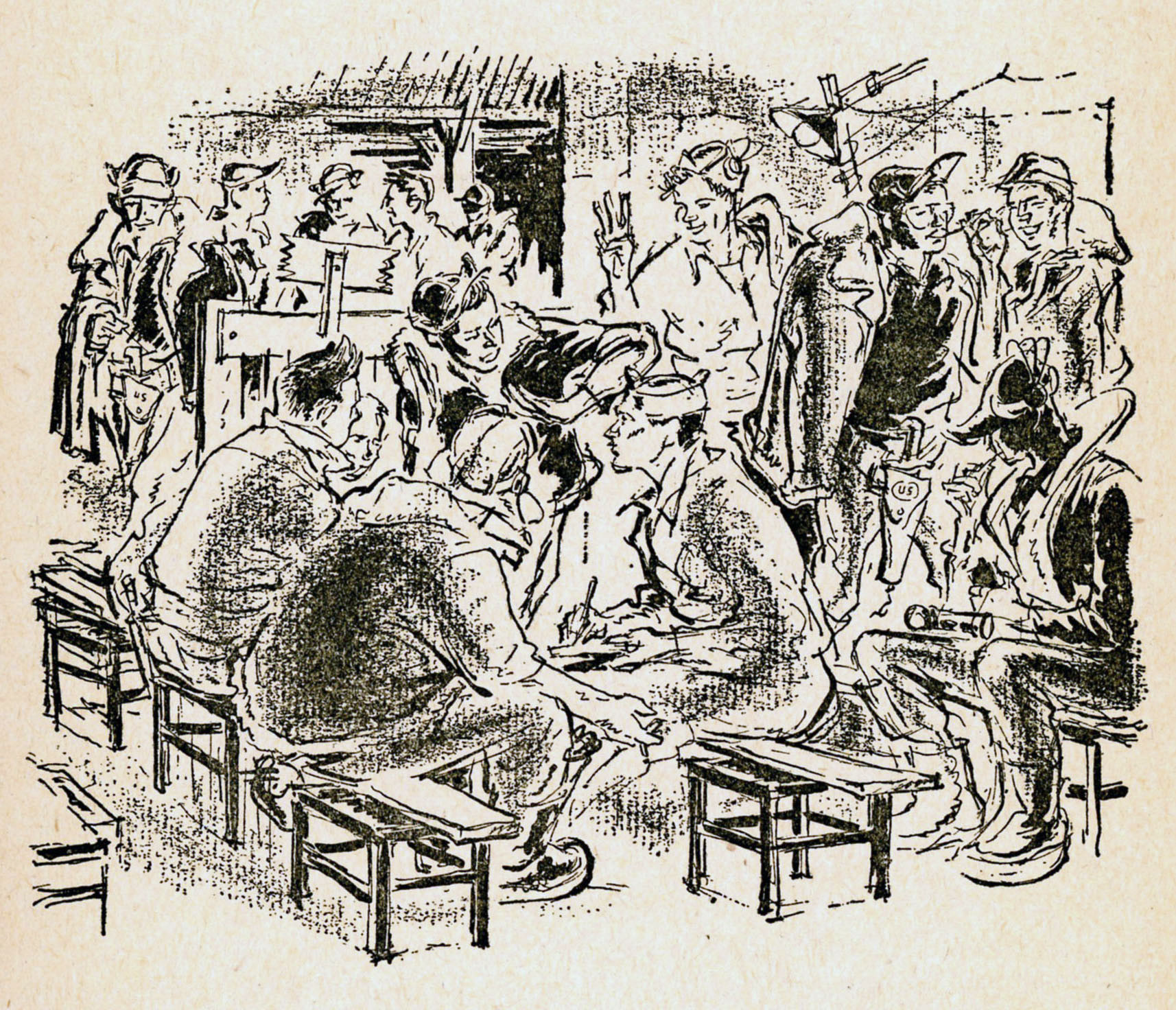
Here is Your War - 025 (The Americans Have Landed) 2

The Americans Have Landed (25)

Here is Your War - 031 (Not Too Dark Africa) 2

Not Too Dark Africa (31)

Here is Your War - 036 (Not Too Dark Africa - Arab Family) 2

Not Too Dark Africa (Arab Family) (36)

Here is Your War - 054 (On The Land - MPs) 2

On The Land (MPs) (54)

Here is Your War - 065 (The Medical Front - Dentist Major Vaiden Kendrick) 2

The Medical Front (Major Vaiden Kendrick, Dentist) (65)

Here is Your War - 080 (In The Air) 2

In The Air (B-25 Mitchell Bomber) (80)

Here is Your War - 089 (In The Air - Fighter Pilots) 2

In The Air (Fighter Pilots) (89)

Here is Your War - 100 (In The Air) 2

In The Air (B-25 Mitchell Bomber) (100)

Here is Your War - 109 (Sherman Had a Word For It) 2

Sherman Had a Word For It (109)

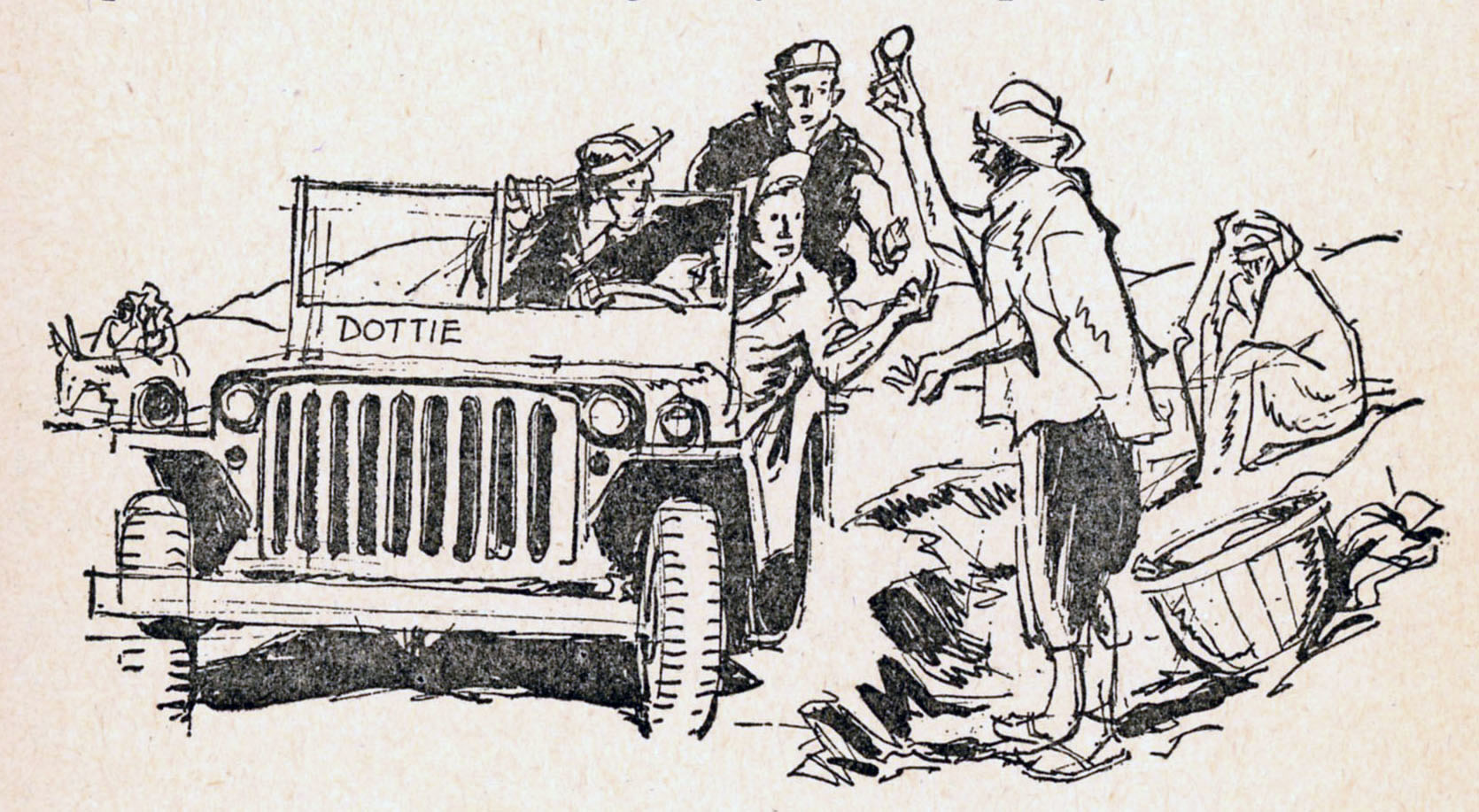
Here is Your War - 113 (Sherman Had a Word For It - Bartering with Arabs) 2

Sherman Had a Word For It (Bartering With Arabs) (113)

Here is Your War - 121 (Sherman Had a Word For It) 2

Sherman Had a Word For It (121)

Here is Your War - 125 (Bullets, Battles, and Retreat) 2

Bullets, Battles and Retreat (125)

Here is Your War - 140 (Bullets, Battles, and Retreat) 2

Bullets, Battles and Retreat (140)

Here is Your War - 150 (Sidelights - Corporal Lester Gray, Chicago) 2

Sidelights (Corporal Lester Gray, Chicago) (150)

Here is Your War - 159 (Desert Sortie - French Soldier) 2

Desert Sortie (French Soldier) (159)

Here is Your War - 173 (Roving Reporters) 2

Roving Reporters (173)

Here is Your War - 177 (Roving Reporters - Sleeping Accomodations) 2

Roving Reporters (Sleeping Accommodations) (177)

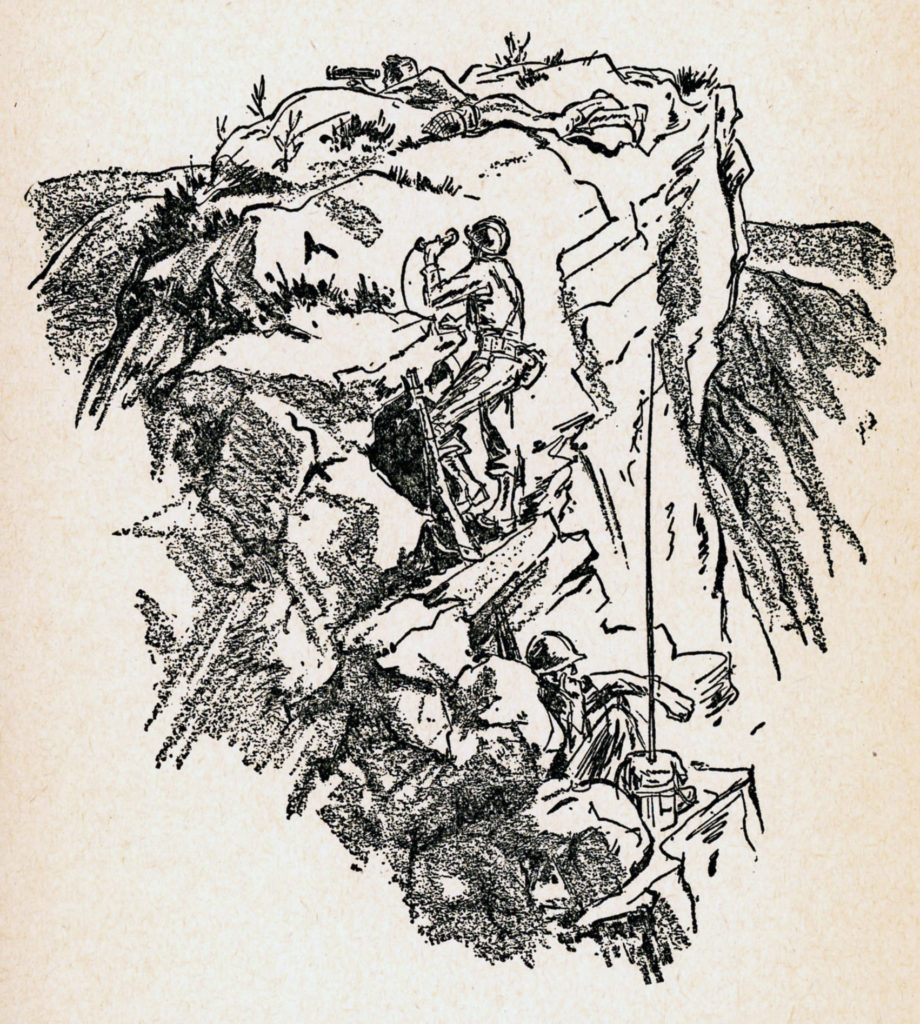
Here is Your War - 183 (The End in Sight - Tunisia) 2

The End in Sight (Tunisia) (183)

Here is Your War - 184 (The End in Sight - Tunisia) 2

The End in Sight (Tunisia) (184)

Here is Your War - 188 (The End in Sight - Tunisia - German Cemetery) 2

The End in Sight (Tunisia – German Cemetery) (184)

Here is Your War - 191 (The End in Sight - Fighter Pilots) 2

The End in Sight (Fighter Pilots) (191)

Here is Your War - 196 (The End in Sight) 2

The End in Sight (196)

Here is Your War - 202 (The Final Push) 2

The Final Push (202)

Here is Your War - 224 (Victory - German POW) 2

Victory (German POW) (224)

Here is Your War - 228 (Victory - Entering Ferryville) 2

Victory (Entering Ferryville) (228)

Here is Your War - 234 (Victory - Jeep at Airfield) 2

Victory (Jeep at Airfield) (234)

Here is Your War - 237 (Victory - Tunisia) 2

Victory (Tunisia) (237)

Here is Your War - 241 (Victory) 2

Victory (241)