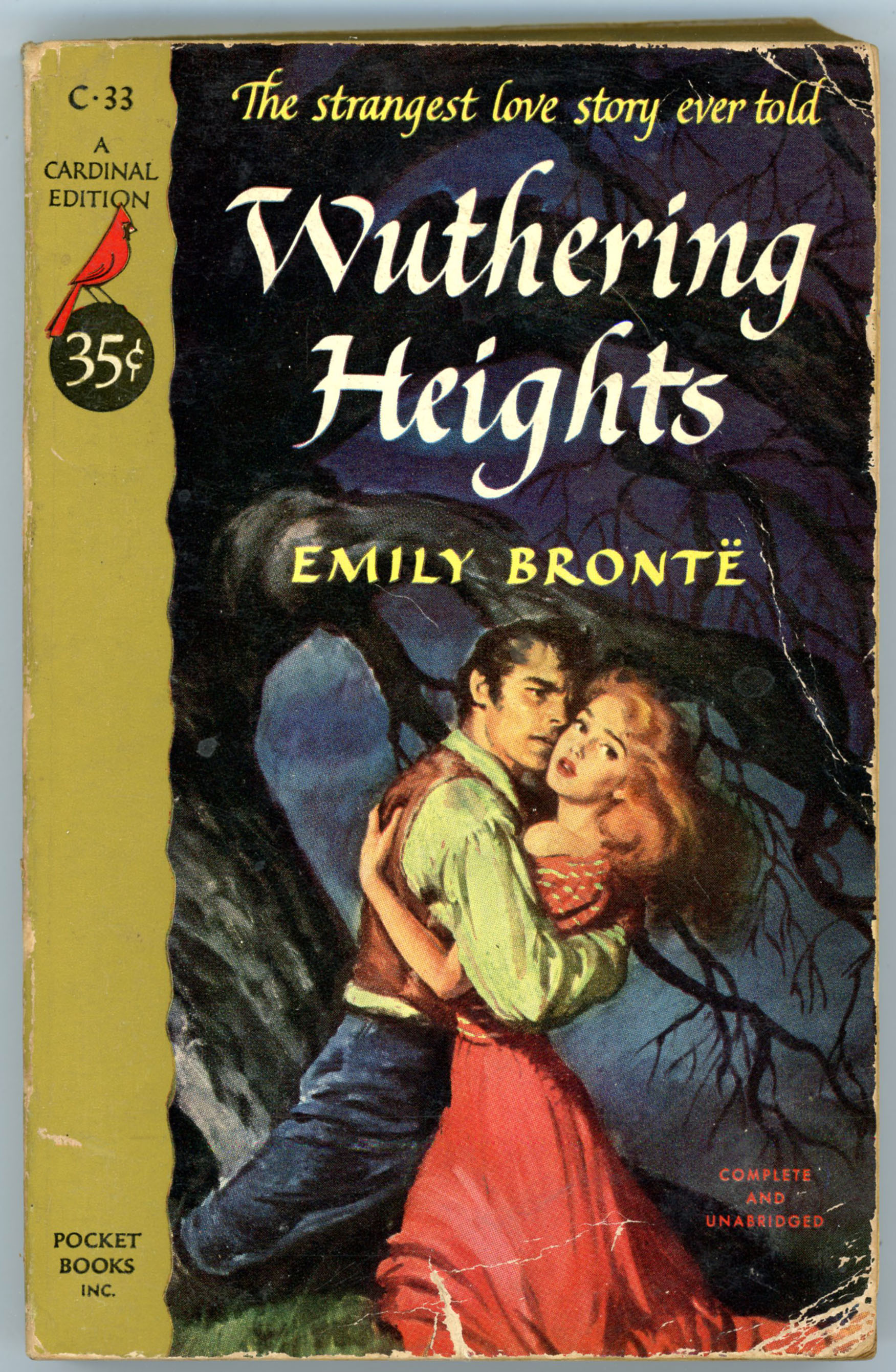
Wuthering Heights, by Emily Bronte – October, 1952 (December, 1847) [Walter M. Baumhofer]

“Is Mr. Heathcliff a man?  If so, is he mad?
And if not, is he a devil?”

Dear Ellen, it begins, —
I came last night to Wuthering Heights,
and heard, for the first time, that Catherine has been, and is yet, very ill. 
I must not write to her, I suppose,
and my brother is either too angry or too distressed to answer what I sent him. 
Still, I must write to somebody, and the only choice left me is you.

Inform Edgar that I’d give the world to see his face again —
that my heart returned to Thrushcross Grange in twenty-four hours after I left it,
and is there at this moment, full of warm feelings for him, and Catherine!
I can’t follow it though — (these words are underlined) —
they need not expect me, and they may draw what conclusions they please;
taking care, however, to lay nothing at the door of my weak will or deficient affection.

The remainder of the letter is for yourself alone. 
I want to ask you two questions: the first is, —
How did you contrive to preserve the common sympathies of human nature when you resided here?
I cannot recognise any sentiment which those around share with me.

The second question I have great interest in; it is this —
Is Mr. Heathcliff a man?  If so, is he mad?
And if not, is he a devil?
I sha’n’t tell my reasons for making this inquiry;
but I beseech you to explain, if you can, what I have married:
that is, when you call to see me; and you must call, Ellen, very soon.
Don’t write, but come, and bring me something from Edgar.

References

Wuthering Heights, at Wikipedia

Wuthering Heights (full text), at Project Gutenberg

The Pocket Book of O. Henry, edited by Harry Hansen – 1948 [Curt Witt]

Contents

From “The Four Million”

The Gift of the Magi
The Skylight Room
The Cop and The Anthem
Memoirs of a Yellow Dog
Springtime a la Carte
The Green Door
After Twenty Years
The Furnished Room

From “Heart of The West”

The Pimienta Pancakes
The Reformation of Calliope

From “Roads of Destiny”

The Passing of Black Eagle
A Retrieved Reformation
Whirling Dick’s Christmas Stocking

From “Cabbages and Kings”

Caught

From “Sixes and Sevens”

The Sleuths
Makes the Whole World Kin

From “Whirligigs”

The Whirligig of Life
A Newspaper Story

From “The Voice of The City”

The Voice of the City
One Thousand Dollars

From “The Trimmed Lamp”

The Trimmed Lamp
A Madison Square Arabian Night
The Rubaiyat of a Scotch Highball
Two Thanksgiving Day Gentlemen
The Buyer From Cactus City
The Badge of Policeman O’Roon
The Last Leaf
The Tale of a Tainted Tenner

From “Strictly Business”

A Municipal Report
Compliments of the Season

Face of a Hero, by Louis Falstein – 1951 [Al Schmidt]

The two images below, of the first (1950) edition (Harcourt, Brace and Company) of Face of A Hero, show the book’s front cover / spine, and title page, the latter including an illustration of an aviator’s flight helmet, goggles, and oxygen mask.  

The book’s cover combined and is limited to two fundamental elements: one symbolic – a human face; the other quite “real” – a formation of six B-24 Liberator bombers under attack by two enemy fighter planes.  Though the novel’s general setting is, of course, the WW II air war against Germany,  it’s intriguing that the cover art is set upon varying tones of red, rather than cooler “aerial” shades of blue, gray, and white.

Though the artist’s name is not presented on either the cover or within the book itself, stylistically, the human face at least seems to be reminiscent of the work of Ben Shahn…  (Well, maybe!)

It occurred to me I must write to Ruth, but I didn’t know what to tell her.
A subtle wall was being erected between my wife and me
because we had not shared this experience.
I realized with a shock that my wife was a civilian, safe back in the States.
And I suddenly resented those who were safe.
I was appalled at the ease with which I abandoned myself to self-pity
even in my hour of triumph.
But aside from the corrupting but very comfortable stabs of self-pity
there was no denying that my most profound experience had been shared with me
not by Ruth but by nine comparative strangers.
They were now a part of my life, part of my joys and sorrows.
We had not chosen one another as brothers; it had been ordained for us.
Mel Ginn, a rancher from western Texas, was my brother.
I didn’t know much about him and he was suspicious of me because I came from a large city.
He was amused by my clumsiness with the guns.
He was puzzled that an “old man” had got himself mixed up in the fighting.
Mel had never met a Jew before and this confused him also.
Before our first mission we had little to say to each other.
But today we had been through life together.
Before our first mission Leo Trent and I had little in common.
Leo used to sell perfume in Hollywood before the war.
His heart had been set on becoming a pilot,
but he had been washed out of cadet training “three hours before graduation.”
That was his story.
It rankled that his younger brother, who was twenty-one, two years Leo’s junior,
was an ace Marine fighter pilot in the Pacific while Leo became a “venereal gunner.”
He was not a good gunner (this we had in common),
and up in the air I saw him paralyzed with fear (this too we had in common).
Leo and I had never become close,
perhaps because we each knew the other to be a coward who resented being found out.
That’s why he was wary of me.
He credited me with an insight that always sat in judgment on his weaknesses.
Also, he mistook my aloofness for snobbery.
He did not like riddles.
But I wanted him to like me.
He was, after all, my brother. (p 30)

______________________________

The images below are of the 1951 Pocket Books edition of Face of A Hero, featuring cover art by Al Schmidt. 


Would Andy laugh at me if I told him I was in this war because I wanted to keep America free?
I wanted to tell him I was in it not only because I was against Hitler;
I was also for something.
I was convinced that after we won it, life would be better for all.
People would get along better;
not only Missourians and Illinoisians,
but Italians and Americans too…
But how do you tell these things to a frightened man, a man facing death?
I was afraid Andy would laugh at me.
Americans had an ingrained suspicion of words, any words smacking of patriotism.

Andy sat silent for a while, contemplating the pebbles on the tent floor.
“Oh, I’ll fly my missions,” he said.
“I’m no better or no worse than anybody else.
I certainly wouldn’t pull a stunt like Bowles pulled yesterday,
shooting off his toe and claiming it was an accident.
I wouldn’t do a thing like that, nobody in our crew would.”
He regarded me searchingly to see whether I believed him.
He got up and went to sit on his cot.
“Oh, I don’t know,” the navigator sighed.
“It’s all mixed up in my mind.
In one way I feel I’m a sucker for being in this.
In another way I feel useless.
I’m supposed to be a navigator.
The army spent a fortune to train me.
But do I navigate?
I’m just a passenger in the ship, while the lead navigator does all the work.
You men could fly without me.
It wouldn’t be so bad if I had a gun to fire.
You don’t know what it means to be shot at and not shoot back.
You’re helpless, useless.
You go crazy.
If I could only keep busy in the air –
maybe I wouldn’t have the time to worry so much about death…”
He slapped his thighs savagely
and stood up and walked to the cone-shaped entrance of the tent.
“I don’t know what to think.
I’ve never been so mixed up and so scared in my life…”  (109-110)

______________________________

The image below – a portrait of Louis Falstein posing against a “backdrop” of a B-24 Liberator’s fuselage – was scanned from a photographic print.  It’s unknown if this picture was taken during his training in the continental United States, or later, at the 450th Bomb Group’s base at Manduria, Italy. 

Most likely, the former. 

Notably, this is the same image of Louis Falstein that appeared (albeit highly cropped!) as the cover of the 1999 Steerforth Press edition of Face of a Hero.  The novel’s re-publication that year generated much commentary concerning the book’s similarities to – and striking differences from – Joseph Heller’s stunningly over-rated embodiment of literary mediocrity (and, ironic commercial and cultural success) otherwise known as “Catch-22.

______________________________

The portrait below, showing Lou in more peaceful times, appears on the jacket of the first edition of Face of A Hero.

The Pocket Book of Science Fiction, Edited by Donald A. Wollheim – 1943 (1947) [Unknown Artist]

By The Waters of Babylon, by Stephen Vincent Benet

Moxon’s Master, by Ambrose Bierce

Green Thoughts, by John Collier

In The Abyss, by H.G. Wells

The Green Splotches, by T.S. Stribling

The Last Man, by Wallace G. West

A Martian Odyssey, by Stanley G. Weinbaum

Twilight, by Don A. Stuart

Microcosmic Gog, by Theodore Sturgeon

And He Built a Crooked House, by Robert A. Heinlein

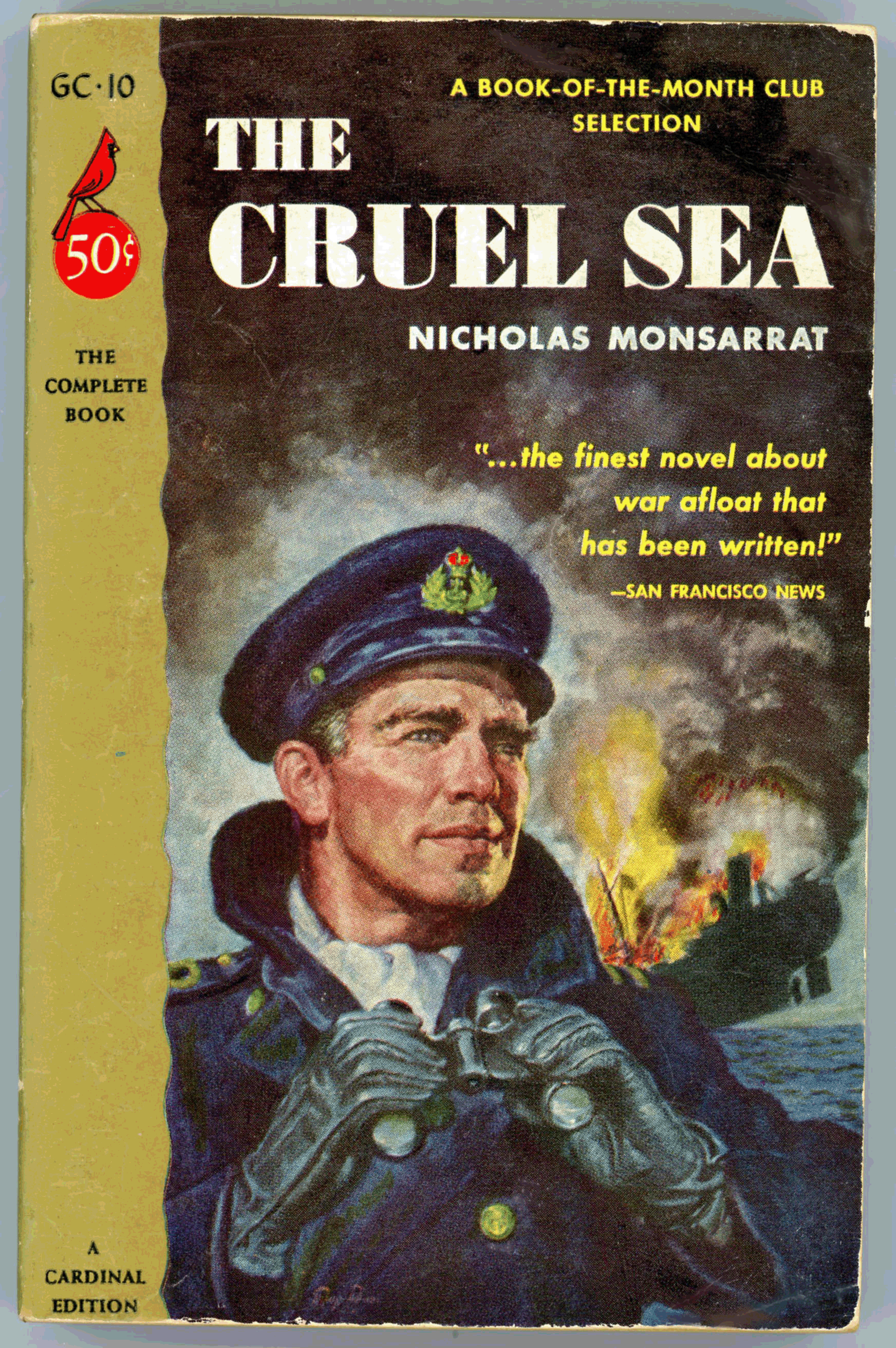
The Cruel Sea, by Nicholas J.T. Monsarrat – 1953 [Ray Pease]

the-cruel-sea-nicholas-monsarrat-1953-ray-pease_edited-1So their battle ended, and so,
all over the Atlantic, the fighting died –
a strangely tame finish,
after five and a half years of bitter struggle.
There was no eleventh-hour,
death-or-glory assault on shipping,
no individual attempt at piracy after the surrender date:
the vicious war petered out in bubbles,
blown tanks, a sulky yielding, and the laconic order:
“Follow me.”
But no anti-climax, no quiet end,
could obscure the triumph and the pride inherent in this victory,
with its large cost –
thirty thousand seamen killed,
three thousand ships sent to the bottom in this one ocean –
and its huge toll of seven hundred and eighty U-boats sunk,
to even the balance.

It would live in history,
because of its length and its unremitting ferocity:
it would live in men’s minds
for what it did to themselves and to their friends,
and to the ships they often loved. 
After all, it would live in naval tradition,
and become legend,
because of its crucial service to an island at war,
its price in sailor’s lives, and its golden prize –
the uncut lifeline to the sustaining outer world.


The Exploration of Space, by Arthur C. Clarke – 1954 [Bob Smallman]

the-exploration-of-space-arthur-c-clarke-1954-1It seems unlikely that any culture can advance more than a few centuries at a time,
on a technological front alone. 
Morals and ethics must not lag behind science,
otherwise (as our own recent history has shown)
the social system will breed poisons which will cause its certain destruction.

With superhuman knowledge there must go
equally great compassion and tolerance. 
When we meet our peers among the stars,
we need have nothing to fear save our own shortcomings.


the-exploration-of-space-arthur-c-clarke-1954-2

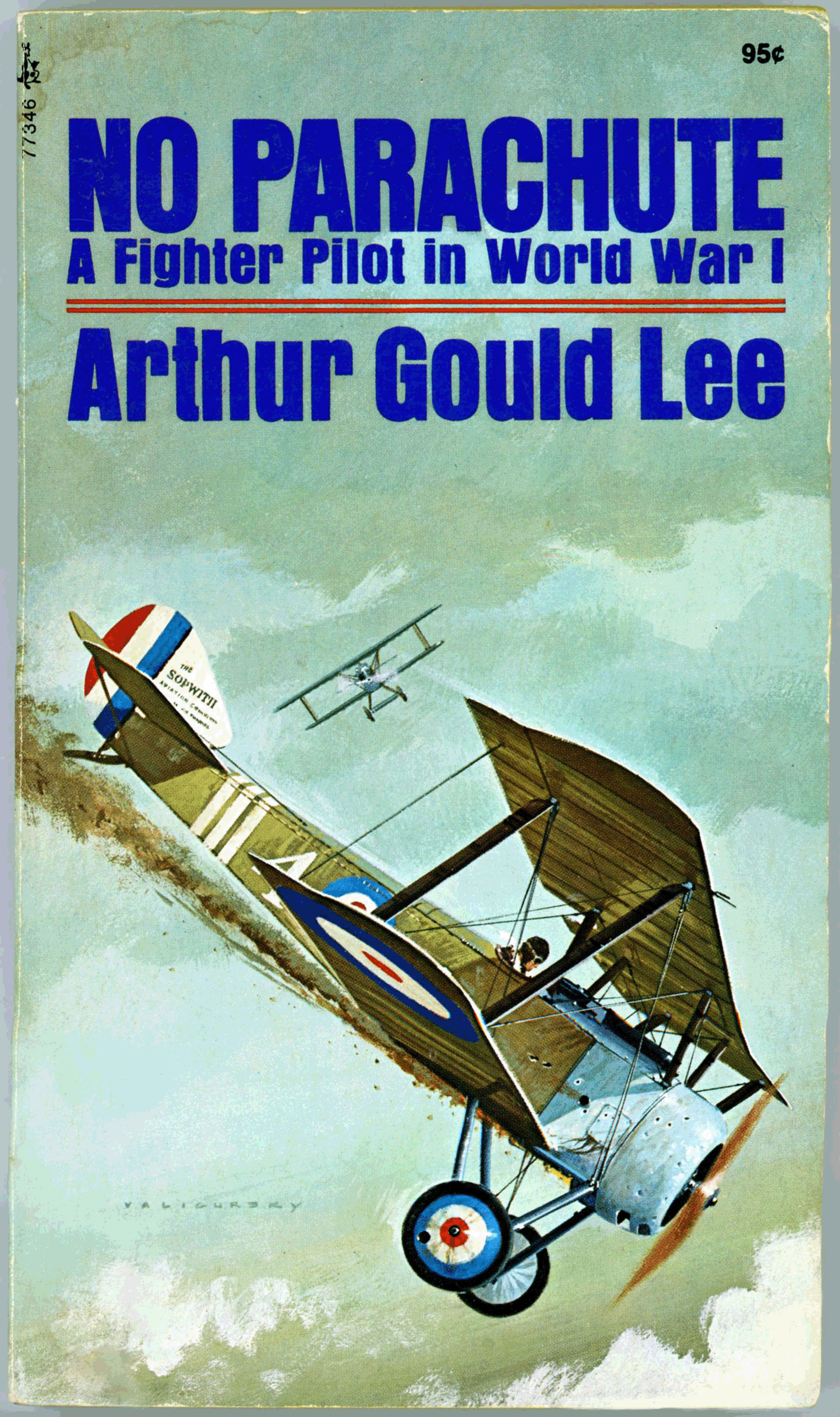
No Parachute – A Fighter Pilot in World War I, by Arthur Gould Lee – 1917 (1971) [Edward Valigursky]

no-parachute-arthur-gould-lee-1971-valigursky_edited-1Looking back on this scrap,
I realize that however much you’re scared before you start,
once you’re in it you don’t feel excitement or fear,
you fight in a sort of daze.
When it’s over, and you find you’re still alive,
you feel both exhausted and exhilarated.
In fact, what with the sun shining,
and blue sky above,
and the white clouds below, and your engine running smoothly,
and the Pup handling like the spirited thing she is,
you can feel that you’ve enjoyed it.
Like you enjoy a plunge in an icy-cold mountain pool – once you get out of it.
(June 30, 1917)

* * * * * * * * * *

In your last letter you ask why I touch wood just before a scrap when I could pray. 
But why should God grant me any special favour? 
The Hun I’m fighting may be calling on Him too. 
It isn’t as though I have any great faith in religion,
but even if I had,
would it divert a bullet? 
Anyway, how can anybody who has to fight believe in God,
with all the mass killings,
and with British, French and German priests all shouting that God is on their side?
How can I call on God to help me shoot down a man in flames?
(September 21, 1917)

* * * * * * * * * *

They talk glibly about danger and bravery and so on,
but they are just words,
they don’t mean a thing. 
They ask you how many Fritzes you’ve shot down,
old bean,
as though it’s a cricket score. 
They just don’t realize that a machine destroyed means a life ended,
some unfortunate devil,
British or German,
smashed to pulp or burned alive.

Somehow, the air smells cleaner out here.

All the way on the journey back to Izel form London

I had the feeling that I didn’t want to come,
that I was forced to do so because I was in the grip of a vast machine,
like hundreds of thousands of other young men,
helpless,
with no wills of our own,
compelled to come back to danger, maybe death. 
Yet as soon as I entered the Mess and was greeted by the chaps,
I had a sensation of coming home. 
The familiar cheerful faces, the smiling Mess servants, my batman, even Jock –
and late the N.C.O.s and the men in the flight –
they all made me feel I belonged here, and not to the selfish mob of London.

It was then that I realize what made me so often restless during that leave
was that I was missing the squadron – and the war. 
Yes, the war. 
Sounds darned silly, but that’s what it was,
the excitement, the unspoken friendliness, the feeling of doing something real. 
I hate the war, of course,
yet I was drawn back to it,
I had a queer urge to go back to where I belonged,
even if it was dangerous.
(Friday, November 9, 1917)

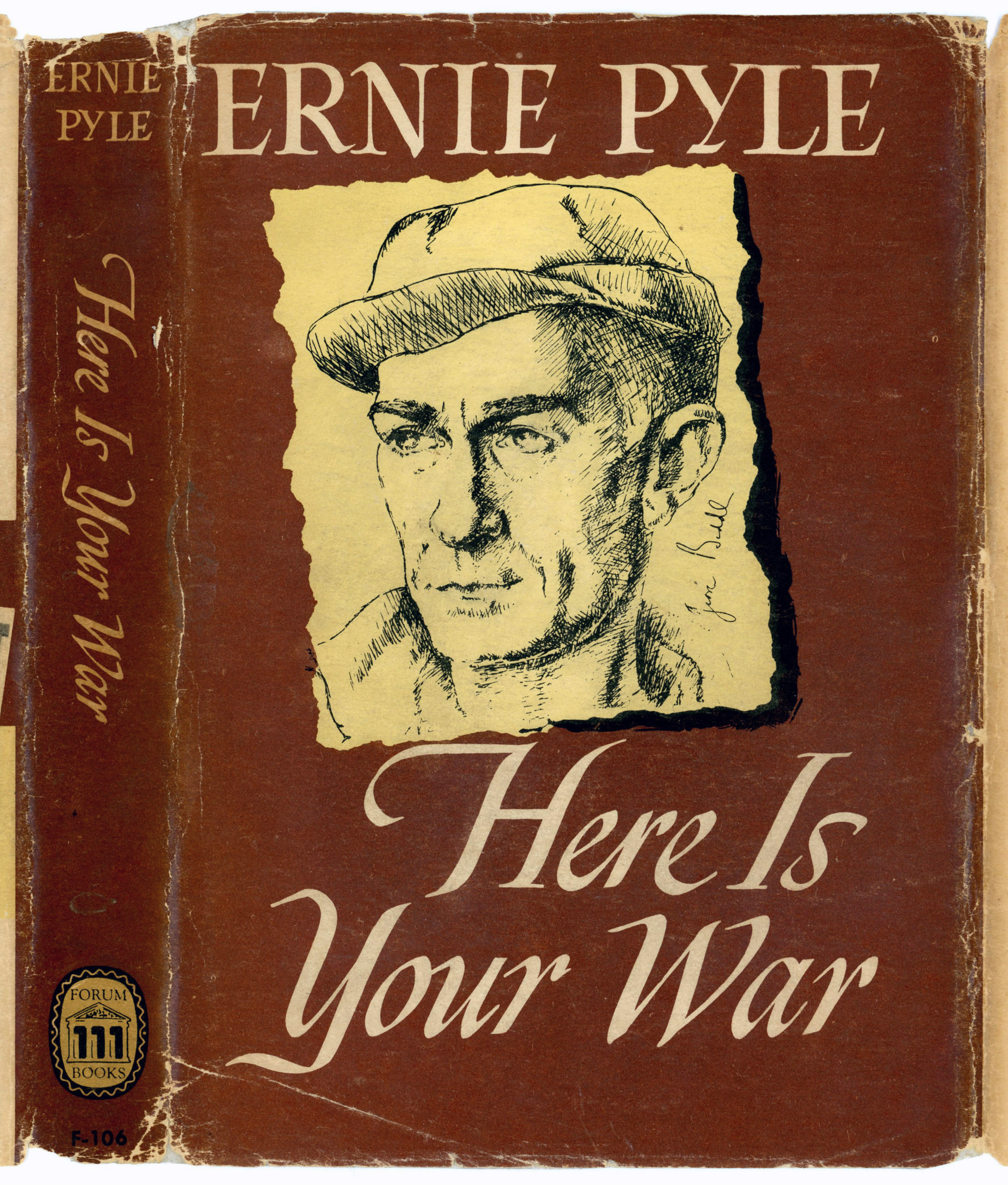
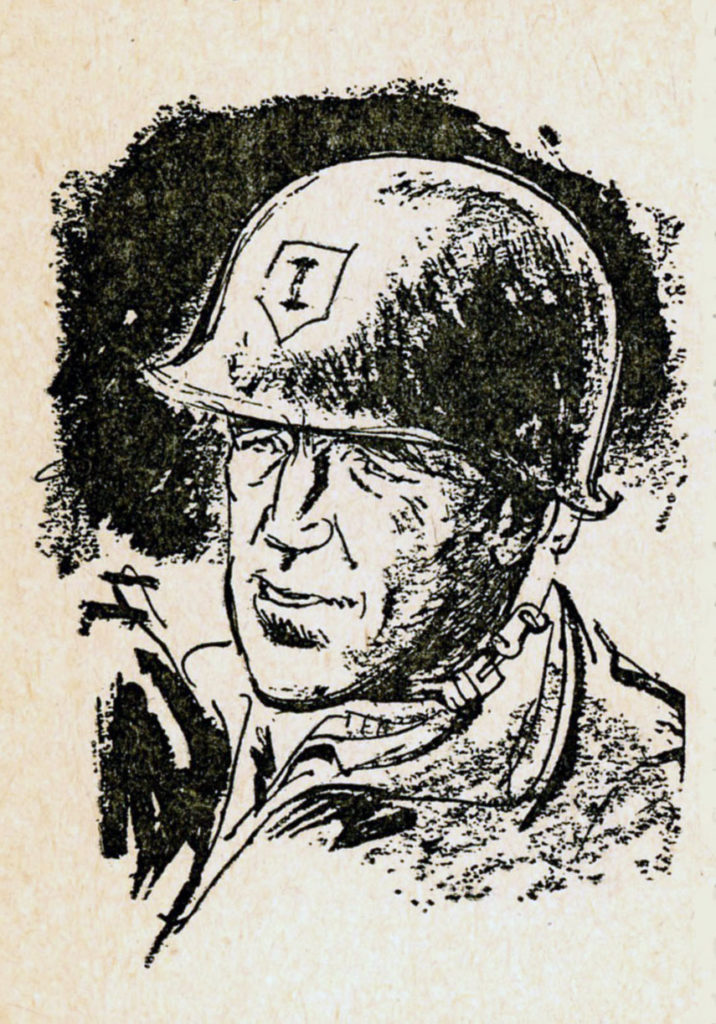
Here Is Your War, by Ernie Pyle [Carol Johnson]

00 Here Is Your War - Ernie Plye - 1945 (Carol Johnson) 2(Forum Books Edition, 1945)

00 Here Is Your War - Ernie Pyle (1943) 1944 1(Pocket Books Edition, 1944 – front)

00 Here Is Your War - Ernie Pyle (1943) 1944 2

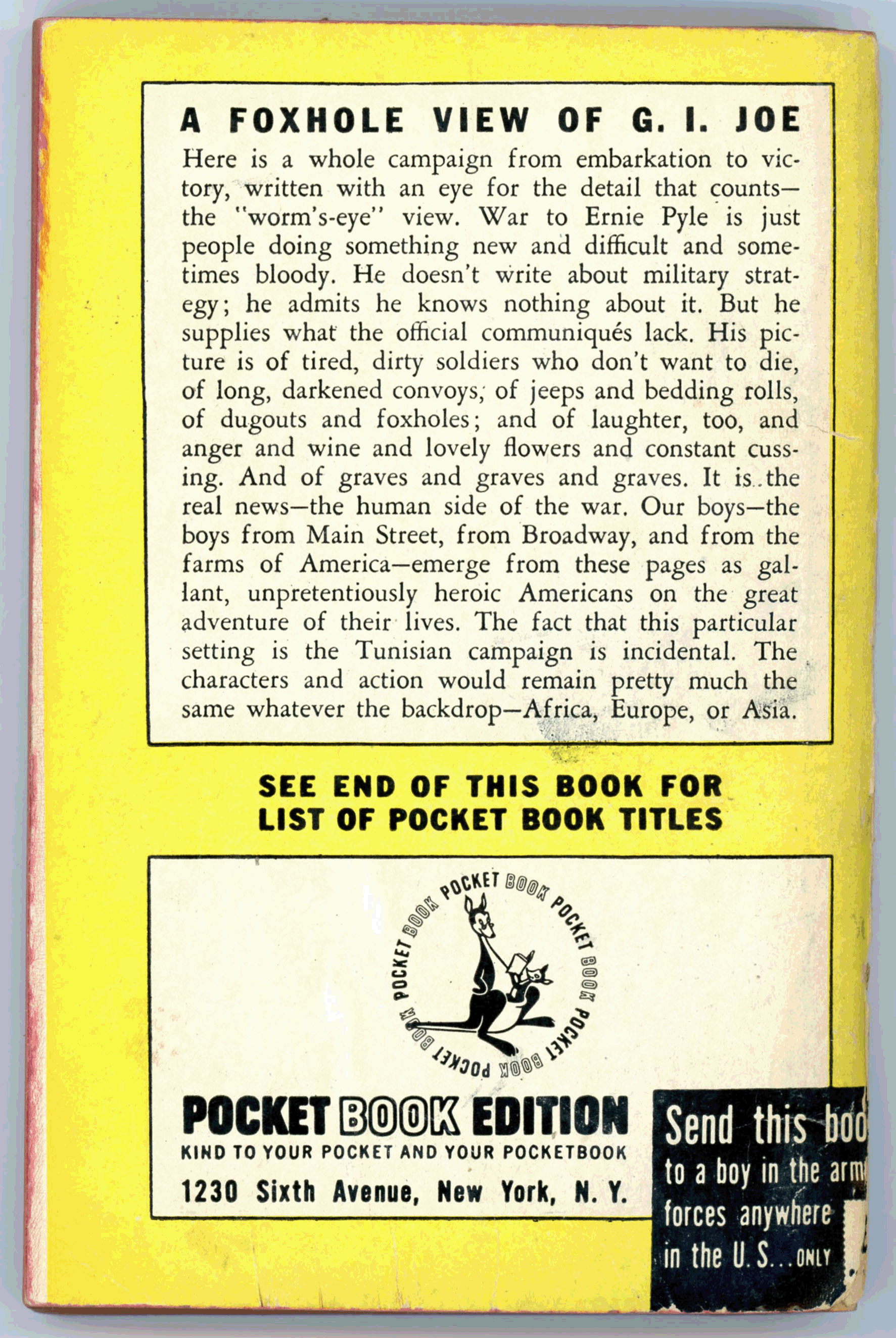
(Pocket Books Edition, 1944 – rear)

Here is Your War - 000 - Frontspiece 2

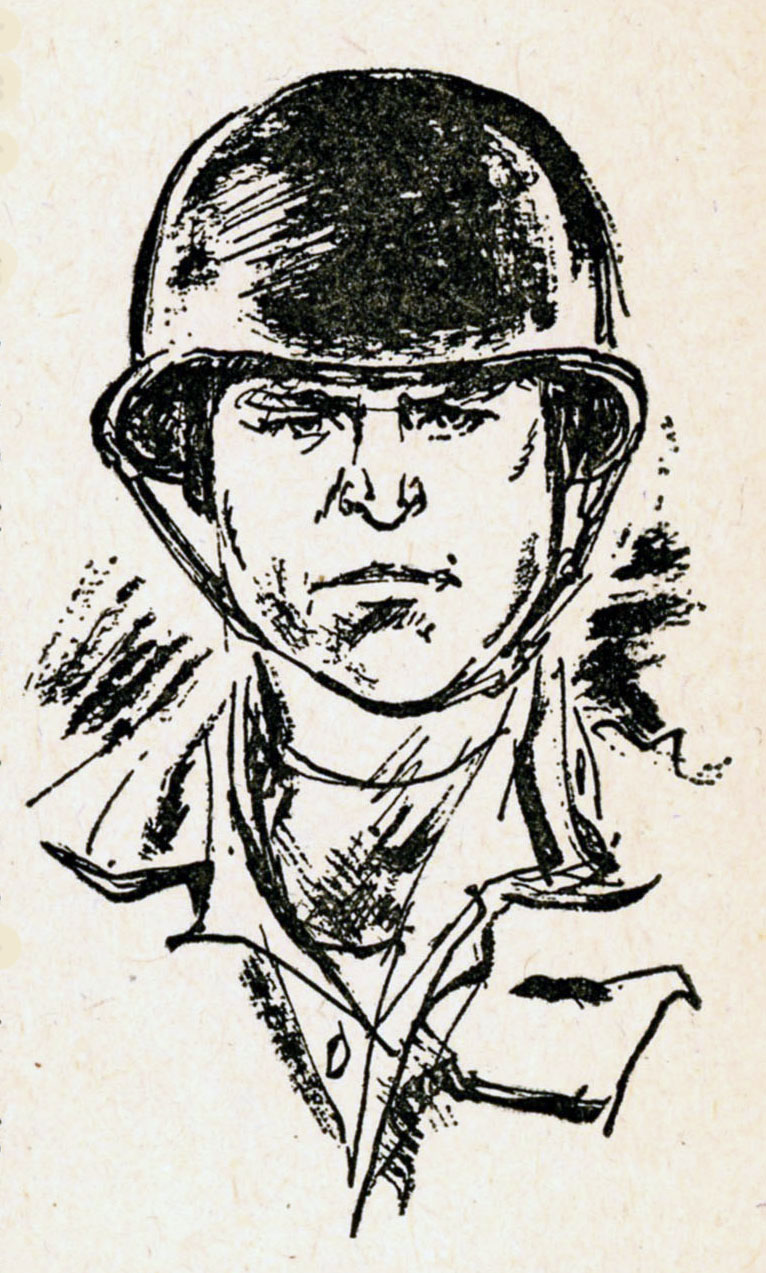
Frontspiece

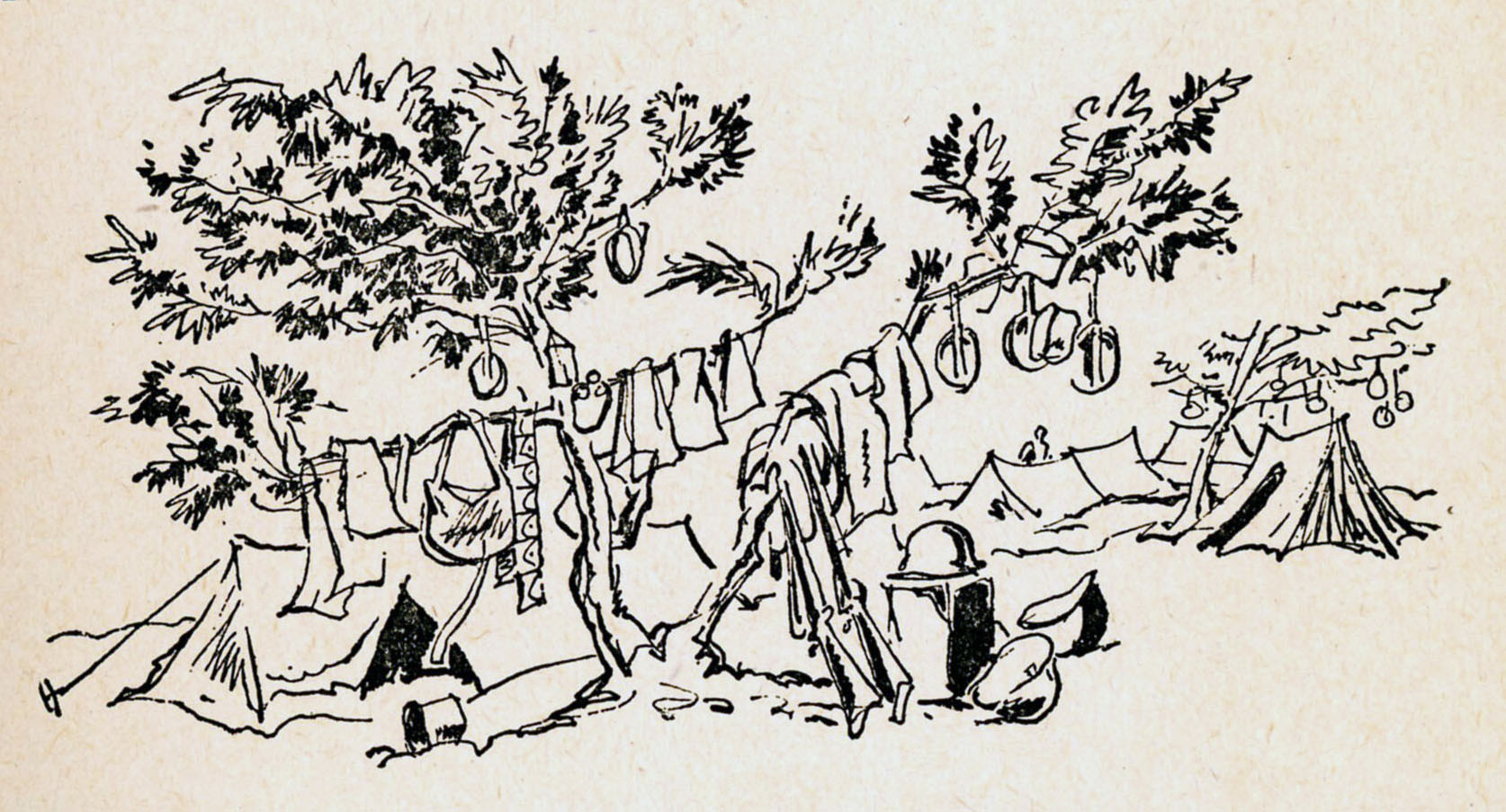
Here is Your War - 003 (Convoy to Africa) 2

Convoy to Africa (3)

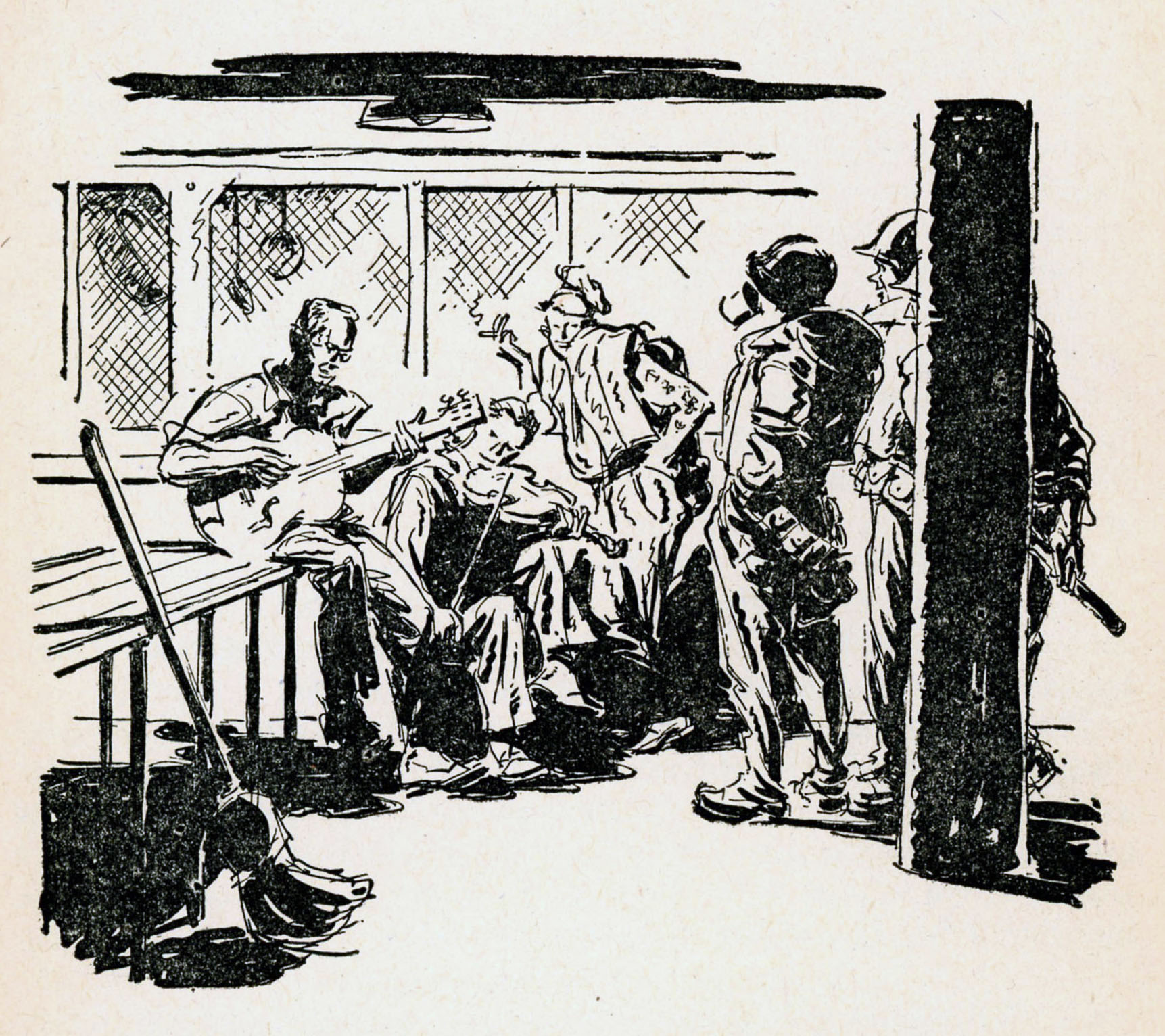
Here is Your War - 004 (Convoy to Africa - Soldiers Aboard Ship) 2Convoy to Africa (4)

Here is Your War - 008 (Convoy to Africa - Soldiers Aboard Ship) 2

Convoy to Africa (8)

Here is Your War - 011 (Convoy to Africa) 2

Convoy to Africa (11)

Here is Your War - 025 (The Americans Have Landed) 2

The Americans Have Landed (25)

Here is Your War - 031 (Not Too Dark Africa) 2

Not Too Dark Africa (31)

Here is Your War - 036 (Not Too Dark Africa - Arab Family) 2

Not Too Dark Africa (Arab Family) (36)

Here is Your War - 054 (On The Land - MPs) 2

On The Land (MPs) (54)

Here is Your War - 065 (The Medical Front - Dentist Major Vaiden Kendrick) 2

The Medical Front (Major Vaiden Kendrick, Dentist) (65)

Here is Your War - 080 (In The Air) 2

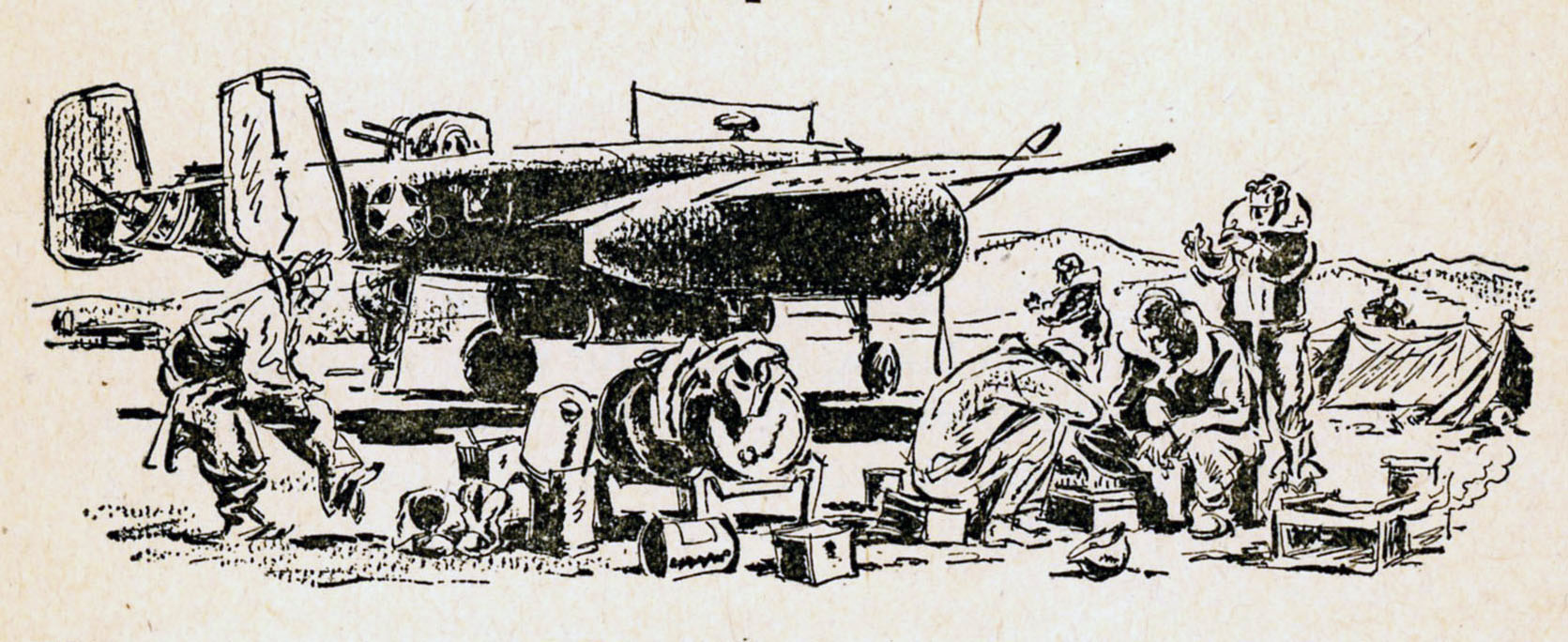
In The Air (B-25 Mitchell Bomber) (80)

Here is Your War - 089 (In The Air - Fighter Pilots) 2

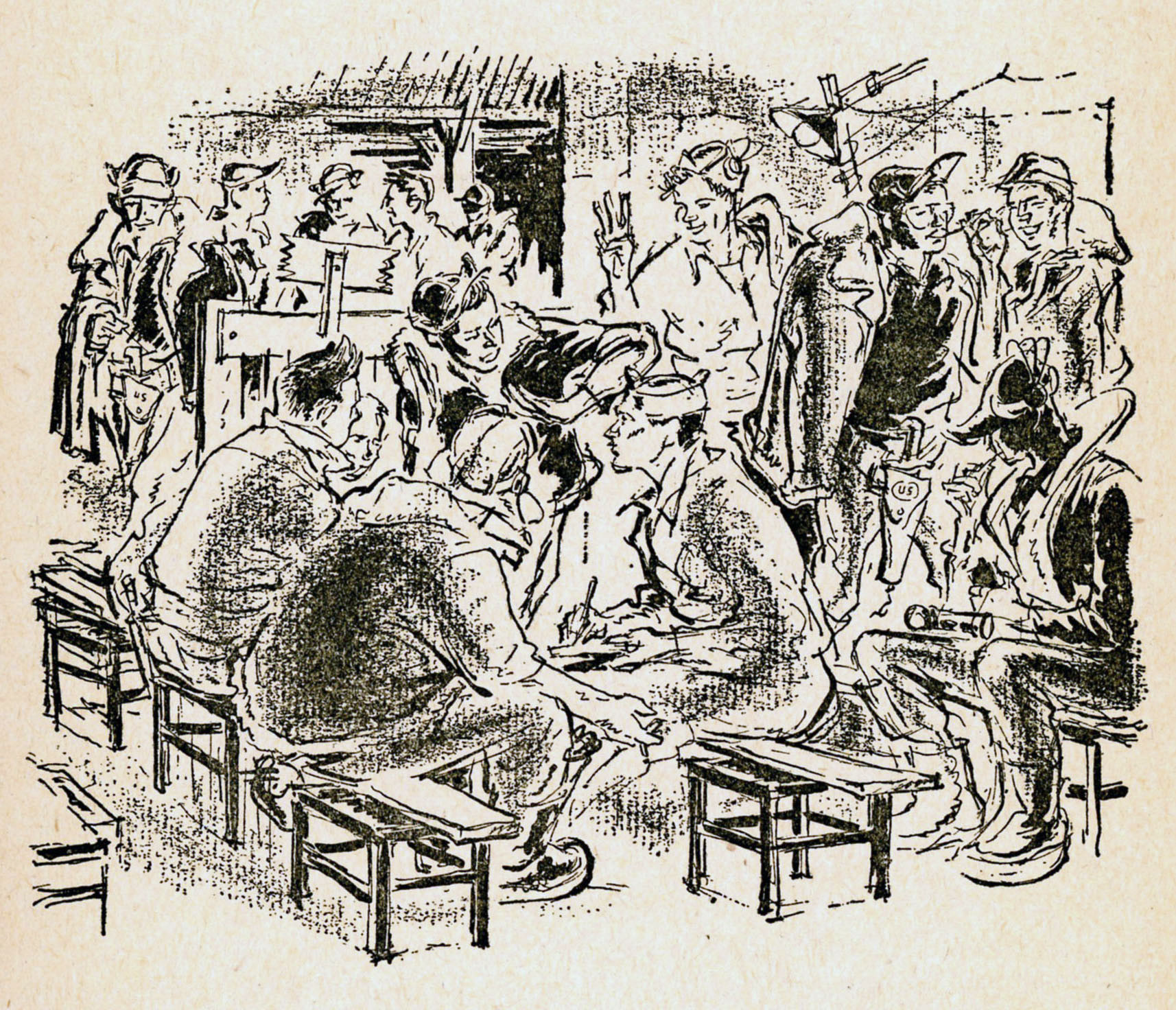
In The Air (Fighter Pilots) (89)

Here is Your War - 100 (In The Air) 2

In The Air (B-25 Mitchell Bomber) (100)

Here is Your War - 109 (Sherman Had a Word For It) 2

Sherman Had a Word For It (109)

Here is Your War - 113 (Sherman Had a Word For It - Bartering with Arabs) 2

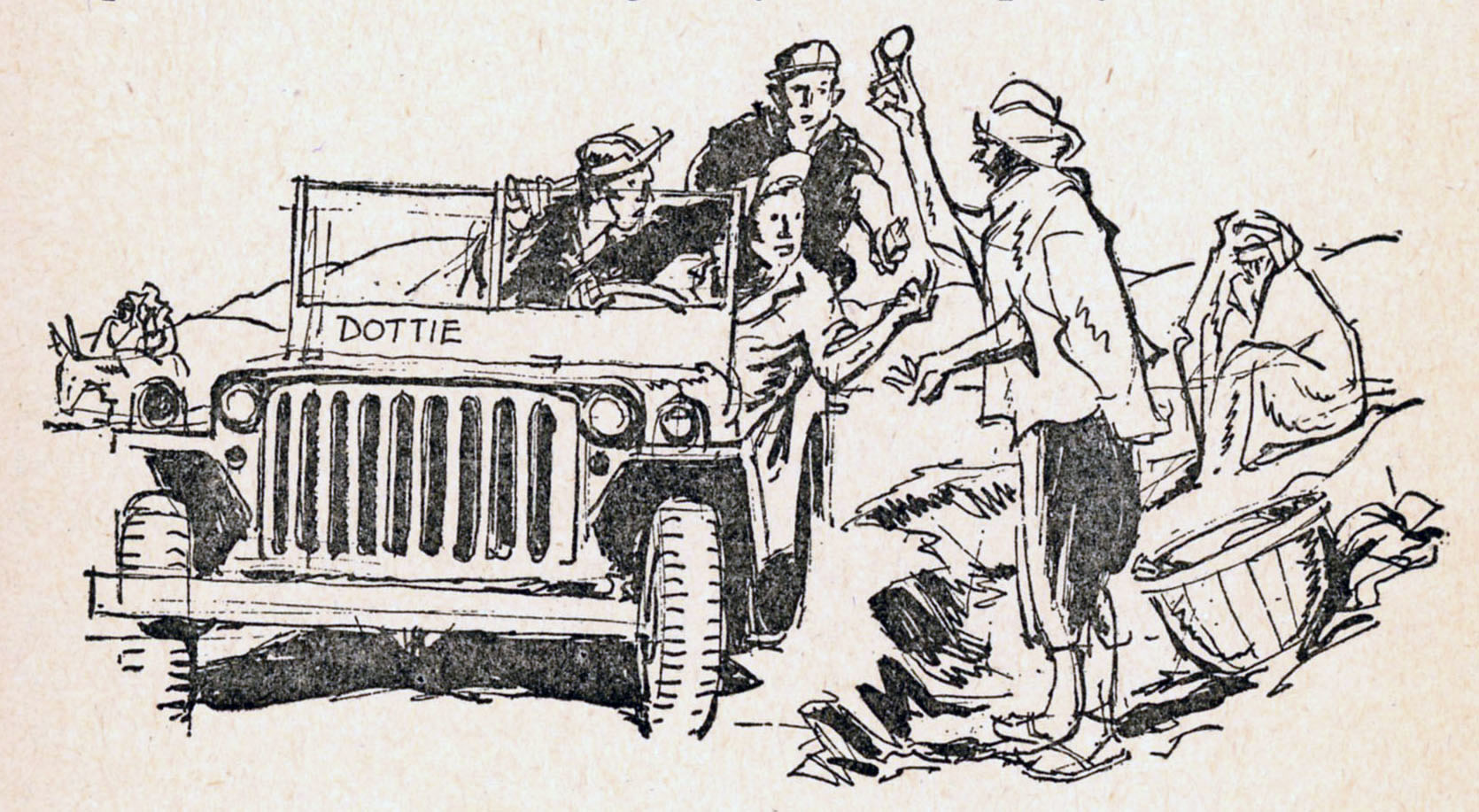
Sherman Had a Word For It (Bartering With Arabs) (113)

Here is Your War - 121 (Sherman Had a Word For It) 2

Sherman Had a Word For It (121)

Here is Your War - 125 (Bullets, Battles, and Retreat) 2

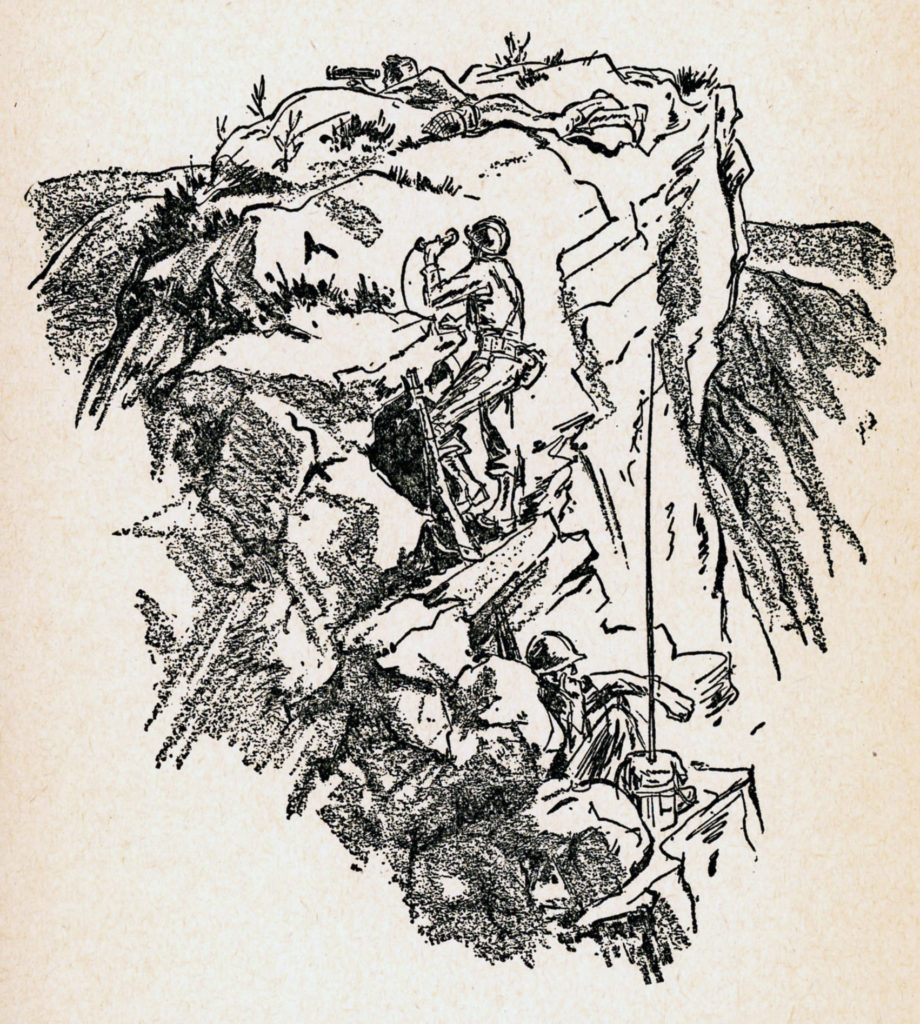
Bullets, Battles and Retreat (125)

Here is Your War - 140 (Bullets, Battles, and Retreat) 2

Bullets, Battles and Retreat (140)

Here is Your War - 150 (Sidelights - Corporal Lester Gray, Chicago) 2

Sidelights (Corporal Lester Gray, Chicago) (150)

Here is Your War - 159 (Desert Sortie - French Soldier) 2

Desert Sortie (French Soldier) (159)

Here is Your War - 173 (Roving Reporters) 2

Roving Reporters (173)

Here is Your War - 177 (Roving Reporters - Sleeping Accomodations) 2

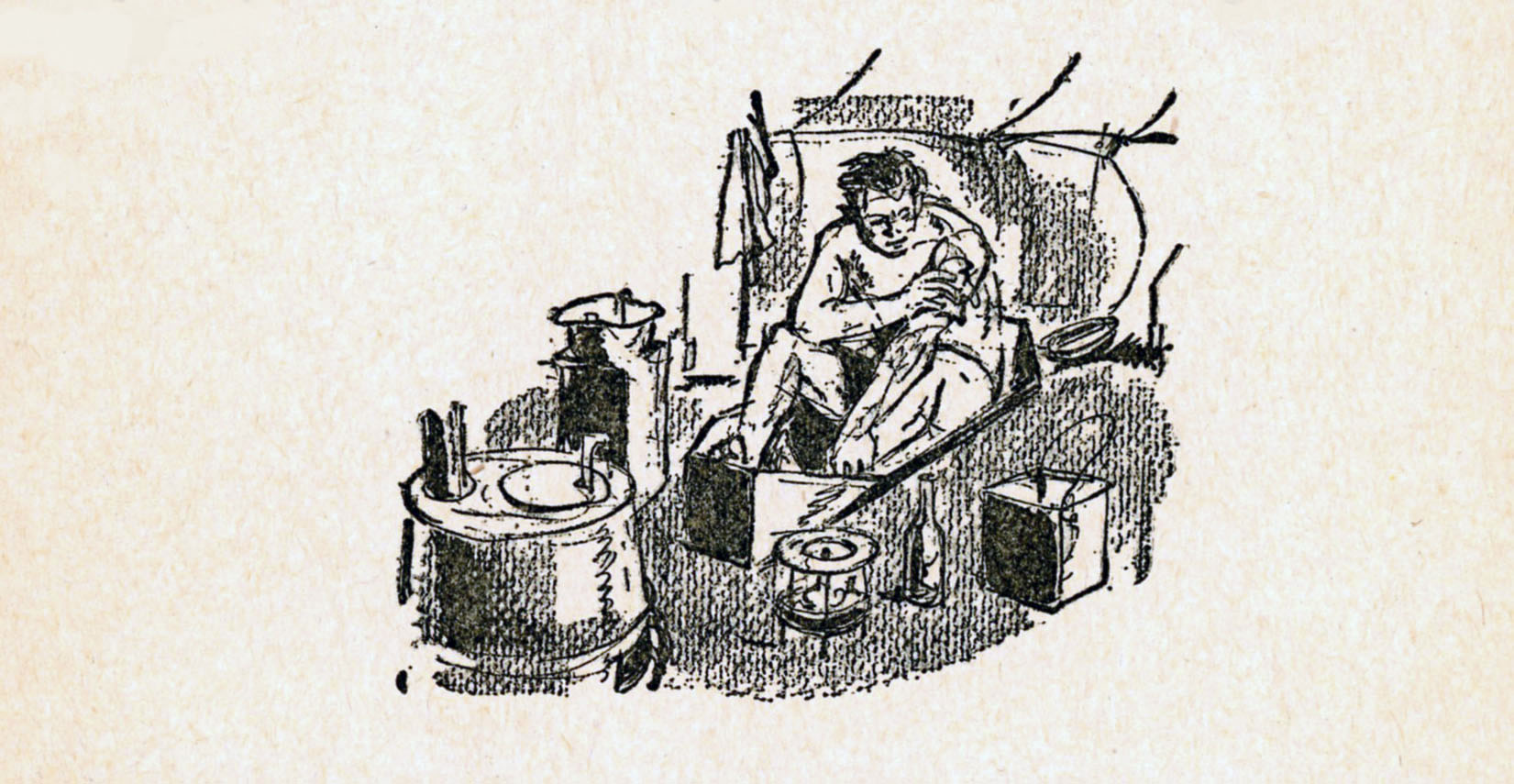
Roving Reporters (Sleeping Accommodations) (177)

Here is Your War - 183 (The End in Sight - Tunisia) 2

The End in Sight (Tunisia) (183)

Here is Your War - 184 (The End in Sight - Tunisia) 2

The End in Sight (Tunisia) (184)

Here is Your War - 188 (The End in Sight - Tunisia - German Cemetery) 2

The End in Sight (Tunisia – German Cemetery) (184)

Here is Your War - 191 (The End in Sight - Fighter Pilots) 2

The End in Sight (Fighter Pilots) (191)

Here is Your War - 196 (The End in Sight) 2

The End in Sight (196)

Here is Your War - 202 (The Final Push) 2

The Final Push (202)

Here is Your War - 224 (Victory - German POW) 2

Victory (German POW) (224)

Here is Your War - 228 (Victory - Entering Ferryville) 2

Victory (Entering Ferryville) (228)

Here is Your War - 234 (Victory - Jeep at Airfield) 2

Victory (Jeep at Airfield) (234)

Here is Your War - 237 (Victory - Tunisia) 2

Victory (Tunisia) (237)

Here is Your War - 241 (Victory) 2

Victory (241)