
Category: Theodicy
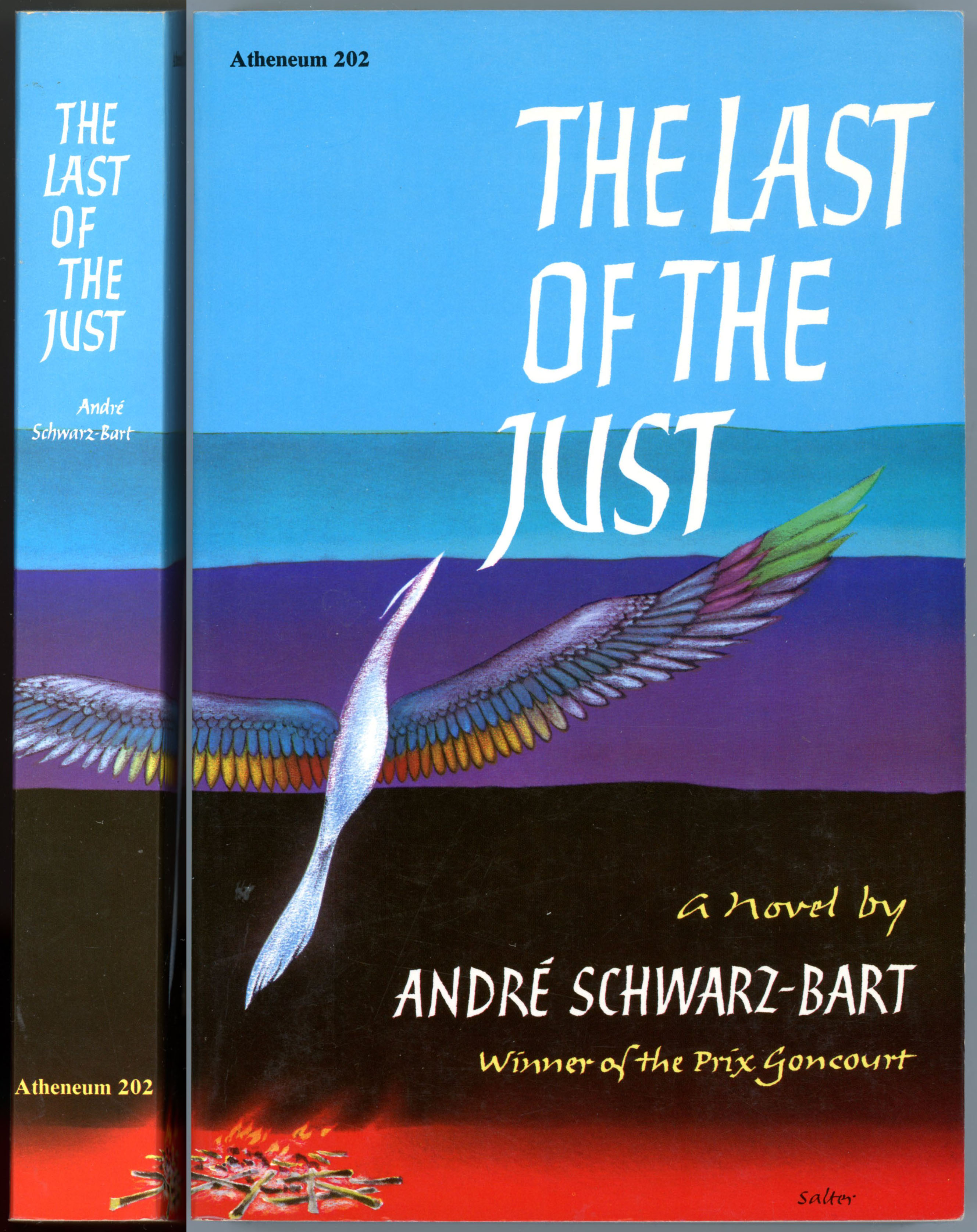
The Last of The Just, by André Schwarz-Bart, Translated from the French by Stephen Becker – 1960 (September, 1973) [George Salter]
Astounding Science Fiction, August, 1954 (Featuring “They’d Rather Be Right,” by Mark Clifton and Frank Riley, and, “The Cold Equations,” by Tom Godwin) [Frank Kelly Freas]
 Tom Godwin’s short story “The Gulf Between” was a cautionary tale about using computer technology to supplant human decision-making, set within the overlapping contexts of the creation of the ultimate (robotic) soldier, and, mans’ first venture into space. Godwin’s “The Cold Equations” is different: The story is a stunning exploration of the classical philosophical dilemma of balancing the life of one, versus the life of many, set within the frontier of a future space-faring civilization.
Though the latter tale is far better known within and even beyond the genre of science-fiction, the cord linking the two stories being Godwin’s adept use of an imagined future as the setting for confronting and resolving – in a deeply unsettling, unflinching manner – questions of man’s uniqueness, and, the inherent spiritual value of the individual. Though the stories are (unsurprisingly) somewhat dated on technological grounds – well, they were written over a half-century ago – overall, the writing is tight, crisp, and direct, their length belying their impact and the import of their underlying themes.
“The Cold Equations” has been adapted for radio, television, and web formats, testimony to the tale’s power and literary merit. Similarly, the story has been anthologized many times, one example being in volume one of the Science Fiction Hall of Fame, published in November of 1972.
The story, scripted by George Lefferts and with the roles of pilot Barton and passenger Marilyn voiced by Court Benson and Jill Meredith, was broadcast as episode 15 of the X Minus One radio program on August 8, 1955. The play can also be downloaded from Archive.org.
The two television versions of the story comprise the Twilight Zone production of January 7, 1989 (available on YouTube), and the FilmRise / Alliance Atlantis movie of December 7, 1996, the latter receiving widely varying reviews at both IMDB and Amazon.
Oddly, the several YouTube versions of the Twilight Zone version manifest the same strange problem: About one hour long, all are comprised of three copies of the episode “spliced” together, whereas the actual episode – without commercial breaks – is only 21 minutes long.
Though appearing under a different title – “Stowaway” – the DUST YouTube channel’s version of The Cold Equations, released on April 7, 2018, is a superb rendering of Godwin’s story, the brevity (12 minutes) and pacing of the film closely paralleling the feel of the original story. The acting is excellent (the CG, too), but (?!) the names of the actor and actress are not presented.
______________________________
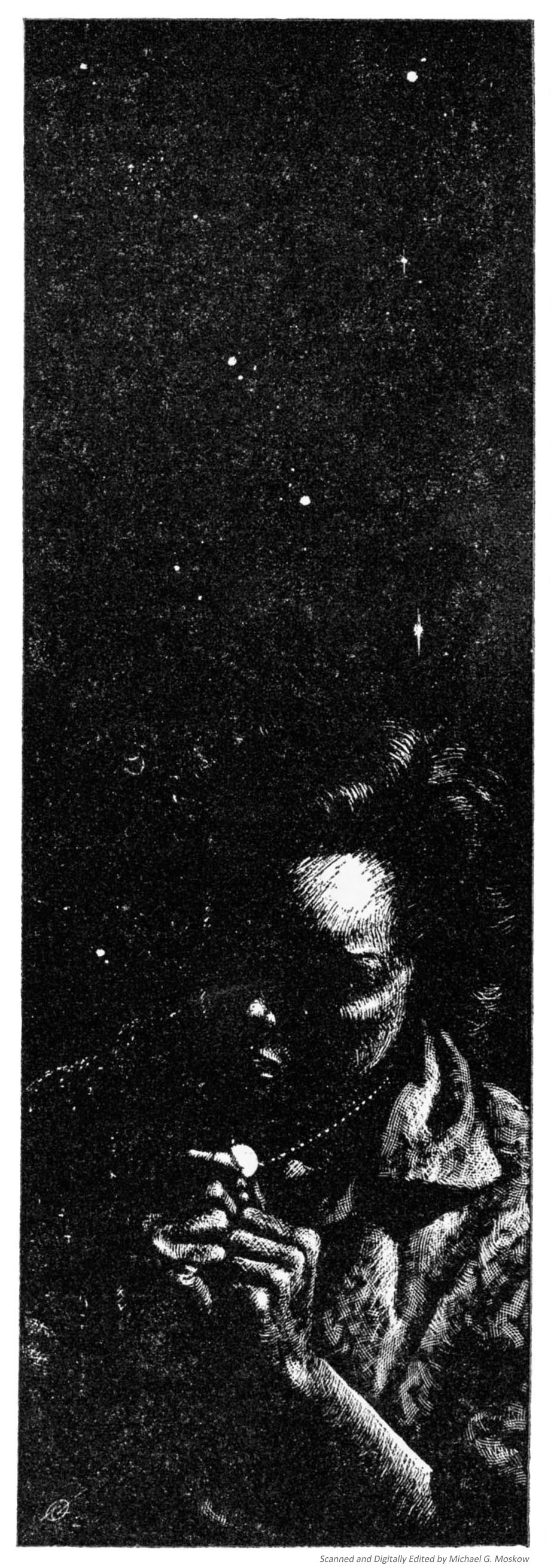
Though Frank Kelly Freas’ illustrations and cover art were often whimsical, humorous, and – at least in his early years – highly creative (the cover is superb!), such qualities would not have befitted art accompanying “The Cold Equations”. Thus, the images of Barton and Marilyn are aptly subdued and pensive, while the leading image – a simple depiction of a spacecraft which seems to have jettisoned an unidentified “something” as it approaches a planet in crescent phase – symbolizes the central aspect of the story. These appear below, accompanied by key passages from the story, which is available in full text at LightSpeedMagazine.
______________________________
He began to check the instrument readings,
going over them with unnecessary slowness.
She would have to accept the circumstances
and there was nothing he could do to help her into acceptance;
words of sympathy would only delay it.
It was 18:20 when she stirred from her motionlessness and spoke.
“So that’s the way it has to be with me?”
He swung around to face her.
“You understand now, don’t you?
No one would ever let it be like this if it could be changed.”
“I understand”, she said.
Some of the color had returned to her face
and the lipstick no longer stood out so vividly red.
“There isn’t enough fuel for me to stay;
when I hid on this ship I got into something I didn’t know anything about
and now I have to pay for it.”
 She had violated a man-made law that said KEEP OUT
but the penalty was not of man’s making or desire
and it was a penalty men could not revoke.
A physical law had decreed:
h amount of fuel will power an EDS with a mass of m safely to its destination;
and a second physical lad had been decreed:
h amount of fuel will not power an EDS with a mass of m plus x safely to its destination.
EDSs obeyed only physical laws
and no amount of human sympathy for her could alter the second law.
“But I’m afraid.
I don’t want to die – not now.
I want to live and nobody is doing anything to help me
everybody is letting me go ahead and acting just like nothing was going to happen to me.
I’m going to die and nobody cares.”
“We all do,” he said.
“I do and the commander does and the clerk in Ship’s Records;
we all care and each of us did what little he could to help you.
It wasn’t enough – it was almost nothing – but it was all we could do.”
“Not enough fuel – I can understand that,” she said,
as though she had not heard his own words.
“But to have to die for it.
Me, alone –
 How hard it must be for her to accept the fact.
She had never known danger of death;
had never known the environments where the lives of men could be as fragile
as sea foam tossed against a rocky shore.
She belonged on gentle Earth,
in that secure and peaceful society where she could be young and gay and laughing
with the others of her kind;
where life was precious and well-guarded
and there was always the assurance that tomorrow would come.
She belonged in that world of soft winds and warm suns,
music and moonlight and gracious manners
and not on the hard, bleak frontier.
— Tom Godwin —
— 1954 —

Franz Kafka – Letters to Milena (Translated and with an Introduction by Philip Boehm) – 1990 [Anthony Russo]
 (Friday, June 11, 1920)
It’s only in my dreams that I am so sinister.
Recently I had another dream about you,
it was a big dream, but I hardly remember a thing.
I was in Vienna, I don’t recall anything about that,
next I went to Prague and had forgotten your address,
not only the street but also the city, everything,
one the name Schreiber kept somehow appearing,
but I didn’t know what to make of that.
So I had lost you completely.
In my despair I made various very clever attempts,
which were nevertheless not carried out –
I don’t know why –
I just remember one of them.
I wrote on an envelope: M. Jesenski and underneath
“Request delivery of this letter,
because otherwise the Ministry of Finance will suffer terrible loss.”
With this threat I hoped to engage the entire government in my search for you.
Clever?
Don’t let this way you against me.
It’s only in my dreams that I am so sinister.
(September, 1920)
But here the transmutability came into play…
Yesterday I dreamt about you.
I hardly remember the details,
just that we kept on merging into one another,
I was you,
you were me.
Finally you somehow caught fire;
I remembered that fire can be smothered with cloth,
took an old coat and beat you with it.
But then the metamorphoses resumed and went so far
that you were no longer even there;
instead I was the one on fire and I was also the one who was beating the fire with the coat.
The beating didn’t help, however,
and only confirmed my old fear that things like that can’t hurt a fire.
Meanwhile the firemen had arrived and you were somehow saved after all.
But you were different than before,
ghostlike,
drawn against the dark with chalk,
and you fell lifeless into my arms,
or perhaps you merely fainted with joy at being saved.
But here the transmutability came into play:
maybe I was the one falling into someone’s arms.

Franz Kafka – The Sons (Introduction by Mark Anderson) – 1989 [Anthony Russo]
 …because you once mentioned in passing that I too might be called to the Torah.
That was something I dreaded for years.
But otherwise I was not fundamentally disturbed in my boredom,
unless it was by the bar mitzvah,
but that demanded no more than some ridiculous memorizing,
in other words,
it led to nothing but some ridiculous passing of an examination… (p. 147)
Marrying,
founding a family,
accepting all the children that come,
supporting them in this insecure world
and perhaps even guiding them a little,
is, I am convinced, the utmost a human being can succeed in doing at all.
That so many seem to succeed in this is no evidence to the contrary;
first of all, there are not many who do succeed,
and second, these not-many usually don’t “do” it,
it merely “happens” to them;
although this is not that utmost,
it is still very great and very honorable
(particularly since “doing” and “happening” cannot be kept clearly distinct).
And finally, it is not a matter of this utmost at all,
anyway, but only of some distant but decent approximation;
it is, after all, not necessary to fly right into the middle of the sun,
but it is necessary to crawl to a clean little spot on Earth
where the sun sometimes shines and one can warm oneself a little. (p. 156)

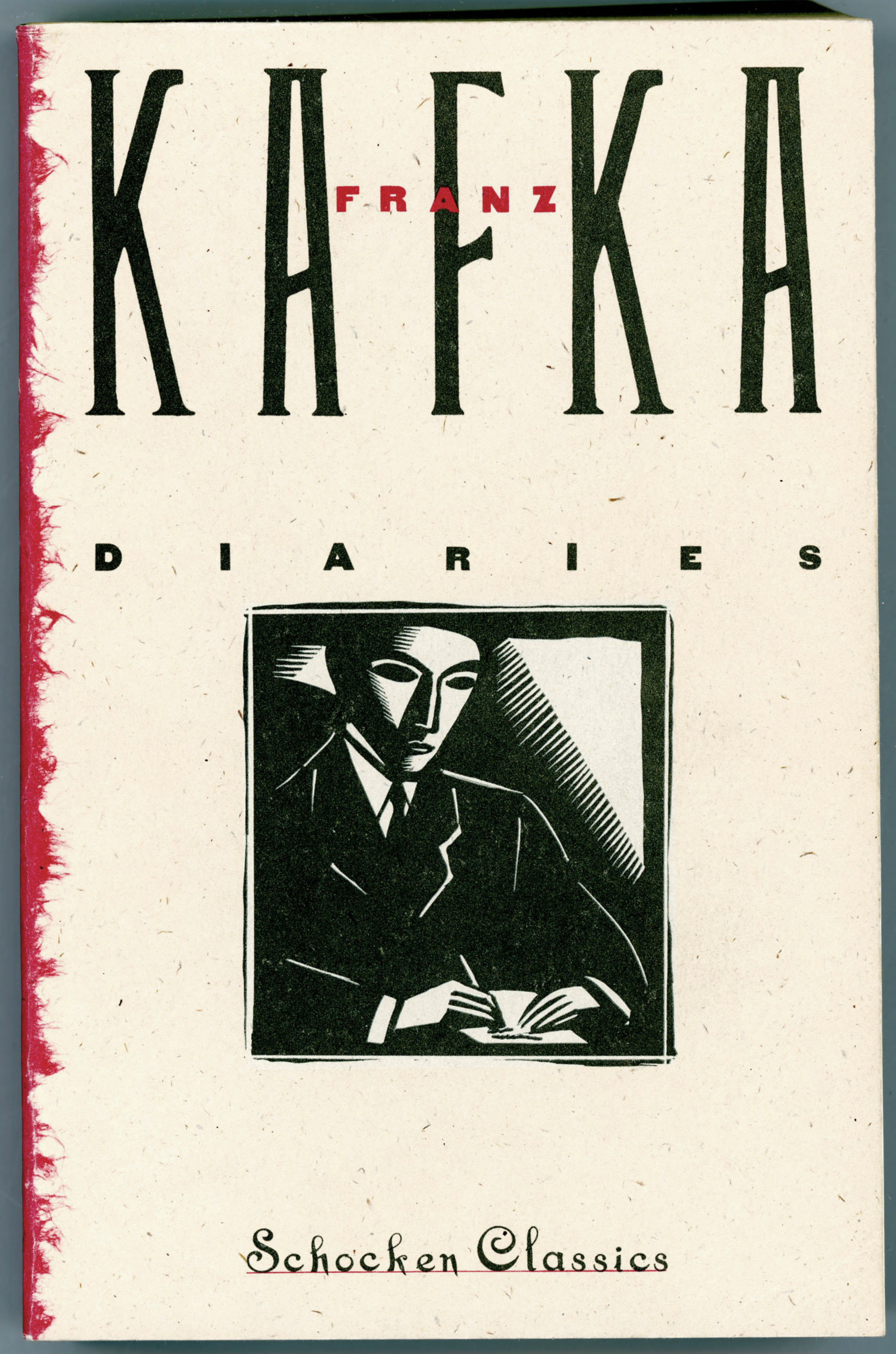
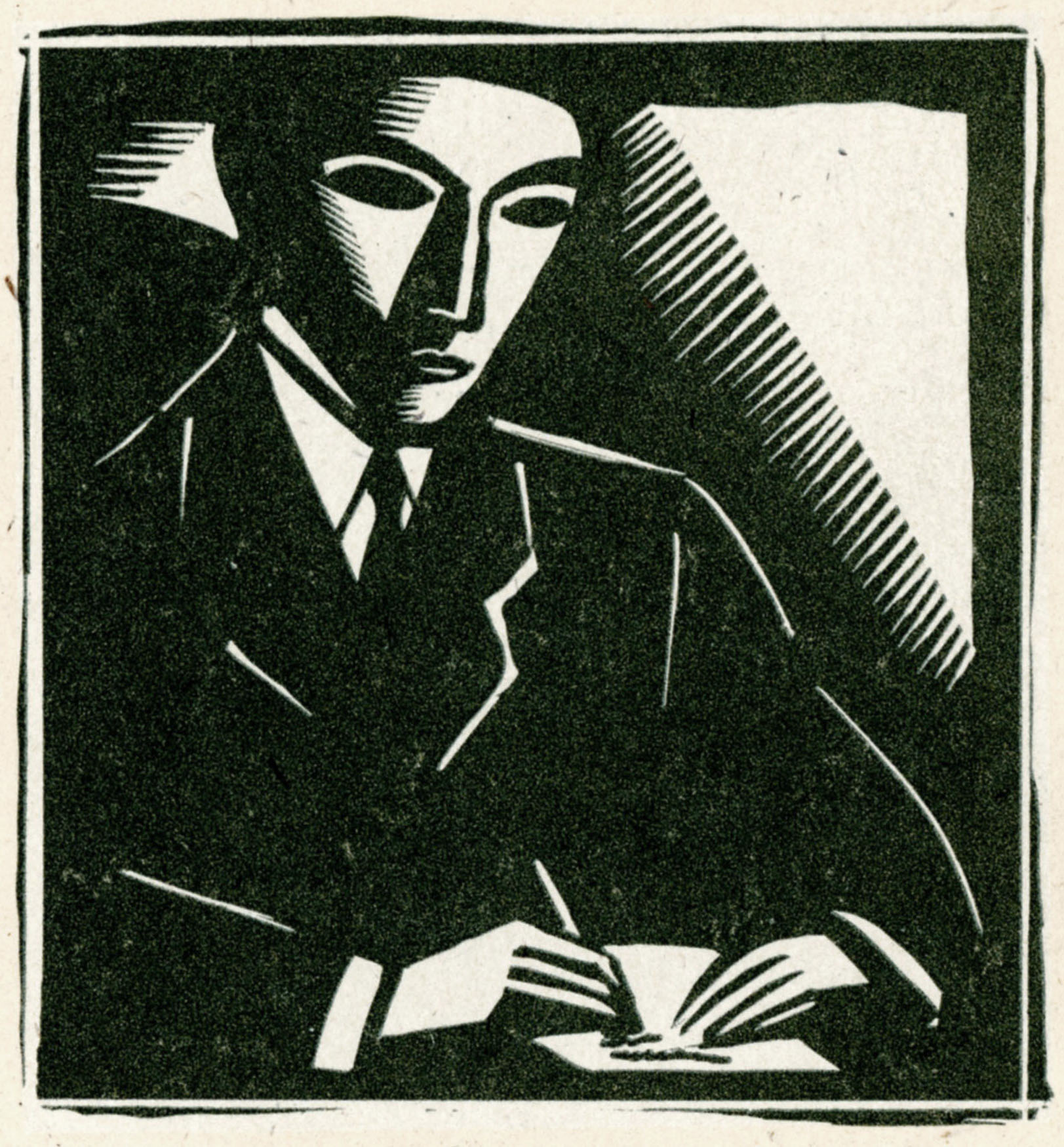
Franz Kafka – Diaries (Edited by Max Brod) – 1948 (1988) [Anthony Russo]
What have I in common with Jews?
I have hardly anything in common with myself
and should stand very quietly in a corner,
content that I can breathe. – January 8-11, 1914
June, 1914 (pp. 279-280)
There are certain relationships which I can feel distinctly
but which I am unable to perceive.
It would be sufficient to plunge down a little deeper;
but just at this point the upward pressure is so strong
that I should think myself at the very bottom
if I did not feel the currents moving below me.
In any event, I look upward to the surface
whence the thousand-times-reflected brilliance of the light falls upon me.
I float up and splash around on the surface,
in spite of the fact that I loathe everything up there and –
August 6, 1914 (p. 302)
What will be my fate as a writer is very simple.
My talent for portraying my dreamlike inner life
has thrust all other matters into the background;
my life has dwindled dreadfully,
nor will it cease to dwindle.
Nothing else will ever satisfy me.
But the strength I can muster for that portrayal is not to be counted upon:
perhaps it has already vanished forever,
perhaps it will come back to me again,
although the circumstances of my life didn’t favour its return.
Thus I waver,
continually fly to the summit of the mountain,
but then fall back in a moment.
March 11, 1915 (p. 332)
Eastern and Western Jews, a meeting.
The Eastern Jews’ contempt for the Jews here.
Justification for this contempt.
The way the Eastern Jews know the reason for their contempt,
but the Western Jews do not.
March 13, 1915 (p. 333)
Occasionally I feel an unhappiness which almost dismembers me,
and at the same time am convinced of its necessity
and the existence of a goal to which one makes one’s way
by undergoing every kind of unhappiness
(am now influenced by my recollection of Herzen,
but the thought occurs on other occasions too.)
Franz Kafka – Letters to Friends, Family, & Editors (Translated by Richard and Clara Winston) – 1977 (1990) [Anthony Russo]


The Divine Comedy, by Dante Alighieri – (Translated by Dorothy L. Sayers) 1949 (1955)


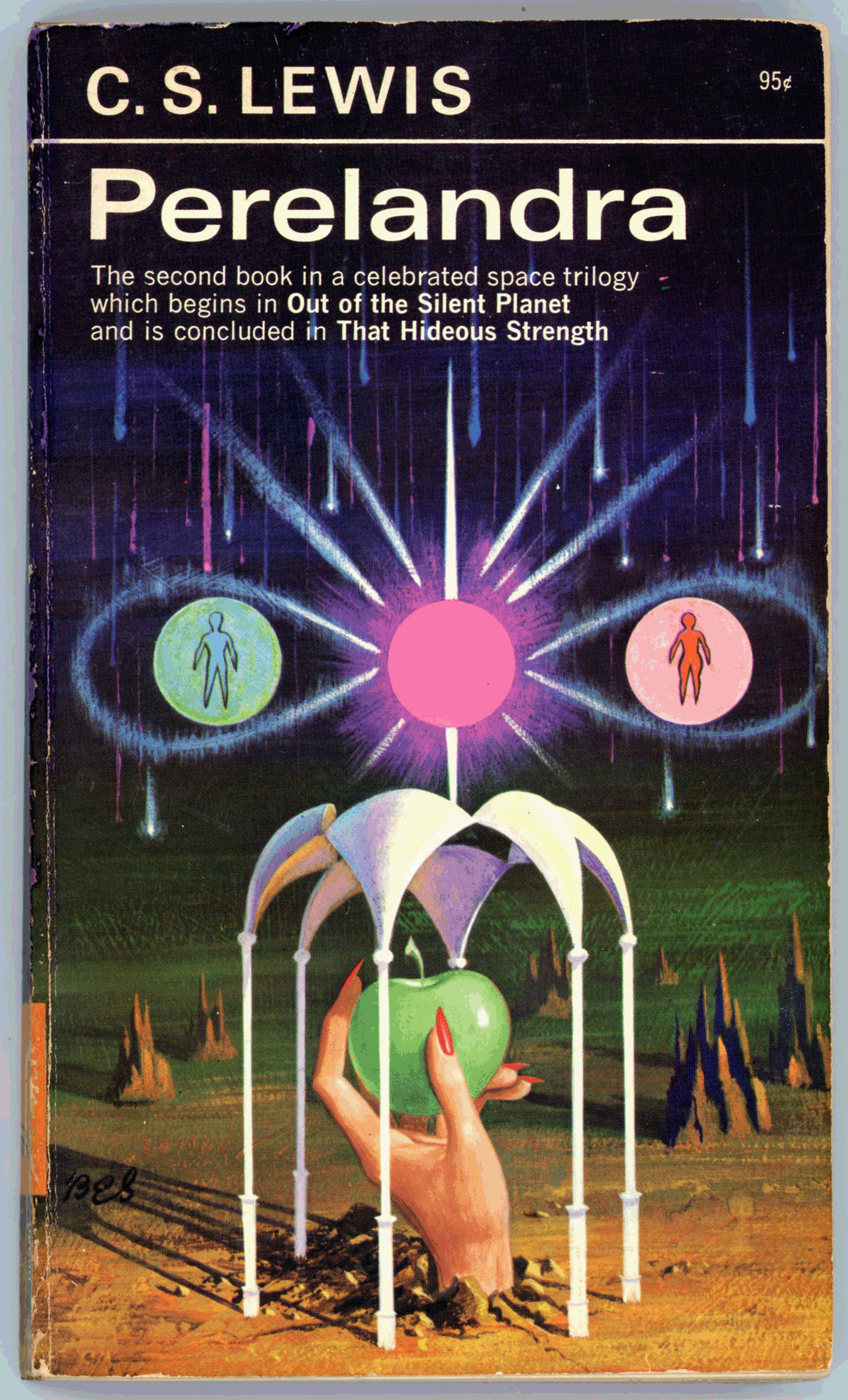
Perelandra, by C.S. Lewis (Clive Staples Lewis) – 1965 (1943) [Bernard Symancyk] – Macmillan # 8690
 “My dear Ransom,
I wish you would not keep relapsing on to the popular level.
The two things are only moments in the single, unique reality.
The world leaps forward through great men
and greatness always transcends mere moralism.
When the leap has been made our ‘diabolism’
as you would call it becomes the morality of the next stage;
but while we are making it, we are called criminals, heretics, blasphemers…”
“How far does it go?
Would you still obey the Life-Force
if you found it prompting you to murder me?”
“Yes.”
“Or to sell England to the Germans?”
“Yes.”
“Or to print lies as serious research in a scientific periodical?”
“Yes.”
“God help you!” said Ransom.
* * * * * * * * * * *
It looked at Ransom in silence and at last began to smile.
We have all often spoken –
Ransom himself had often spoken –
of a devilish smile.
Now he realized that he had never taken the words seriously.
The smile was not bitter, nor raging, nor, in an ordinary sense, sinister;
it was not even mocking.
It seemed to summon Ransom, with horrible naivete of welcome,
into the world of its own pleasures,
as if all men were at one in those pleasures,
as if they were the most natural thing in the world
and no dispute could ever have occurred about them.
It was not furtive, nor ashamed, it had nothing of the conspirator in it.
It did not defy goodness, it ignored it to the point of annihilation.
Ransom perceived that he had never before seen anything
but half-hearted and uneasy attempts at evil.
This creature was whole-hearted.
The extremity of its evil had passed beyond all struggle
into some state which bore a horrible similarity to innocence.
It was beyond vice as the Lady was beyond virtue.
________________________________________
You can view the cover of Avon Books’ 1957 edition of Perelandra (Avon # T-157), here.
Out of the Silent Planet, by C.S. Lewis (Clive Staples Lewis) – 1965 (1938) [Bernard Symancyk] – Macmillan # 8688
 “…We are only obeying orders.”
“Whose?”
There was another pause.
“Come,” said Weston at last,
“there is really no use in continuing this cross-examination.
You keep on asking me questions I can’t answer;
in some cases because I don’t know the answers,
in other because you wouldn’t understand them.
It will make things very much pleasanter during the voyage
if you can only resign your mind to your fate and stop bothering yourself and us.
It would be easier if your philosophy of life
were not so insufferably narrow or individualistic.
I had thought no one could fail to be inspired
by the role you are being asked to play:
that even a worm, if it could understand, would rise to the sacrifice.
I mean, of course, the sacrifice of time and liberty, and some little risk.
Don’t misunderstand me.”
“Well,” said Ransom, “You hold all the cards, and I must make the best of it.
I consider your philosophy of life raving lunacy.
I suppose all that stuff about infinity and eternity means
that you think you are justified in doing anything
– absolutely anything –
here and now,
on the off chance
that some creatures or other descended from man as we know him
may crawl about a few centuries longer in some part of the universe.”
________________________________________
You can view the cover of Avon Books’ 1956 edition of Out of the Silent Planet (Avon # T-27), here.