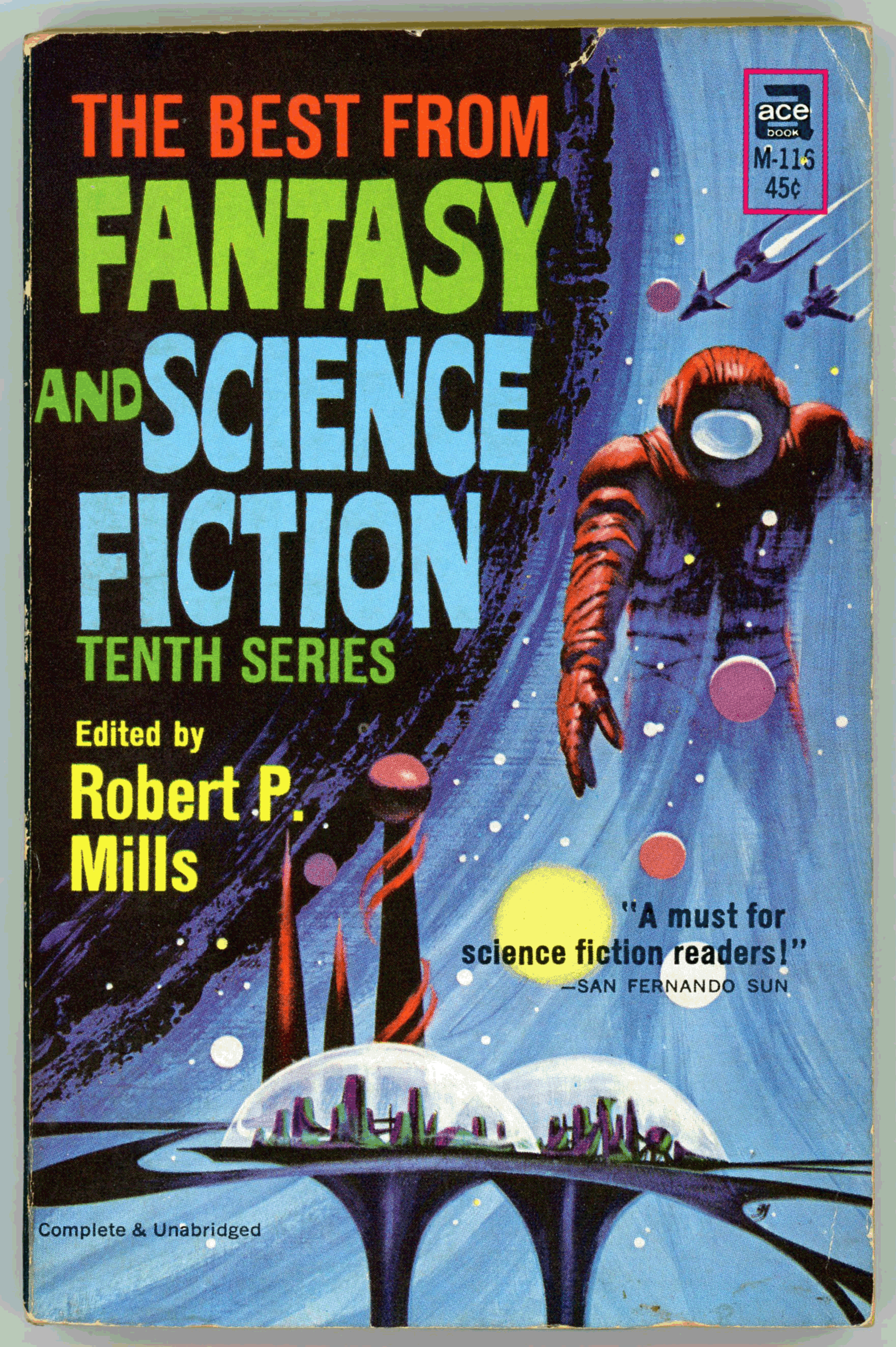
The Best From Fantasy and Science Fiction – Tenth Series, Edited by Robert P. Mills – 1959 (1960, 1961) [Jack Gaughan]

Nikita Eisenhower Jones, by Robert F. Young

Who Dreams of Ivy, by Will Worthington

Mine Own Ways, by Richard McKenna

The Rainbow Gold, by Jane Rice

Crazy Maro, by Daniel Keyes

Something, by Allen Drury

It’s a Great Big Wonderful Universe, by Vance Aandahl

Man Overboard, by John Collier

The Blind Pilot, by Charles Henneberg (translated by Damon Knight)

A Divvil With The Women, by Niall Wilde

The Martyr, by Poul Anderson

Double, Double, Toil and Trouble, by Holley Cantine

Apres Nouse, by Avram Davidson

Interbalance, by Katherine MacLean

Infinity, by Rosser Reeves

The Replacement, by Robert Murray

The Fellow Who Married the Maxill Girl, by Ward Moore
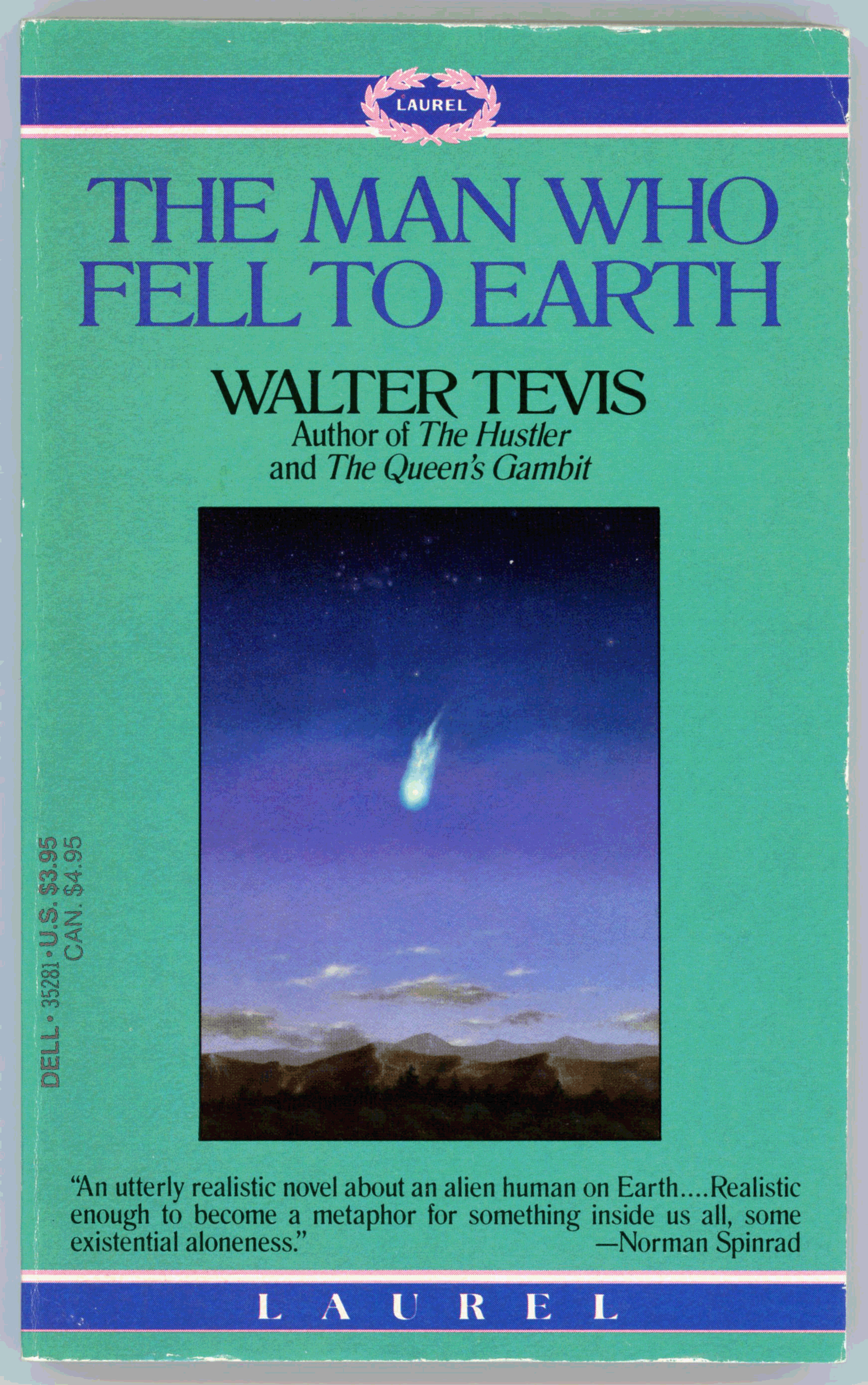
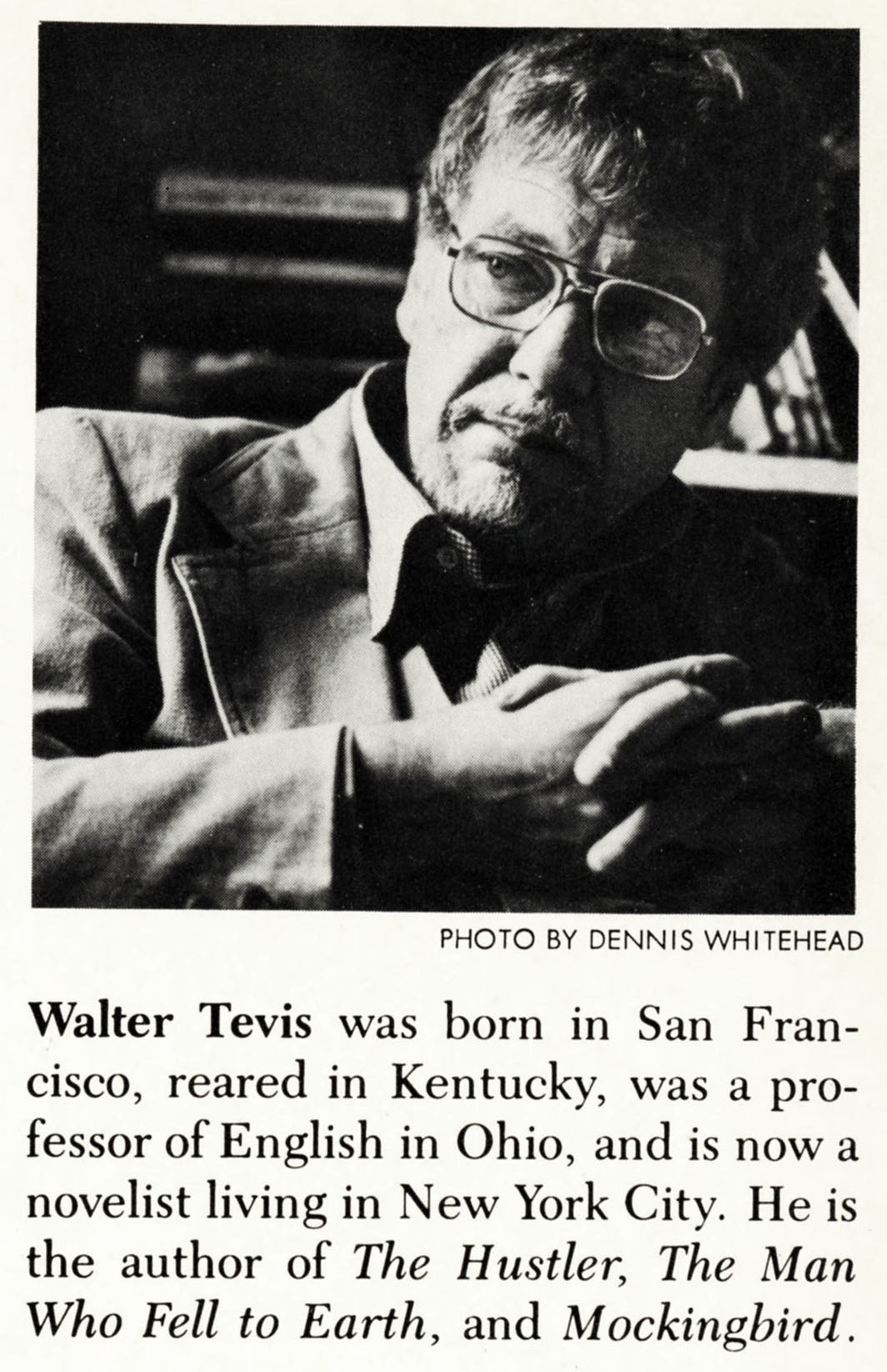
The Man Who Fell to Earth, by Walter Tevis – 1963 (1986) [Unknown Artist]; 1990 [Tim O’Brien]

He was sick; sick from the long,
dangerous trip he had taken,
sick from all the medicine – the pills,
the inoculations, the inhaled gases – sick from worry,
the anticipation of crisis,
and terribly sick from the awful burden of his own weight. 
He had known for years that when the time came,
when he would finally land and begin to effect that complex,
long-prepared plan, he would feel something like this. 
This place, however much he had studied it,
however much he had rehearsed his part in it,
was so incredibly alien – the feeling,
now that he could feel – the feeling was overpowering. 
He lay down in the grass and became very sick.

He was not a man; yet he was very much like a man. 
He was six and a half feet tall,
and some men are even taller that that;
his hair was as white as that of an albino,
yet his face was a light tan color;
and his eyes a pale blue. 
His frame was improbably slight,
his features delicate, his fingers long,
thin,
and the skin almost translucent, hairless. 
There was an elfin quality to his face,
a fine boyish look to the wide, intelligent eyes,
and the white,
curly hair now grew a little over his ears. 
He seemed quite young.

Yet he did have eyelashes,
eyebrows,
opposed thumbs,
binocular vision,
and a thousand of the physiological features of a normal human. 
He was incapable of warts;
but stomach ulcers, measles and dental caries could affect him. 
He was human; but not, properly, a man. 
Also, man like, he was susceptible to love,
to fear,
to intense physical pain and to self-pity.

____________________

(1990 Book-of-the-Month Club hardcover edition, art by Tim O’Brien)

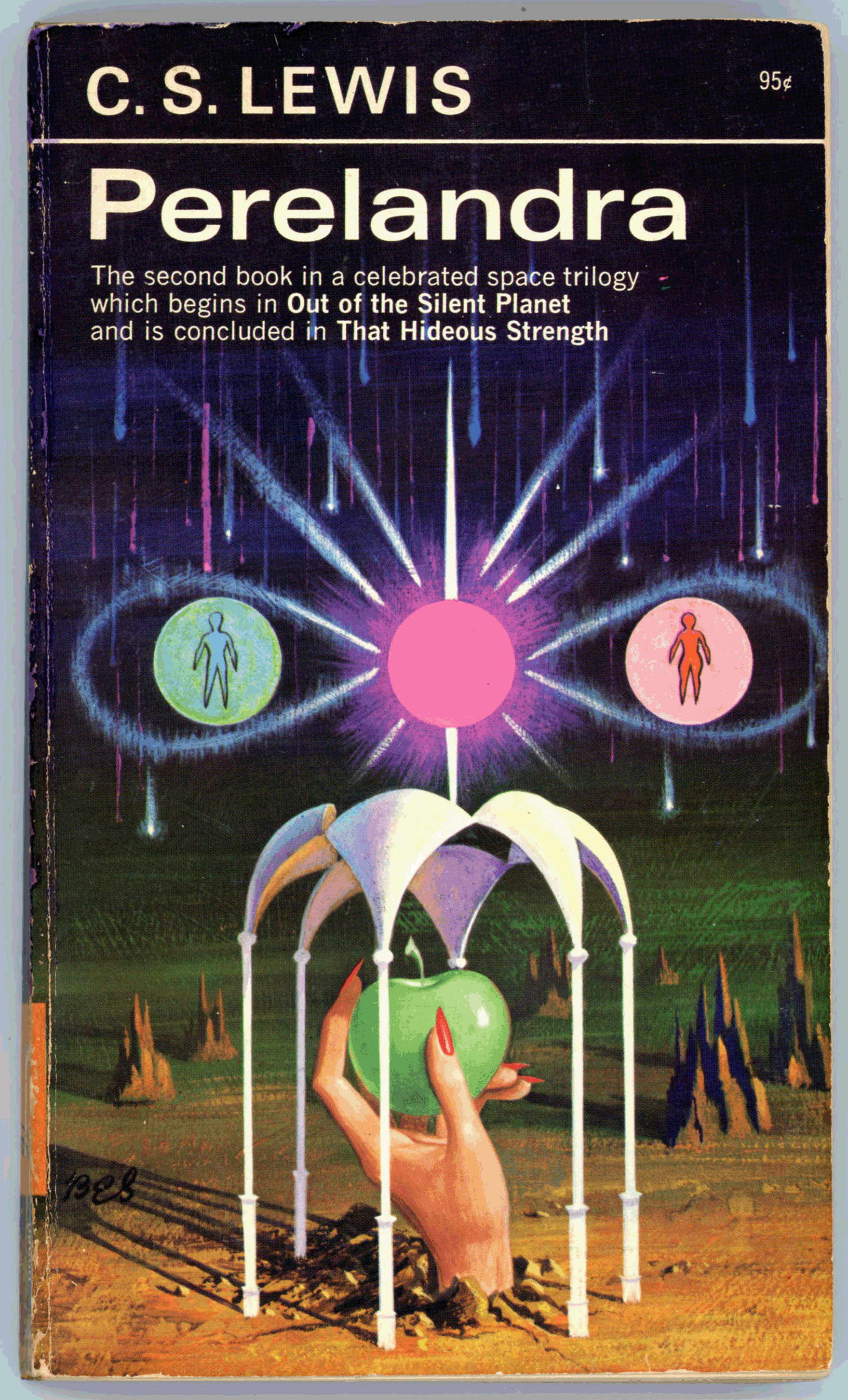
Perelandra, by C.S. Lewis (Clive Staples Lewis) – 1965 (1943) [Bernard Symancyk] – Macmillan # 8690

perelandra-cs-lewis-1944-1965-bernard-symancyk“My dear Ransom,
I wish you would not keep relapsing on to the popular level.
The two things are only moments in the single, unique reality.
The world leaps forward through great men
and greatness always transcends mere moralism.
When the leap has been made our ‘diabolism’
as you would call it becomes the morality of the next stage;
but while we are making it, we are called criminals, heretics, blasphemers…”

               “How far does it go?
Would you still obey the Life-Force
if you found it prompting you to murder me?”

Yes.”

“Or to sell England to the Germans?”

“Yes.”

“Or to print lies as serious research in a scientific periodical?”

“Yes.”

“God help you!” said Ransom.

* * * * * * * * * * *

It looked at Ransom in silence and at last began to smile.
We have all often spoken –
Ransom himself had often spoken –
of a devilish smile.
Now he realized that he had never taken the words seriously.
The smile was not bitter, nor raging, nor, in an ordinary sense, sinister;
it was not even mocking.
It seemed to summon Ransom, with horrible naivete of welcome,
into the world of its own pleasures,
as if all men were at one in those pleasures,
as if they were the most natural thing in the world
and no dispute could ever have occurred about them.
It was not furtive, nor ashamed, it had nothing of the conspirator in it.

It did not defy goodness, it ignored it to the point of annihilation. 

Ransom perceived that he had never before seen anything
but half-hearted and uneasy attempts at evil.
This creature was whole-hearted.
The extremity of its evil had passed beyond all struggle
into some state which bore a horrible similarity to innocence.
It was beyond vice as the Lady was beyond virtue.

________________________________________

You can view the cover of Avon Books’ 1957 edition of Perelandra (Avon # T-157), here

Out of the Silent Planet, by C.S. Lewis (Clive Staples Lewis) – 1965 (1938) [Bernard Symancyk] – Macmillan # 8688

out-of-the-silent-planet-cs-lewis-1965-1969-bernard-symancyk“…We are only obeying orders.”

“Whose?”

There was another pause.
“Come,” said Weston at last,
“there is really no use in continuing this cross-examination. 
You keep on asking me questions I can’t answer;
in some cases because I don’t know the answers,
in other because you wouldn’t understand them. 
It will make things very much pleasanter during the voyage
if you can only resign your mind to your fate and stop bothering yourself and us. 
It would be easier if your philosophy of life
were not so insufferably narrow or individualistic. 
I had thought no one could fail to be inspired
by the role you are being asked to play:
that even a worm, if it could understand, would rise to the sacrifice. 
I mean, of course, the sacrifice of time and liberty, and some little risk. 
Don’t misunderstand me.”

“Well,” said Ransom, “You hold all the cards, and I must make the best of it.
I consider your philosophy of life raving lunacy.
I suppose all that stuff about infinity and eternity means
that you think you are justified in doing anything
– absolutely anything –
here and now,
on the off chance
that some creatures or other descended from man as we know him
may crawl about a few centuries longer in some part of the universe.”

________________________________________

You can view the cover of Avon Books’ 1956 edition of Out of the Silent Planet (Avon # T-27), here