“So, that is love,” thought I dumbly, despairingly, as we picked up our things;
“so that is the love my books at home were so full of
– of which I had expected so much in the vague dreams of my youth!”
_________________________________________
The Road Back is a book I’ve read a b o u t, but not yet actually read, having learned about it at ChicagoBoyz. There, the book is discussed in the context of literature of First World War in general, and, the war’s impact and legacy, in intellectual and cultural terms, in particular, on the generation of soldiers who fought in it. Much more importantly – with relevance for the world of 2022; our world – is the way in which the war altered ways of understanding, living in, and acting upon (and catastrophically against?) the world, for veterans of the conflict and especially those who came after.
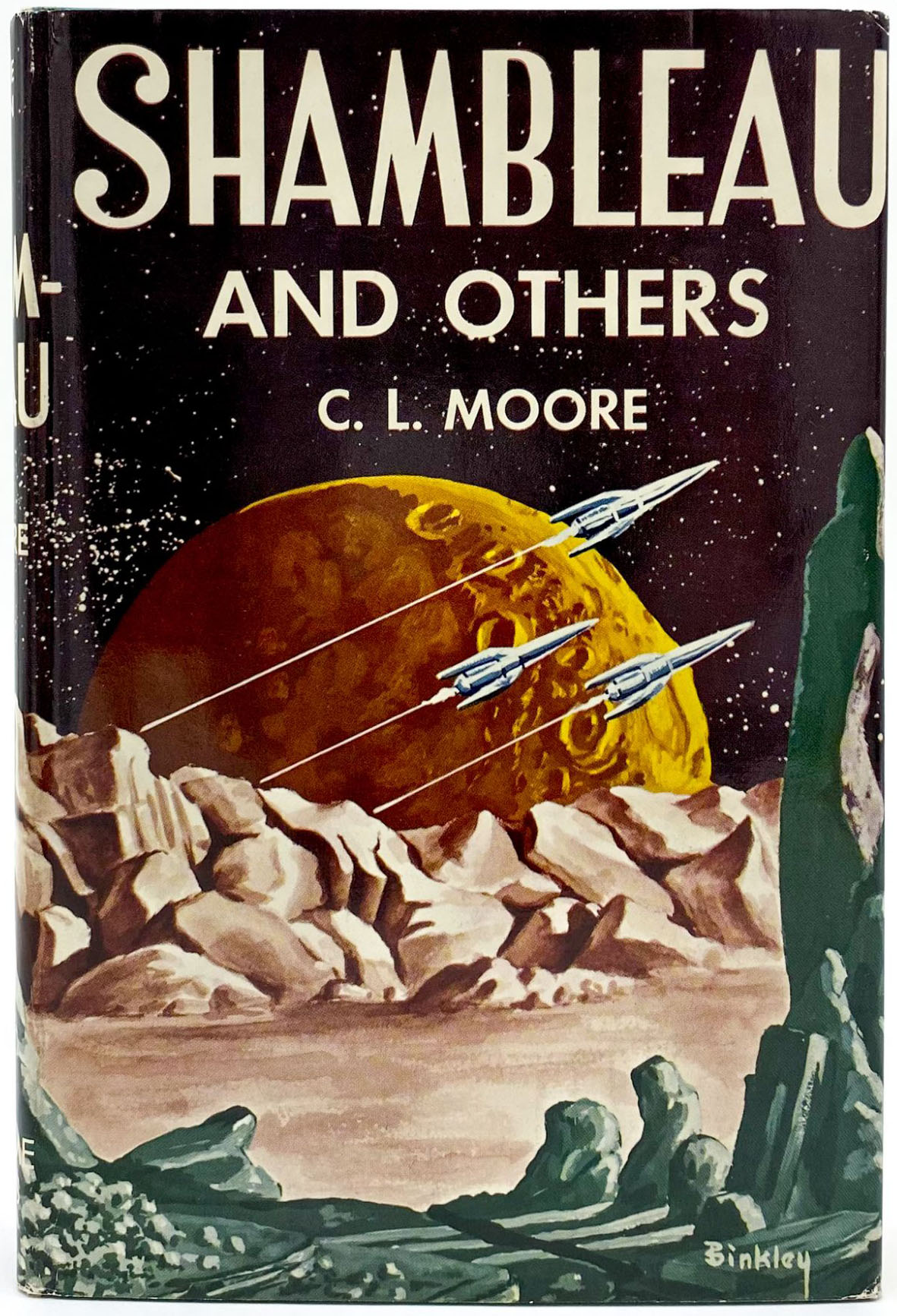
Like Signet Books’ 1959 edition of Arch of Triumph, I’ve no idea who the cover artist was for this 1959 Avon paperback.

Akin to Remarque’s to Arch of Triumph, The Road Back was transformed to film in 1937. The full movie, at Sir Jänskä’s YouTube channel, can be viewed here…
_________________________________________
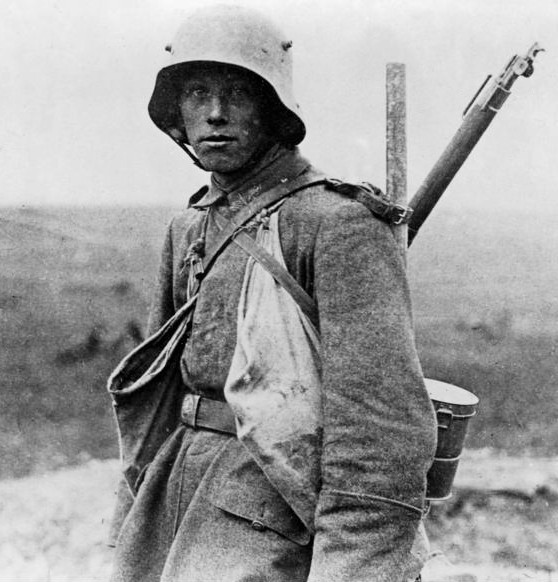
This photo, (Bundesarchiv Bild 183-R05148, Westfront, deutscher Soldat) supposedly shows Remarque as a soldier in the German Army during World War I. He was driven from Nazi Germany to France, and in 1939 came to America.
_________________________________________

The Old Man decides to humor us at all costs.
We are too many, and Willy stands there too formidably trumpeting before him.
And who can say what these undisciplined fellows may not be doing next;
they may even produce bombs from their pockets.
He beats the air with his arms as an archangel his wings.
But no on listens to him.
Then suddenly comes a lull in the tumult.
Ludwig Breyer has stepped out to the front.
There is silence.
“Mr. Principal,” says Ludwig in a clear voice, “you have seen the war after your fashion –
with flying banners, martial music, and with glamour.
But you saw it only to the railway station from which we set off.
We do not mean to blame you.
We, too, thought as you did.
But we have seen the other side since then,
and against that the heroics of 1914 soon wilted to nothing.
Yet we went through with it –
we went through with it because here was something deeper that held us together,
something that only showed up out there,
a responsibility perhaps,
but at any rate something of which you know nothing,
and about which there can be no speeches.”
Ludwig pauses a moment, gazing vacantly ahead.
He passes his hand over his forehead and continues.
“We have not come to ask a reckoning –
that would be foolish; nobody knew then what was coming. –
But we do require that you shall not again try to prescribe what we shall think of these things.
We went out full of enthusiasm, the name of the “Fatherland” on our lips –
and we have returned in silence, but with the thing, the Fatherland, in our hearts.
And now we ask you to be silent too.
Have done with fine phrases.
They are not fitting.
Nor are they fitting to our dead comrades.
We saw them die.
And the memory of it is still too near that we can abide to hear them talked of as you are talking.
They died for more than that.”
Now everywhere it is quiet.
The Principal has his hands clasped together.
“But, Breyer,” he says gently, “I – I did not mean to – “
Ludwig has done.
After a while the Principal continues.
“But tell me then, what is it that you do want?”
We look at one another.
What do we want?
Yes, if it were so easy a thing to say in a sentence.
A vague, urgent sense of it we have – but for words?
We have no words for it, yet.
But perhaps later we shall have. (97-98)
_________________________________________
At last came my turn.
The man who had been before me stumbled out and I stepped into the room.
It was low and dark,
and reeked so of carbolic acid and sweat
that I thought it strange to see the branches of a lime tree just outside the window,
and the sun and wind playing in the fresh, green leaves
– so withered and used up did everything in the room appear.
There was a dish with pink water on a chair
and in the corner a sort of camp-bed on which was spread a torn sheet.
The woman was fat and had on a short, transparent chemise.
She did not look at me at all, but straightway lay down.
Only when I still did not come, did she look up impatiently;
then a flicker of comprehension showed in her spongy face.
She perceived that I was still quite young.
I simply could not; horror seized me and a chocking nausea.
The woman made a few gestures to rouse me, gross, repulsive gestures;
she tried to pull me to her and even smiled as she did so,
sweetly and coyly,
that I should have compassion on her
– what was she, after all, but a poor, army mattress,
that must bed twenty and more fellows every day?
– but I laid down only the money beside her and went out hastily and down the stairs.
Jupp gave me a wink. “Well, how was it?”
“So, so”, I answered like an old hand, and we turned to go.
But no, we must go first to the A.M.C corporal again and make water under his eyes.
Then we received a further injection of protargol.
“So, that is love,” thought I dumbly, despairingly, as we picked up our things;
“so that is the love my books at home were so full of
– of which I had expected so much in the vague dreams of my youth!”
I rolled up my great-coat and packed my ground-sheet,
I received my ammunition and we marched out.
I was silent and sorrowful, and I thought upon it:
how now nothing was left me of those high-flying dreams of life and of love,
but a rifle,
a fat whore
and the dull rumble out there on the sky-line whither we were now slowly marching.
Then came darkness, and the trenches and death. –
Franz Wagner fell that night, and we lost besides twenty-three men. (157-158)
For Further Thought
World War One, and the Transformation of Civilization, With Relevance for Our Times, at Chicago Boyz…
… Germany’s Descent Into Naziism
… Book Review: The Road Back, by Erich Maria Remarque
… Some World War I Book Recommendations
The Road Back, at…
… Internet Movie Database (1937 film)
Eric Maria Remarque, at…