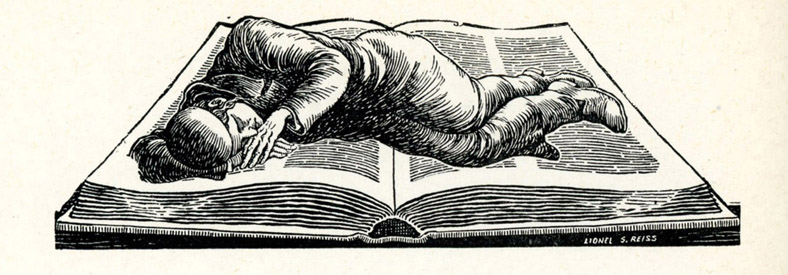
The Old Man, by William Faulkner – November, 1948 (1939) [Robert Jonas]

When I first discovered this 1948 Signet Books edition of William Faulkner’s The Old Man, I assumed that the very phrase – “the old man” – referred to the novel’s protagonist.  Well, it does, but only in a symbolic sense, for the title actually refers to the Mississippi River, a “character” inanimate yet very much alive.  The only work of Faulkner’s that I’ve read is The Reivers, which was an assigned reading for freshman English in Easton College, as a novel reflecting an ideological orientation focusing (and this was decades ago) on the concept of the “anti-hero”.  I was highly unimpressed by the story then (really, I was, even accounting for age) and remain so, now.   

As you can see from the very title of this post (!), this Signet Books cover art is by “Jonas” – that’s Robert Jonas – who created the cover art for many a monograph in the Mentor Books series.  Unlike Jonas’ covers for those books, which are typified by bright, bold, contrasting colors, and geometrically-situated patterns, symbols, and objects, there’s something about this painting that’s vastly different:  It’s very reminiscent of WPA (Works Progress Administration) murals from the late 1930s through early 1940s in post offices. 

______________________________

The novel, starring Jeanne Tripplehorn and Arliss Howard, was adapted for film in 1997.  Here’s the trailer, from Video Detective’s YouTube channel…

…and, here’s the full movie, at Chzz77 Dacan’s YouTube channel, uploaded November 7, 2023:

Take a listen: At thepostarchive, William Faulkner reads from his novels “A Fable” and “The Old Man”…

______________________________

This 1948 edition of The Old Man features a biographical blurb about the author on the rear cover, accompanied by his photograph.  In this case, Faulkner is seen in front of his home (I guess it’s his home?) in Oxford, Mississippi, in a photograph by Henri Cartier-Bresson. 

Here’s the image as it appears on the rear-cover, published in halftone format… 

…while this version, obviously scanned from a photographic print, was found at Pinterest.

Evidently, the above image was one of a sequence of photos (how many – two? – three? – more? – I’ve no idea) of Faulkner at Oxford.  This is revealed by the photo below, also taken by Cartier-Bresson, showing Faulkner in a vertical format.  For this image, the author seems to have stepped back a foot or two – or has Cartier-Bresson stepped forward a little bit? – from where he was standing in the previous photo.  The picture, from artsy.net, is described as “Gelatin silver print, printed later – 17 3/5 × 11 7/10 in | 44.8 × 29.8 cm”.

Clever, how Cartier-Bresson got Faulkner’s dogs (I guess they’re his dogs?) in the picture.  

Some Other Things to Read…

The Old Man (Novel)…

…at Good Reads

…at Book Marks

…at All Things Crime (“Honor Among Thieves in William Faulkner’s “The Old Man”)

…at Jaysanalysis (“Esoteric Symbolism and Allegory in Faulkner’s Old Man”)

…at Wikipedia (an interwoven story in “If I Forget Thee, Oh Jerusalem”)

The Old Man (1997 Movie)…

…at All Movie

…at Variety

Henri Cartier-Bresson…

…at Brittanica.com

…at MoMA

…at Magnum Photos
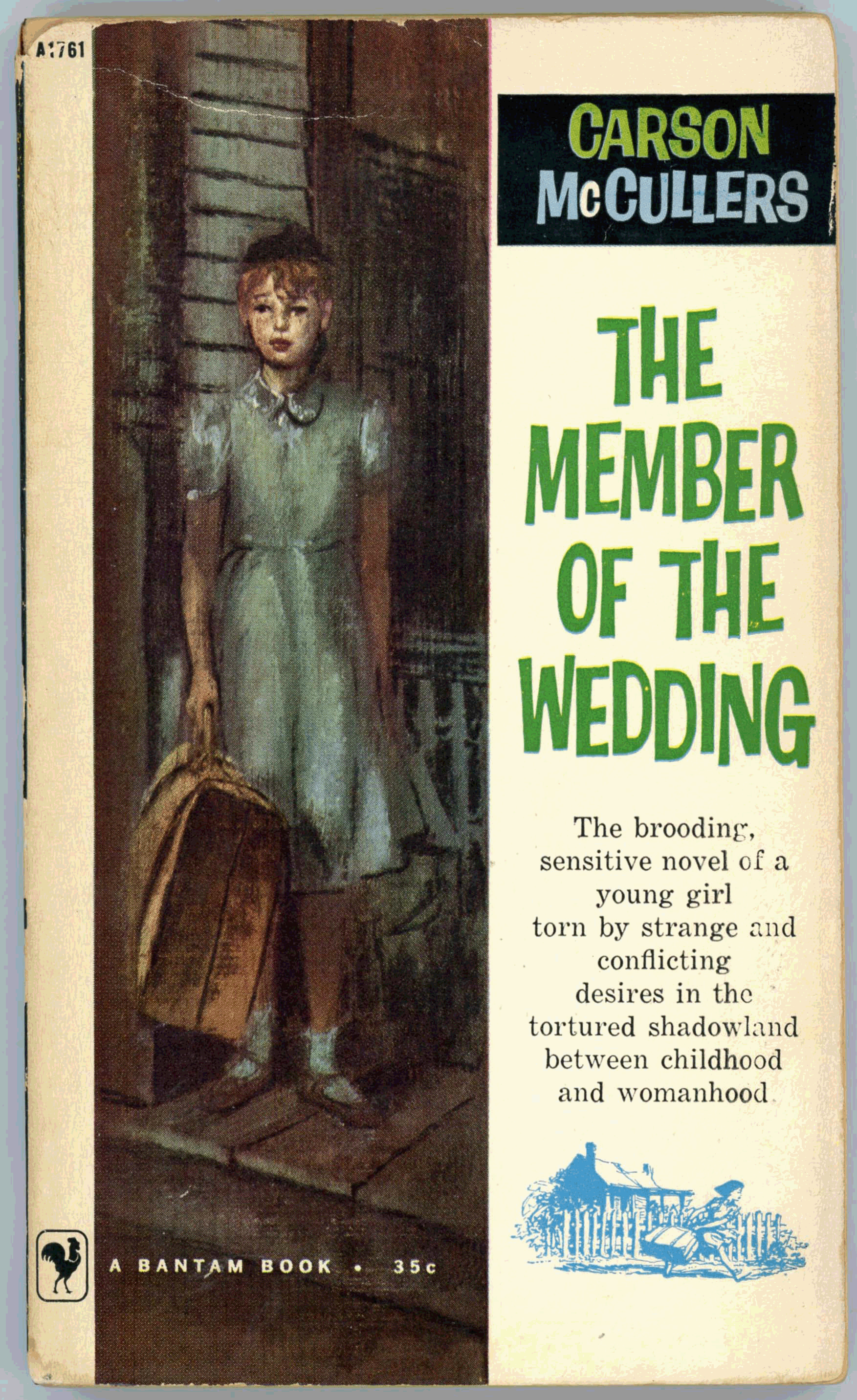
The Member of the Wedding, by Carson McCullers – 1958 (1946) [Unknown Artist] [Updated post…]

A book can draw your attention by its cover, but its power and impact by nature ultimately derive from the words upon its pages.  

If so in print, and even moreso in pixels.  To that end, many posts at WordsEnvisioned – particularly those for novels – include an excerpt which gives a representative sample of the author’s literary style, and more importantly, to lesser or greater degree, embody the ethos, spirit, or animating idea behind the work.

As such, in February of 2018 I posted images of the 1958 Bantam Books’ edition of Carson McCullers’ The Member of the Wedding, sans other content.  That literary lacuna is now remedied with an excerpt from the novel, which you can read below.   

You can view the cover of the 1962 paperback edition of McCullers’ The Ballad of the Sad Café here.

And now F. Jasmine walked with a soldier
who in his mind included her in such unknown pleasures.
But she was not altogether proud.
There was an uneasy doubt that one could not quite place or name.
The noon air was thick and sticky as hot syrup,
and there was the stifling smell of the dye-rooms from the cotton mill.
She heard the organ-grinder sounding faintly from the main street.

The soldier stopped.  “This is the hotel,” he said.

They were before the Blue Moon
and F. Jasmine was surprised to hear it spoken of as a hotel,
as she had thought it was only a café.
When the soldier held the screen door open for her,
she noticed that he swayed a little.
Her eyes saw blinding red, then black, after the glare,
and it took them a minute to get used to the blue light.
She followed the soldier to one of the booths on the right.

“Care for a beer,” he said, not in an asking voice,
but as though he took her reply for granted.

F. Jasmine did not enjoy the taste of beer;
once or twice she had sneaked swallows from her father’s glass and it was sour.
But the soldier had not left her any choice.
“I would be delighted,” she said.  “Thank you.”

Never had she been in a hotel,
although she had often thought about them and written about them in her shows.
Her father had stayed in hotels several times,
and once, from Montgomery,
he had brought her two tiny little cakes of hotel soap which she had saved.
She looked around the Blue Moon with new curiosity.
All of a sudden she felt very proper.
On seating herself at the booth table, she carefully smoothed down her dress,
as she did when at a party or in church, so as not to sit the pleats out of the skirt.
She sat up straight and on her face there was a proper expression.
But the Blue Moon still seemed to her more like a kind of café than a real hotel.
She did not see the sad, pale Portuguese,
and a laughing fat lady with a golden tooth poured beer for the soldier at the corner.
The stairway at the back led probably to the hotel rooms upstairs,
and the steps were lighted by a blue neon bulb and covered with a runner of linoleum.
A sassy chorus on the radio was singing an advertisement:
Denteen Chewing Gum!  Denteen Chewing Gum!  Denteen!
The beery air reminded her of a room where a rat had died behind a wall.
The soldier walked back to the booth, carrying two glasses of the beer;
he licked some foam that had spilled over his hand
and wiped the hand on his trousers seat.
When he was settled in the booth, F. Jasmine said,
in a voice that was absolutely new to her –
a high voice spoken through the nose, dainty and dignified:

“Don’t you think it is mighty exciting?
Here we are sitting here at this table
and in a month from now there’s no telling on earth where we’ll be.
Maybe tomorrow the army will send you to Alaska like they sent my brother.
Or to France or Africa or Burma.
And I don’t have any idea where I will be.
I’d like for us to go to Alaska for a while, and then  go somewhere else.
They say that Paris has been liberated.  In my opinion the war will be over next month.”

The soldier raised his glass, and threw back his head to gulp the beer.
F. Jasmine took a few swallows also, although it tasted nasty to her.
Today she did not see the world as loose
and cracked and turning a thousand miles an hour,
so that the spinning views of war and distant lands made her mind dizzy.
The world had never been so close to her.
Sitting across from the soldier at that booth in the Blue Moon,
she suddenly saw the three of them – herself, her brother, and the bride –
walking beneath a cold Alaskan sky,
along the sea where green ice waves lay frozen and folded on the shore;
they climbed a sunny glacier shot through with pale cold colors
and a rope tied the three of them together,
and friends from another glacier called in Alaskan their J A names.
She saw them next in Africa, where, with a crowd of sheeted Arabs,
they galloped on camels in the sandy wind.  Burma was jungle-dark,
and she had seen pictures in Life magazine.
Because of the wedding, these distant lands, the world,
seemed altogether possible and near:
as close to Winter Hill as Winter Hill was to the town.
It was the actual present, in fact, that seemed to F. Jasmine a little bit unreal.

“Yes, it’s mighty exciting,” she said again.

8/30/20 294