The Voice of America, by Rick DeMarinis – 1991 [Anne Bascove]

“…a second chance is the sweetest blessing any of us can hope for.”

Contents

Safe Forever, from Story

Desert Place, from Epoch

Paraiso: An Elegy, from The Georgia Review

God Bless America

An Airman’s Goodbye, from The Paris Review

Aliens, from Antioch Review

Horizontal Snow, from Story

Fidelity

Infidelity

The Whitened Man, from Vox

Wilderness, from Epoc

The Voice of America, from Cutbank

Insulation, from Harper’s Magazine

Her Alabaster Skin

Rudderless Fiction: Lesson 1 (A Correspondence Course), from Harper’s Magazine

________________________________________

How people could lie to themselves,
and believe it,
was the miracle of human life as far as I was concerned. 
(from “The Voice of America”, p. 177)

He’s on a mission of wild truth-seeking. 
He thinks he can solve his life if he keeps telling it. 
(from “Rudderless Fiction: Lesson 1”, p. 208)

A story should not mean; at best it should be meant.
(from “Rudderless Fiction: Lesson 1”, p. 213)

– Rick DeMarinis –

Damon Runyon Favorites, by Damon Runyon – 1946 [Unknown Artist]

Contents

Butch Minds the Baby
Lillian
A Very Honorable Guy
Madame La Gimp
The Hottest Guy in The World
Bred for Battle
A Story Goes With It
Sense of Humor
Undertaker Song
That Ever-Living Wife of Hymie’s
The Brakeman’s Daughter
Little Miss Marker
Dancing Dan’s Christmas
Princess O’Hara
________________________________________

“Sense of Humor”

No one in the world can give a hot foot as good as Joe the Joker, because it takes a guy who can sneak up very quiet on the guy who is to get the hot foot, and Joe can sneak up so quiet many guys are willing to lay you odds that he can give a mouse a hot foot if you can find a mouse that wears shoes.  Furthermore, Joe the Joker can take plenty care of himself in case the guy who gets the got foot feels like taking the matter up, which sometimes happens, especially with guys who get their shoes made to order at forty bobs per copy and do not care to have holes burned in these shoes.

But Joe does not care what kind of shoes the guys are wearing when he feels like giving out hot foots, and furthermore, he does not care who the guys are, although many citizens think he makes a mistake the time he gives a hot foot to Frankie Ferocious.  In fact, many citizens are greatly horrified by this action, and go around saying no good will come of it.

This Frankie Ferocious comes from over in Brooklyn where he is considered a rising citizen in many respects and by no means a guy to give a hot foots to, especially as Frankie Ferocious has no sense of humor whatever.  In fact, he is always very solemn, and nobody ever sees him laugh, and he certainly does not laugh when Joe the Joker gives him a hot foot one day on Broadway when Frankie Ferocious is standing talking over a business matter with some guys from the Bronx.

He only scowls at Joe, and says something in Italian, and while I do not understand Italian, it sounds so unpleasant that I guarantee I will leave town inside of the next two hours if he says it to me.

– Damon Runyon –

Lost Horizon, by James Hilton – 1933 (1967) [Unknown Artist]

“There is a reason, and a very definite one indeed. 
It is the whole reason for this colony of chance-sought strangers living beyond their years. 
We do not follow an idle experiment, a mere whimsy. 
We have a dream and a vision. 
It is a vision that first appeared to old Perrault when he lay dying in this room in the year 1789. 
He looked back then on his long life,
as I have already told you,
and it seemed to him that all the loveliest things were transient and perishable,
and that war, lust, and brutality
might some day crush them until there were no more left in the world. 
He remembered sights he had seen with his own eyes,
and with his mind he pictured others;
he saw the nations strengthening,
not in wisdom, but in vulgar passions and the will to destroy;
he saw their machine-power multiplying until a single-weaponed man
might have matched a whole army of the Grand Monarque. 
And he perceived that when they had filled the land and sea with ruin,
they would take to the air… 
Can you say that this vision was untrue?”

“True indeed.”

“But that was not all. 
He foresaw a time when men,
exultant in the technique of homicide,
would rage so hotly over the world that every precious thing would be in danger,
every book and picture and harmony,
every treasure garnered through two milleniums,
the small,
the delicate,
the defenseless – all would be lost like the books of Livy,
or wrecked as the English wrecked the Summer Palace in Pekin.”

“I share your opinion of that.”

“Of course. 
But what are the opinions of reasonable men against iron and steel? 
Believe me, that vision of old Perrault will come true. 
And that, my son, is why I am here,
and why you are here,
and why me pray to outlive the doom that gathers around on every side.”

“To outlive it?”

“There is a chance.  It will come to pass before you are as old as I am.”

“And you think that Shangri-La will escape?”

“Perhaps. 
We may expect no mercy, but we may faintly hope for neglect. 
Here we shall stay with our books and our music and our meditations,
conserving the frail elegancies of a dying age,
and seeking such wisdom as men will need when their passions are all spent. 
We have a heritage to cherish and bequeath. 
Let us take what pleasure we may until that time comes.”

(James Hilton)

The Man in The High Castle, by Philip K. Dick – 1962 (1964) [Unknown Artist]

It furthers one
To undertake something. 
It furthers one to cross the great water.

Ten pairs of tortoises cannot oppose him.
Constant perseverance brings good fortune.
The king presents him before God.

One is enriched through unfortunate events.
No blame, if you are sincere
And walk in the middle,
And report with a seal to the prince.

If you walk in the middle
And report to the prince,
He will follow.

He brings increase to no one.
Indeed, someone even strikes him.
He does not keep his heart constantly steady.
Misfortune.

One must resolutely make the matter known
At the court of the king.
It must be announced truthfully.  Danger.
It is necessary to notify one’s own city.
It does not further to resort to arms.
It furthers one to undertake something.

(Philip K. Dick)

The Pocket Book of O. Henry, edited by Harry Hansen – 1948 [Curt Witt]

Contents

From “The Four Million”

The Gift of the Magi
The Skylight Room
The Cop and The Anthem
Memoirs of a Yellow Dog
Springtime a la Carte
The Green Door
After Twenty Years
The Furnished Room

From “Heart of The West”

The Pimienta Pancakes
The Reformation of Calliope

From “Roads of Destiny”

The Passing of Black Eagle
A Retrieved Reformation
Whirling Dick’s Christmas Stocking

From “Cabbages and Kings”

Caught

From “Sixes and Sevens”

The Sleuths
Makes the Whole World Kin

From “Whirligigs”

The Whirligig of Life
A Newspaper Story

From “The Voice of The City”

The Voice of the City
One Thousand Dollars

From “The Trimmed Lamp”

The Trimmed Lamp
A Madison Square Arabian Night
The Rubaiyat of a Scotch Highball
Two Thanksgiving Day Gentlemen
The Buyer From Cactus City
The Badge of Policeman O’Roon
The Last Leaf
The Tale of a Tainted Tenner

From “Strictly Business”

A Municipal Report
Compliments of the Season

Face of a Hero, by Louis Falstein – 1951 [Al Schmidt]

The two images below, of the first (1950) edition (Harcourt, Brace and Company) of Face of A Hero, show the book’s front cover / spine, and title page, the latter including an illustration of an aviator’s flight helmet, goggles, and oxygen mask.  

The book’s cover combined and is limited to two fundamental elements: one symbolic – a human face; the other quite “real” – a formation of six B-24 Liberator bombers under attack by two enemy fighter planes.  Though the novel’s general setting is, of course, the WW II air war against Germany,  it’s intriguing that the cover art is set upon varying tones of red, rather than cooler “aerial” shades of blue, gray, and white.

Though the artist’s name is not presented on either the cover or within the book itself, stylistically, the human face at least seems to be reminiscent of the work of Ben Shahn…  (Well, maybe!)

It occurred to me I must write to Ruth, but I didn’t know what to tell her.
A subtle wall was being erected between my wife and me
because we had not shared this experience.
I realized with a shock that my wife was a civilian, safe back in the States.
And I suddenly resented those who were safe.
I was appalled at the ease with which I abandoned myself to self-pity
even in my hour of triumph.
But aside from the corrupting but very comfortable stabs of self-pity
there was no denying that my most profound experience had been shared with me
not by Ruth but by nine comparative strangers.
They were now a part of my life, part of my joys and sorrows.
We had not chosen one another as brothers; it had been ordained for us.
Mel Ginn, a rancher from western Texas, was my brother.
I didn’t know much about him and he was suspicious of me because I came from a large city.
He was amused by my clumsiness with the guns.
He was puzzled that an “old man” had got himself mixed up in the fighting.
Mel had never met a Jew before and this confused him also.
Before our first mission we had little to say to each other.
But today we had been through life together.
Before our first mission Leo Trent and I had little in common.
Leo used to sell perfume in Hollywood before the war.
His heart had been set on becoming a pilot,
but he had been washed out of cadet training “three hours before graduation.”
That was his story.
It rankled that his younger brother, who was twenty-one, two years Leo’s junior,
was an ace Marine fighter pilot in the Pacific while Leo became a “venereal gunner.”
He was not a good gunner (this we had in common),
and up in the air I saw him paralyzed with fear (this too we had in common).
Leo and I had never become close,
perhaps because we each knew the other to be a coward who resented being found out.
That’s why he was wary of me.
He credited me with an insight that always sat in judgment on his weaknesses.
Also, he mistook my aloofness for snobbery.
He did not like riddles.
But I wanted him to like me.
He was, after all, my brother. (p 30)

______________________________

The images below are of the 1951 Pocket Books edition of Face of A Hero, featuring cover art by Al Schmidt. 


Would Andy laugh at me if I told him I was in this war because I wanted to keep America free?
I wanted to tell him I was in it not only because I was against Hitler;
I was also for something.
I was convinced that after we won it, life would be better for all.
People would get along better;
not only Missourians and Illinoisians,
but Italians and Americans too…
But how do you tell these things to a frightened man, a man facing death?
I was afraid Andy would laugh at me.
Americans had an ingrained suspicion of words, any words smacking of patriotism.

Andy sat silent for a while, contemplating the pebbles on the tent floor.
“Oh, I’ll fly my missions,” he said.
“I’m no better or no worse than anybody else.
I certainly wouldn’t pull a stunt like Bowles pulled yesterday,
shooting off his toe and claiming it was an accident.
I wouldn’t do a thing like that, nobody in our crew would.”
He regarded me searchingly to see whether I believed him.
He got up and went to sit on his cot.
“Oh, I don’t know,” the navigator sighed.
“It’s all mixed up in my mind.
In one way I feel I’m a sucker for being in this.
In another way I feel useless.
I’m supposed to be a navigator.
The army spent a fortune to train me.
But do I navigate?
I’m just a passenger in the ship, while the lead navigator does all the work.
You men could fly without me.
It wouldn’t be so bad if I had a gun to fire.
You don’t know what it means to be shot at and not shoot back.
You’re helpless, useless.
You go crazy.
If I could only keep busy in the air –
maybe I wouldn’t have the time to worry so much about death…”
He slapped his thighs savagely
and stood up and walked to the cone-shaped entrance of the tent.
“I don’t know what to think.
I’ve never been so mixed up and so scared in my life…”  (109-110)

______________________________

The image below – a portrait of Louis Falstein posing against a “backdrop” of a B-24 Liberator’s fuselage – was scanned from a photographic print.  It’s unknown if this picture was taken during his training in the continental United States, or later, at the 450th Bomb Group’s base at Manduria, Italy. 

Most likely, the former. 

Notably, this is the same image of Louis Falstein that appeared (albeit highly cropped!) as the cover of the 1999 Steerforth Press edition of Face of a Hero.  The novel’s re-publication that year generated much commentary concerning the book’s similarities to – and striking differences from – Joseph Heller’s stunningly over-rated embodiment of literary mediocrity (and, ironic commercial and cultural success) otherwise known as “Catch-22.

______________________________

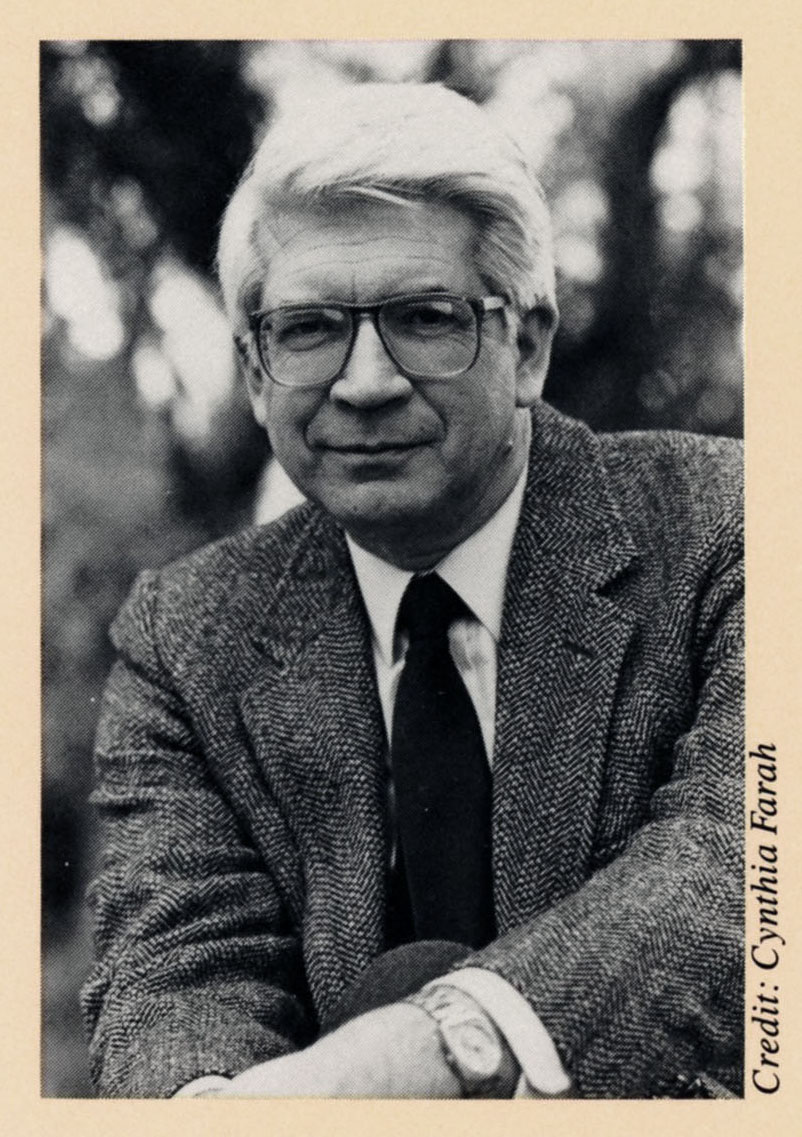
The portrait below, showing Lou in more peaceful times, appears on the jacket of the first edition of Face of A Hero.

The Pocket Book of Science Fiction, Edited by Donald A. Wollheim – 1943 (1947) [Unknown Artist]

By The Waters of Babylon, by Stephen Vincent Benet

Moxon’s Master, by Ambrose Bierce

Green Thoughts, by John Collier

In The Abyss, by H.G. Wells

The Green Splotches, by T.S. Stribling

The Last Man, by Wallace G. West

A Martian Odyssey, by Stanley G. Weinbaum

Twilight, by Don A. Stuart

Microcosmic Gog, by Theodore Sturgeon

And He Built a Crooked House, by Robert A. Heinlein