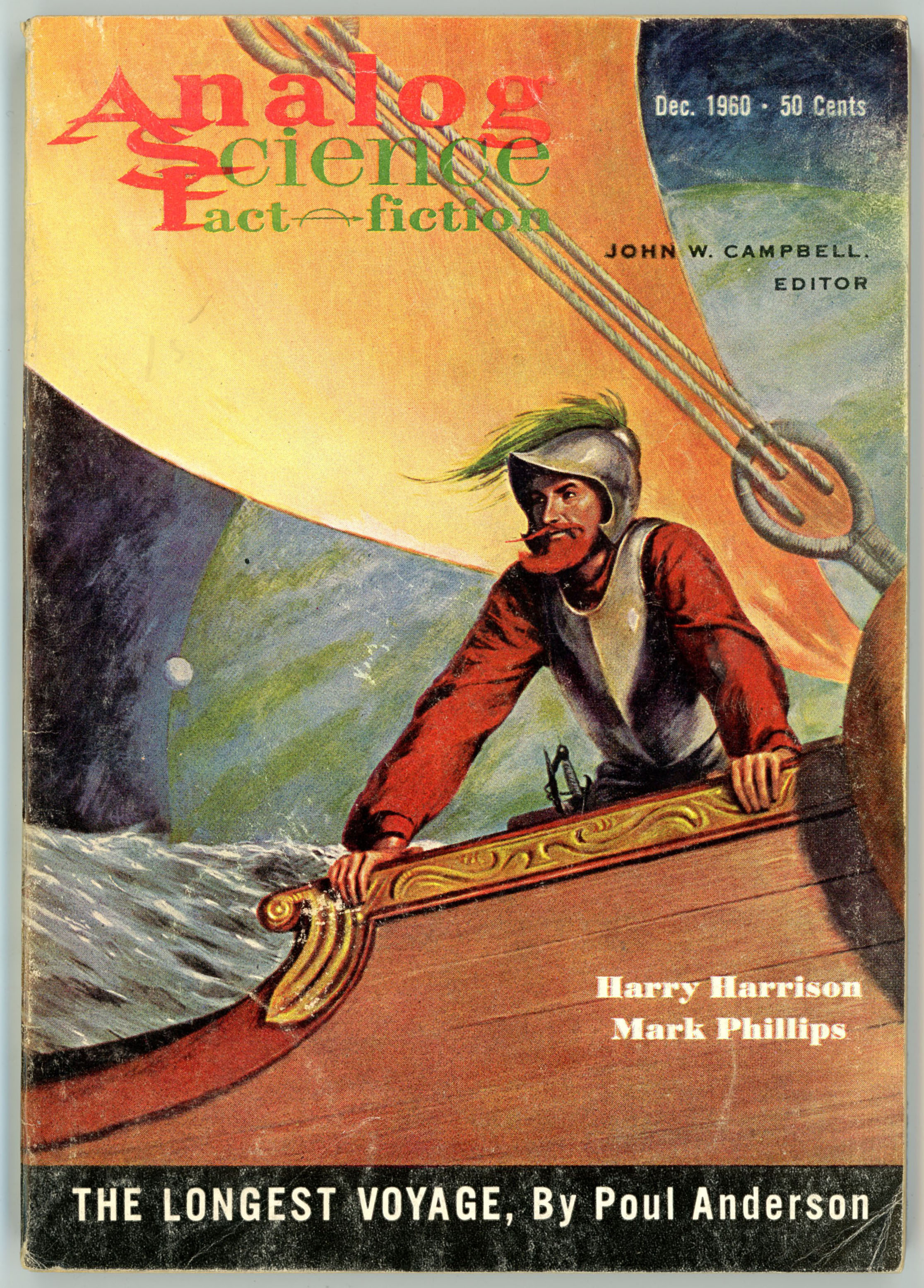
Analog – Science Fact – Fiction, December, 1960 (Featuring “The Longest Voyage” by Poul Anderson) [Frank Kelly Freas]

Yet when we came upon the Ship, toward evening, I forgot my weariness. 
And after an amazed volley of oaths,
our mariners rested silent on their pikes. 
The Hisagazi,
never talkative,
crouched low in token of awe. 
Only Guzan remained erect among them. 
I glimpsed his expression as he started at the marvel. 
It was a look of lust.

Wild was that place.
We had gone above timberline.
The land was a green sea below us, edged with silvery ocean.
Here we stood among tumbled black boulders,
cinders and spongy tufa underfoot.
The mountains rose in steeps and scarps and ravines,
on to snows and smoke,
which rose another mile into a pale chilly sky.
And here stood the Ship.
And the Ship was beauty.

I remember. 
Its length
 – height, rather, since it stood on its tail
 – it was about equal to our caravel,
in form not unlike a lance head,
in color a shining white,
unvarnished after forty years. 
That was all. 
But words are paltry, my lords. 
What can they show of clean soaring curves,
of iridescence on burnished metal,
of a thing which was proud and lovely and in its very shape aquiver to be off? 
How can I conjure back the glamour which hazed that Ship whose keel had cloven starlight?

– Poul Anderson

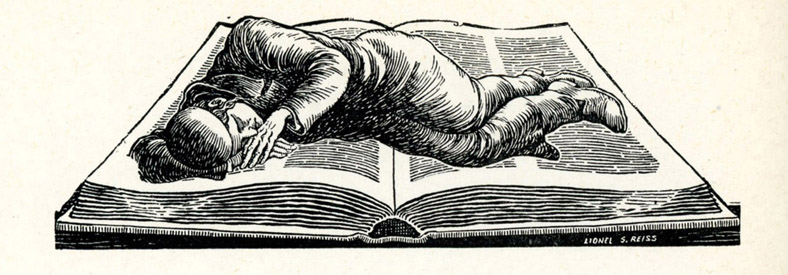
Illustration by Frank Kelly Freas (p. 24)
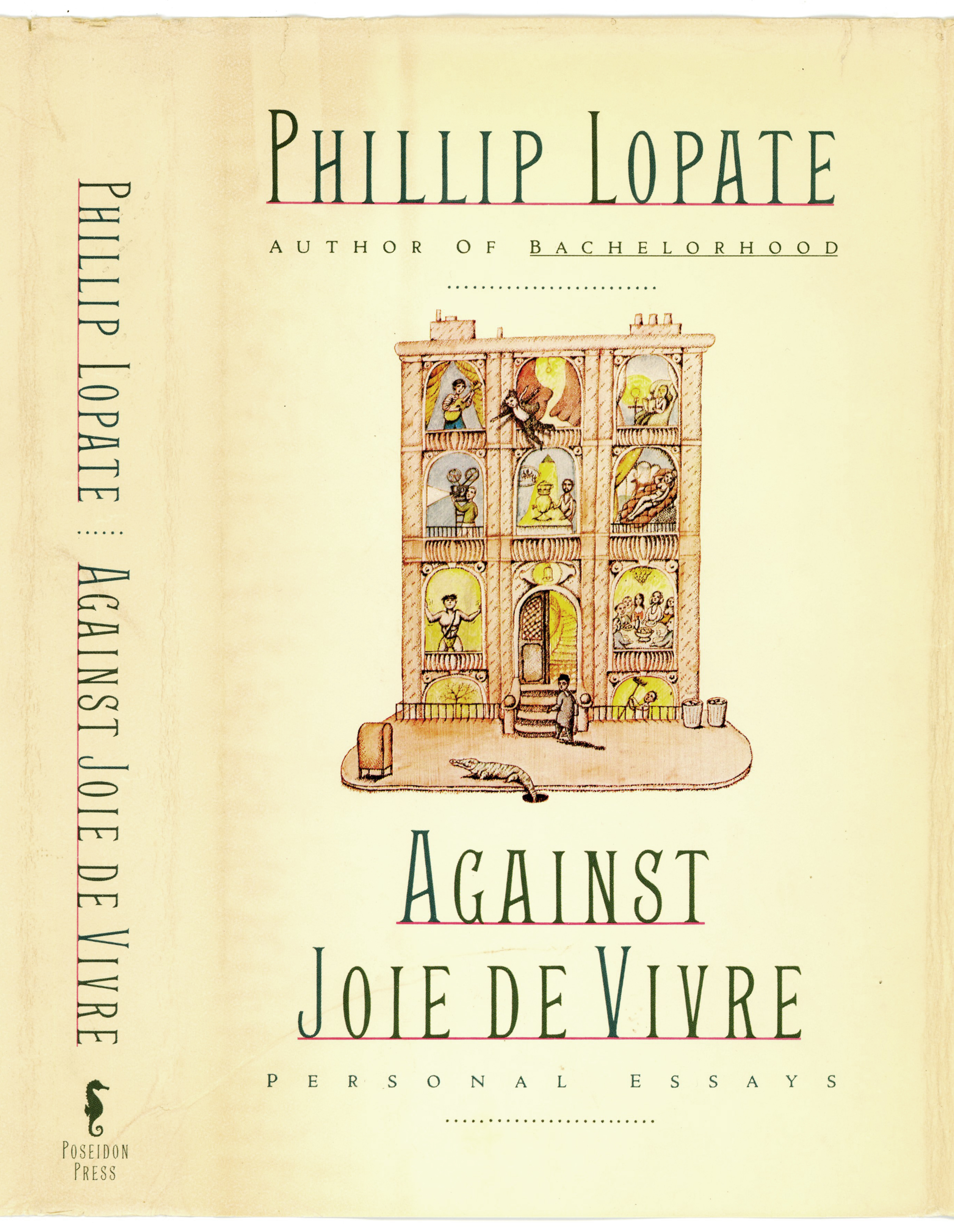
Against Joie De Vivre – Personal Essays, by Phillip Lopate – 1989 [Peter Sis]

My parents had a bookcase which held a few hardcovers
and a library of Pocket Books,
whose flimsy, browning pages would crack if you bent down the corners. 
I can still picture those cellophane-peeling covers with their kangaroo logo,
their illustrations of busty, available-looking women
or hard-bodied men
or solemn, sensitive-looking Negroes with titles like

Intruder in the Dust,
Appointment in Samara,
Tobacco Road,
Studs Lonigan,
Strange Fruit,
Good Night, Sweet Prince,
The Great Gatsby,
The Sound and the Fury
.

Father brought home all the books, it was his responsibility;
though Mother chafed at everything else in the marriage,
she still permitted him at the same time to be her intellectual mentor.
I have often wondered on what basis he made his selections:
he’d had only one term of night college
(dropping out because he fell asleep in class after a day in the factory),
and I never saw him read book reviews.
He seemed all the same, to have a nose for decent literature.
He was one of those autodidacts of the Depression generation,
for whose guidance the inexpensive editions
of Everyman, Modern Library, and Pocket Books seemed intentionally designed,
out of some bygone assumption that the workingman should
 – must
 – be educated to the best in human knowledge.

(by Phillip Lopate, from “Samson and Delilah and the Kids”)

______________________________

Cover illustration by Peter Sis.  The nine (or is it eleven?) vignettes symbolize the central themes of book’s nineteen essays, the titles of which are listed below…

I

Samson and Delilah and the Kids
Against Joie de Vivre
Art of the Creep
A Nonsmoker with a Smoker
What Happened to the Personal Essay?

II

Never Live Above Your Landlord
Revisionist Nuptials
Anticipation of La Notte: The “Heroic” Age of Moviegoing
Modern Friendships
A Passion for Waiting

III

Chekhov for Children
On Shaving a Beard
Only Make Believe: Some Observations on Architectural Language
Houston Hide-and-Seek
Carlos: Evening in the City of Friends

IV

Upstairs Neighbors
Waiting for the Book to Come Out
Reflections on Subletting
Suicide of a Schoolteacher

______________________________

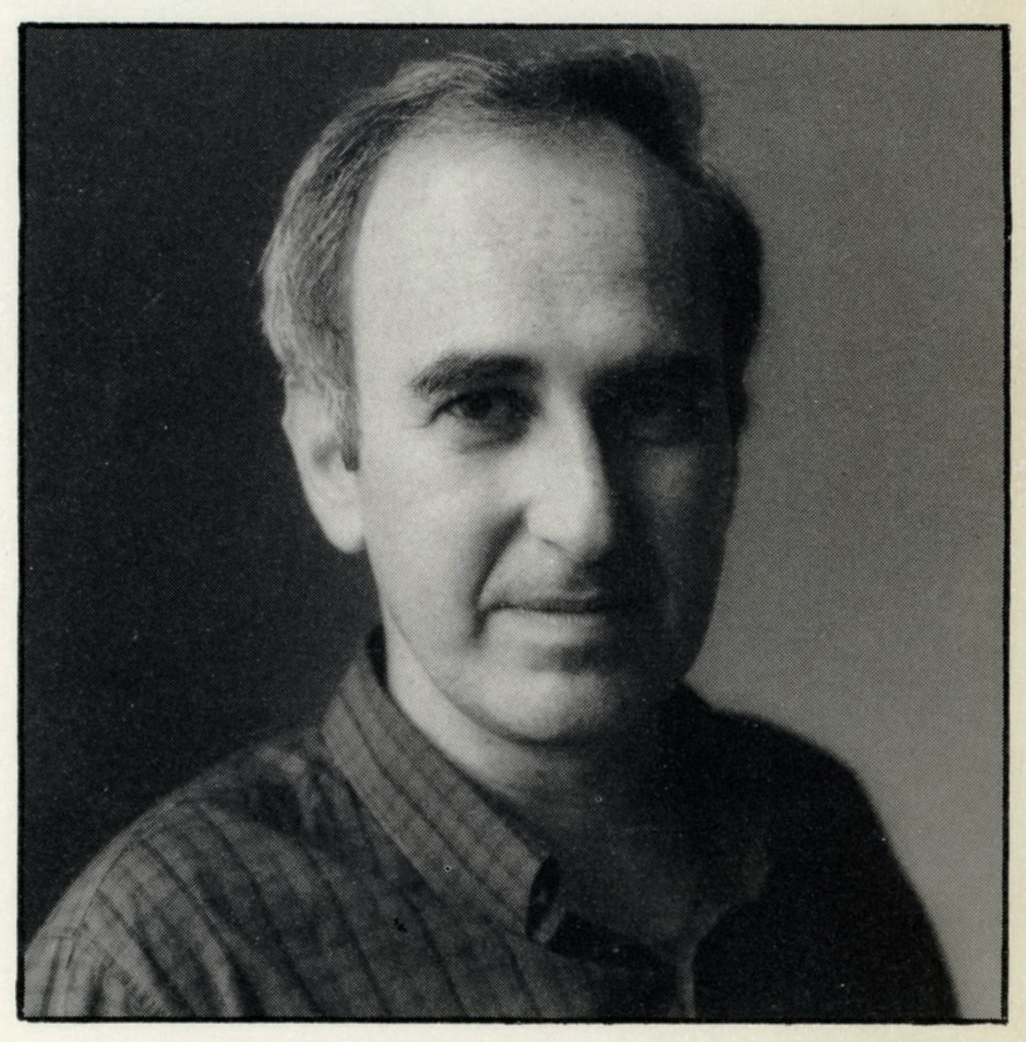
Phillip Lopate (photo by Sally Gall)