Well, I thought I’d seen this one before…
Not the cover, though I noticed that, while perusing issues of Worlds of If at Archive.org.
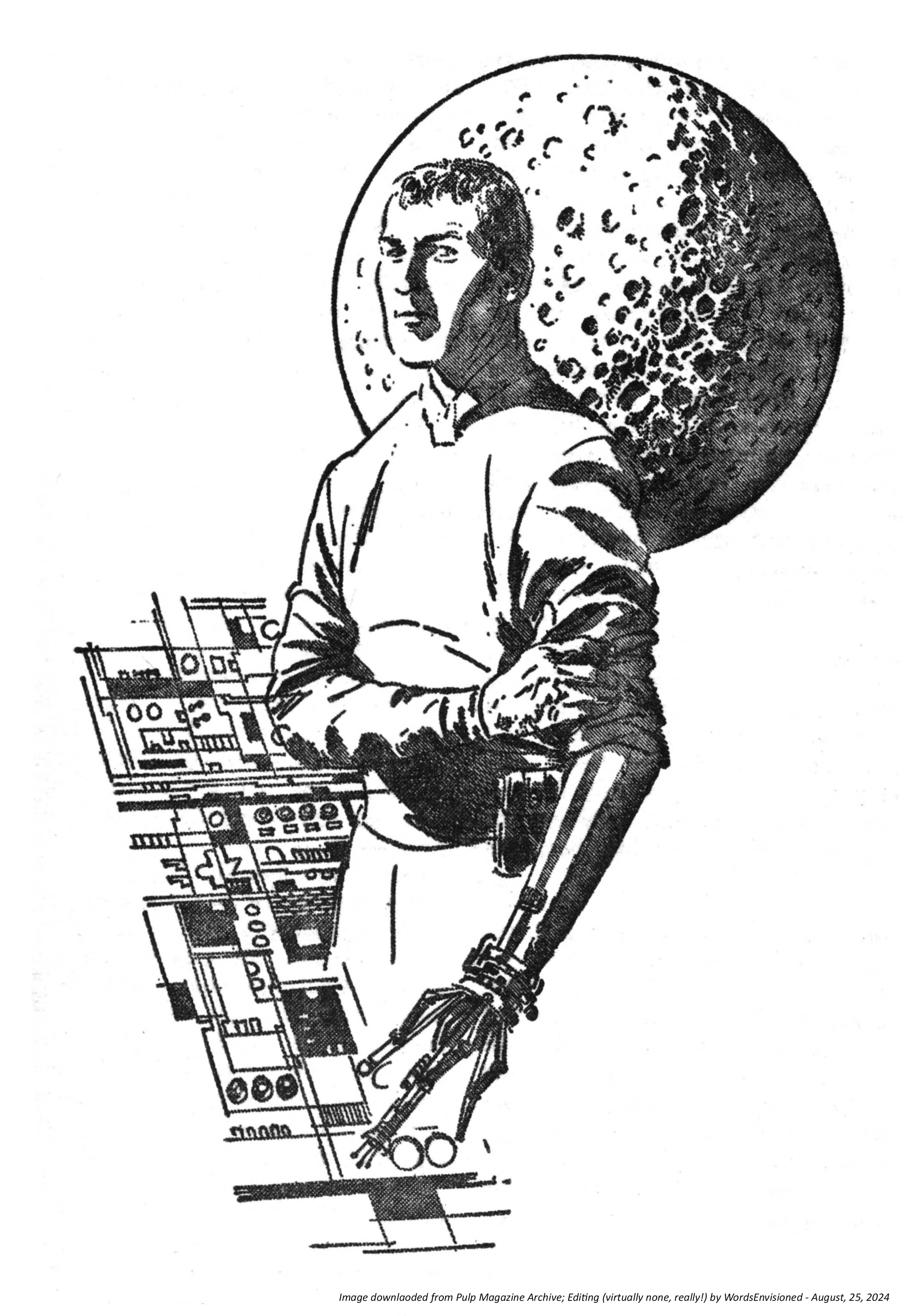
Rather, Dan Adkins’ illustration for Neal Barret, Jr.’s story “Starpath”. It shows a space-suited soldier running across a barren alien landscape, with a nondescript alien spacecraft in the background. The most compelling aspect of the composition is not its setting, but rather, the posture and position of the soldier: He’s depicted in mid-run, right foot on the ground and left foot raised, body bent, head raised and looking ahead, carrying a rifle (note the strap) in his right hand. Then, I remembered: The original soldier wasn’t a spacemen. Much more earthbound, he was a United States Marine in the Pacific Theater during the Second World War…
____________________
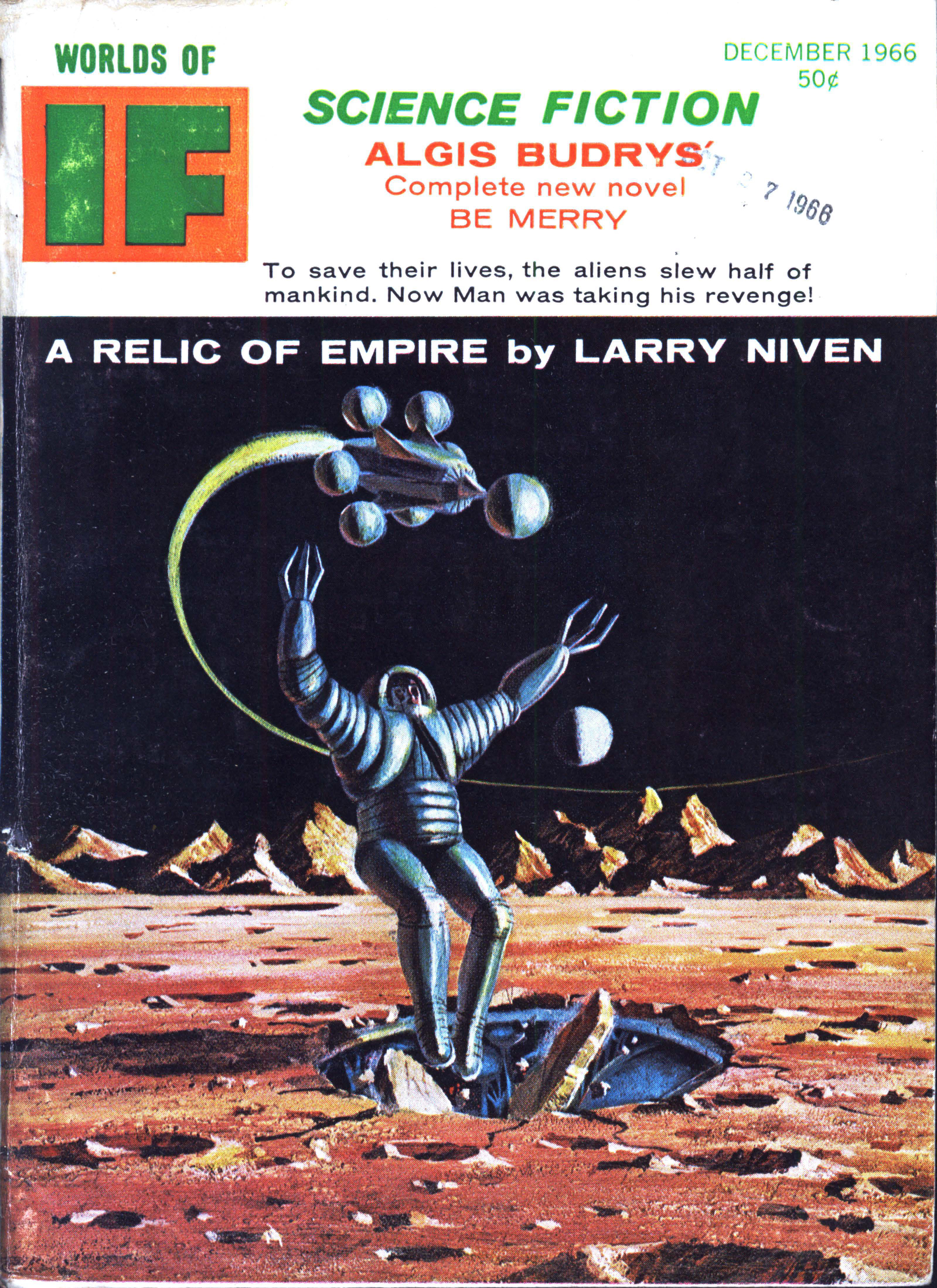
Jack Gaughan’s cover illustrating Larry Niven’s “A Relic of Empire”. The story was republished by Ballantine in a 1978 anthology of Niven’s stories, which featured cover art by Rick Sternbach.
___________
Here’s the image that caught my eye, and, my attention: Dan Adkins’ illustration for “Starpath”, by Neal Barrett, Jr. (pp. 58-59) (I created this image by using Photoshop Elements to combine two images. Pretty straightforward.)
 ______________________________
Below, Adkins’ likely – probable – almost certain inspiration: Note the parallels between the photo and art, in terms of the Marine’s posture, the position of canteen and rifle, and, the barren landscape (notice how the terrain is rising to the right?). Born in 1937, Adkins would have been twelve years old during 1945; probably aware even then, and doubtless with an artist’s perceptive eye after, of the striking nature of the photo.
But, who was this man? It turns out that information about him is readily available. He was PFC Paul Edward Ison. While serving as a Private First Class in the First Marine Division, he was photographed while running through Japanese fire at “Death Valley”, Okinawa on May 10, 1945. Born in Ashland, Kentucky, in 1916, he died in Fort Myers, Florida, in 2001. Further information about him can be found at Wikipedia.
As for the image itself, the caption of the photograph (the image can be found at Wikipedia) states “Through “Death Valley” – Moving on the double, a Marine dashes to a forward point of cover through a hail of Jap machine gun fire. The Marines sustained more than 125 casualties in eight hours while crossing this draw and dubbed in “Death Valley.”” From the Photograph Collection (COLL/3948), Marine Corps Archives & Special Collections OFFICIAL USMC.”

______________________________
And, a very nicely done colorization of the photo, posted at reddit by ColorizedHollywood.

______________________________
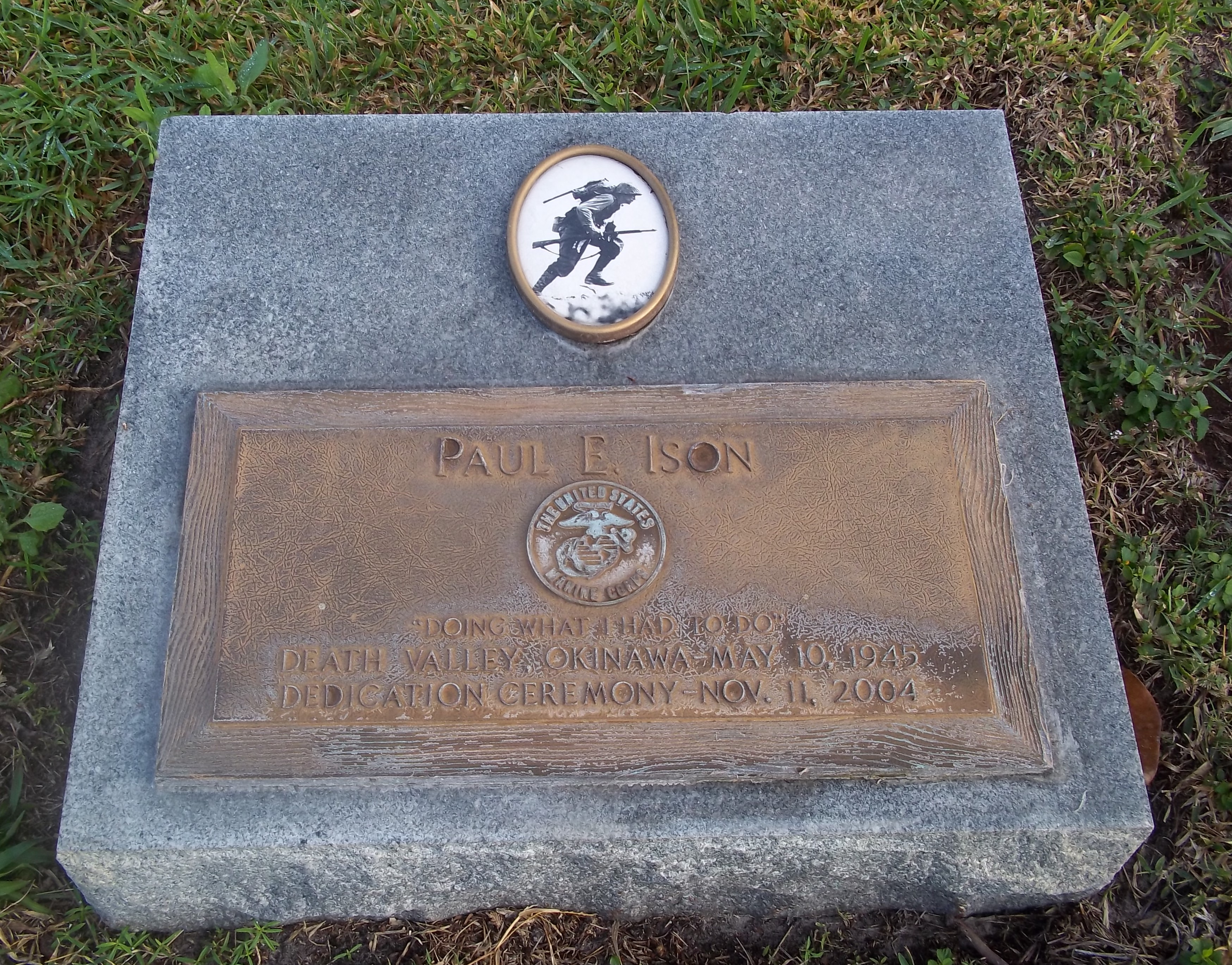
“DOING WHAT I HAD TO DO”
Here’s Mr. Ison’s tombstone (from FindAGrave), by Helen Farrell.
______________________________
Utterly different in style and technique than Dan Adkins, this issue of If provided a venue for the unique and striking work of Virgil Finlay. Though a digest-size magazine unfortunately did not provide a format for best possible display of Finlay’s creativity, for his work (and income!) it provided a format, nonetheless: Here, an eye floats – serenely? – in a box, in the waters of a stream.
Illustration by Virgil Finlay, for “Call Me Dumbo”, by Bob Shaw (p. 97)
 ______________________________
And, two examples of the work of Dwight Morrow, for Algis Budrys’ “Be Merry”. Slightly on the Wally Woodish side, but distinct in their own way.
Page 9
 ______________________________
Page 30