
Category: Life
The Year Of The Zinc Penny, by Rick DeMarinis – 1989 [Anne Bascove]
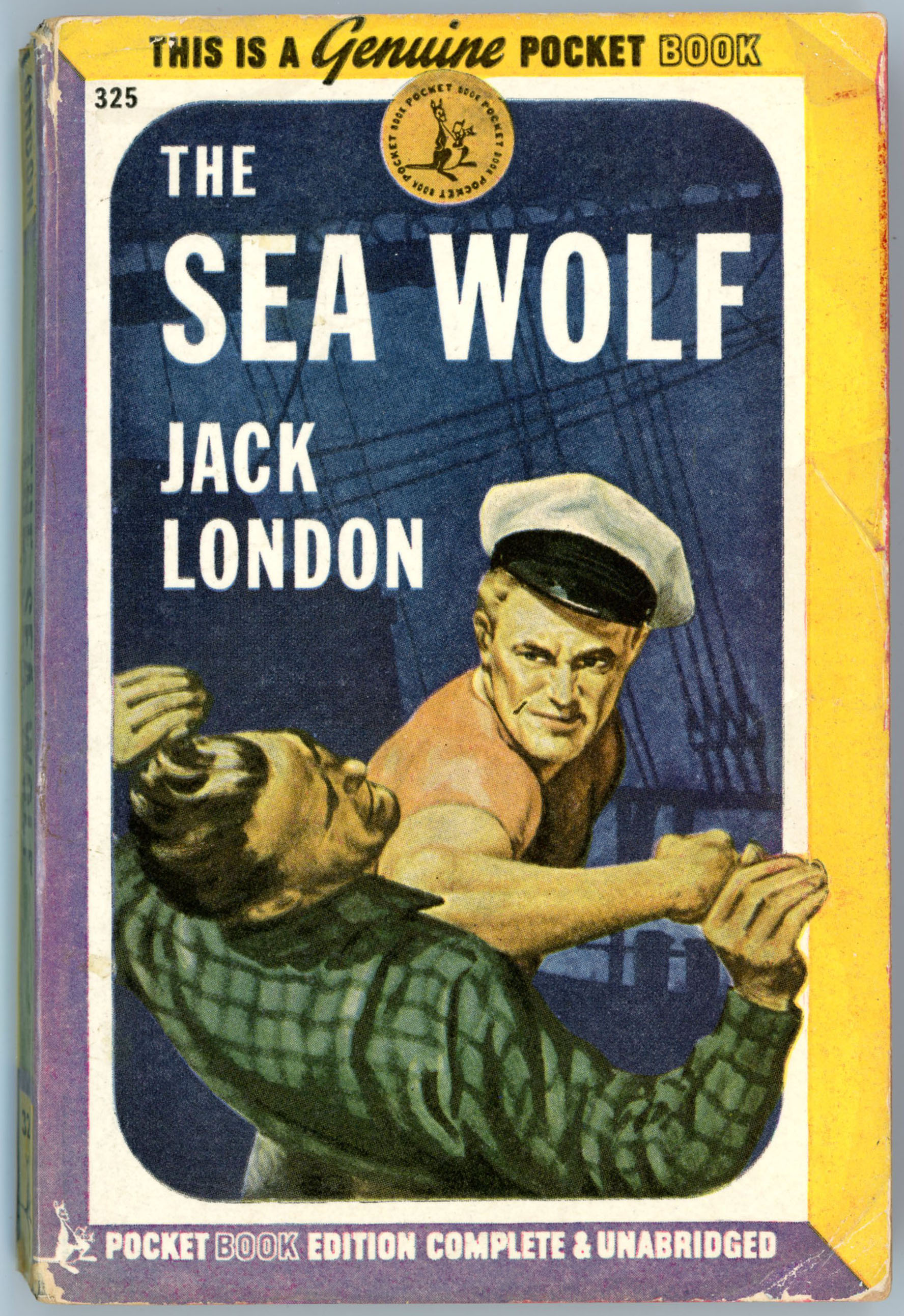
This post, which first appeared in mid-2018, has been updated to include Michiko Kakutani’s New York Times October 1989 book review of The Year of the Zinc Penny. The “initial” version of the post included the review as a scan, but this revision includes the review in full text, followed by a close-up of Anne Bascove’s cover art, which is as evocative as it is stylistically distinctive.
Scroll down, and enjoy…
 She understood me, though.
Not my words but my acquiescence.
I relaxed back into the pillow and stared at the white ceiling.
She began to sing again as she dipped the washcloth into the pan of warm water.
“When the lights go on again, all over the world,”
she sang, her voice plaintive and sad.
Her melancholy tone made me think
that she had a boyfriend or husband overseas.
I imagined him an airman, a fighter pilot stationed in London.
He flew P-51 Mustangs and had shot down twelve Messerschmitt Me-109s
before getting shot down himself.
He was lying, helpless, in a hospital on the outskirts of London.
He couldn’t remember his name of where he came from,
and no one had told him just yet that his legs had been amputated.
He could remember his girlfriend or wife,
but only her pretty face and mournful singing voice,
not her name.
“Jenny,” he’d cry out in his delirium.
Then he’d sink back into his confused gloom.
“No, not Jenny,” he’d mumble.
(105)
I had discovered something about myself.
I knew that I was now capable of mustering any necessary lie at will.
I could say “Dad” and not mean it
and I could accept being called “son” by someone who did not mean it.
It was like discovering an unsuspected talent.
William and Betty didn’t have this talent,
and I was dimly aware that it was a deficiency that would cost them dearly.
I was also dimly aware that if this talent could be used without shame,
its power would be awesome.
And dangerous.
As dangerous as the one who used it as leukemia.
Because necessary lies trick the liar himself.
He wants to believe them.
Then he does.
“Stay clear of it,” Aunt Ginger had said.
Her words repeated themselves in my mind, gathering meaning.
(130-131)
____________________
Books of The Times
World War II Los Angeles, as a Boy Sees It
By MICHIKO KAKUTANI
The Year of the Zinc Penny
By Rick DeMarinis
174 pages. W.W. Norton & Company.
$17.95.
The New York Times
October 3, 1989
The year is 1943, when the war effort required that pennies be manufactured of zinc instead of precious copper; and Trygve Napoli, the narrator of Rick DeMarinis’s new novel, is 10 years old. His story of that year is, at once, a portrait of a vanished era, and an old-fashioned coming-of-age tale, showing one boy’s initiation into the solemnities of the adult world. If the novel’s material sometimes feels derivative – there are echoes throughout the narrative of the movies “Radio Days,” “Hope and Glory” and “Empire of the Sun” – Mr. DeMarinis’s voice remains distinctively his own, by turns comic and melancholy, lyrical and street smart.
Writing in brisk, observant prose, Mr. DeMarinis quickly immerses us in the staccato rhythms of life in wartime Los Angeles: rowdy sailors on leave, showing off their war wounds and tattoos; war widows working in aircraft factories, riveting wings and tails; children searching the skies above the city with their tin binoculars, on the lookout for enemy planes. A huge camouflage net spans one boulevard, covering the Douglas aircraft plant, and Tryg and his friends notice that it has been painted – surreally – to look like an ordinary farmland scene with houses, barns, and herds of dairy cows. The Japanese will never fall for it, says his friend William, noting that a Midwestern farm scene looks incongruously out of place in downtown Los Angeles. “The nut who designed it must have been from Iowa.”
When Tryg isn’t at the movies watching Ronald Colman, Claudette Colbert and Franchot Tone, he’s home listening to the radio, tuning in the Lone Ranger or whatever foreign station he can locate on his shortwave machine. With the help of his uncle, he builds a huge antenna on the top of his parents’ apartment building – an antenna that enables him to listen to the likes of Tokyo Rose, as he sits in the living room playing Parcheesi or concocting secret codes.
Tryg’s favorite pastime, however, is fantasizing about the war. Sometimes, he is an anonymous figure like Kilroy – someone who is everywhere and nowhere, partly hidden, in disguise. Other times, he is a brave fighter pilot named Charlie Jones or Bill Tucker, Jerry Granger or Buddy Thompson – someone without an awkward foreign name. He shoots down enemy pilots, dive-bombs strategic targets, and after his plane crashes, dies a heroic death in the arms of a beautiful girl.
“I loved the pose,” Tryg recalls. “I loved being someone everyone could like. To encourage this view of myself, I had to make it real. To make it real required a strong and unwavering imaginative act. I had to elaborate the details of my coming death in combat. This was important. I had to work at it. I couldn’t afford to be slack on the details.”
Though these fantasies earn Tryg a reputation as an oddball – “Monk, the Nut,” who’s constantly spacing out and mumbling to himself – they also provide a necessary respite from the boring rigors of school and the tensions of his squabbling family.
Tryg’s mother, who left his father for a smirking would-be actor named Mitchell, is a disturbingly cold woman, possessed of “a Norwegian fatalism.” When he was an infant, she abandoned him for four years, leaving him with her autocratic father; and now that she has retrieved him, she seems quite indifferent to his happiness or welfare. Mitchell, on his part, is a vain, selfish man, obsessed with parlaying his job as a Hollywood milkman into a movie career. He is completely cynical about the war – it doesn’t much matter, he says, which side ends up winning.
Filling out the Napoli household are Ginger, Tryg’s neurotic aunt, who acts like a California version of Blanche DuBois, and her violent husband, Gerald, who’s constantly getting into drunken brawls. Their son, William, a sullen, chain-smoking teen-ager, becomes Tryg’s mentor and surrogate brother. And William’s girlfriend, Betty, becomes a symbol to Tryg of the mysteries of sex that await him in adolescence.
Although these characters are all drawn in broad, colorful strokes, they never become generic cartoons, so deft is Mr. DeMarinis in portraying Tryg’s mixed feelings toward them of love and resentment, sympathy and irritation. In the course of the year, we watch him exchange needy loneliness for a more melancholy detachment, and we see him attempt to use the clear-sighted logic of childhood to solve the mysteries of love and death. By the end of the book, he is old beyond his years – initiated, by the war and assorted family tragedies, into the sadnesses of grown-up life.
“I had discovered something about myself,” Tryg says, recalling an exchange with his stepfather, who has just been drafted. “I knew that I was now capable of mustering any necessary lie at will. I could say ‘Dad’ and not mean it and I could accept being called ‘son’ by someone who did not mean it. It was like discovering an unsuspected talent.”
Without ever resorting to easy nostalgia or cheap sentimentality, Mr. DeMarinis gives us both a picture of the eternal realities of childhood – the humiliations of playground gamesmanship, the cruelties of puppy love – and a tactile portrait of life in the wartime 40s. In that sense, “The Year of the Zinc Penny” is like one of Proust’s madeleines: for those old enough to remember, it captures a receding past; for those too young to recall, it conjures up a vanished era.
____________________
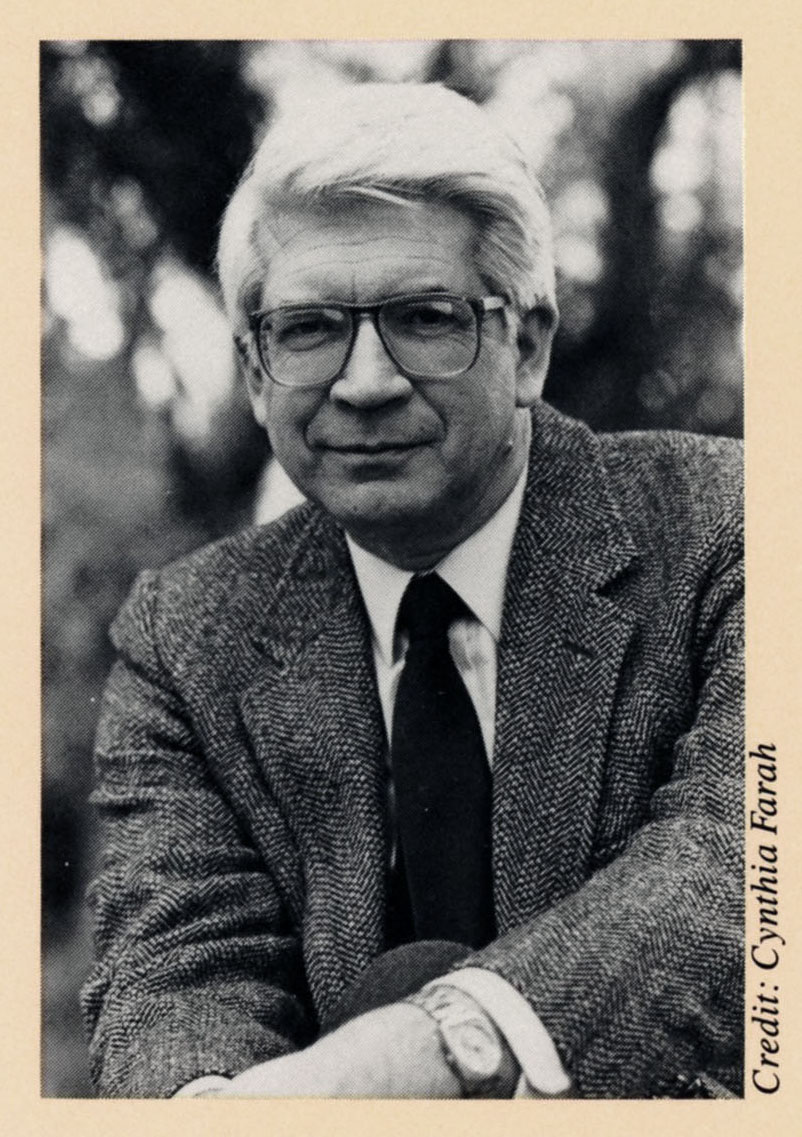
– Rick DeMarinis –
 ____________________

Those Who Fall, by John G. Muirhead – 1986 [Cover by Eric Joyner, Interior Illustrations by Susan Coons]
This post has been updated to include Tom Ferrell’s laudatory review of Those Who Fall, from The New York Times Book Review. The review follows…
‘I Drop Bombs. That’s My Job’
THOSE WHO FALL
By John Muirhead.
Illustrated. 258 pp. New York:
Random House. $18.95.
By Tom Ferrell
The New York Times Book Review
February 15, 1987
PEOPLE who have been in battle have a claim on our attention, as the Vietnam veterans keep insisting. This is not because we are grateful, or even because we should be. There’s a terrible disproportion between risk and gain, increasing with time. The Americans in a World War I cemetery lost all they had to lose, but it would be a bold and speculative accountant of history who might try to show just how we are better off in 1987 for men who died very young in 1917.
John Muirhead isn’t dead, though men were killed in his plane and more than enough airmen went down in flames before his eyes. He too has trouble defining his claim on our attention. This is how “Those Who Fall” begins:
“I suppose I am like most men who soldiered for a time. I think that something unusual happened to me; some particular meaning was revealed to me so I should set it down. Men have been boring their wives, their children, and other men with these kind of stories from Marathon through Chickamauga, and I’m no different from the lot. Having survived it all, I can’t leave well enough alone, but must ponder on it and remember and talk at least about one part of it that was, I think, a kind of glory.”
Mr. Muirhead, whose first book this is, is now a retired engineer. In early 1944 he was a B-17 pilot based near Foggia, Italy, flying missions up the Adriatic and over the Alps to targets like Regens-burg, Munich and Wiener Neustadt. For combat soldiers, the men of his heavy bomber group enjoyed reasonable material conditions: hot meals, dry beds in which they could safely sleep, even hot water at times. Then they would rise, before dawn, to start a long day’s ride over an armed and hostile industrial society, 10 men in a contraption 75 feet long and weighing not all that much more than a New York City bus.
The chief hazards were fighters – Germany still had at that time enough planes, pilots and fuel to mount a vigorous defense – and flak. “We edged past Pola,” Mr. Muirhead writes, “and were saluted with a barrage of flak that for all but a few bursts fell short of the low-left squadron. Three stray shells exploded in the center of the formation. I could see the orange flame in the middle of the black puffs. Two successive bursts erupted off the tip of our right wing and magically an array of star-shaped holes appeared in our windshield. … It never seemed to us that the flak came from anything on the ground. Not from guns that men fired. Flak came from the sky itself; it blossomed there.” Things got rapidly worse and stayed worse for hours; on this trip to Regensburg, a particularly horrible one, Mr. Muirhead’s left waist gunner was killed, one engine was shot out and his group lost 11 of 21 planes.
• • •
Fear and self-induced amnesia became the poles of Mr. Muirhead’s service life. He avoided knowing the other members of his crews. He tells us, repeatedly, that he forgot why the war was being fought and didn’t want to know. “I work in this little parish,” he tells a nonflying officer friend. “I’m employed to fly a bomber from here to there. I drop some bombs there, and then I come back here – if I’m lucky. That’s my job; I’m used to it.”
On June 28, 1944, he was shot down over Bulgaria, surviving with most of his crew. Defeat brought a kind of relief, but apparently not only because capture enhanced his chances of living out the war. “Peace and comradeship,” he writes, could now replace professional relations among his crew and his new acquaintances in captivity. Though he nowhere says so, I suspect he was glad to see his responsibility diminished. Another pilot’s error in formation that had destroyed two B-17s and 20 men returns oppressively to his memory several times in his narrative.
His P.O.W. camp was atop a hill, with splendid views; but life in it was very lousy, literally. Also hungry and unmedicated, though it isn’t clear that his Bulgarian captors were in much better case; the Germans had stripped their unfortunate ally to support their own military machine as their situation deteriorated on both fronts. In September, with the Russians massed on the Bulgarian border, the camp commandant opened the gate and released the prisoners. What happened after that Mr. Muirhead doesn’t say.
WE haven’t been bored; the battle stuff has been keenly drawn, the terror and desperation, some of it quiet, are as real as can be. There’s a lot of soldierly helling around and a lot of funny obscene conversation, funny in the way reflex obscenity can be when it supplants or augments official military jargon (there’s also a lot of effortful, quasi-poetic writing, much of which deserves good marks for trying). And there’s enough nuts-and-bolts matter about caring for planes and running the squadron to fix the whole tale solidly in the slot of 1944 material technology. All excellent of its kind, and it is a kind, the kind that feeds little bookstores and catalogue houses specializing in “militaria” and “aeronautica.”
But what about the glory? Promised at the start, it begins to glimmer in the P.O.W. camp when the men win a tiny victory over toilet regulations. “To endure we sought to win such trifles to measure the day. We had become aliens of the poorest kind, and we had to find more than bits of bread to live on. … The last hour, the last minute, the last second of the last day, would come to pass, opening the way for us. That would be the moment of our glory, our long-remembered glory.” And so it proved, when Mr. Muirhead and two comrades, with four legs among them, walked out the prison gate and across their hilltop – a victory parade without a band. Military memoirs don’t dare to dress themselves in glory much any more, and maybe you had to be there, but Mr. Muirhead has the courage to trust his memories. I’m convinced he was there.
Tom Ferrell is an editor of The Book Review.
 I suppose I am like most men who soldiered for a time.
I think that something unusual happened to me;
some particular meaning was revealed to me so I should set it down.
Men have been boring their wives,
their children,
and other men with these kind of stories from Marathon through Chickamauga,
and I’m no different from the lot.
Having survived it all, I can’t leave well enough alone,
but must ponder on it and remember and talk at least about one part of it that was, I think,
a kind of glory.
On the twenty-third of June, 1944,
I ended my time as a bomber pilot flying out of Italy with the 301st Bomb Group,
and became a prisoner of war in Bulgaria.
My last mission was to Ploesti.
Although that name had its own dreadful sound,
the other places and other names all took their toll
whether you feared them or not.
It mattered very little when you finally bought it.
The odds were, one always knew, that something was going to happen.
It was not felt in any desperate way,
but rather it came as a difference in consciousness
without one’s being aware of the change.
In the squadron we learned to live as perhaps once we were long ago,
as simple as animals without hope for ourselves or pity for one another.
Completing fifty missions was too implausible to even consider.
An alternative, in whatever form it might come, was the only chance.
Death was the most severe alternative.
It was as near as the next mission,
although we would not yield to the thought of it.
We would get through somehow: maybe a good wound,
or a bail-out over Yugoslavia or northern Italy; the second front might open up,
and the Germans might shift all their fighters to the French coast.
We might even make it through fifty missions – a few did.
But such fantasies didn’t really persuade us,
not with our sure knowledge that we were caught in a bad twist of time
with little chance we would go beyond it.
Our lives were defined by a line from the present
to a violent moment that must come for each of us.
The missions we flew were the years we measured to that end,
passing by no different from any man’s except we became old and died soon.
I don’t know whether any of this is true or not.
Everything happened that I have said happened,
but it’s memory now, the shadow of things.
The truth lives in its own time, recall is not the reality of the past.
When friends depart, one remembers them but they are changed;
we hold only the fragment of them that touched us and our idea of them,
which is now a part of us.
Their reality is gone, intact but irretrievable,
in another place through which we passed and can never enter again.
I cannot go back nor can I bring them to me;
so I must pursue the shadows to some middle ground,
for I am strangely bound to all that happened then.
We broke hard bread together and I can’t forget:
Breslau, Steyr, Regensburg, Ploesti, Vienna, Munich, Graz,
and all the others; not cities,
but battlegrounds five miles above them where we made our brotherhood.
It’s gone and long ago; swept clean by the wind, only some stayed.
Part of me lives there still, tracing a course through all the names.
I don’t know why.
What is it that memory wants that it goes through it all again?
Was there something I should have recognized?
Some terrible wisdom?
The kind of awful knowledge that stares out of the eyes of a dying man?
I was at the edge then and almost grasped the meaning,
but I lived and failed the final lesson and came safe home.
I linger now, looking back for them, the best ones who stayed and learned it all.
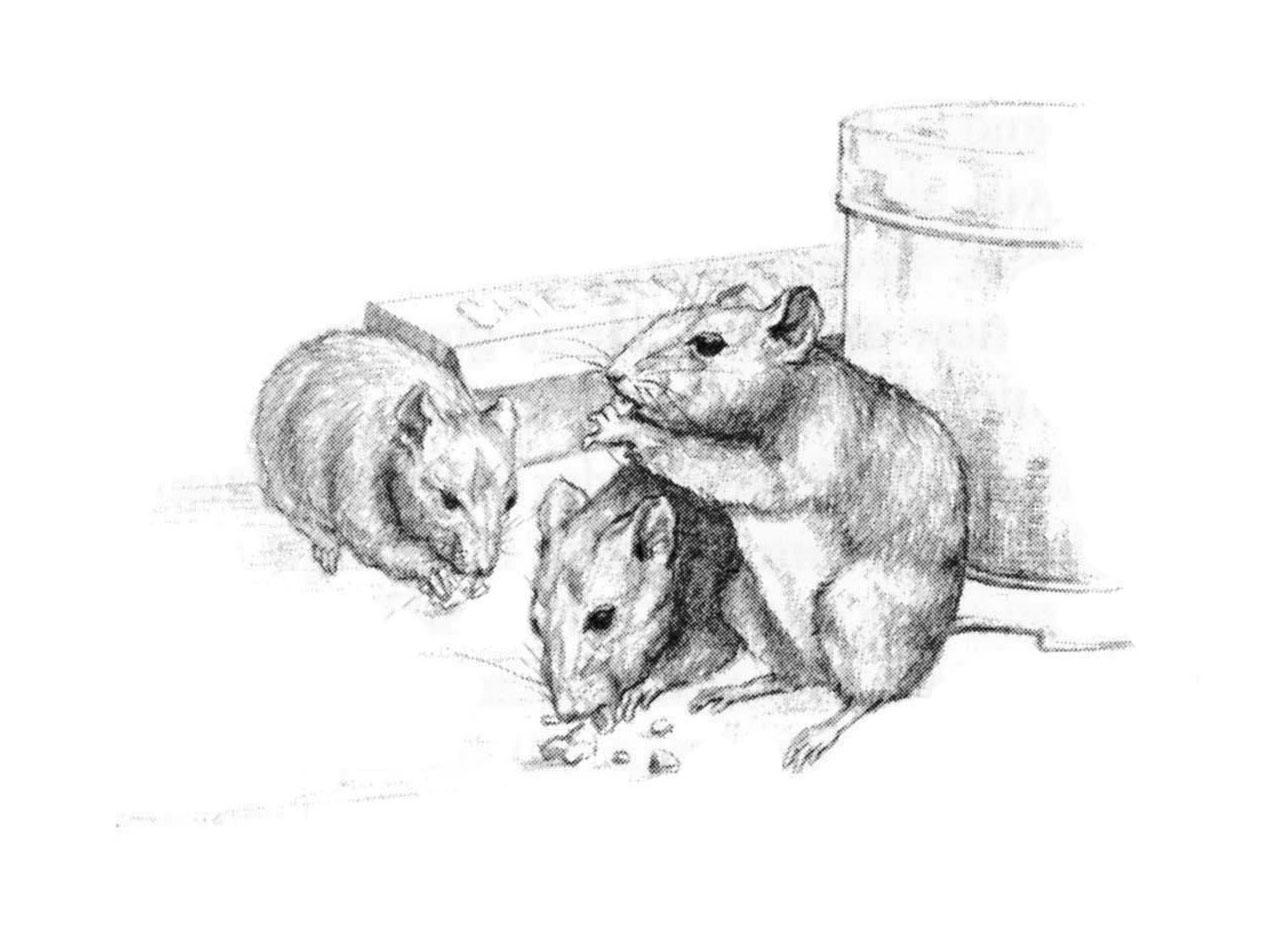 “It was as if in greeting that three of the tiny creatures came out from the boards around the stove and scurried toward me. I was sitting on Mac’s bunk. He used to feed them crumbs every time he came in the tent. A fourth mouse joined his friends and, while they nibbled happily, I began the sad chore of going through Mac’s belongings.” (pp. 66-67)
 “I don’t have any damn matches.”
“I handed him mine. He took them without a word; he struck five of them before he got the pipe going. He had forgotten his cigarette, which was still smoldering on the bomb cart where he had placed it.” (p. 114)

“The ground was rushing up at me! I was moving toward a high ridge! I swept over it, and then I plunged through the upper branches of a giant pine; mu chute caught and was held fast while my inertia drove me over a deep, rocky gorge. My forward motion was violently snubbed, and I was sent rushing back toward a massive trunk. I missed it by three feet, but continued to swing wildly beside it. After a time, the motion ceased. I hung there over the steep incline of the gorge. The base of the tree reached deep into the slope; it was much too far to drop.” (p. 194)
__________
In this strange life, we lived in the narrow dimension of the present.
We didn’t seek the future, for it was not there;
and if we could not move into it or beyond it,
we could not return to our past.
We were dull and listless,
but we did not have the true languor of young men
whose dreams were of worlds ahead of them,
and who saw the present only as prelude to it.
If we were without dreams, without a past or a future,
and were caught in the stillness of the present,
our vision then became wise.
There was peace in the absence of clamor;
there was serenity in the days without battles.
If this tattered place where we lived
were to be the full measure of our lives,
we would find some sweetness in it.
A small mouse nibbling a piece of biscuit in my tent
was as wondrous as a unicorn.
The soiled streets of Foggia were full of light,
and one time when I was walking there,
I heard the pure voice of a woman singing.
I learned each day of the goodness of life.
I cherished what was given to me,
holding it just for the moment it was given,
for I knew it was fragile and could not be held for long.
__________
 The Muirhead crew prior to departure for Italy. Author John Muirhead is in front row, far left, holding headphones. Notice that the aircraft in the background is a B-24 Liberator, which the author initially flew before assignment to the 301st Bomb Group. (USAAF photo, from dust jacket of Those Who Fall.)
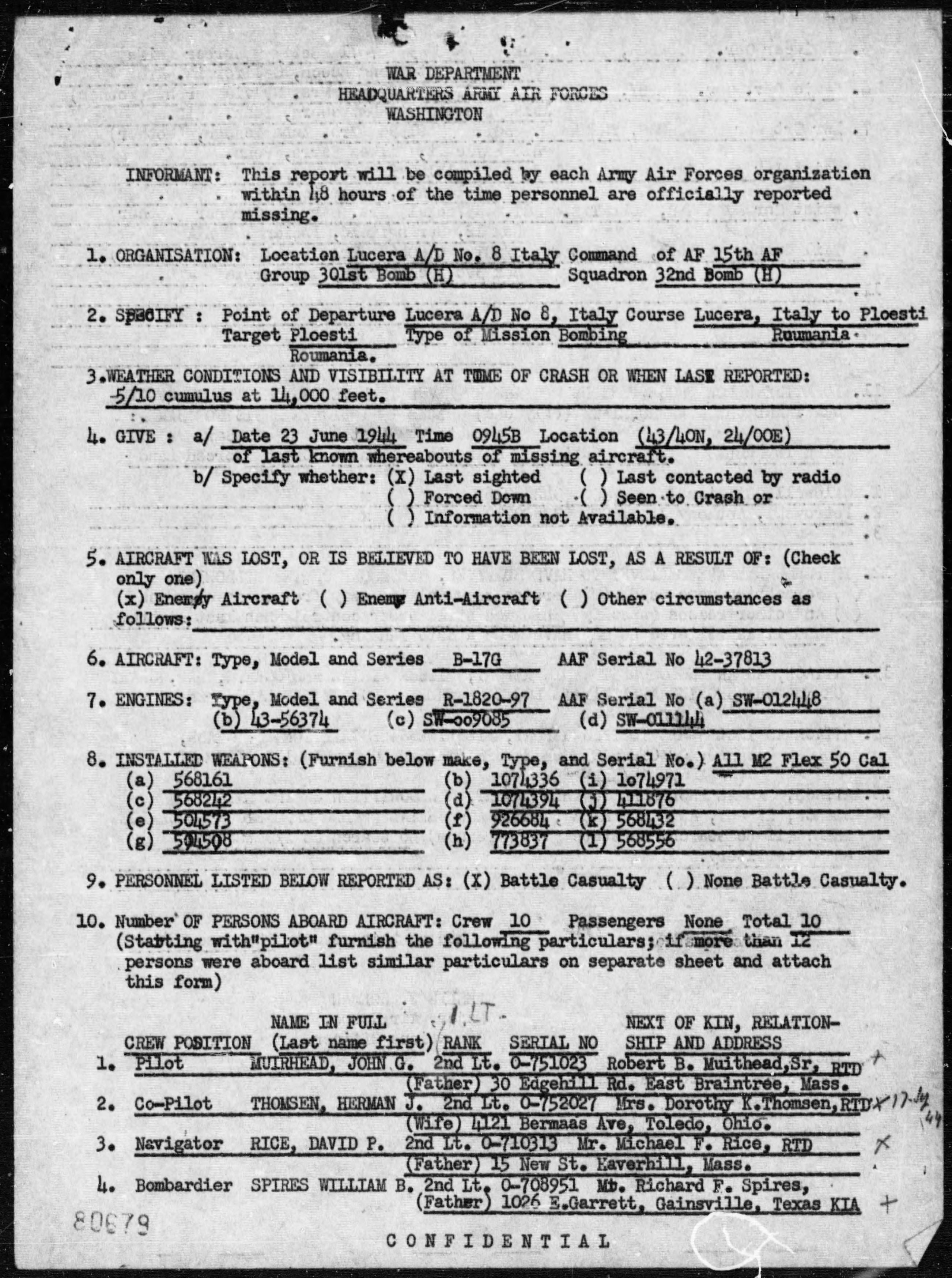 The Missing Air Crew Report (MACR) – #16203 – covering the author’s final mission: Target Ploesti, Roumania – Date June 23, 1944. John Muirhead, as pilot, is listed first in the crew roster.
 The second page of the MACR, listing the crew’s enlisted personnel (flight engineer, radio operator, and aerial gunners).
 Eyewitnesses to the loss of Muirhead’s B-17, S/Sgt. William E. Caldwell and S/Sgt. Anthony J. Petrowski.
 John Muirhead, mid-1980s.
New York Son – Stories by Mike Feder – 1992 [Victor Weaver]
New York Son’s title blurb – “This book will make you laugh with all your heart!” is only partially true. Though at times ( – well okay, yes – ) humorous, Mike Feder’s collection of eleven stories reveals genuine, deeply felt and penetrating insight into the fundamental “stuff” of life – family relationships and human nature, in a way that makes the reader step back, pause, and contemplate his own life.
While my own favorites are “Sanford Brodsky”, “Marilyn”, and “Hollywood and Bust”, passages from two other stories – “The Fishing Trip” and “Paralegal” – are given below.
You can read and listen to more of Mr. Feder’s work at Mike Feder and the Feder Files.
 Contents
Here’s Herbie (Esquire, March, 1988)
Mother
__________
The Fishing Trip
“Whenever I visited him [my father] in the locations of his grandeur,
I was never disappointed.
If you’ve lived any,
you know that such a continuing idealization of somebody can be extremely dangerous.
But here I was twenty-three years old and not once did he ever appear to have any faults.”
__________
Sanford Brodsky
The Hospital
The Psychic
Antigua
__________
Paralegal
You see, all these men, even the young ones, are my father to me.
Most of them are big guys, ex-athletes, ex-military guys –
John Ramrod III, attorney at law.
Sometimes, passing me in the hall, they say, “I hear you’re an artist.”
“Yeah.”
“What do you do?”
“I tell stories.”
“Oh.”
They don’t burst out laughing, or stare, or scowl with contempt or anything.
A lawyer is trained to look you in the face and seem confident and happy to see you –
thinking the whole time of course that you’re a hopeless asshole.
“Hmm, that’s interesting.”
He’s thinking to himself, what kind of job is that for a thirty-eight-year-old man?”
“What do you tell stories about?”
“Autobiographical stories.
In fact I’m probably gonna tell a story about all of you on the radio next week.”
“Oh.”
__________
The Affair
Marilyn
Hollywood and Bust
 ______________________________
Mike Feder (photo by Dena Schutzer)

Desire Provoked, by Tracy Daugherty – 1986 [Richard Mantel]
 In the fall the valley turns green.
Scholars and mystics have joined hands in attempts to explain why our seasons misbehave.
Weathermen pepper our skies with balloons,
diviners scratch with earth with sticks.
Legends, and curious accounts in leather pouches found in the hollow of a tree,
suggest that the valley was once a lake.
Dogwood blossomed on its banks, peacocks danced in the hills.
Fisherman reported seeing water sprites, twinkling,
no fatter than fingers,
change into bulbous squashlike creatures in the middle of the night.
What appeared to be falling leaves drifted slowly out over the lake,
then turned into metal filings, which rained down hard upon the men.
Nothing was safe.
The shapeshifters smashed turtles, birds, trawlers, anything that settled on the lake.
On shore a chubby boy, an orphan, lived on the pumpkins of the fields.
He longed to swim.
As he had no family, the villagers assumed responsibility for him.
They warned him of the danger in the water,
but he seemed to have an intimate knowledge of the lake.
He spoke of the colors at the bottom as though he’d been diving.
Some people suggested that he came from the lake;
after all, he had no family.
Where did he come from?
 One night,
having informed the fishermen that he was tired of travelling the earth,
he jumped into the shallows and swam.
From time to time the townsfolk saw him in the middle of the lake,
riding a shaggy white buffalo.
Eventually the boy wrenched a horn from the animal’s head and tossed it ashore.
A tree laden with heavy fruit sprang up where it landed.
Next the boy surfaced gripping a black obelisk.
The obelisk was slippery;
often the boy lost his grip,
but finally managed to fling it ashore.
An artesian well burst forth, spraying water high into the air.
The villagers danced beneath the spring,
feasting on heavy fruit as the boy battled tumbleweeds, crates, panes of glass.
Each time he hurled an opponent ashore it became,
instantly,
a source of beauty and health.
The people were delighted.
Finally one creature remained – the mother squash, the biggest in the lake.
The boy caught his breath, ate a chunk of pumpkin, submerged.
He was underwater for hours.
The lake boiled.
Orange steam patches off the water.
The water began to blaze.
Women from the village tossed ice into the deepest part.
A mixture of blood –
male and female, mother and son –
hardened on the surface, burst into flames.
It burned until the lake dried up.
Afterwards there was no sign of the boy or the squash –
just a salt deposit, as if from giant tears.
For years boiling rain seared the dogwoods in the valley.
The grass dried up in summer.
 He turns out the light. “Good night,” he says.
“Daddy?”
“Yes?”
“That was neat. Will you tell us another story tomorrow night?”
“Sure. Go to sleep now.” (91-93)
– Tracy Daugherty –
The Pilgrim’s Progress, by John Bunyan (Edited and Introduced by Rex Warner) – 1951 (1678) [Tate Smith]


(The cover of Airmont’s 1969 edition of The Pilgrim’s Progress is very different from that of 1951 Pocket Books’ edition…)
References
John Bunyan, at…
The Pilgrim’s Progress, at…
2/12/19RR
Winters’ Tales – Stories and Observations for the Unusual, by Jonathan Winters – 1988 [Raphael Olbinski]
 ______________________________
 Illustration by Jonathan Winters
______________________________
 …and.
…and.
Jonathan.
Winters.
A Theft, by Saul Bellow – 1989 [Amy Hill]
 When you were down, busted, blasted, burnt out, dying, you saw the best of Clara.
So it was odd that she also should have become an executive,
highly paid and influential.
She could make fashionable talk,
she dressed with originality,
she knew at lot at first hand about decadence,
but at any moment she could set aside the “czarina” and become the hayseed,
the dupe of travelling salesmen or grifters who wanted to lure her up to the hayloft.
In her you might see suddenly a girl from a remote town,
from the vestigial America of one-room schoolhouses,
constables,
covered-dish suppers,
one of the communities bypassed by technology and urban development.
Her father, remember, was still a vestryman,
and her mother sent checks to TV fundamentalists.
In a sophisticated boardroom Clara could be as plain as cornmeal mush,
and in such a mood, when she opened her mouth,
you couldn’t guess whether she would speak or blow bubble gum.
Yet anybody who had it in mind to get around her was letting himself in for lots of bad news.
– Saul Bellow –
______________________________
 Amy Hill’s cover painting for A Theft. An untitled copy of A Theft – bearing her own (the above) illustration, is tossed from a window above Park Avenue. A closer view reveals that this illustration appears – ad infinitum? – inside each iteration within the painting.
______________________________
 Portrait of Saul Bellow by Thomas Victor.
The Elephant and My Jewish Problem – Selected Stories and Journals, 1957-1987, by Hugh Nissenson – 1988 [Hugh Nissenson]
 June 12, 1967
“What about Jerusalem?” I ask.
“What about it?”
“You didn’t mention giving that up.”
“No,” he says, “and we never will.
It’s our historic capital.
And then there’s the Wall.”
“What do you care about the Wall if you’re not religious?”
“I’ve been thinking about that.
When we captured it, I wept without knowing why.
Why did the early Zionists, who were atheists, insist on returning here?
Herzl, as you know, was offered Uganda as a Jewish national home,
but the Sixth Zionists Congress refused to consider it.
It has to be the land of Israel or nothing.
“It was as if they unconsciously assumed that a covenant between the Jews and God still existed.
Deep down we feel the same way.
It’s depressing.
You’d think that by now we’d be finished with Him once and for all.”
He absent-mindedly raises his forefinger and strokes his clean-shaven upper lip.
“Bus is it possible to create a human civilization without Him?” he says.
“That’s the question.”
– Hugh Nissenson
(From “Victory: A Journal”, originally published in Notes From the Frontier, 1968)
______________________________
 Cover Illustration by Hugh Nissenson
______________________________
Contents
The Blessing
The Groom on Zlota Street
The Well
The Law
Israel During the Eichmann Trial: A Journal
The Prisoner
Charity
A Pile of Stones
Victory: A Journal
Going Up
The Throne of God
The Crazy Old Man
Forcing The End
The Elephant And My Jewish Problem: A Journal
In The Reign of Peace
Lamentations
Under Siege: A Journal
Exile: A Journal
The Pit: A Journal
______________________________
 Hugh Nissenson (photo by Thomas Victor)
Against Joie De Vivre – Personal Essays, by Phillip Lopate – 1989 [Peter Sis]
 My parents had a bookcase which held a few hardcovers
and a library of Pocket Books,
whose flimsy, browning pages would crack if you bent down the corners.
I can still picture those cellophane-peeling covers with their kangaroo logo,
their illustrations of busty, available-looking women
or hard-bodied men
or solemn, sensitive-looking Negroes with titles like
Intruder in the Dust,
Appointment in Samara,
Tobacco Road,
Studs Lonigan,
Strange Fruit,
Good Night, Sweet Prince,
The Great Gatsby,
The Sound and the Fury.
Father brought home all the books, it was his responsibility;
though Mother chafed at everything else in the marriage,
she still permitted him at the same time to be her intellectual mentor.
I have often wondered on what basis he made his selections:
he’d had only one term of night college
(dropping out because he fell asleep in class after a day in the factory),
and I never saw him read book reviews.
He seemed all the same, to have a nose for decent literature.
He was one of those autodidacts of the Depression generation,
for whose guidance the inexpensive editions
of Everyman, Modern Library, and Pocket Books seemed intentionally designed,
out of some bygone assumption that the workingman should
– must
– be educated to the best in human knowledge.
(by Phillip Lopate, from “Samson and Delilah and the Kids”)
______________________________
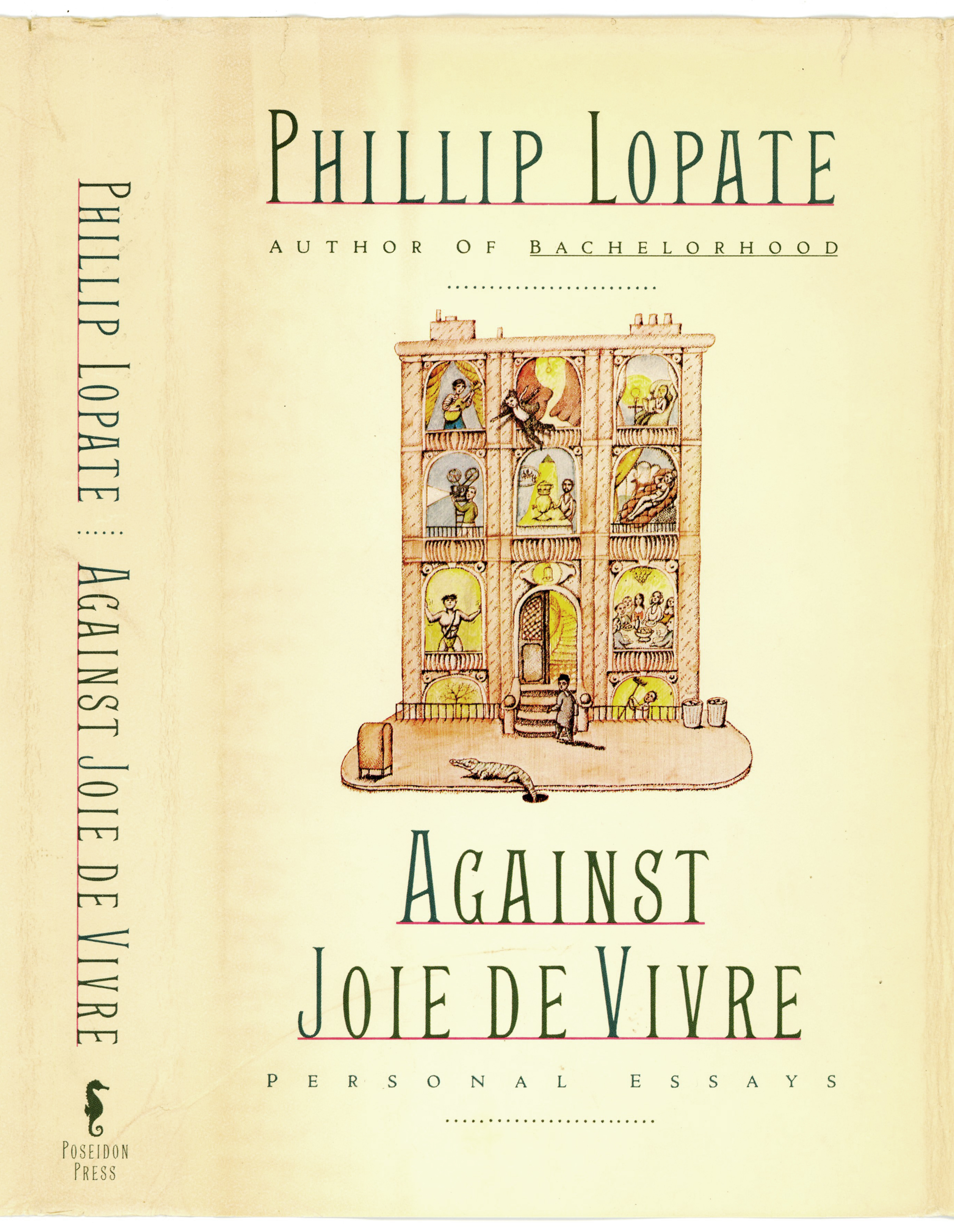
Cover illustration by Peter Sis. The nine (or is it eleven?) vignettes symbolize the central themes of book’s nineteen essays, the titles of which are listed below…
 I
I
Samson and Delilah and the Kids
Against Joie de Vivre
Art of the Creep
A Nonsmoker with a Smoker
What Happened to the Personal Essay?
II
Never Live Above Your Landlord
Revisionist Nuptials
Anticipation of La Notte: The “Heroic” Age of Moviegoing
Modern Friendships
A Passion for Waiting
III
Chekhov for Children
On Shaving a Beard
Only Make Believe: Some Observations on Architectural Language
Houston Hide-and-Seek
Carlos: Evening in the City of Friends
IV
Upstairs Neighbors
Waiting for the Book to Come Out
Reflections on Subletting
Suicide of a Schoolteacher
______________________________
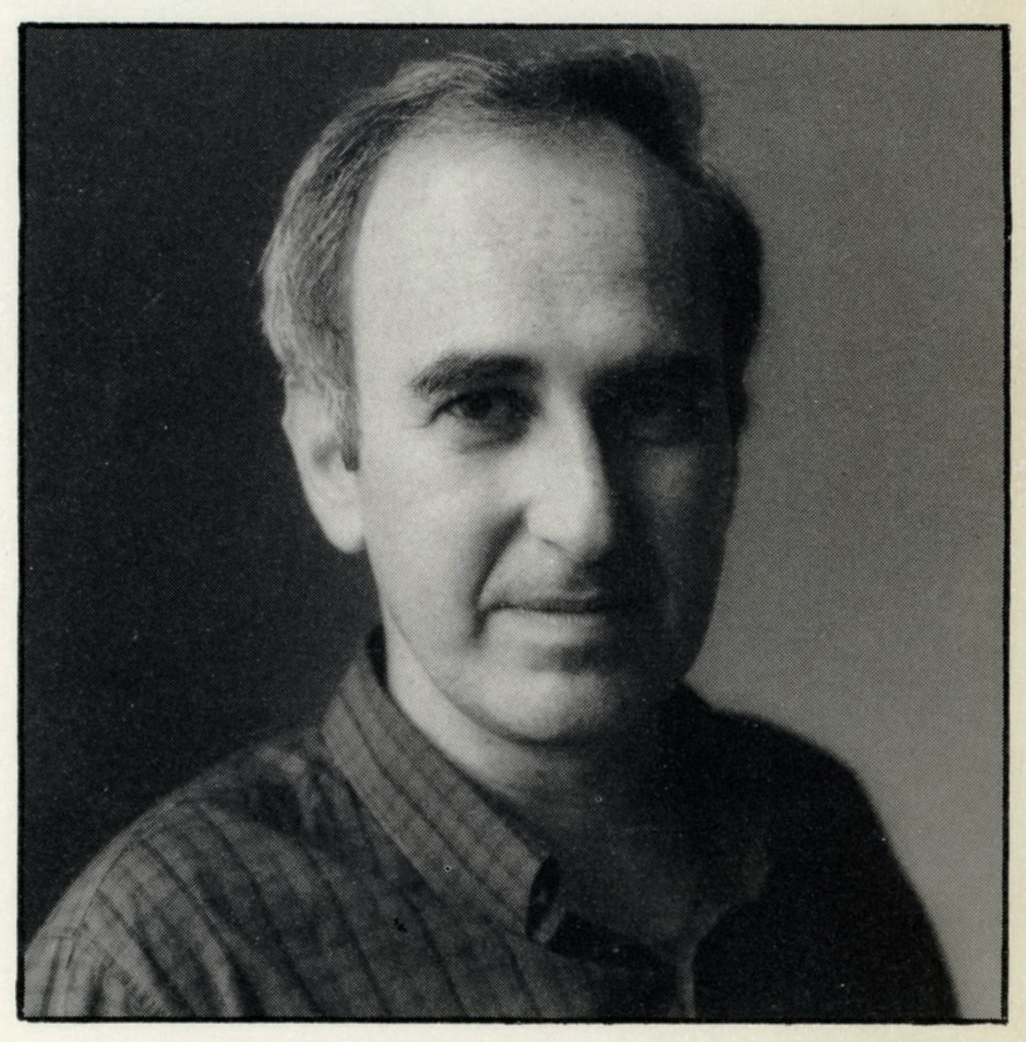 Phillip Lopate (photo by Sally Gall)