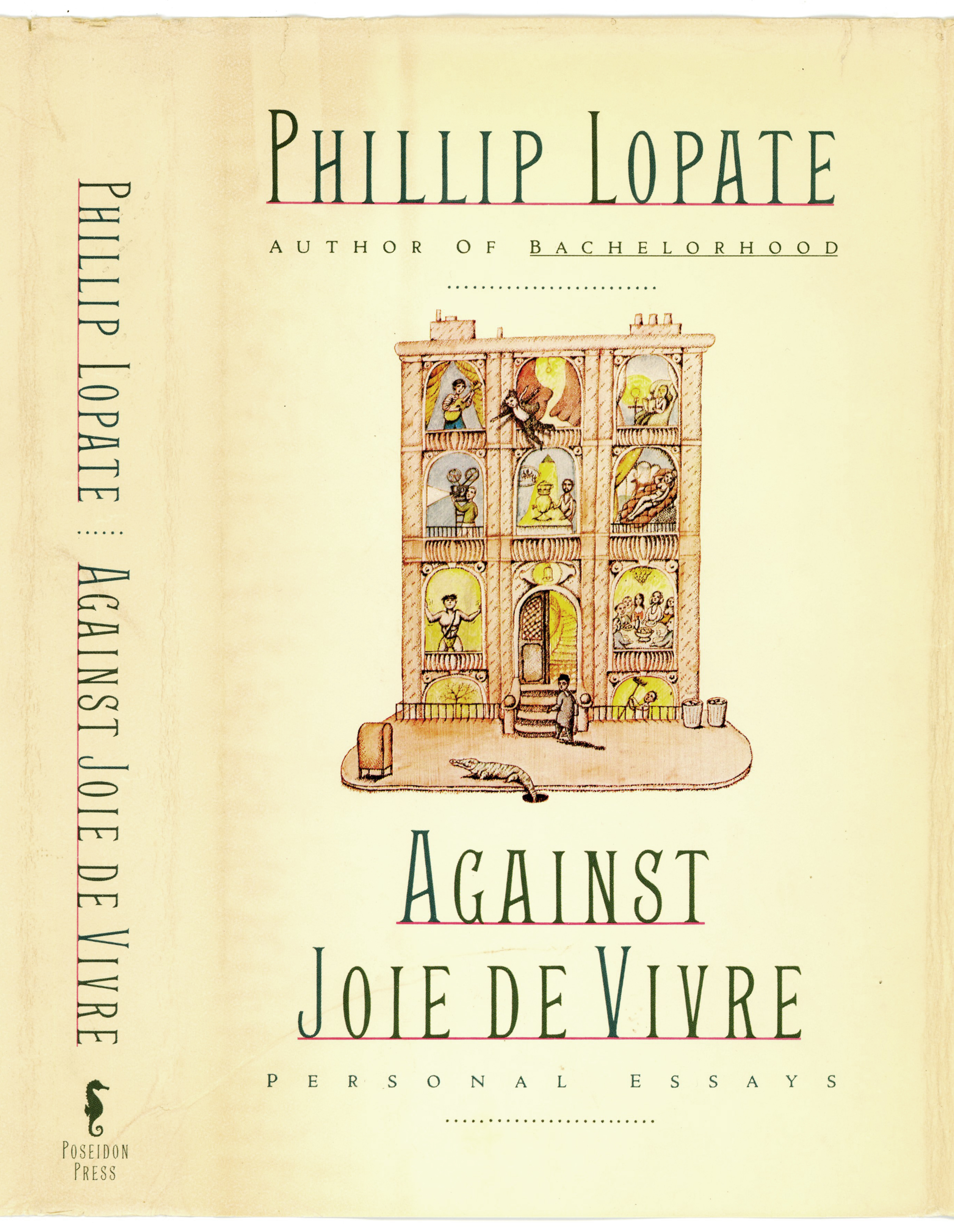
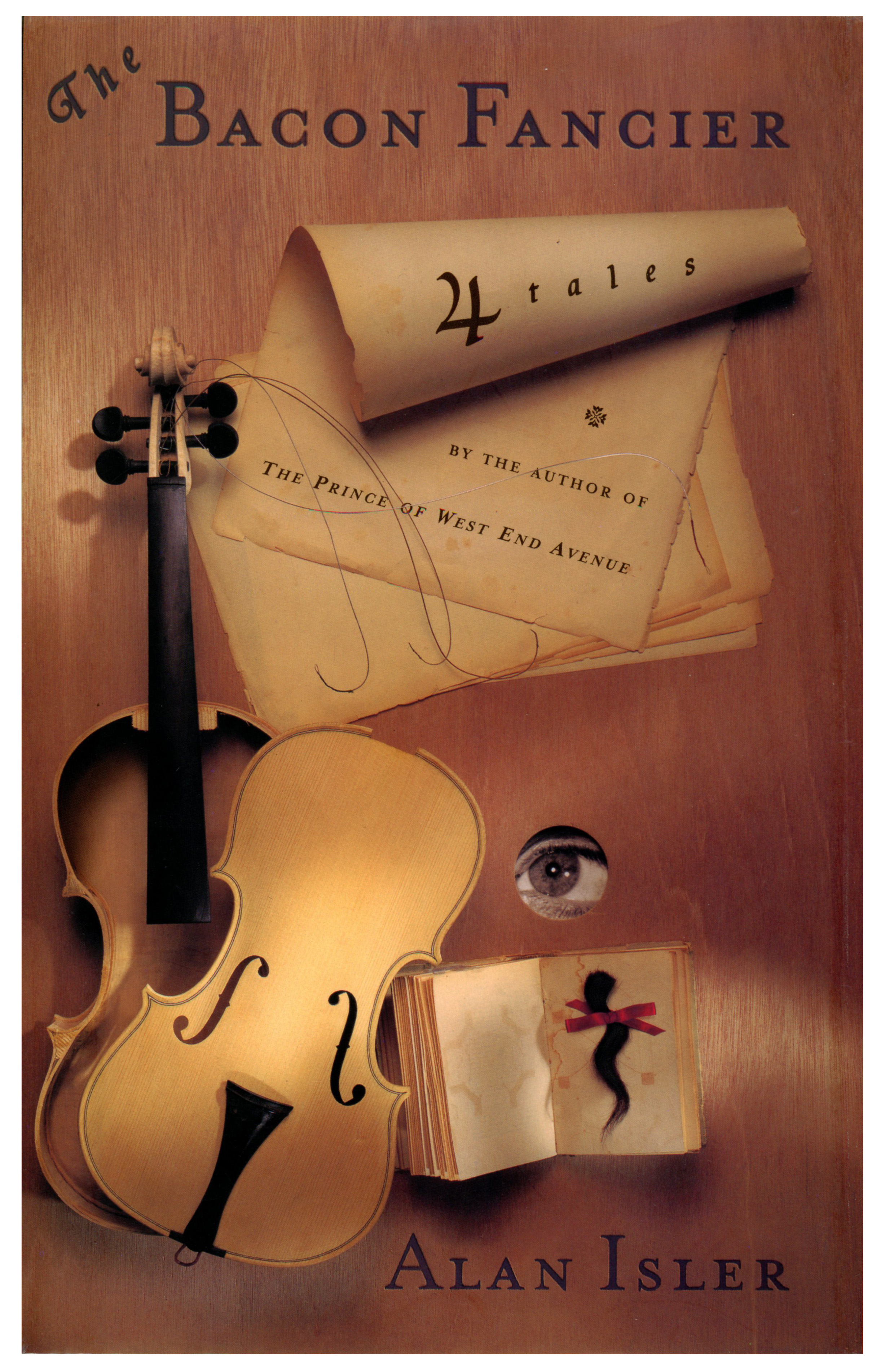
The Bacon Fancier – 4 Tales, by Alan Isler – 1997 [Mark Tauss]

Thus far the only work by Alan Isler that I’ve read, I found the four stories collected within The Bacon Fancier (the title of the book having been derived from the “second” of the four) to be beautifully written, illustrating Mr. Isler’s skill in illustrating commonalities in the historical experience of the Jews transcending time, geography, and the human personality. 

Mr. Isler does this through the creation of vividly depicted protagonists whose lives are crafted in the same degree of fullness regardless of the tales’ setting, or, the predicaments or perplexities that fate or personal decision (but are not fate and personal decision sometimes one and the same?) has forced them to contend with. 

Similarly, the plot of each of the four tales is constructed with a sensibility that bespeaks of serious historical research, undergirded by an understanding of the complexities and contradictions of human nature.  Ultimately, the undercurrent of moral clarity that emerges in his stories could, I think, only have arisen from an author whose own life history or even nominal understanding of life, as a Jew, had included parallel experiences. 

And if not parallel experiences, parallel perceptions.   

While each of the four stories is excellent as a “stand alone” tale, my favorites are “The Crossing” (as relevant today in 2020, as it was when published in 1997, as imagined by Mr. Isler in the world of the late 1800s), and, “The Bacon Fancier”. 

So.  Accompanying the image of Mark Tauss’ cover illustration are quotes from those two tales, as well as Michiko Kakutani’s book review of 4 Tales from the New York Times in July of 1997.

____________________

… the hold that time past exerts over time present …

____________________

The New World, so bright and glistening in the pure and frigid air,
so inviting at the birth of the new year,
offered no solace,
no alleviation.
(The Crossing)
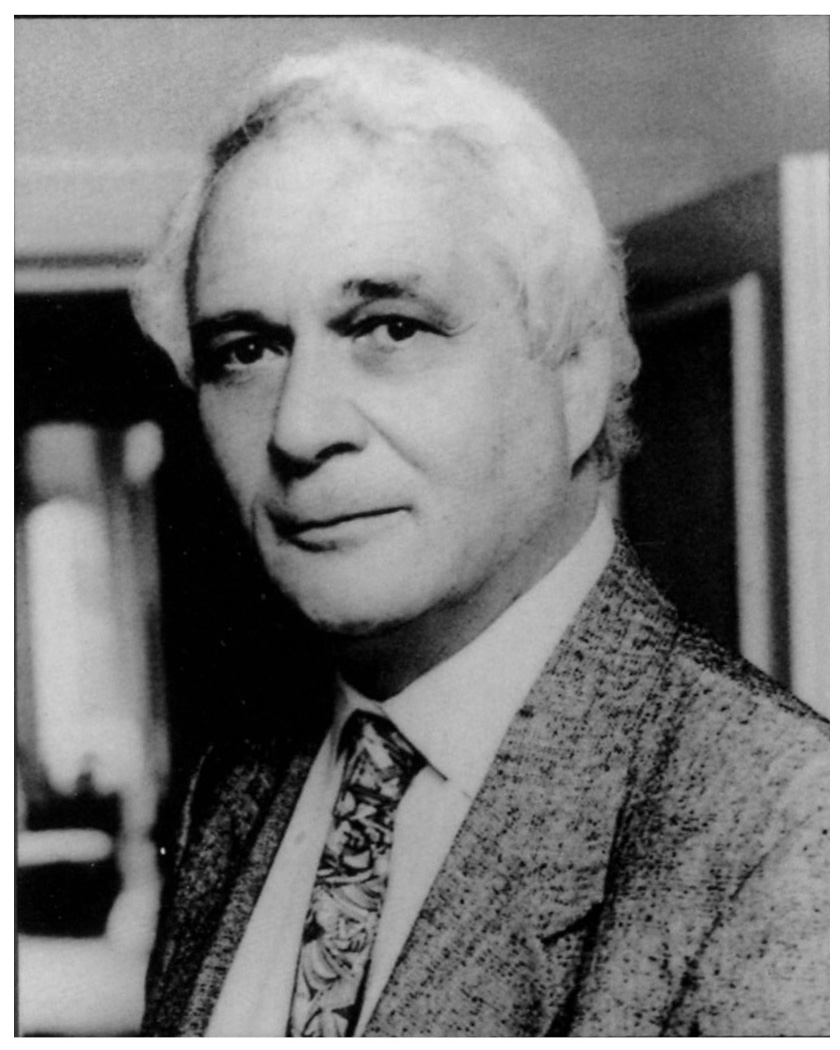
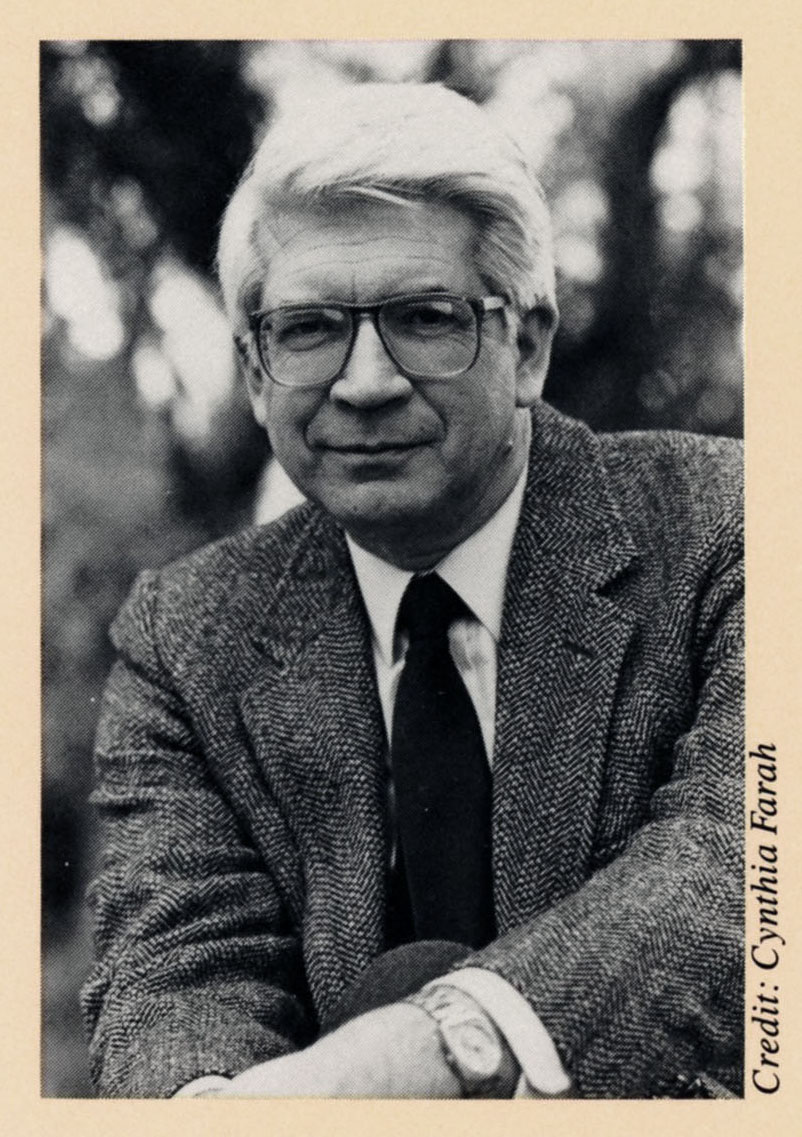
Portait of Alan Isler, by Jerry Bauer

________________________________________

I have not lived my life as a Jew, not really, not here in Porlock. 
There is a mezuzah on my door, of course,
but I do not observe the holidays,
not even the Days of Awe; all these pass me by. 
Candles are alight on my table of a Friday night,
and of a Saturday I do no work. 
Still, I eat what I eat, although before Queenie never pork, never shellfish,
never deliberately a mixing of milk and meat;
and since Queenie, well, as I gave said, I found it prudent not to inquire. 
Of course, as the year rolls round, I say kaddish for my parents;
that, at least, I have always done. 
And I have welcomed the infrequent visits of the occasional Bristol and,
even less frequently, London Jew. 
My co-religionists pressed their fingers to my stomach and conveyed them to their lips. 
In my home they took only ale or cider or porter, bread, and salted herring. 
They talked of the small Jewish communities in this sceptered isle,
in London, in Leeds, in Bristol,
of the importance of marriage, Jew and Jewess,
and of the few others, like me in isolation, the very few, scattered in the south and west,
but married, so far as they knew, every one. 
What could have possessed me, they wondered,
a young man, who, apart from a slight physical disability,
enough perhaps to have denied me a priesthood in the ancient Temple –
here, they smiled ironically –
to separate himself from his fellows, to deny himself a helpmeet,
the very heart and hearth of his home? 
(Queenie, who cheerfully plied them with that sustenance they would,
at least, hungry, accept,
who soon learned that her puddings and her most accomplished dainties were forbidden,
not to say hateful, to them, they ignored as a nonpresence.)
Why, in short, had I chosen to live alone in Porlock?
Why indeed?

(“The Bacon Fancier”, pp. 52-53)

________________________________________

But Gladstone had had enough.
It was not that he lacked the stomach

to sit through yet another of Miss Courtneidge’s “programs” –

although that much was certainly true,
particularly since she herself had spoken of this evening’s list as “jumbo”.
Nor was it that he longed to return to his stateroom,
where, a little before midnight,
he was to be joined by the lubricious Victoria Gammidge –
although that much too was certainly true.
It was that Gladstone had always felt something alien among his gentile countrymen,
even those of that class among whom he had spent most of his life,
those among whom he moved with seeming ease and freedom.
There was forever something behind their hooded eyes, he felt,
some unspoken thing, that locked him out.
Yet through that he had learned to navigate.
So long as the discreet signposts of social intercourse remained fixed in place,
he negotiated quite successful the world in which fortune had placed him.
But when they began to disappear, as now,
when tongues began to loosen from too much wine,
when eyes began to blear or grew fever bright,
when politesse began to sink into good-fellowship,
then Gladstone began to sense his own vulnerability.
He did not fear a physical attack, of course.
No, what he feared was that the unspoken thing would be given utterance,
that acceptance,
conditional upon a conspiracy of silence,
would be publicly revealed as sham.
Making his excuses to his table companions, he rose and left.


(“The Crossing”, pp. 134-135)

________________________________________

Navigating in a World of Gentiles
By MICHIKO KAKUTANI

THE BACON FANCIER
Four Tales
By Alan Isler
214 pages.  Viking.  $21.95.

The New York Times
July 22, 1997

Alan Isler’s new book, “The Bacon Fancier,” reads uncannily like a distillation of his work to date.  His previously demonstrated weaknesses (most notably a tendency to italicize the significance of his stories) are on display in these pages, as are his previously demonstrated strengths: a gift for authoritative storytelling and an ability to combine comedy and tragedy in a unique, idiomatic voice.  What’s more, the volume’s four loosely linked stories recapitulate the central themes of his earlier fiction, the award-winning “Prince of West End Avenue” (1994) and “Kraven Images” (1996): namely, the hold that time past exerts over time present, the role that religion plays in shaping an individual’s identity, and the relationship between art and real life.

Spanning several centuries and two continents, the stories in “The Bacon Fancier” all deal loosely with what it means to be a Jew in a gentile world.  The first tale, “The Monster,” is a kind of improvisation on “The Merchant of Venice,” featuring a narrator who bears more than a passing resemblance to Shylock.  This narrator gives us his version of the notorious “pound of flesh” trial (he claims that Antonio tricked him into the agreement, as “a merry jest”), then goes on to recount another story that illustrates the anti-Semitism routinely directed against Jews in 16th-century Venice.  This second tale concerns a huge but harmless idiot named Mostrino who is beloved by the ghetto children.  To get rid of an annoying English tourist who’s intent on trying to win converts to Christianity, the narrator tells him that Mostrino is “the Defender of the Ghetto,” a golem with the power to destroy unbelievers.  It is a lie that will have tragic consequences when it collides with the city’s prejudice against the Jews.

In Mr. Isler’s other stories, the effects of anti-Semitism are both less violent and more personal.  In the title story, the narrator – a one-eyed violin maker who left the overtly anti-Semitic world of 18th-century Venice for the more covertly anti-Semitic world of London – contemplates leaving his gentile mistress,

Queenie, for a Jewish girl he can marry.  Though he loves Queenie and Queenie loves him, he knows that they can never enjoy a respectable life together.  Indeed Queenie will always be known as the “Jooey Zoor,” the “Jew’s Whore.”

Things are little better, Mr. Isler suggests, in the New World.  In “The Crossing,” a Jewish orphan named David, who has been adopted by the wealthy Gladstone family, boards a ship bound for America.  Though David’s adoptive parents own a financial interest in the ship, though David is traveling first class, he soon becomes aware of the prejudice directed against him.  He is mocked at dinner (“Gladstone?” says another dinner guest, “I’d’ve thought Disraeli”), put down by the father of a young woman he would like to court, and openly scorned by the ship’s captain, when he questions the actions of a drunken American bully.

Gladstone “had always felt somewhat alien among his gentile countrymen,” writes Mr. Isler, adding: “There was forever something behind their hooded eyes, he felt, some unspoken thing, that locked him out.  Yet through that he had learned to navigate.  So long as the discreet signposts of social intercourse remained fixed in place, he negotiated quite successfully the world in which fortune had placed him.  But when they began to disappear, as now, when tongues began to loosen from too much wine, when eyes began to blear or grow fever bright, when politesse began to sink into good-fellowship, then Gladstone began to sense his own vulnerability.  He did not fear a physical attack, of course.  No, what he feared was that the unspoken thing would be given utterance, that acceptance, conditional upon a conspiracy of silence, would be publicly revealed as sham.”

By the time we reach the last story, set in contemporary New York, anti-Semitism is less a conscious prejudice than a casual byproduct of callousness and greed.  In this case, the hero – an extra in a small Greenwich Village opera company – is offered the chance to star in a musical about the Dreyfus affair.  While he finds the show shallow and offensive, he – like many others – will profit from its success.

While Mr. Isler’s efforts to link these four stories feel highly perfunctory and his efforts to lend them resonance through a series of literary allusions can feel strained, his sheer abilities as a storyteller force the reader to shrug such misgivings aside.  There is an assurance to his writing that enables him to fold digressions and speculative asides effortlessly into his tales, coupled with a wry affection for his characters that makes their stories poignant and funny and sad.  Mr. Isler did not begin writing until late middle age – his first novel, “The Prince of West End Avenue” was published when he was 60 – but these stories make it clear that he’s a natural.


The Blue Valleys – A Collection of Stories, by Robert Morgan – 1989 (Lisa Lytton-Smith)

This post, illustrating the cover of Robert Morgan’s The Blue Valleys, was originally created in April of 2017.  It’s now – in November of 2019 – been updated to include Joanne Kennedy’s 1989 book review from The New York Times, and, the book’s table of contents… 

THE BLUE VALLEYS, By Robert Morgan.

(Peachtree, $15.95.) 

The New York Times Book Review
Review of Joanne Kennedy
December 10, 1989

The strong, pungent stories in “The Blue Valleys,” a first collection by the poet Robert Morgan, are set in the Blue Ridge Mountains of North Carolina, whose hills and valleys are a sturdy home for his characters, mostly working people at the mercy of circumstance.  As these intricate tales progress chronologically from Civil War times to the present, the dignity of simple farm life is complicated by the advent of computers, working wives and disrespectful children, and the land becomes less a source of livelihood than a vital touchstone.  In perhaps the best story in the book, “Tailgunner,” a former prisoner of war named Jones realizes that he has spent his life doing things he never wanted to do, married a women he never intended to marry.  Wondering why he alone was spared in the World War II crash of a B-24, he encounters his real self only in the pine woods.  “It was as though he had forgotten something about himself for almost forty years,” James muses.  “He could not explain why the peacefulness of the trees reminded him of instants of great danger and sickness, why he felt close to some bedrock definition, some value.”  Similarly, in the story called “A Brightness New and Welcoming,” a soldier dying in the sordidness of a Yankee prison camp during the Civil War thinks about the pristine water of a spring that he had cleared on his home place, and the way the spring, “seemed the dial of some instrument.”  The resilience of childhood, the misery of life in a trailer and the humor of December romance are also among the diverse subjects of the stories in this beautifully crafted collection, a procession of tales rich with native detail and character, told in language as plain and deep as the hills, the whole weighed with an awareness of death that looms over the struggle for a meaningful life. 

________________________________________

Contents

A Brightness New and Welcoming (originally as “Camp Douglas”), from Jacaranda Review

Pisgah

1916 Flood, from South Dakota Review

Crossties

War Story, form St. Andrews Review

Let No Man, from Maryland Review

Family Land, from Appalachian Heritage

The Lost State of Franklin

Tailgunner

The Half Nelson, from Memphis State Review

Night Thoughts, from Epoch

The Pickup

Blinding Daylight, from Celery

________________________________________

Lorna had never understood the sharpness of her tongue.

It was a habit she had developed as a teenager,
and it had grown on her over the years.

She did not realize how she sounded.

He thought of recording her on tape and then playing it back to her.

She would be astonished at the harshness in her voice,
at the belittling tone of her comments.

She knew how to be polite in public, and with her friends from church.

It was only with him, and with her sisters, that side of her came out.

But she was mostly a good woman,
though he had not meant to spend his life with her.

That was why he seemed so tolerant, why he almost never quarreled.

If he let himself go who knows what he would end up saying.

He might let it out that he had never wanted to marry her,
never wanted to be with her.

It would tear away whatever grace their life had had,
pull down the scaffold and show how badly fitted and supported they really were.

It would ruin her opinion and pride in herself.

His very lack of feeling for her had been the essence of his devotion and patience,
which so many friends had praised,
especially at the times when other friends had divorced.

– “Tailgunner“, by Robert Morgan

Things Not Seen and Other Stories, by Lynna Williams – 1992 [Raul Colon]

This post, which first appeared in early 2018, has been updated to include Michiko Kakutani’s New York Times July 17, 1992 book review of Things Not Seen.  While the “initial” version of the post included the review as a scan, this revision includes the review as full text, followed by a close-up of Raoul Colon’s cover art.

I’ve also (October, 2019) updated the post to include a brief excerpt from the story “Last Shift at The Mine”.

Scroll down just a little…

Contents

Afghanistan

The Sisters of Desire

Personal Testimony

Sole Custody

A Morning in the Late Cretaceous Period

Last Shift at the Mine

Rescue the Perishing

Legacy

Things Not Seen

________________________________________

Books of The Times

A Thousand Tiny Heartbreaks

By MICHIKO KAKUTANI

Things Not Seen

And Other Stories
By Lynna Williams
213 pages. Little, Brown & Company.
$18.95.

The New York Times
July 17, 1992

The characters in these fine new stories by Lynna Williams are outsiders, people excluded from the safe, warm circle of familial affection.

In “The Sisters of Desire,” a young woman named Chris is recovering from a nervous breakdown.  Chris takes a job baby-sitting for an 11-year-old girl named Rachel, who proposes that they form a fan club for her stepfather, Tom.  It’s not long before Chris realizes that she has actually fallen in love with Tom, that she wants to replace his wife and take her place beside him as Rachel’s mother.  As the impossibility of this fantasy sinks in, Chris sees again “how separate she was, and would always be, from them, through history and circumstance, through all the things she felt but could not say.”

It’s a feeling shared by Ellen Whitmore, a preacher’s daughter who narrates two stories in this volume (“Personal Testimony” and “Rescue the Perishing”).  At the age of 9, Ellen learned that she was adopted, and this knowledge warps her subsequent relationship with her father.  On one hand, she wants to hurt and embarrass him by ghostwriting phony testimonies for the other children at Bible camp; on the other, she tries to earn back his love by trying to introduce an ill-tempered neighbor, who had supposedly been a Nazi, to Christ.

Looking at her father, she thinks, “I was sure that what I wanted most in the world was for him to love me back, not in the ‘Ellen is my daughter and I have to prove it’ way that was familiar to us both by then, but in the old way, when he looked for me in any room he went into.”

Ms. Williams’s other characters also ostensibly belong to families, but they, too, suffer from feelings of exclusion and alienation.  In the title story, a woman named Jenny begins to recover memories of being abused as a child, and these memories, accelerated by therapy, begin to contaminate her marriage.  She grows nervous, paranoid and defensive.  Her husband, David, soon catches her sense of peril; he begins to distance himself from her and question his own impulses toward their daughter.  He tells Jenny he wants “this to be over”; he wants “things to be the way they were.”  “What if I’m O.K.,” she responds, “and things still aren’t the same?  What if they never are?”  In relating such stories, Ms. Williams demonstrates an uncanny ability to write scenes that effectively dramatize her characters’ emotional dilemmas without ever seeming stagey or didactic.  Emily, the heroine of “A Morning in the Late Cretaceous Period,” realizes, while wandering through a dinosaur exhibit at the local museum, that memories of her former husband have come between her and her new husband, Tom.  “She stops speaking to him halfway through the Triassic period,” Ms. Williams writes, “feigning desperate interest in the museum dioramas of earth 225 million years before.”  Moments later, “they enter the Cretaceous period,” she writes.  “All around them, the known world is splitting into separate continents, and Emily pushes ahead, until she’s standing alone somewhere on the edge of North America.”  She feels stranded and alone, and when she gives Tom a quick, desperate shove she feels “she has moved her marriage toward extinction with an act she can’t explain and can’t take back.”

Anna, the heroine of “Sole Custody,” who lost her child, Katie, to cancer several years ago, experiences a similar epiphanic moment, when she peers in a window of the house belonging to her ex-husband, Jay.  Everything she sees inside – pictures of Katie, along with furniture, knickknacks and toys that attest to Jay’s new life with his new wife and new baby – makes her realize how much she has lost, how much she remains in thrall to the past.

Cancer, unemployment and divorce – these sad, ordinary facts of life, rather than the melodramatic sort mentioned on the evening news (“drunk drivers, or snipers at the mall, or boulders pushed at cars from freeway overpasses”) – are the ones that haunt Ms. Williams’s characters.  In many cases, the mere fear or premonition of such “things not seen” is enough to drive these people to the brink of emotional despair.  By dwelling on bad memories or intimations of some unnamed future disaster, they court misunderstanding and bad luck.

In “Afghanistan,” a man named Hopkins tries to decipher a note left by his wife: “Have gone to Afghanistan.  Tess at Scotts’ overnight.  Food in fridge.”  The second half of the note is clear and accurate: his daughter, Tess, is indeed at a neighbor’s house for the evening, and there is a casserole with stuffed pasta shells in the refrigerator.  The first sentence is more perplexing: since his wife is a linguist, Hopkins tells himself, Afghanistan must be a kind of code for something else.  After reading a newspaper story with a headline that says, “Afghan Left Feels Betrayed by Russians,” he decides that “Afghanistan” must symbolize “betrayal” to his wife, although he’s unsure whether she means her betrayal of him, or his betrayal of her.

In each of these stories, Ms. Williams writes with quiet assurance, delineating her characters’ psyches with the same authority she brings to her descriptions of their day-to-day routines.  The writing is limpid, almost translucent, allowing the reader almost complete access to these people’s inner lives.  One is left with both an appreciation of the resilience of love and an understanding of its frightening limitations: its failure in the face of illness, grief and existential fear.

____________________

– Lynna Williams –

____________________

We’ve known for months we couldn’t stay unless Mark could find permanent work. 
We’d talk about it sometimes late at night,
but then it would be another day and we’d be doing anything we could to stay. 
I could write a book about that – about all the things we never thought could happen to us. 
Like going on welfare this winter, when Mark couldn’t find any work at all for six weeks. 
On my going to work at the Traveler’s Motel three days a week, cleaning rooms. 
Two and a half years ago, when Mark got laid off again,
we would have fought about my working at any job, much less as a maid. 
But not anymore. 
I know he’d do it instead if he could. 
When I come home on those days, he and Molly make me sit at the table
while they bring me dinner like it’s a hotel. 
“Madame, perhaps desires the macaroni?” Mark will say,
and Molly, who’s started to swallow the beginnings of words,
will punch me on the arm with her little fist and say, “Caroni, Dame?” 
I am never sorry about anything when they’re carrying on like that. 
And as long as Mark is talking, I know we’re all right. 
So we’ve been doing whatever we’ve had to – until two weeks ago. 
That was when Mr. Peterson told me there’s not enough business at the motel
and they don’t need me anymore. 
We’ve been using that money, and whatever we can earn doing odd jobs, to eat,
and drawing out what little savings we have left to pay the utilities. 
My parents made the June house payment. 
We let them because it looked like there might be a buyer if we could just hang on. 
There are some older people up here looking for retirement homes. 
But nothing’s happened, and we can’t wait anymore.  (“Last Shift at The Mine”, pp. 145-146)

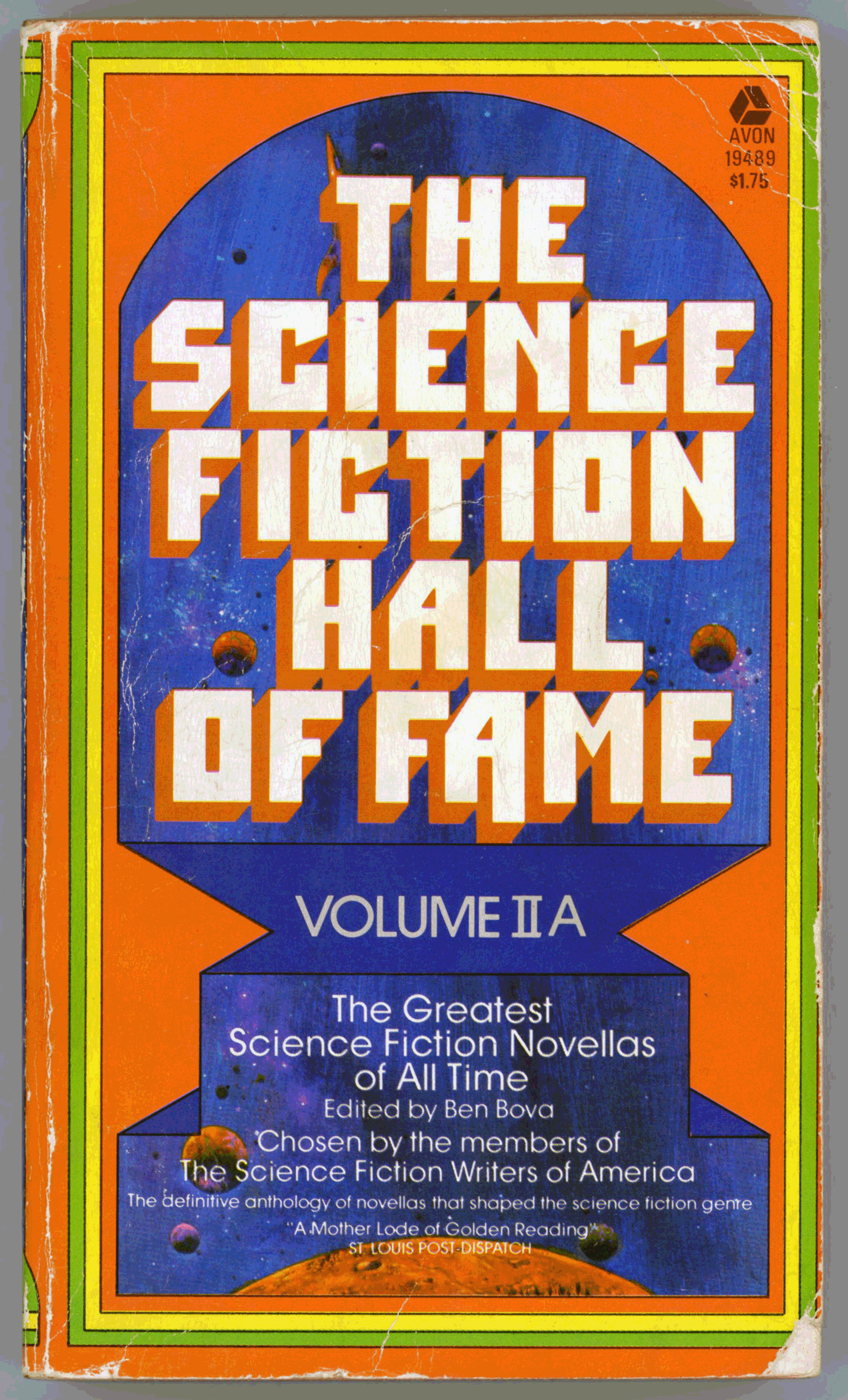
The Science Fiction Hall of Fame – Volume IIA, Edited by Ben Bova – 1973

Contents

Introduction, by Ben Bova

“Call Me Joe”, by Poul Anderson
(Astounding Science Fiction, April, 1957)

“Who Goes There?”, John W. Campbell, Jr (as Don A. Stuart)
(Astounding Science Fiction, August, 1938)

“Nerves”, by Lester del Rey
(Astounding Science Fiction, September, 1942)

“Universe”, by Robert A. Heinlein
(Astounding Science Fiction, May, 1941)

“The Marching Morons”, by Cyril M. Kornbluth
(Galaxy Science Fiction, April, 1951)

“Vintage Season”, by Henry Kuttner and Catherine L. Moore (as Lawrence O’Donnell)
(Astounding Science Fiction, September, 1946)

“And Then There Were None”, by Eric Frank Russell
(Astounding Science Fiction, June, 1951)

“The Ballad of Lost C’Mell”, by Cordwainer Smith
(Galaxy Science Fiction, October, 1952)

“Baby Is Three”, by Theodore Sturgeon
(Galaxy Science Fiction, October, 1952)

“The Time Machine”, by H.G. Wells
(William Heinemann, 1895)

With Folded Hands”, by Jack Williamson
(Astounding Science Fiction, July, 1947)

The Elephant and My Jewish Problem – Selected Stories and Journals, 1957-1987, by Hugh Nissenson – 1988 [Hugh Nissenson]

June 12, 1967

“What about Jerusalem?” I ask.

“What about it?”

“You didn’t mention giving that up.”

“No,” he says, “and we never will.
It’s our historic capital.
And then there’s the Wall.”

“What do you care about the Wall if you’re not religious?”

“I’ve been thinking about that.
When we captured it, I wept without knowing why.
Why did the early Zionists, who were atheists, insist on returning here?
Herzl, as you know, was offered Uganda as a Jewish national home,
but the Sixth Zionists Congress refused to consider it.
It has to be the land of Israel or nothing.

“It was as if they unconsciously assumed that a covenant between the Jews and God still existed.
Deep down we feel the same way.
It’s depressing.
You’d think that by now we’d be finished with Him once and for all.”

He absent-mindedly raises his forefinger and strokes his clean-shaven upper lip.

“Bus is it possible to create a human civilization without Him?” he says.
“That’s the question.”

– Hugh Nissenson

(From “Victory: A Journal”, originally published in Notes From the Frontier, 1968)

______________________________

Cover Illustration by Hugh Nissenson

______________________________

Contents

The Blessing
The Groom on Zlota Street
The Well
The Law
Israel During the Eichmann Trial: A Journal
The Prisoner
Charity
A Pile of Stones
Victory: A Journal
Going Up
The Throne of God
The Crazy Old Man
Forcing The End
The Elephant And My Jewish Problem: A Journal
In The Reign of Peace
Lamentations
Under Siege: A Journal
Exile: A Journal
The Pit: A Journal

______________________________

Hugh Nissenson (photo by Thomas Victor)

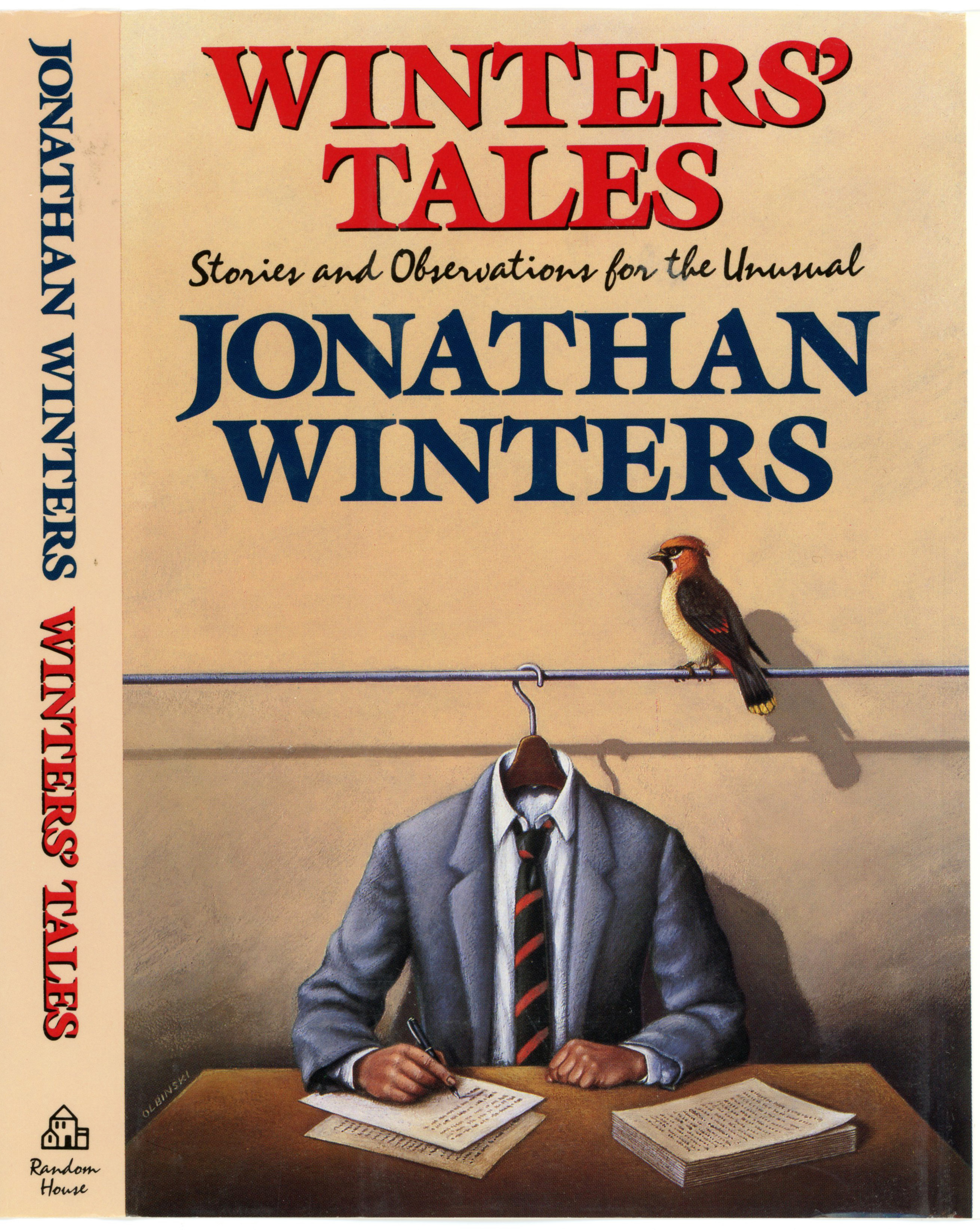
Against Joie De Vivre – Personal Essays, by Phillip Lopate – 1989 [Peter Sis]

My parents had a bookcase which held a few hardcovers
and a library of Pocket Books,
whose flimsy, browning pages would crack if you bent down the corners. 
I can still picture those cellophane-peeling covers with their kangaroo logo,
their illustrations of busty, available-looking women
or hard-bodied men
or solemn, sensitive-looking Negroes with titles like

Intruder in the Dust,
Appointment in Samara,
Tobacco Road,
Studs Lonigan,
Strange Fruit,
Good Night, Sweet Prince,
The Great Gatsby,
The Sound and the Fury
.

Father brought home all the books, it was his responsibility;
though Mother chafed at everything else in the marriage,
she still permitted him at the same time to be her intellectual mentor.
I have often wondered on what basis he made his selections:
he’d had only one term of night college
(dropping out because he fell asleep in class after a day in the factory),
and I never saw him read book reviews.
He seemed all the same, to have a nose for decent literature.
He was one of those autodidacts of the Depression generation,
for whose guidance the inexpensive editions
of Everyman, Modern Library, and Pocket Books seemed intentionally designed,
out of some bygone assumption that the workingman should
 – must
 – be educated to the best in human knowledge.

(by Phillip Lopate, from “Samson and Delilah and the Kids”)

______________________________

Cover illustration by Peter Sis.  The nine (or is it eleven?) vignettes symbolize the central themes of book’s nineteen essays, the titles of which are listed below…

I

Samson and Delilah and the Kids
Against Joie de Vivre
Art of the Creep
A Nonsmoker with a Smoker
What Happened to the Personal Essay?

II

Never Live Above Your Landlord
Revisionist Nuptials
Anticipation of La Notte: The “Heroic” Age of Moviegoing
Modern Friendships
A Passion for Waiting

III

Chekhov for Children
On Shaving a Beard
Only Make Believe: Some Observations on Architectural Language
Houston Hide-and-Seek
Carlos: Evening in the City of Friends

IV

Upstairs Neighbors
Waiting for the Book to Come Out
Reflections on Subletting
Suicide of a Schoolteacher

______________________________

Phillip Lopate (photo by Sally Gall)

The Coming Triumph of the Free World, by Rick DeMarinis – 1988 [Anne Bascove]

Contents

The Handgun

Disneyland, from Antaeus

Culture Shock

Romance: A Prose Villanelle

Your Story

The Coming Triumph of the Free World (originally titled “Rick DeMarinis to Q”), from The Quarterly

The Swimmer in Hard Light (originally titled “The Swimmer”), from The Malahat Review

The Flowers of Boredom, from The Antioch Review

Pagans, from Harper’s Magazine

Mole, from Harper’s Magazine

Queen (originally titled “Tenderloin”) from Colorado State Review

Your Burden Is Lifted, Love Returns

Red Chair

Medicine Man, from The Atlantic

________________________________________

“What I am telling you is that there is a great dark …
consensus
that sweeps things along to their inevitable conclusion. 
There is an intelligence behind it, but, believe me, it is not human. 
It is the intelligence of soil, the thing that lifts trees and flowers out of the ground. 
I am too astonished and thrilled to be frightened by it.”

Lamar saw, even then, that Randy Voss was crazy,
but what he had said made a lasting impression.
And over the years he has come to adopt Voss’s idea as his own.
But it was something he was unable to talk about to anyone else,
not even his wife.
How could you convince anyone that in this industry no single individual,
or group of individuals,
suspects the existence of a vital sub-rosa mechanism
that produces and deploys our beautifully elegant weapons?
How could you say to someone that the process is holistic,
that a headstrong organic magic is at work,
or that a god presides?

(From “The Flowers of Boredom” (first published in Antioch Review, Winter, 1988)

The Voice of America, by Rick DeMarinis – 1991 [Anne Bascove]

“…a second chance is the sweetest blessing any of us can hope for.”

Contents

Safe Forever, from Story

Desert Place, from Epoch

Paraiso: An Elegy, from The Georgia Review

God Bless America

An Airman’s Goodbye, from The Paris Review

Aliens, from Antioch Review

Horizontal Snow, from Story

Fidelity

Infidelity

The Whitened Man, from Vox

Wilderness, from Epoc

The Voice of America, from Cutbank

Insulation, from Harper’s Magazine

Her Alabaster Skin

Rudderless Fiction: Lesson 1 (A Correspondence Course), from Harper’s Magazine

________________________________________

How people could lie to themselves,
and believe it,
was the miracle of human life as far as I was concerned. 
(from “The Voice of America”, p. 177)

He’s on a mission of wild truth-seeking. 
He thinks he can solve his life if he keeps telling it. 
(from “Rudderless Fiction: Lesson 1”, p. 208)

A story should not mean; at best it should be meant.
(from “Rudderless Fiction: Lesson 1”, p. 213)

– Rick DeMarinis –

The Pocket Book of O. Henry, edited by Harry Hansen – 1948 [Curt Witt]

Contents

From “The Four Million”

The Gift of the Magi
The Skylight Room
The Cop and The Anthem
Memoirs of a Yellow Dog
Springtime a la Carte
The Green Door
After Twenty Years
The Furnished Room

From “Heart of The West”

The Pimienta Pancakes
The Reformation of Calliope

From “Roads of Destiny”

The Passing of Black Eagle
A Retrieved Reformation
Whirling Dick’s Christmas Stocking

From “Cabbages and Kings”

Caught

From “Sixes and Sevens”

The Sleuths
Makes the Whole World Kin

From “Whirligigs”

The Whirligig of Life
A Newspaper Story

From “The Voice of The City”

The Voice of the City
One Thousand Dollars

From “The Trimmed Lamp”

The Trimmed Lamp
A Madison Square Arabian Night
The Rubaiyat of a Scotch Highball
Two Thanksgiving Day Gentlemen
The Buyer From Cactus City
The Badge of Policeman O’Roon
The Last Leaf
The Tale of a Tainted Tenner

From “Strictly Business”

A Municipal Report
Compliments of the Season