The Saturday Evening Post Reader of Fantasy & Science Fiction – January, 1964 (October, 1963) – No Editor Credited [Richard M. Powers]

Among the twenty stories in Popular Library’s 1964 edition of The Saturday Evening Post Reader of Fantasy & Science Fiction, the most significant may be Stephen Vincent Benay’s 1937 “The Place of the Gods”, and Robert Heinlein’s 1947 “The Green Hills of Earth”. 

I well remember Benay’s story, for it was deemed significant enough to have been included among works of American short fiction assigned as reading in my high school, some years ago.  As to its topicality in 2019, some eighty-two years after its original publication – with all that transpired in the world during those eight decades; with all that may yet transpire in the world – I have no idea. 

In any event, the story’s theme of a civilizational collapse quietly and gently yielding to the implied rebirth of culture and technology, comports well with and has anticipated the plot of many a work of science-fiction, let alone contemporary pseudo-science (such as the ancient-astronaut / paleo-contact hypothesis, which actually harks back to the works of H.P. Lovecraft, and, the millenarian apocalyptic religious cult – ostensibly in secular garb! – based on the myth of “anthropogenic climate change“), in historical and contemporary cinema and literature.     

Though I’ve been generally well-acquainted with Heinlein’s early works (not much at all his later writing!), “The Green Hills of Earth” escaped my attention until I actually read the story, in the pages of this particular book.  Entertaining (albeit with the dated implication of a habitable planet Venus, and, discussion of the use of a tape recorder – ? – ! – to preserve the songs of dying protagonist “Noisy” Rhysling), the story was adapted for NBC’s Dimension X radio series, where it was broadcast as episode 10 (of 50 total episodes)  on June 10, 1950

You can listen to The Green Hills of Earth at NewThinkable, or, Vulkan Channel.   

Contents

Doctor Hanray’s Second Chance, by Conrad Richter (June 10, 1950)

Fallout Island, by Robert Murphy (March 24, 1962)

The Green Hills of Earth, by Robert A. Heinlein (February 8, 1947)

Doomsday Deferred, by William F. Jenkins (“Murray Leinster”) (September 24, 1949)

Test-Tube Terror, by Robert Standish (September 13, 1958)

Island of Fear, by William Sambrot (June 18, 1958)

Sinister Journey, by Conrad Richter (September 26, 1953)

The Place of the Gods (alternate title “By the Waters of Babylon”), by Stephen Vincent Benet (July 31, 1937)

The Phantom Setter, by Robert Murphy (June 17, 1961)

The Big Wheel, by Fred McMorrow (July 29, 1961)

The Death Dust, by Frank Harvey (August 8, 1959)

The Lost Continent, by Geoffrey Household (September 3, 1960)

The Trap, by Kem Bennett (January 7, 1956)

Space Secret, by Wiliam Sambrot (February 21, 1959)

The Unsafe Deposit Box, by Gerald Kersh (April 14,1962)

The Second Trip to Mars, by Ward Moore (August 28, 1954)

The Voice in the Earphones, by William Schramm (March 29, 1947)

Moon Crazy, by William Roy Shelton (June 25, 1949)

The Little Terror, by William F. Jenkins (“Murray Leinster”) (August 22, 1953)

Novelette

The Answer, by Philip Wylie (May 7, 1955)

______________________________

Especially notable is the book’s cover art by Richard Powers, which, though uncredited in the text, bears Powers’ name in the lower left corner.  The composition bears two major hallmark’s of Powers’ work: The near-afterthought-like presence of a human figure visible only in silhouette, and, a variety of curved, ovoid, elongated objects rising vertically, or floating in the background.  Like many of Powers’ compositions that appeared on the covers of science-fiction anthologies, rather than pertaining to or having elements of a specific story, his art instead sets a mood and feeling. 

And, in this it succeeds superbly.   

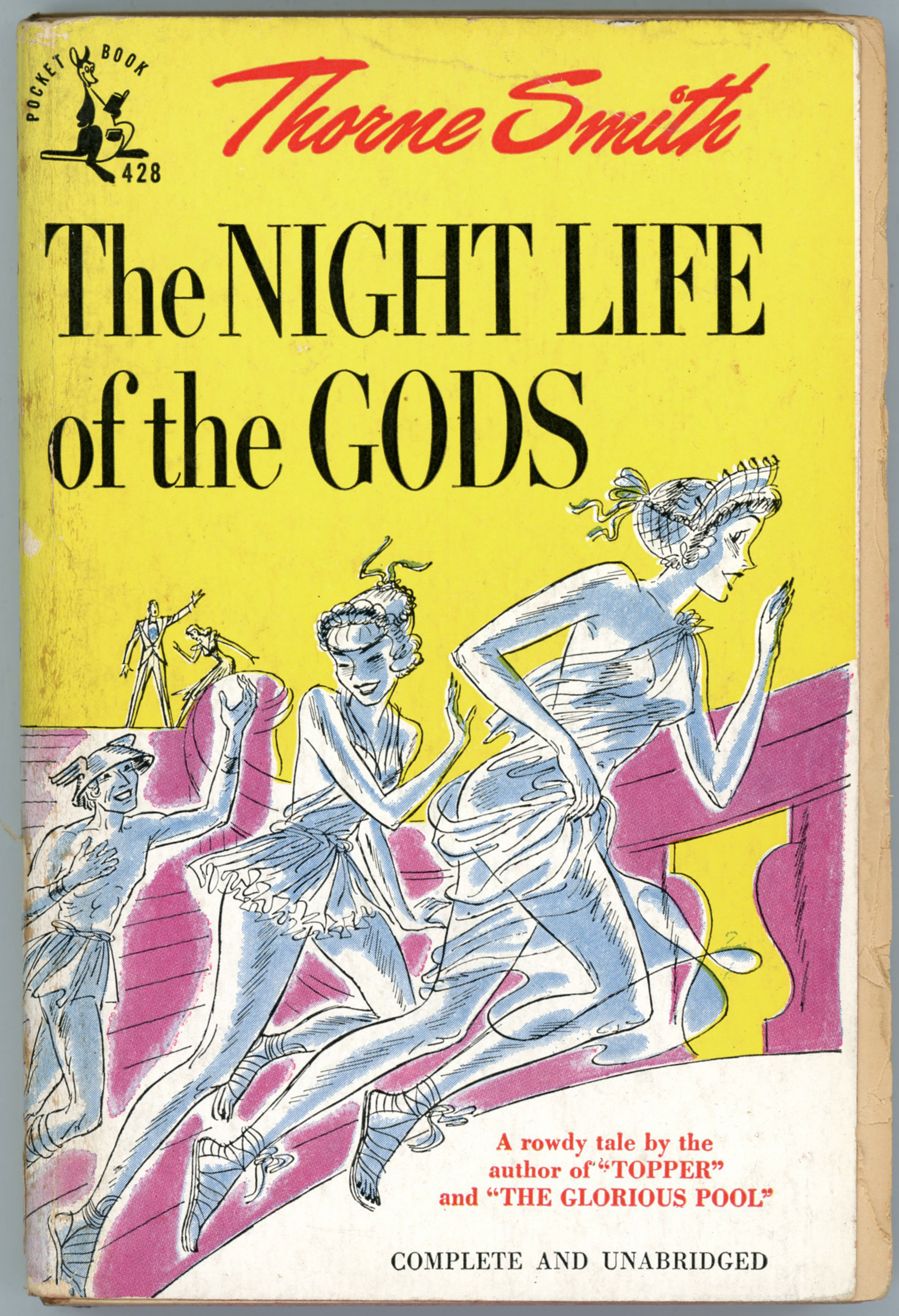
The Night Life of The Gods, by Thorne Smith – January, 1948 (March, 1931) [Gordon Hake]

By the time Megara had initiated Mr. Hawk so well into her magic for turning statues into people
and back again that he would remember the simple ritual even when not quite sober,
no one was quite sober,
not even Megara herself. 

As she had previously told him,
it was really a bang-up trick
and not so difficult to master if taken without applejack. 

With his own discovery and Meg’s magic literally at the tips of his fingers,
Hunter Hawk,
with an emotion of exultation not entirely unbeholden to applejack,
felt himself well-equipped to face a new and eventful life.  (64) 

Farhenheit 451, by Ray Bradbury – 1953 [Joseph A. Mugnaini]

Contents

Fahrenheit 451

And the Rock Cried Out

The Playground

______________________________

Joseph Mugnaini’s interior art…

______________________________

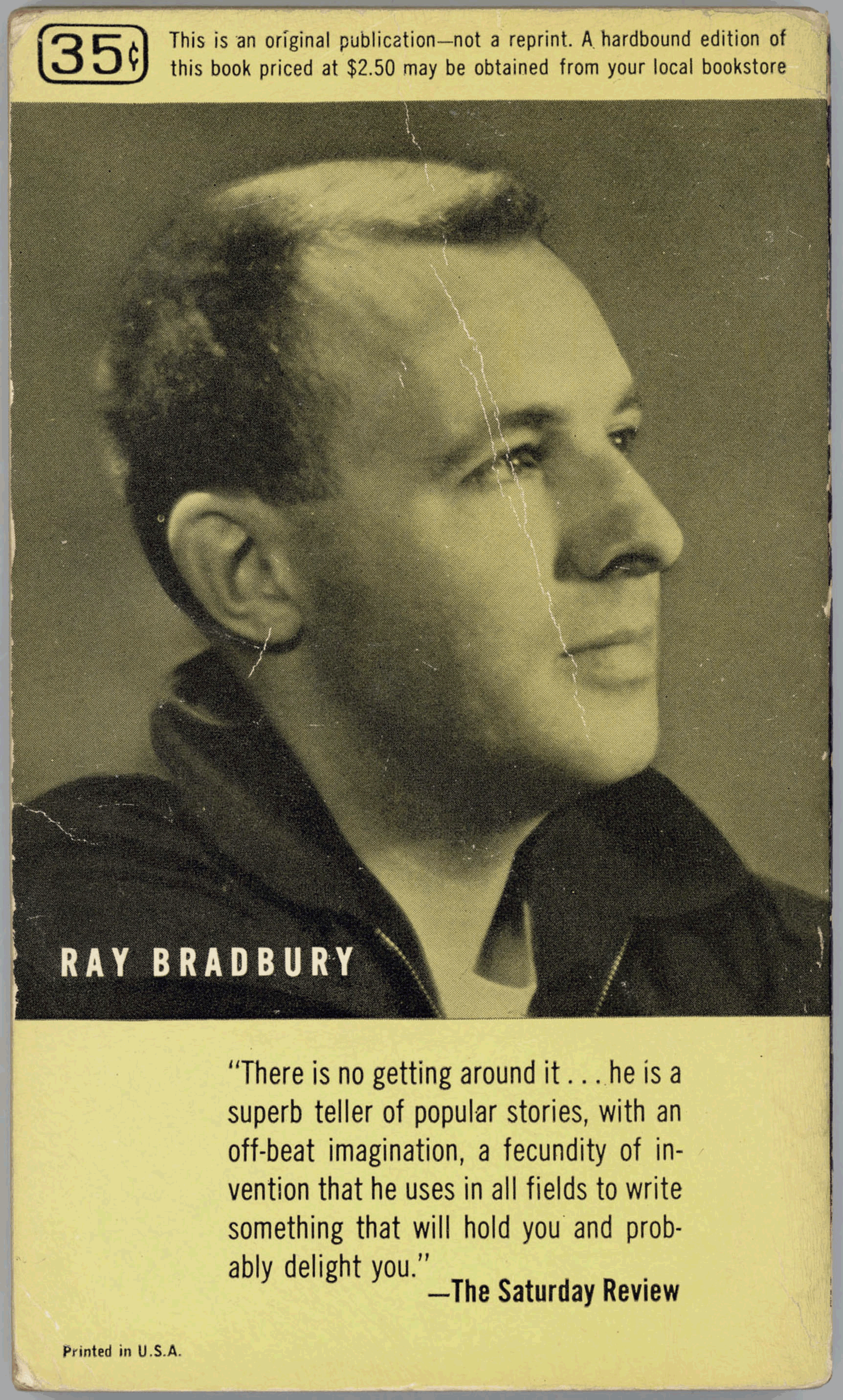
Rear cover, with portrait of Ray Bradbury

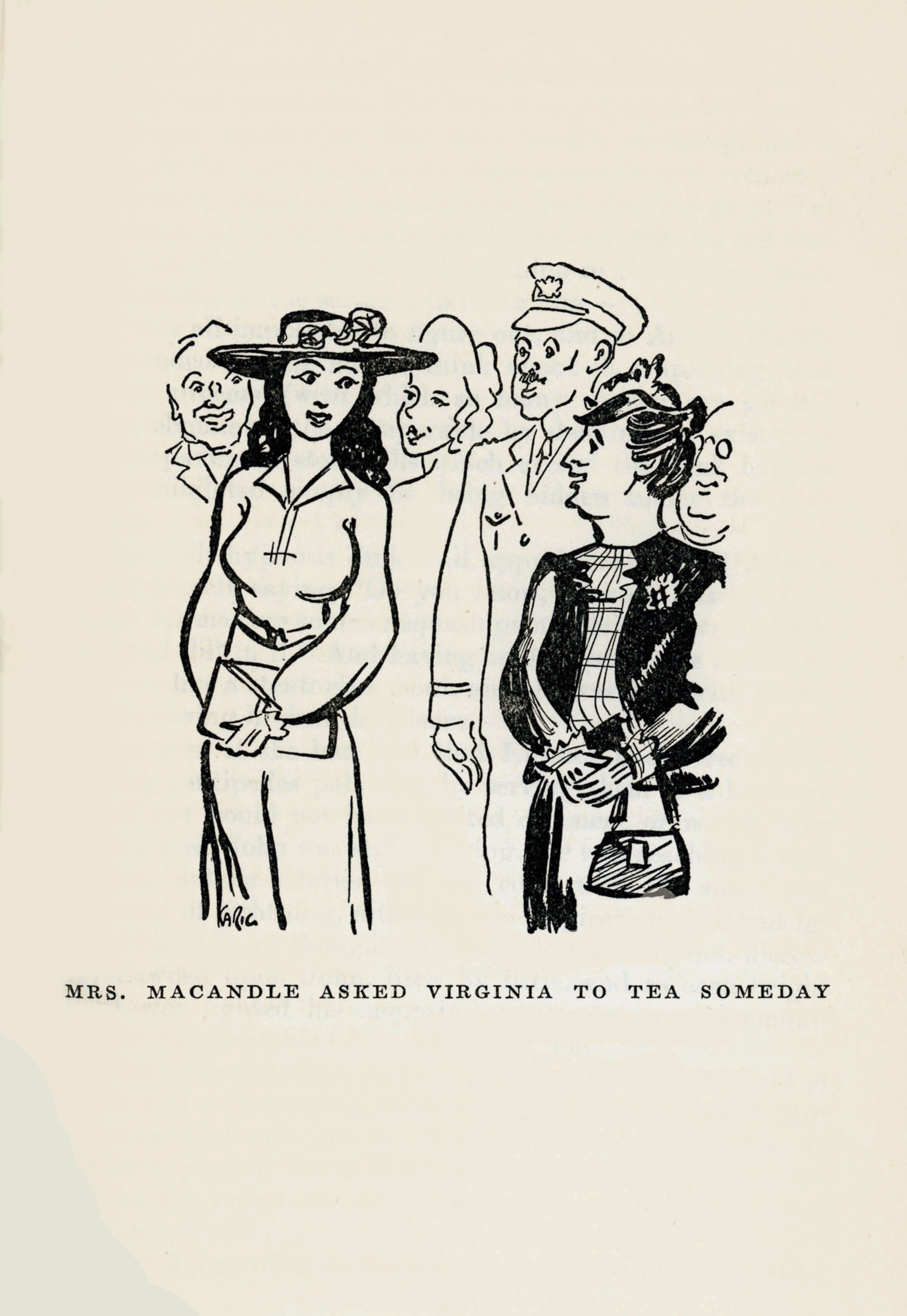
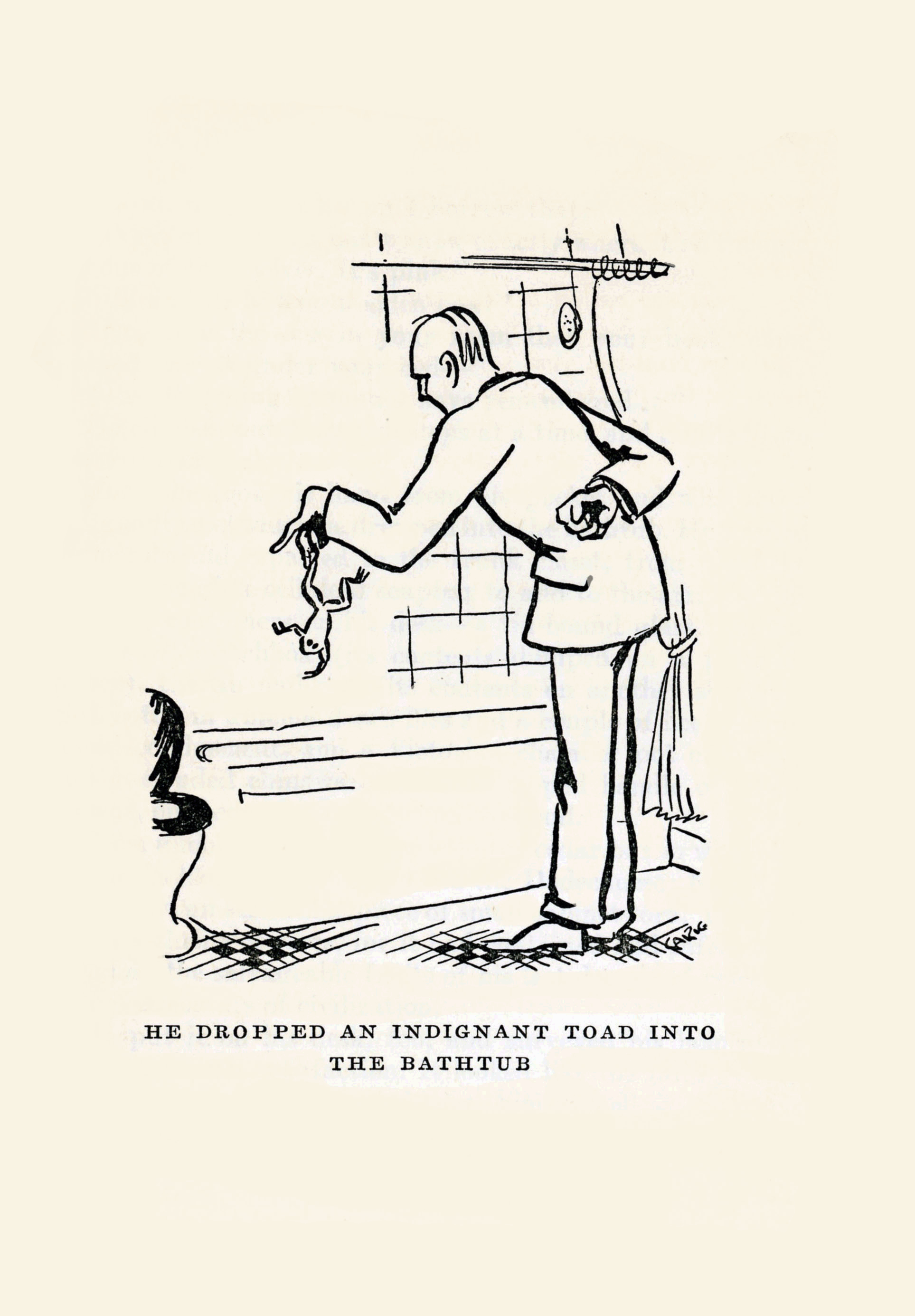
Zotz!, by Walter Karig – 1947 [Walter Karig] [Revised Post]

(This post has been revised to include Walter Karig’s portrait…scroll to the end.)

______________________________

Thus is gained the power of the silent death that strikes without sound,
without wound,
by night,
by day.
First prayeth one in the language of the ancient ones thus:

Khatnoth takhath blecho.

Now draweth one the symbol of the female and upon it the symbol of the male,
the whole making the symbol of the unmoving star with is the home of Zotz…
Now cometh the letting of blood and the drinking of blood
and thereafter if ye would strike any living thing dead
thou hast but to point thy finger and call upon Zotz…

Z o t z!

Dust jacket cover art, nicely symbolizing the novel’s opening chapter.

______________________________

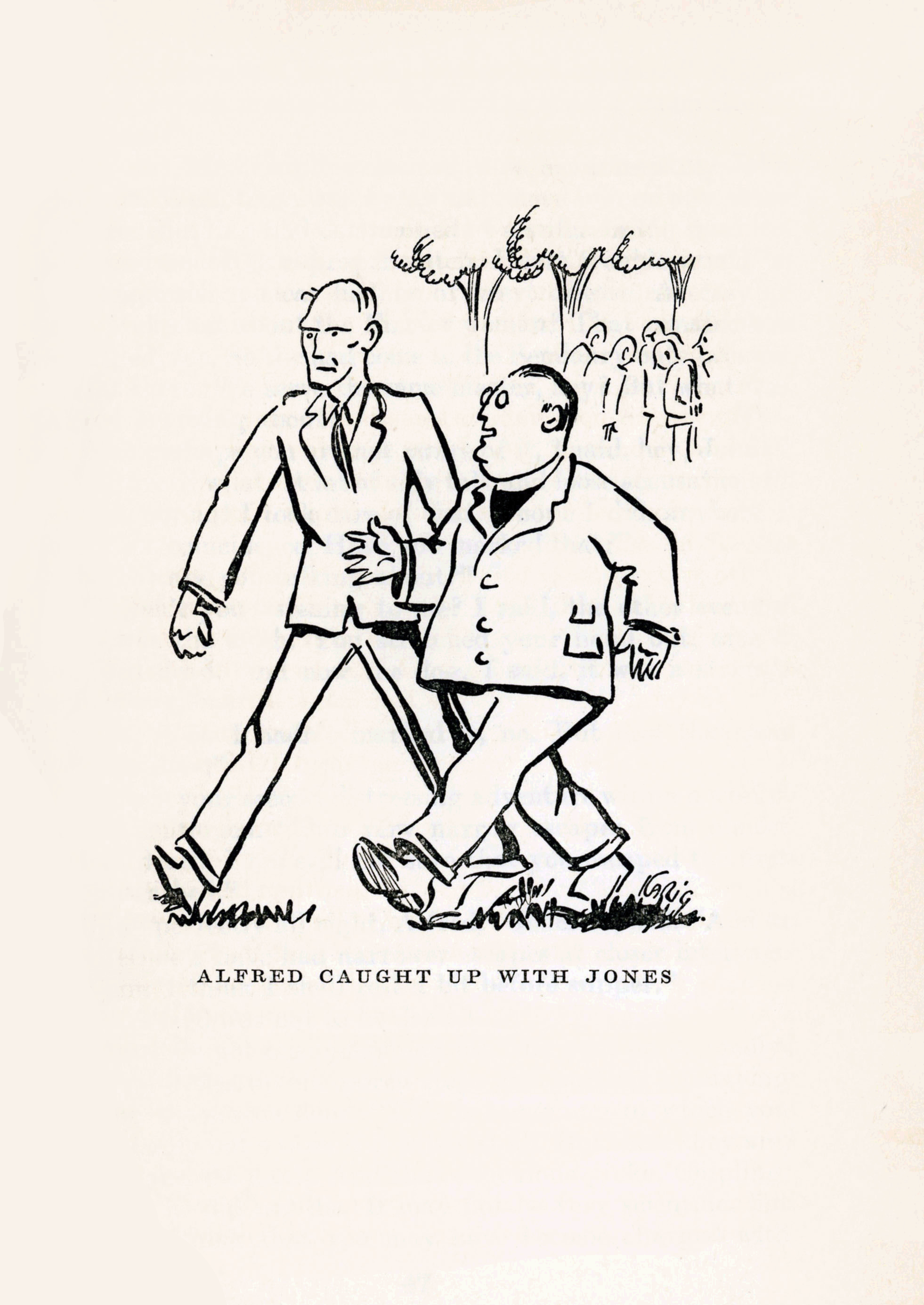
zotz-walter-karig-11_edited-2 zotz-walter-karig-045_edited-2 zotz-walter-karig-75_edited-2 zotz-walter-karig-107_edited-2 zotz-walter-karig-141_edited-2 zotz-walter-karig-249_edited-2 zotz-walter-karig-207_edited-2 zotz-walter-karig-265_edited-2______________________________

A portrait of author (and artist) Walter Karig, from the jacket of Zotz!

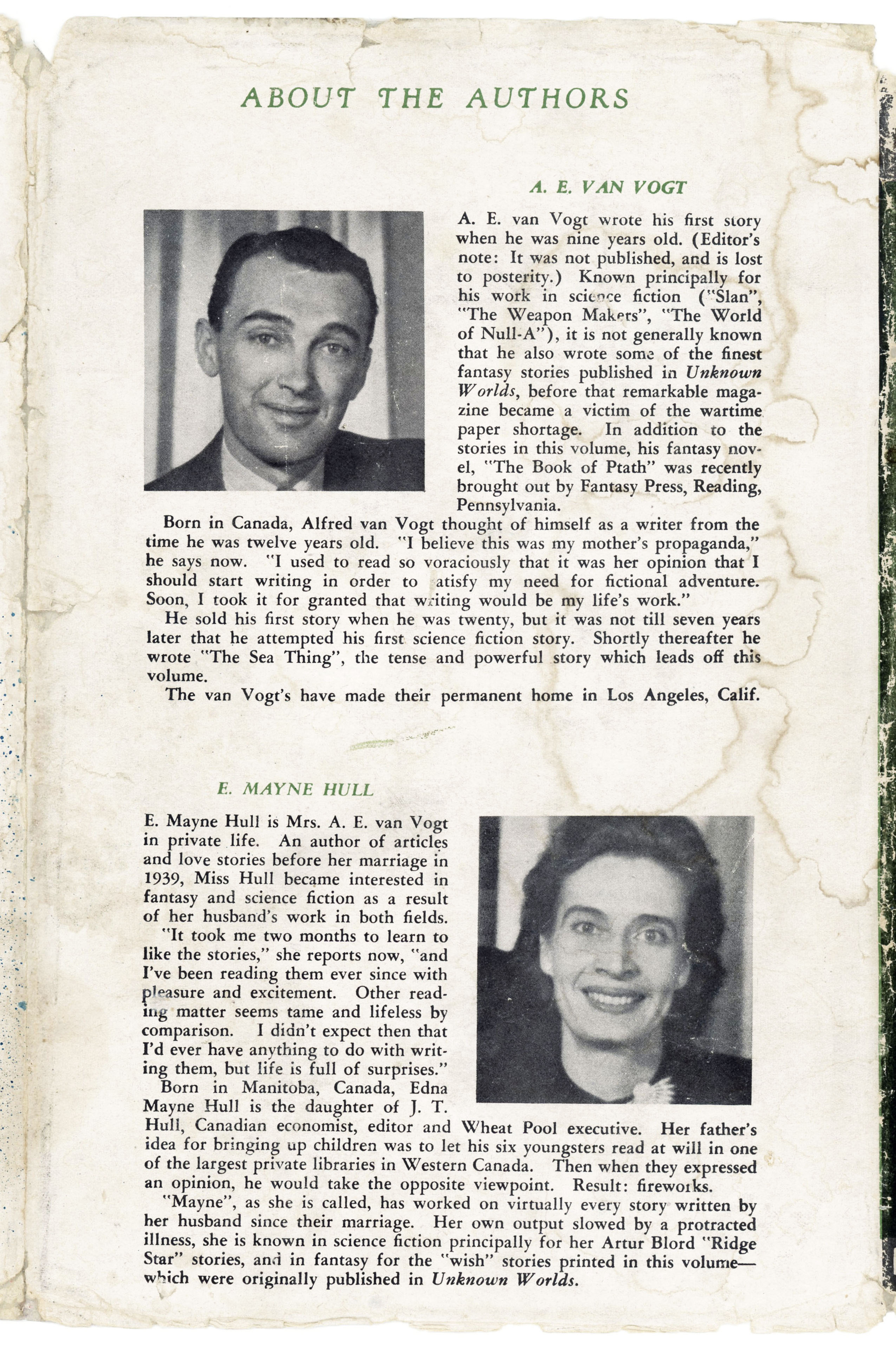
Out of the Unknown, by A.E. van Vogt and Edna Mayne Hull – April, 1948 [Roy Hunt]

______________________________

“The Sea Thing”, by A.E. van Vogt (art by Charles McNutt) – page 2.

______________________________

“The Sea Thing”, by A.E. van Vogt (art by Charles McNutt) – page 23.

______________________________

“The Wishes We Make”, by Edna Mayne Hull (art by Charles McNutt) – page 32.

______________________________

“The Wishes We Make”, by Edna Mayne Hull (art by Charles McNutt) – page 33.

______________________________

“The Witch”, by A.E. van Vogt (art by Charles McNutt) – page 56.

______________________________

“The Witch”, by A.E. van Vogt (art by Neil Austin) – page 69.

______________________________

“The Patient”, by Edna Mayne Hull (art by Charles McNutt) – page 80.

______________________________

“The Patient”, by Edna Mayne Hull (art by Charles McNutt) – page 81.

______________________________

“The Ultimate Wish”, by Edna Mayne Hull (art by Charles McNutt) – page 90.

______________________________

“The Ultimate Wish”, by Edna Mayne Hull (art by Roy Hunt) – page 103.

______________________________

“The Ghost”, by A.E. van Vogt (art by Roy Hunt) – page 108.

______________________________

“The Ghost”, by A.E. van Vogt (art by Roy Hunt) – page 115.

______________________________

The Magazine of Fantasy and Science Fiction – September, 1956 (Featuring “Operation Afreet”, by Poul Anderson) [Frank Kelly Freas]

Unlike the majority of science fiction (and fantasy) magazines of the 40s and 50s, The Magazine of Fantasy and Science Fiction eschewed interior art.  The issue of September, 1956 was an exception to this policy, featuring two illustrations – below – by Frank Kelly Freas, which accompanied Poul Anderson’s tale “Operation Afreet”. 

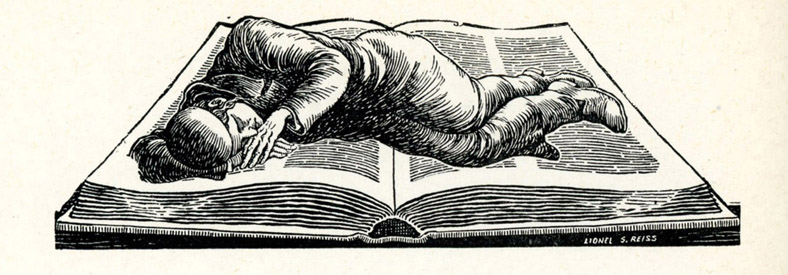
The third illustration is an allegorical image created by the unknown artist “H.M.”

(Page 11) (Page 37)

(Page 37)

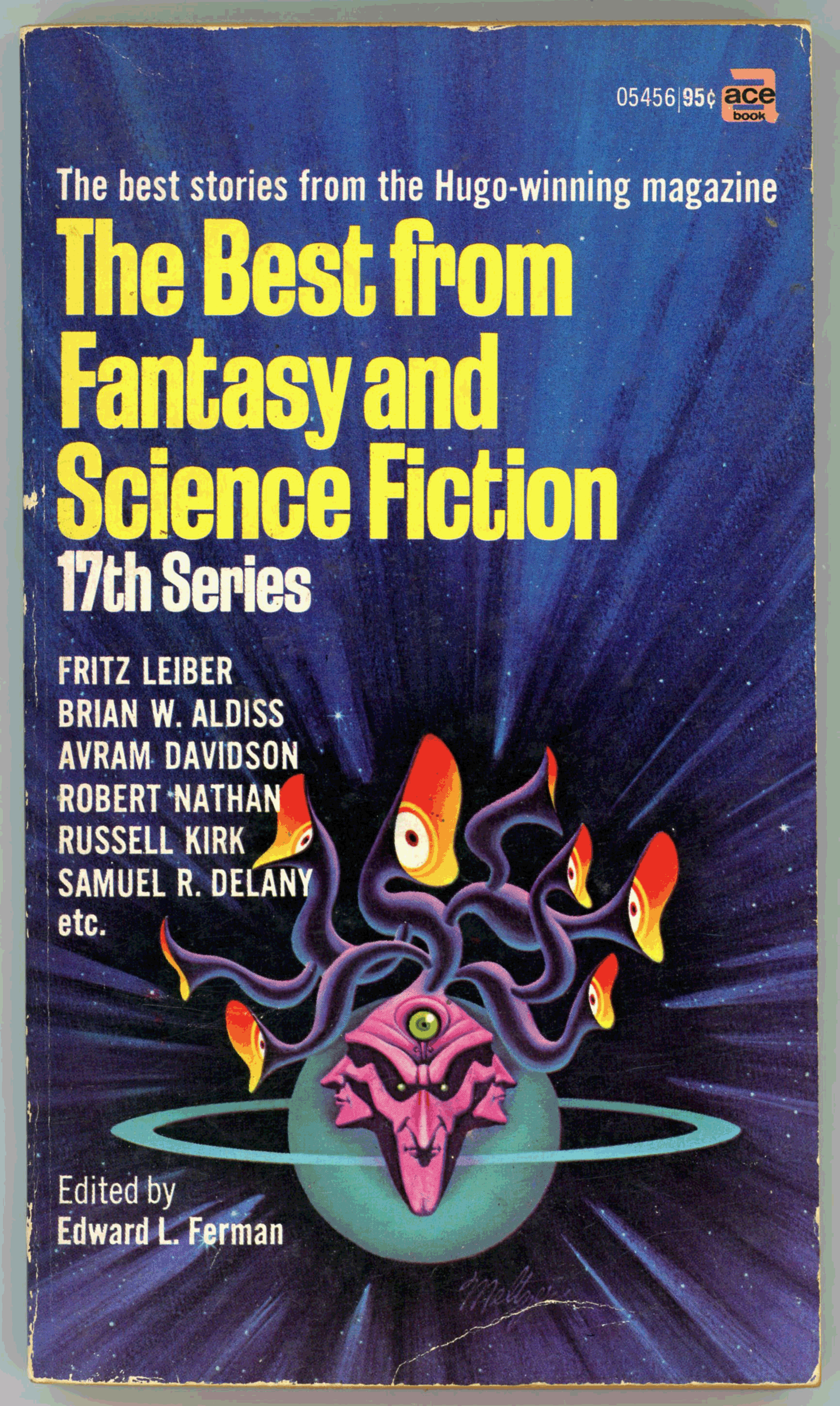
The Best From Fantasy and Science Fiction – Seventeenth Series, Edited by Edward L. Ferman – 1966 (1967, 1968) [Davis Meltzer]

Cyprian’s Room, by Monica Sterba

Out Of Time, Out of Place, by George Callyn

Vom Goom’s Gambit, by Victor Contoski

Bumberboom, by Avram Davidson

Fill In The Blank, by Ron Goulart

Balgrummo’s Hell, by Russell Kirk

Corona, by Samuel R. Delaney

The Inner Circles, by Fritz Leiber

Problems of Creativeness, by Thomas M. Disch

Encounter In The Past, by Robert Nathan

The Sea Change, by Jean Cox

The Devil and Democracy, by Brian Cleeve

Randy’s Syndrome, by Brian W. Aldiss

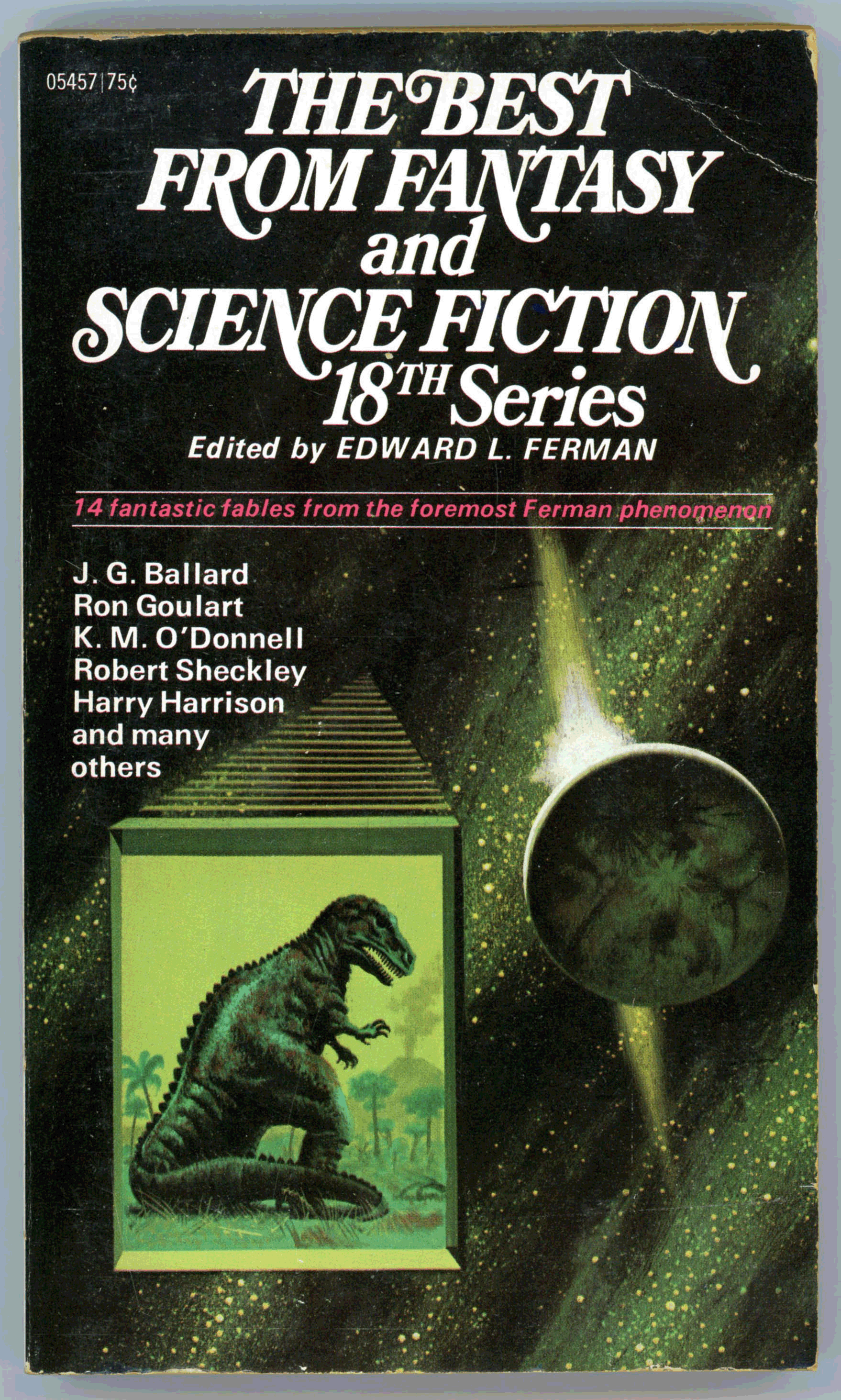
The Best From Fantasy and Science Fiction – Eighteenth Series, Edited by Edward L. Ferman – 1972 (1970, 1971) [Unknown Artist]

The Cloud-Sculptors of Coral D, by J.G. Ballard

The People Trap, by Robert Sheckley

In His Own Image, by Lloyd Biggle, Jr.

Ogre!, by Ed Jesby

Lunatic Assignment, by Sonya Dorman

Gifts From the Universe, by Leonard Tushnet

Sundown, by David Redd

Beyond the Game, by Vance Aandahl

Sea Home, by William M. Lee

That High-Up Blue Day That Saw the Black Sky-Train Come Spinning, by David R. Bunch

Muscadine, by Ron Goulart

Final War, by K.M. O’Donnell

I Have My Vigil, by Harry Harrison

The Egg of The Glak, by Harvey Jacobs

The Best From Fantasy and Science Fiction – Sixteenth Series, Edited by Edward L. Ferman – 1965 (1966, 1967) [Karel Thole]

Luana, by Gilbert Thomas

And Madly Teach, by Lloyd Biggle, Jr.

Matog, by Joan Patrick Basch

The Key, by Isaac Asimov

The Seven Wonders of The Universe, by Mase Mallette

A Few Kindred Spirits, by John Christopher

We Can Remember It For You Wholesale, by Philip K. Dick

Three For Carnival, by John Shepley

Experiment in Autobiography, by Ron Goulart

The Adjusted, by Kenneth Bulmer

The Age of Invention, by Norman Spinrad

Apology To Inky, by Robert M. Green, Jr.

This Moment of the Storm, by Roger Zelazny