Thought I’d be a little politically incorrect.
Why not?
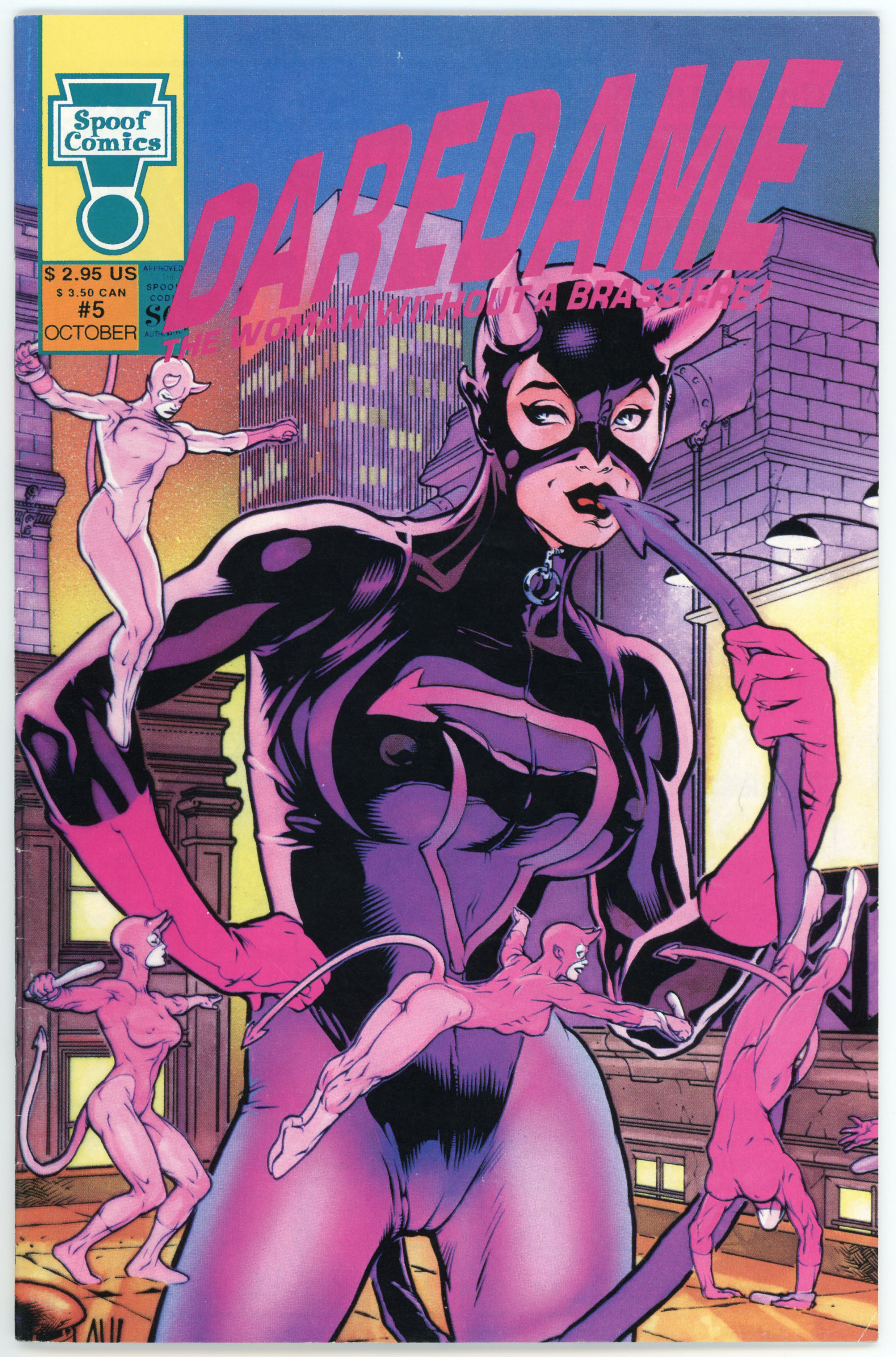
Great cover by Adam Hughes.
____________________
Well! There’s only one thing we can say about this!…
____________________
Places to see…
Adam Hughes, at…
Spoof Comics, at…
Images and Thoughts to Inspire Your Intellect and Infuse Your Imagination!
Thought I’d be a little politically incorrect.
Why not?
Great cover by Adam Hughes.
____________________
Well! There’s only one thing we can say about this!…
____________________
Places to see…
Adam Hughes, at…
Spoof Comics, at…
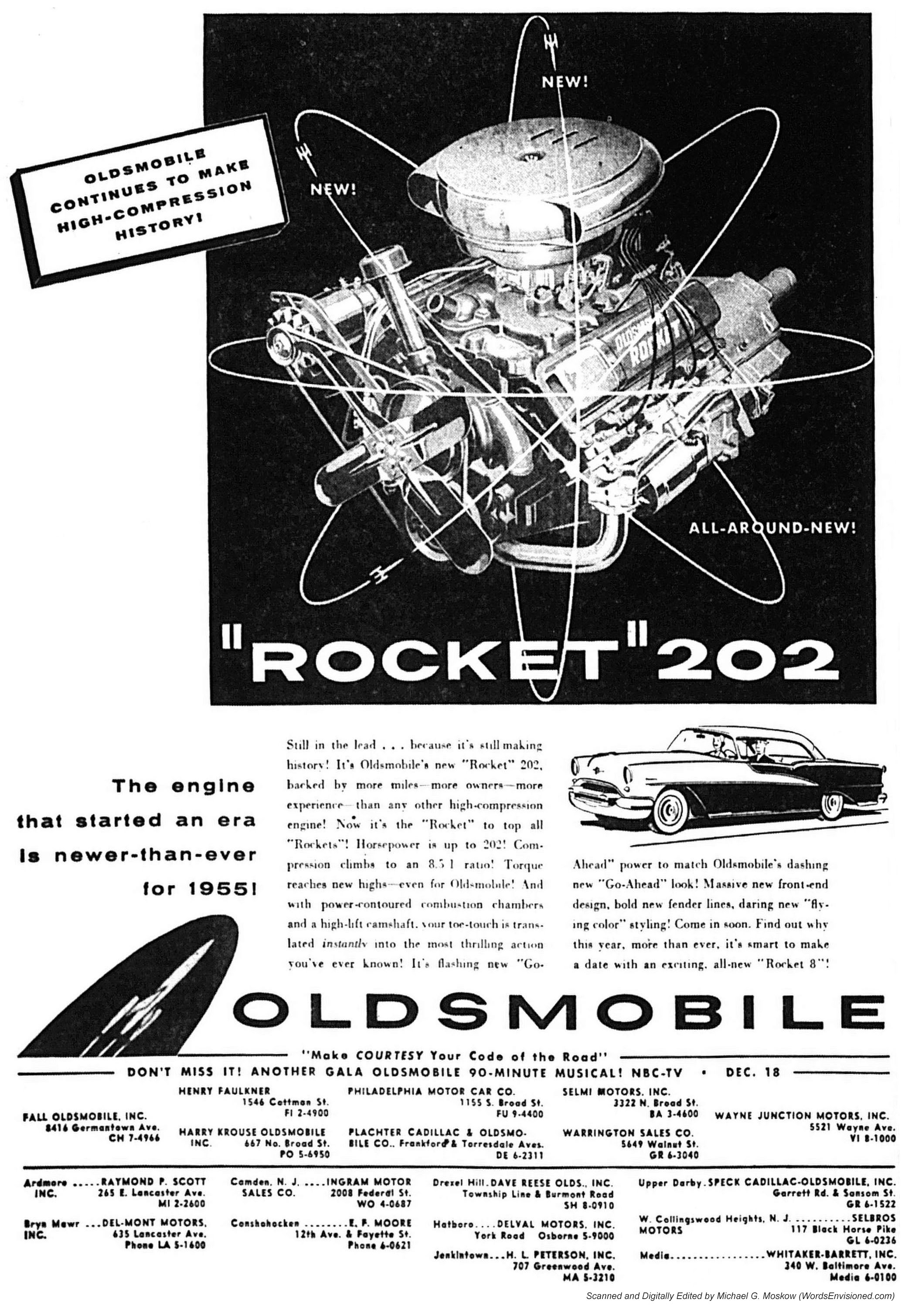
Power and style, from the world of 1954: An ad for the venerable Oldsmobile 88.
Most notable is the ad’s emphasis on the Rocket 202 engine, rather than the car itself, a depiction of which only occupies a small part of the “landscape”. In a way that cleverly fits the 1950s cultural prominence of space exploration and atomic energy, the photo of the engine is surrounded by four ovals – or, orbitals? – which together – with a rocket superimposed on each orbital – symbolize an atom. Or, “the” atom.
I’ve transcribed the ad verbatim, right down to the addresses of the fifteen southeastern Pennsylvania (and one New Joisey) dealerships listed at the bottom. Remarkably, even with the passage of 66 years, two of these locations still serve as auto dealerships: Sloane Toyota of Philadelphia, and Piazza Nisan of Ardmore. Oogle street views reveal that any buildings at the other fifteen locations have either been converted into offices or warehouses or have been demolished, in the latter cases most often ironically leaving – what else? – parking lots.
OLDSMOBILE
CONTINUES TO MAKE
HIGH-COMPRESSION
HISTORY!
ALL-AROUND NEW!
“ROCKET” 202
The engine that started an era is newer-than-ever for 1955!
Still in the lead…because it’s still making history! It’s Oldsmobile’s new “Rocket” 202, backed by more miles – more owners – more experience – than any other high-compression engine! Now it’s the “Rocket” to top all “Rockets”! Horsepower is up to 202! Compression climbs to an 8.5 1 ratio! Torque reaches new highs – even for Oldsmobile! And with power-contoured combustion chambers and a high-life camshaft, your toe-touch is translated instantly into the most thrilling action you’ve ever known! It’s flashing new “Go-Ahead” power to match Oldsmobile’s dashing new “Go-Ahead” look! Massive new front-end design, bold new fender lines, daring new “flying color” styling! Come in soon. Find out why this year, more than ever, it’s smart to make a date with an exciting, all-new “Rocket-8”!
OLDSMOBILE
“Make COURTESY Your Code of the Road”
DON’T MISS IT! ANOTHER GALA OLDSMOBILE 90-MINUTE MUSICAL NBC-TV * DEC. 18
HENRY FAULKNER
1546 Cottman St.
Fl 2-4900
(Now Sloane Toyota of Philadelphia)
PHILADELPHIA MOTOR CAR CO.
1155 S. Broad St.
FU 9-4400
SELMI MOTORS, INC.
3222 N. Broad St.
BA 3-4600
FALL OLDSMOBILE, INC.
8416 Germantown Ave.
CH 7-4966
HARRY KROUSE OLDSMOBILE INC.
667 No. Broad St.
PO 5-6950
PLACHTER CADILLAC & OLDSMOBILE CO.
Frankford & Torresdale Aves.
DE 6-2311
WAYNE JUNCTION MOTORS, INC.
5521 Wayne Ave.
YI 8-1000
_________________________________________________________________
Ardmore … RAYMOND P. SCOTT, INC.
265 E. Lancaster Ave.
MI 2-2600
(Now Piazza Nisan of Ardmore)
Camden, N.J. … INGRAM MOTOR SALES CO.
2008 Federal St.
WO 4-0687
Drexel Hill … DAVE REESE OLDS., INC.
Township Line & Burmont Road
SH 8-0910
Upper Darby … SPECK CADILLAC-OLDSMOBILE, INC.
Garrett Rd. & Sansom St.
GR 6-1522
Bryn Mawr … DEL-MONT MOTORS INC.
635 Lancaster Ave.
LA 5-1600
Conshohocken … E.F. MOORE
12th Ave. & Fayette St.
4-0621
Hatboro … DELVAL MOTORS, INC.
York Rad
Osborne 5-9000
W. Collingswood Heights, N.J. … SELBROS MOTORS
117 Black Horse Pike
GL 6-0236
Jenkintown … H.L. PETERSON, INC.
707 Greenwood Ave.
MA 5-3210
Media … WHITAKER-BARRETT, INC.
340 W. Baltimore Ave.
Media 6-0100
______________________________
Go for a spin…
… Oldsmobile (Division of General Motors)
This cartoon, by The New Yorker cartoonist George Price, is hilarious, for it takes a commonplace idea – a literary idea – and carries it to an (il)logical conclusion. More than the merely weird idea of assembling all the authors of a anthology’s collected works for a single book signing, the appearance, facial expression, and attire of every individual is unique, exaggeratingly embodying the life experience of every author. It’s this, combined with the hilarity of a collective book signing, makes the cartoon work so well.

____________________
____________________
Price’s cartoon reminds me of the cover of the October, 1952 issue of Galaxy Science Fiction, which featured depictions of twenty contributors (excluding “Bug-Eye”) who were making the by then two-year-old magazine a success. A very clever idea. The magazine leads with a report to its readers touching upon its successes, challenges, and plans for the future, and mentions upcoming works by Isaac Asimov and Clifford Simak, and, includes a key – reproduced below – identifying the authors and contributors shown on the cover.

____________________
Annual Report to our Readers
The twelvemonth between our first annual report and this, which marks the beginning of our third year, was rammed full of activity for GALAXY. It all boils down to this one astonishing fact, however:
GALAXY has acquired the second largest circulation in science- fiction and is pushing hard toward first place.
For a magazine to achieve this record in so short a time is a tribute to its unyielding policy of presenting the highest quality obtainable; to its readers for their loyalty and appreciation; to its authors for helping it maintain those standards and even advance them.
During the turbulent first year of GALAXY’s existence, other publishers thought the idea of offering mature science fiction in attractive, adult format was downright funny. They knew what sold – shapely female endomorphs with bronze bras, embattled male mesomorphs clad in muscle, and frightful alien monsters in search of a human meal.
Even our former publisher [World Editions, Inc., 105 West 40th St., New York, N.Y. – not this contemporary World Editions!] became infected with that attitude, and the resulting internal conflicts were no joke at all. But now:
• We have the biggest promotion campaign mapped out that any science fiction magazine has ever had.
• We are working out the broadest circulation possible. Note that we reach the stands regularly on the second Friday of each month. (Subscribers, however, get their copies at least five to ten days before.)
• Better printing, paper and reproduction of art lie ahead.
• These new art techniques I mentioned in the past are on their way. They were stubborn things to conquer, but you’ll be seeing them soon.
• If you want to find WILLY LEY in a science fiction magazine henceforth, you’ll have to buy GALAXY. As our science editor, he will work exclusively for us in this field.
• Last and by far the most important, the literary quality of GALAXY will continue to be a rising curve – as steeply rising as we can manage.
Coming up, for example:
• November: THE MARTIAN WAY by Isaac Asimov, a novella, that introduces problems and situations in space travel that I have never seen before,.
• December: RING AROUND THE SUN by Clifford D. Simak is a powerful new serial with a startling theme and one surprising development after another.
• March: After the conclusion of the Simak serial, we have THE OLD DIE RICH by a chap named Gold. Naturally, the story was read by impartial critics – no writer can judge his own work – and they report it’s GALAXY quality. I hope you’ll agree with them.
Yes, it’s been a fine year. Next year looks even better.
– H.L. GOLD
____________________
1 – Fritz Leiber (“Gonna’ Roll the Bones”)
2 – Evelyn Paige
3 – Robert A. Heinlein
4 – Katherine MacLean (Dragons and such)
5 – Chesley Bonestell
6 – Theodore Sturgeon
7 – Damon Knight (“To Serve Man”)
8 – H.L. (Horace L.) Gold
9 – Robert Guinn
10 – Joan De Mario
11 – Charles J. Robot
12 – Cyril Kornbluth
13 – E.A. (Edmund A.) Emshwiller
14 – Willy Ley
15 – F.L. Wallace
16 – Isaac Asimov
17 – Jerry Edelberg
18 – Groff Conklin (anthologist)
19 – John Anderson
20 – Ray Bradbury (“The Fireman” (“Fahrenheit 451”))
21 – Bug Eye

____________________
____________________
But, where did Horace Gold get the very idea to acknowledge people instrumental to Galaxy’s success, in such a clever way?
I don’t know.
But, while perusing the contents of other, lesser known magazines at the Luminist Archive, I came across the November, 1951 issue of Marvel Science Fiction, which features cover art by Hannes Bok, in his own immediately recognizable style…

____________________
…and this two-page cartoon of the members of the by then four-year-old “Hydra Club”, an organization of professionals in the field of science fiction. Though far more “busy” than the scene depicted on the cover of Galaxy, the design is remarkably similar, right down to the number key at the bottom of the cartoon, and, the accompanying diagram of “who’s who” at lower right, the names of “who” are all listed below.
Was this the inspiration for Horace Gold, or, art director W.I. Van Der Poel? Given the timing, could be!

THE HYDRA CLUB
Text by Judith Merril
(Illustration by Harry Harrison)
An organization of Professional Science Fiction Writers, Artists and Editors.
Article One: The name of this organization shall be the Hydra Club.
Article Two: The purpose of this organization shall be…
PUZZLED silence greeted the reader as he lay down the proposed draft of a constitution, and looked hopefully at the eight other people in the room.
“The rest of it was easy,” he explained, “but we spent a whole evening trying to think of something for that.”
“Strike out the paragraph,” someone said. “We just haven’t got a purpose.”
And so we did. The Hydra Club was, officially, and with no malice in the forethought, formed as an organization with no function at all. It was to meet twice a month; it hoped to acquire a regular meeting place and a library of science fiction; its membership was to be selected on no other basis than the liking and approval of the charter members, who organized themselves into a Permanent Membership Committee for the new club.
That was in September, 1947. In four years of existence, the club has increased sevenfold. Its roster now lists more than sixty members, and the number is that low only because of the strict stipulation that admission to membership is by invitation only. There is no way for a would-be member to apply for admission; and invitations are issued only after the holding a complex secret-ballot blackball vote.
Of the nine charter members of the club, five are still active on the Permanent Membership Committee. Lester del Rey, who had been absent from the science fiction field entirely for several years, when the club was started, is now once again a leading name in the field. Dave Kyle and Marty Greenberg, who first met each other in the organizational days of the club, have since become partners in a publishing firm, Prime Press. Fred Pohl, who was then still writing an occasional story under the pen-name of James MacCreigh, has developed the then still-struggling Dirk Wylie agency into the foremost literary agency in the science fiction field. And yr. humble correspondent, who had just a few months earlier written her first science fiction story, has since become, among other things, Mrs. Frederik Pohl.
There are half a hundred other names on the rolls, many of which would be completely unfamiliar to science fiction fandom. The Club has never attempted to limit its membership to professionals working in the field. It has endeavored only to gather together as many congenial persons as possible. In the four years of its existence there have been many changes in character, constitution, solvency, and situation. A considerable library has been acquired by gift and donation, but no permanent meeting place or library space has ever been found. Meetings are now held only once a month, sometimes in the studio apartment of the Pratts’, or that of Basil Davenport, more often in a rented hall. From time to time, under the impetus of an unwonted ambition, the club has even initiated major endeavors, and less frequently has actually carried them through.
The single exception to this renewed enthusiasm for purposelessness is the annual Christmas party … perhaps because we have found it possible for all concerned to have a remarkably good time at these affairs in return for an equally remarkably small output of work. The success of the annual parties has rested largely on the willingness of member talent to be entertaining (and the dependable willingness of the guests to amuse themselves at the bar). At such times, there is little holding back. Why watch television, after all, or empty your pockets for a Broadway show, if you can have Willy and Olga Ley explain with words and gestures the structure of the Martian language – or watch your best friends cavort through a stefantic satire devised in the more mysterious byways of Fred Brown’s Other Mind – or listen yearly to a new and even funnier monologue delivered by Philip-William (Child’s Play) Klass-Tenn?
Between this yearly Big Events, club meetings very considerably in character. A member may arrive, on any given meeting date, to find a scant dozen seriously debating the date of publication of the second issue of Hugo Gernsback’s third magazine – or to find seventy-off slightly soused guests and members engaged in the most frantic of socializing, to the apparent exclusion of science fiction as a topic of interest. At these larger meetings, it takes a knowing eye to detect the quiet conversation in the corner where a new line of science fiction books has just been launched, or to understand that the clinking of glasses up front center indicates the formation of a new collaborating team.
Perhaps one of the most unlikely and most pleasant things about the Hydra Club is the way it manages to contain in amity a membership not only of writers and artists, but also of editors and publishers. We like to think that it is due to the “by invitation only” policy, and to the profound wisdom of our P.M.C., that the lions and the lambs have been induced to lie down so meekly all over the place. Even rival anthologists and agents are seen smiling at each other from time to time, and the senior editor of a large publishing house is always willing to pass on advice to newcomer specialist publishers. There are thirty-odd magazine writers in the crowd, and ten or more magazine editors – and still not a fistfight in a barload!
Hydra members are selected for interest, individuality, intelligence, and an inquiring mind, a combination unique among science-fiction organizations in my knowledge, we have now achieved four years of existence without a single major internal feud. What difficulties have arisen in relation to the club, from the outside, appear to be entirely due to the fact that, without trying, Hydra has become an increasingly important group in the professional field. But the business that takes place in and around the Hydra Club remains incidental.
When bigger and better purposes for clubs are found, the Hydra Club will still point happily to its nonexistent Article Two.
____________________
1 – Lois Miles Gillespie
2 – H. Beam Piper
3 – David A. Kyle
4 – Judith Merril Pohl
5 – Frederik Pohl
6 – Philip Klass
7 – Richard Wilson
8 – Isaac Asimov, Ph.D.
9 – James A. Williams
10 – Martin Greenberg (anthologist)
11 – Sam Merwin, Jr.
12 – Walter I. Bradbury
13 – Bruce Elliott
14 – J. Jerome Stanton
15 – Jerome Bixby (Twilight Zone!)
16 – Basil Davenport
17 – Robert W. Lowndes
18 – Olga Ley (Willy’s wife)
19 – Oswald Train
20 – Charles Dye
21 – Frank Belknap Long
22 – Damon Knight
23 – Thomas S. Gardner, Ph.D.
24 – Harry Harrison
25 – Sam Browne
26 – Groff Conklin
27 – Larry T. Shaw
28 – Lester del Rey
29 – Frederic Brown
30 – Margaret Bertrand
31 – Evelyn Harrison
32 – L. Sprague de Camo
33 – Theodore Sturgeon
34 – George C. Smith
35 – Has Stefan Santessen
36 – Fletcher Pratt
37 – Willy Ley (Olga’s husband)
38 – Katherine MacLean Dye
39 – Daniel Keyes
40 – H.L. (Horace L.) Gold
41 – Walter Kublius
____________________
____________________
For your amusement…
Here’s the book where I found George Price’s cartoon…
Price, George (Introduced by Alistair Cooke), The World of George Price – A 55-Year Retrospective, Harper & Row, New York, N.Y., 1989
George Price, at…
… Art.com
Hydra Club, at…
… That’s My Skull (Judith Merril’s article, and, accompanying illustration)
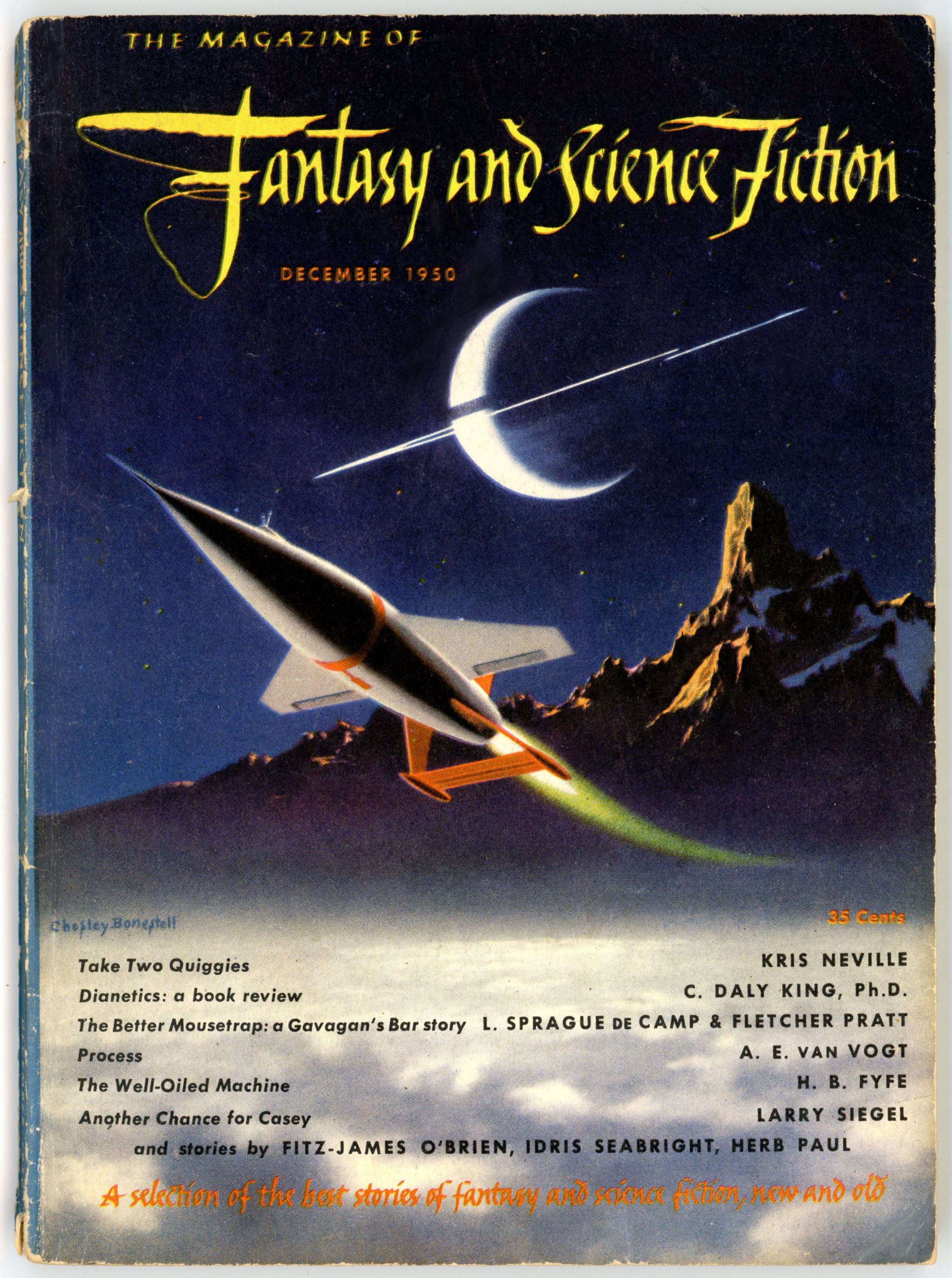
I recently received a communication from Mr. Melvin Schuetz, former assistant to the curators of Baylor University’s Armstrong Browning Library and Museum, regarding Chesley Bonestell’s cover illustration for the December, 1950 issue of The Magazine of Fantasy and Science Fiction which – followed by my response – appears as a “Comment” to this post.
Mr. Schuetz has long had a deep interest in Chesley Bonestell’s body of work. As described at Baylor Blogs, “Melvin is also passionate about the space program and the work of space artist Chesley Bonestell. He authored A Chesley Bonestell Space Art Chronology, published in 1999; collaborated on an illustrated book The Art of Chesley Bonestell in 2001 for which he received a Hugo Award; and co-produced a multi-award winning documentary on Bonestell, Chesley Bonestell: A Brush with the Future, in 2018.”
Here’s more about Chesley Bonestell: A Brush with the Future:
P r o m o…

Following closely in the pixels of my prior post about William Timmins’ cover illustration of the January, 1946 issue of Astounding Science Fiction, here’s another reimagined magazine cover: Chesley Bonestell’s cover art for the December, 1950 issue of The Magazine of Fantasy and Science Fiction. Unlike, Timmins’ painting, Bonestell’s depiction of a spacecraft gracefully sweeping just above clouds of a moon of Saturn doesn’t pertain to any of the ten stories within the magazine. Similarly, the only information “about” the painting is the simple statement “Cover Illustration Chesley Bonestell”; the issue is absent of anything dealing with the imagined when, where, why, and how of the scene depicted.
Regardless, the illustration is wonderful; certainly for me, one of the best – if not the very best – covers that appeared during the magazine’s (thus far 74 year long) ongoing history, and I think very highly among the ranks of all science fiction pulps from the mid-twentieth century. The combination of glowing clouds in shades of gray, Saturn as a crescent with its rings a mere sliver of light, and, pale brown cliffs in the distance set against a thinly starlit deeply blue sky, combine to make a wondrous scene.
The painting imparts feelings of wonder, danger, and beauty. What is the spaceship’s origin? On what mission is it headed … to simply conduct a reconnaissance of the moon – Titan? – and then depart, to land on the moon’s surface, or, to sweep by, passing en-route to another – unknown – destination? Are any explorers aboard the craft, or is it entirely automated? What is the time-frame of the action – only a few decades hence, or in a future far, far distant, when not robots but men have finally leapt into the depths of the solar system, and beyond? The answers lie in our imagination.
Sweeping through the void.
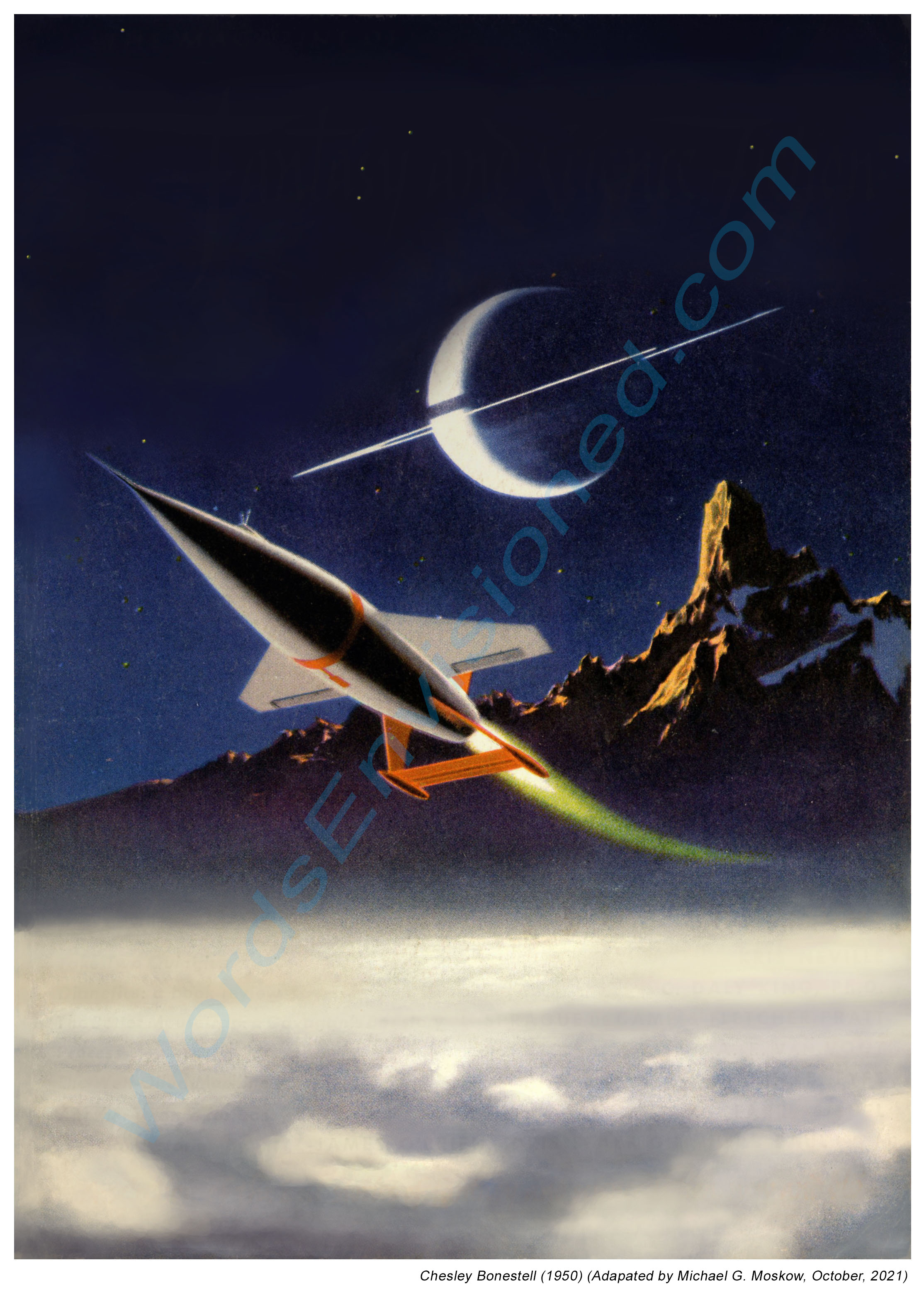
Here’s the original cover which is the basis of the above image. Lovely work by Chesley Bonestell.
12/13/23 – 52
Published in the March, 1939, issue of Amazing Stories, “Marooned Off Vesta”, the third science-fiction story written by Isaac Asimov and an example of “hard” SF, was his first published tale.
Though the story is significant in terms of Asimov’s literary oeuvre, ironically, given his centrality in the history of science fiction, I’ve not read the tale. Then again (minor blasphemy, given the ethos of this blog?!), with the exception of Pebble In the Sky, I’ve not read any tale in the Foundation series or any of his robot stories. The reason being, simply put, that I’ve never liked Asimov’s writing style, though some decades ago – at the time I read it; perhaps it resonated with me then! – I greatly enjoyed The End of Eternity in terms of plot and pacing.
Regardless, I thought it’d be nice to present Robert Fuqua’s very busy lead illustration for “Marooned Off Vesta”. Like many such examples from the era, the spaceship is imagined with a very strong nautical or industrial “air”, what with rivets, portholes (are they portholes?!), pipes, girders, and hinges. Evocative of its time. It makes such a strange contrast with Fuqua’s cover painting that one could be forgiven for assuming that the illustrations were created by different artists. I can only suppose that the truly awful cover painting – in contrast to the absolutely lovely cover art that appeared in earlier issues of Amazing – was simply a reflection of what the magazine’s readers, and thus its editors, actually wanted. (Megacephalic, big-eared, naked, spindly aliens inside a golden-geared fishbowl? Gadzooks!)


While you’re here, you might want to visit Virgil Finlay’s 1959 version of Fuqua’s interior art…
As for the real Vesta, check out this NASA Video “Dawn Spacecraft’s Farewell Portrait of Giant Asteroid Vesta“…
Marooned Off Vesta, at…
… Internet Speculative Fiction Database
… ArtStation (by Cosmin Panfil)
… Science Daily (“Geologists propose theory about a famous asteroid”)
Robert Fuqua, at…
… Internet Speculative Fiction Database
As originally designed in the former world of 2016, the header of WordsEnvisioned included drop-downs by which you could view numerous publishers’ trademarks.
In order to display these images in a way that’s easier to locate and access, I’ve deleted those drop-downs, and have instead created a series of posts about trademarks, of which this is the first.
And so (drum roll, please) here are eight variations on a theme of Bantam Books.
From the 1949 edition of William Krasner’s Walk the Dark Streets.

Isaac Asimov: The Naked Sun, from March, 1953.

…and on the rear cover.

This one’s from the 1954 edition of Fredric Brown’s Star Shine.

…and on the back.

From June of 1956, Charles Eric Main’s Timeliner.

This rooster’s from the 1957 edition of Isaac Asimov’s Pebble In The Sky.

And this big bird is from Seven Short Novels by Chekhov, from 1963.

Originally created in July of 2019, this post – showing the July 1963 issue of Amazing Stories – now includes Edmund Emshwiller’s illustration for part two of Jack Sharkey’s novella “The Programmed People”. The cover and interior art of the June issue can be viewed here.

______________________________
Illustration by Edmund A. Emshwiller, for “The Programmed People“, by Jack Sharkey (pages 82-83)

7/15/19 234
Jack Sharkey’s two-part novella, “The Programmed People”, from the June and July of ’63 issues of Amazing Stories, while a strong example of world-building, envisions a future – the result of an odd confluence of social and technological developments – that for all the tale’s intricacy and complexity is simply not that engaging. The plot is based upon a rebellion within self-contained, subterranean civilization Earth, the society a cross between the worlds Brave New World and 1984, and even resembling (and perhaps inspiring?!) Logan’s Run.
The protagonist – a young woman; Grace Horton – and secondary characters are all clearly “drawn” in terms of their roles within the story, but they’re neither too deeply individuated nor that compelling in terms of emotion or personality, as people. To be fair, it’s a worthwhile one-time read, but not at all the kind of tale – unlike, for example, anything in the oeuvre of Cordwainer Smith – that would draw your attention for a second (or third (or fourth?)) reading, let alone contemplation. It’s not been anthologized, either.
Withal, Edmund Emshwiller’s cover art for the June issue – below – and interior illustrations are great; perhaps the best parts of the story. Aside from their spandexy outfits, the most notable aspect of the painting is the punch-card slots superimposed on the man and woman, a reminder of computer programming in the 1960s.
The cover and interior art of the July issue can be viewed here.

______________________________
Lead illustration for “The Programmed People”, on pages 6 and 7.

Programming!… A superb illustration from page 34, showing Grace Horton, a robot, and a bank of computers, encircled by a perforated computer tape.

7/12/19 – 216
In space, they say,
Lies The Hand of Zei.
A strange adventure,
Far, far away!
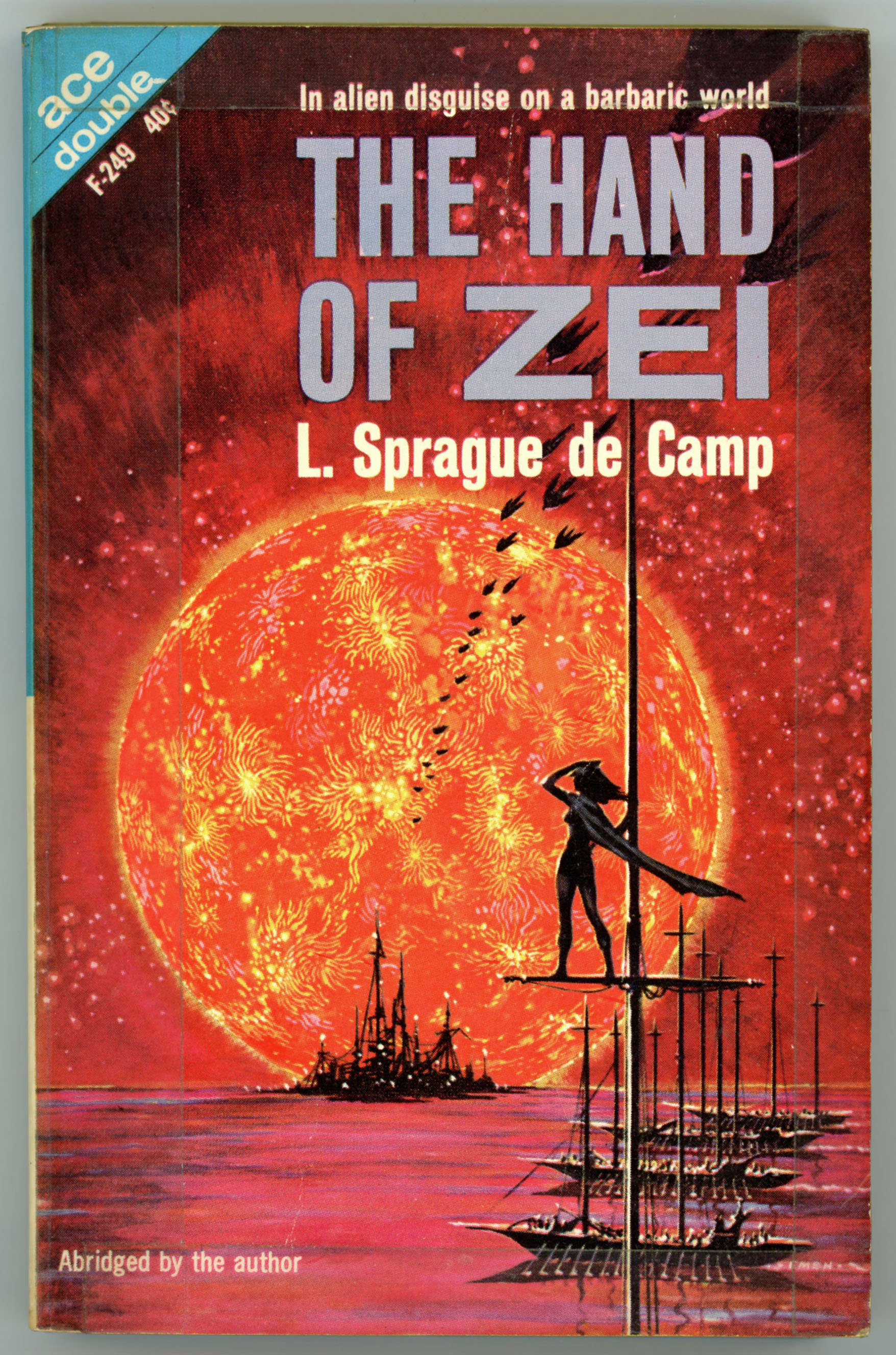
The Search For Zei is found this way…
What can one say,
About The Search for Zei?
A colorful cover,
On display!

The Hand of Zei, not far away…